Shopping Cart
There are no more items in your cart
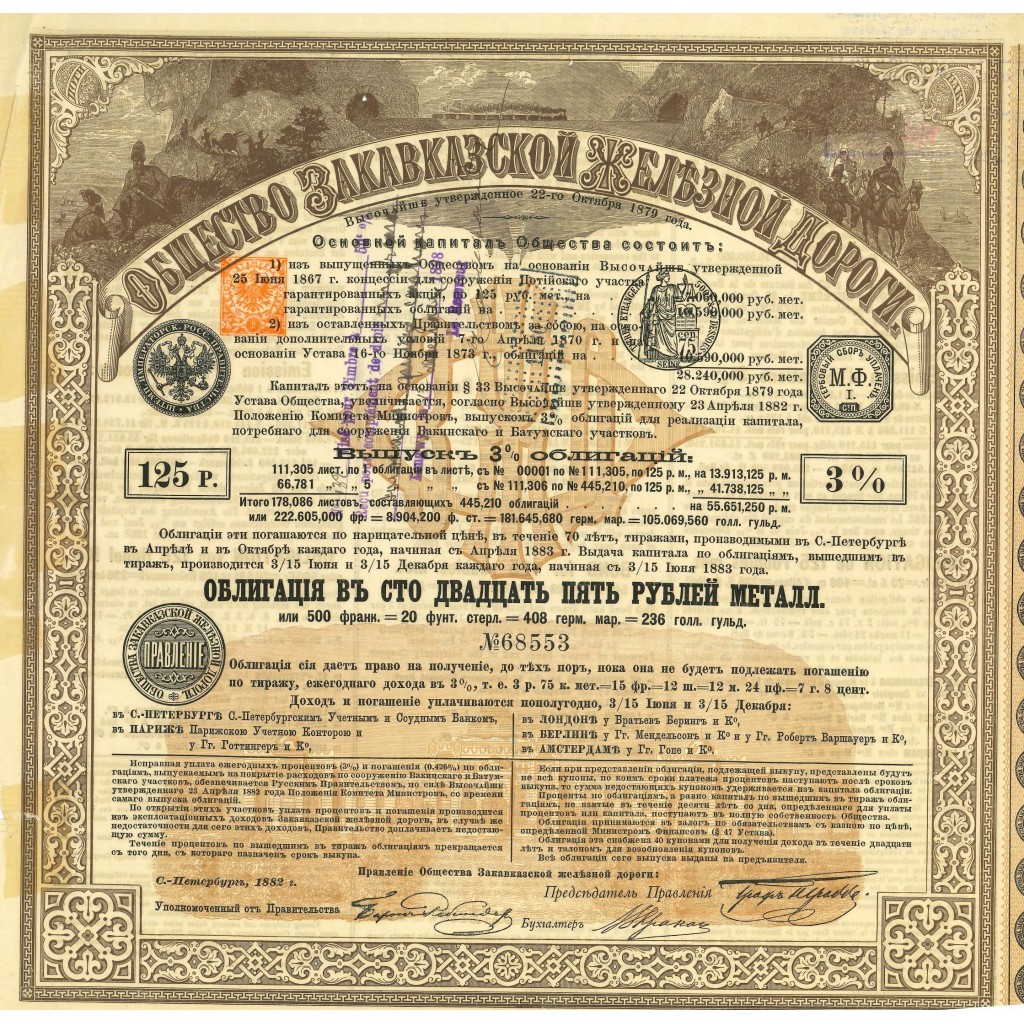


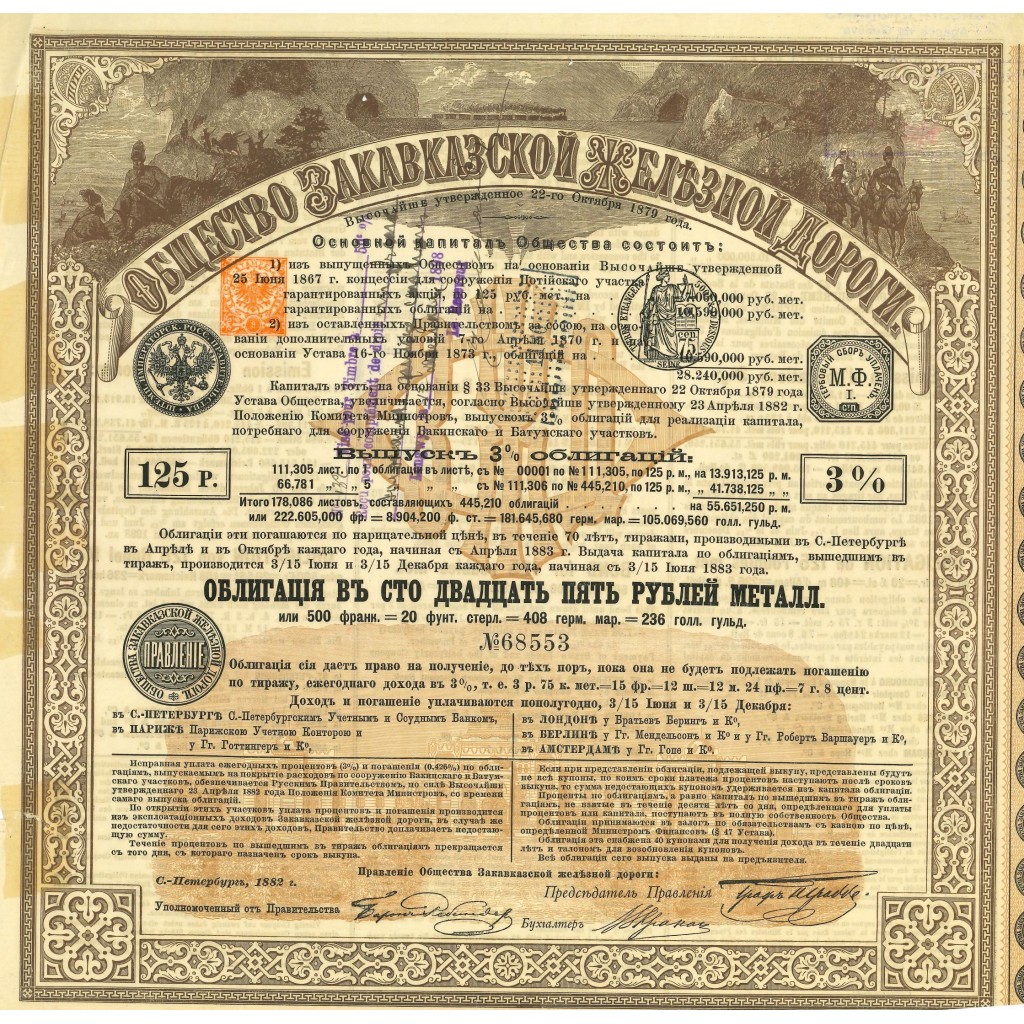
The Société du Chemin de Fer Transcaucasien, founded in 1879, is one of the most significant railway companies in Russian history. This company, headquartered in St. Petersburg, was established to develop the railway network in the Transcaucasian region, a strategic area for trade and transport. The initial share capital was 28,340,000 rubles, a considerable amount for the time, reflecting the importance and ambition of the project.
The bond presented in this document, dated October 1, 1882, represents a bond issue to finance the expansion of the railway network. With a nominal value of 125 rubles, these bonds guaranteed a 3% interest, offering a safe investment opportunity to savers of the time. The certificate's artwork, with its artistic details, celebrates the grandeur of the railway infrastructure and the importance of rail transport to the economy.
Historical Data of Société du Chemin de Fer Transcaucasien
| Year | Revenue (in Rubles) | Share Capital | Headquarters | Stock Market Admission | Delisting from Stock Market | Year of Cessation |
|---|---|---|---|---|---|---|
| 1879 | Not available | 28,340,000 | St. Petersburg | Not available | Not available | Not available |
Document Characteristics
| Issue Date | Serial Number | Nominal Value | Interest Rate | Artwork | Signature |
|---|---|---|---|---|---|
| October 1, 1882 | N/A | 125 Rubles | 3% | Artistic details | Président du Conseil |
Scripophily Collecting
Scripophily collecting offers a unique way to explore and preserve financial and industrial history. Each document tells a story of economic development, innovation, and social change. Certificates like this bond from the Société du Chemin de Fer Transcaucasien not only represent past investments but are also artworks that reflect the aesthetics and culture of the era in which they were created.
Owning a historical document like this 1882 bond means preserving a piece of industrial and cultural history. The detailed graphics and original signatures add aesthetic value in addition to historical significance, making these certificates objects of great interest to collectors.
All historical documents for sale are considered collectible. The documents have no economic or financial value, and the second image is only representative of the object of the reference company.