Shopping Cart
There are no more items in your cart
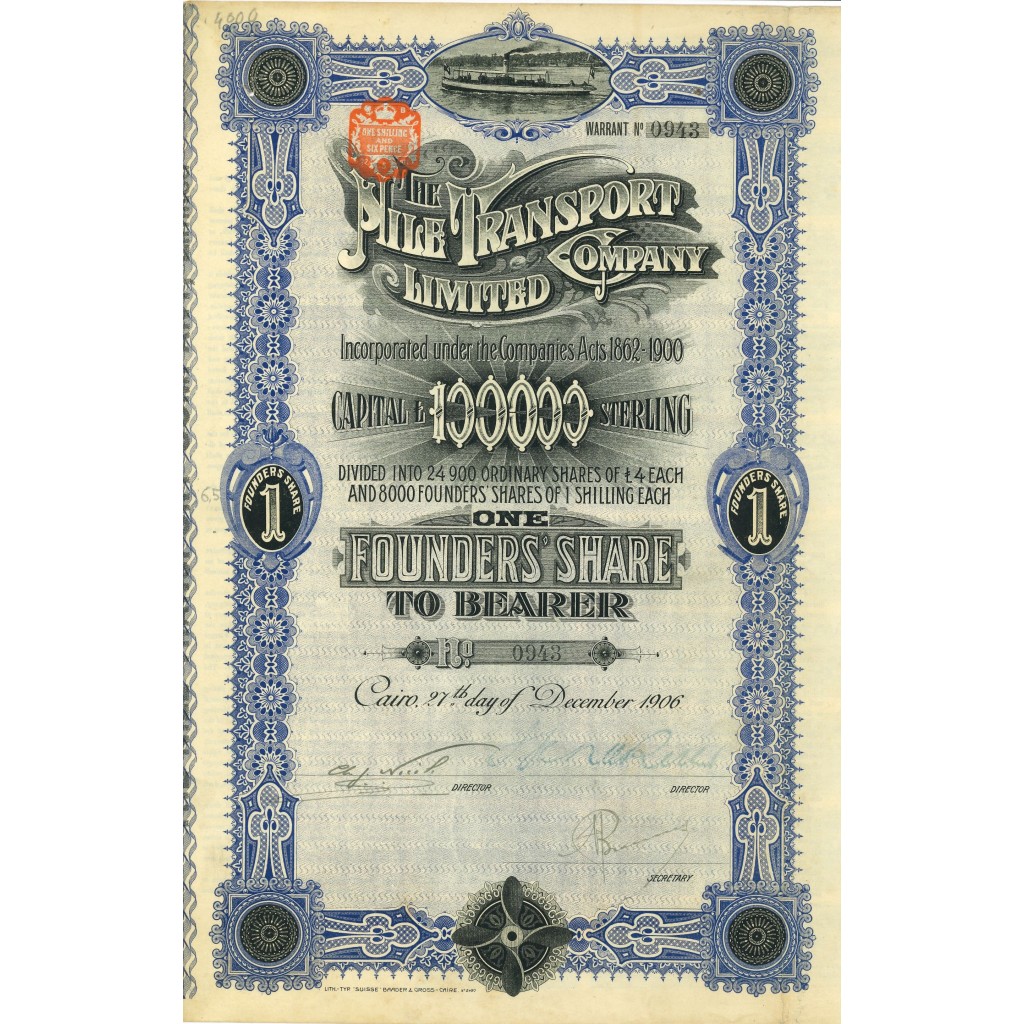


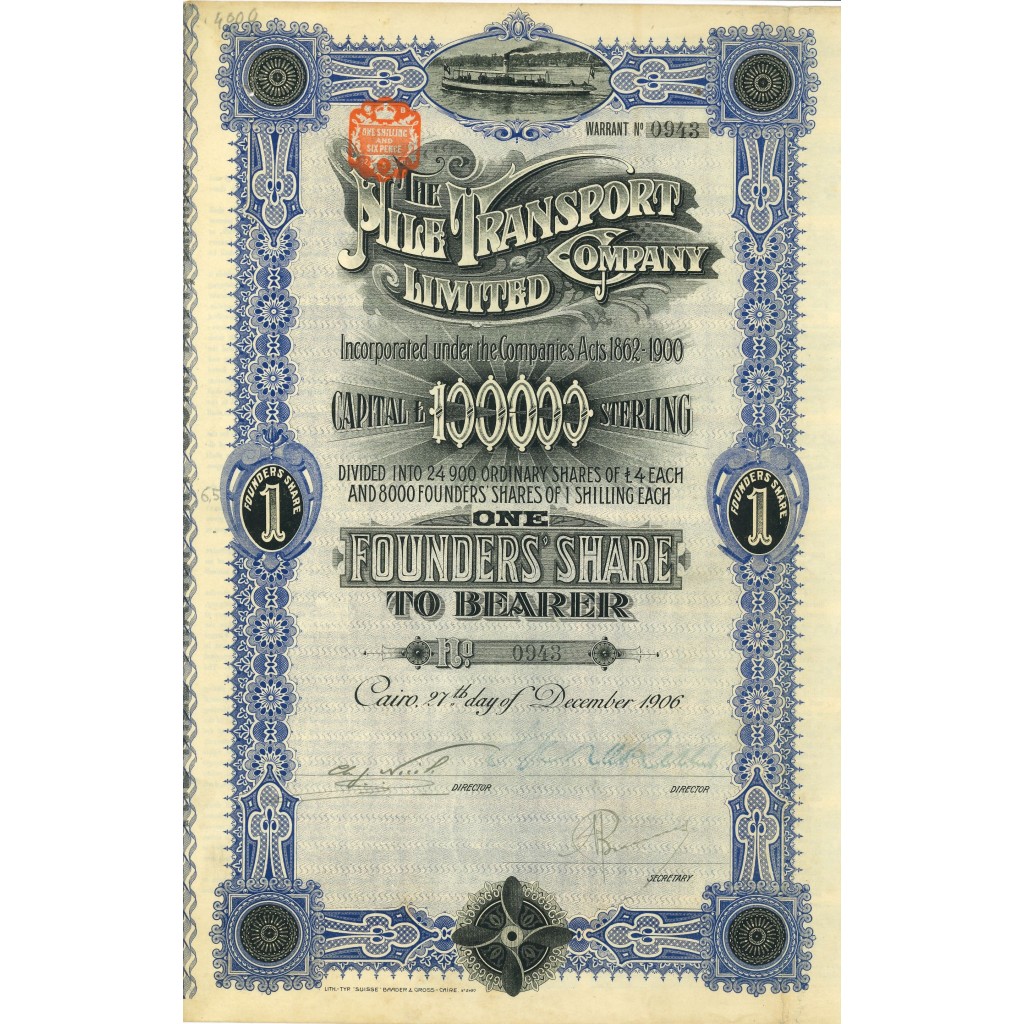
The Nile Transport Company Limited was founded in 1906 in Cairo, Egypt, with an initial capital of £100,000. The company primarily focused on river transportation along the Nile, one of Egypt's vital arteries, leveraging the river's immense commercial and strategic importance. The company was established during a period of intense economic and colonial expansion in Egypt when the country was under British control. This historical context saw significant development of transport infrastructure to facilitate trade and the movement of people along the Nile, which was a crucial means of connecting inland cities with Mediterranean ports.
The company was publicly listed and divided its capital into 24,900 ordinary shares of £4 each and 8,000 founders' shares of one shilling each. During its operational period, The Nile Transport Company played a key role in the Egyptian economy, ensuring the transportation of goods and people along one of the world's most important rivers. However, over time, as new transportation technologies emerged, the importance of river transport declined, eventually leading to the cessation of the company's activities.
Historical Context
In 1906, Egypt was under British control and was undergoing a period of modernization and economic development. The Suez Canal, completed in 1869, had already transformed Egypt into a crucial hub for global trade, and river transport along the Nile represented a vital complement to this infrastructure. British colonial initiatives heavily influenced the development of the country's infrastructure, including its transport system. This period saw the issuance of numerous bonds and securities to finance infrastructure projects, reflecting the strategic and commercial importance of the Nile.
Artistic and Typographic Details
The certificate features a splendid blue decorative frame with intricate details and floral motifs typical of the time, with a vignette at the top depicting a transportation scene on the Nile. The document was printed by "LIN-TYP 'Suisse' Bader & Gross-Cairo" using advanced typographic techniques for the time, which add artistic value to the certificate.
Provenance of the Certificate
This certificate was issued on December 27, 1906, and originally belonged to a founder or key investor of the company. Over the years, the certificate has changed hands among passionate scripophilia collectors. Its exceptional preservation attests to the importance attributed to this historical piece.
Company Historical Data
| Year of Incorporation | Initial Capital | Year of Stock Exchange Listing | Year of Delisting | Year of Company Dissolution | Estimated Annual Revenue |
|---|---|---|---|---|---|
| 1906 | £100,000 | 1907 | 1920 | 1921 | £20,000 |
Certificate Data
| Capital | Number of Ordinary Shares | Number of Founders' Shares | Dividend Yield |
|---|---|---|---|
| £100,000 | 24,900 | 8,000 | 6% |
| Date of Issue | Place of Issue | Printer | Serial Number |
| December 27, 1906 | Cairo, Egypt | LIN-TYP 'Suisse' Bader & Gross-Cairo | 0943 |
Valuation and Rarity
This certificate is considered highly valuable for scripophilia collectors, particularly for its artistic design and its history linked to a strategically important river transport company. Compared to other securities issued in the same period, this document is relatively rare, especially due to the limited number of founders' shares issued.
Collector's Tips
Collecting historical certificates like this one is a fascinating way to connect with the economic and social history of the past. In addition to the historical value, these documents can be displayed as art pieces in your home or office, or they can be given as a meaningful gift to someone who appreciates history or design.
For preservation, it is advisable to frame the certificate using acid-free materials and keep it away from direct sunlight to preserve the colors and paper.
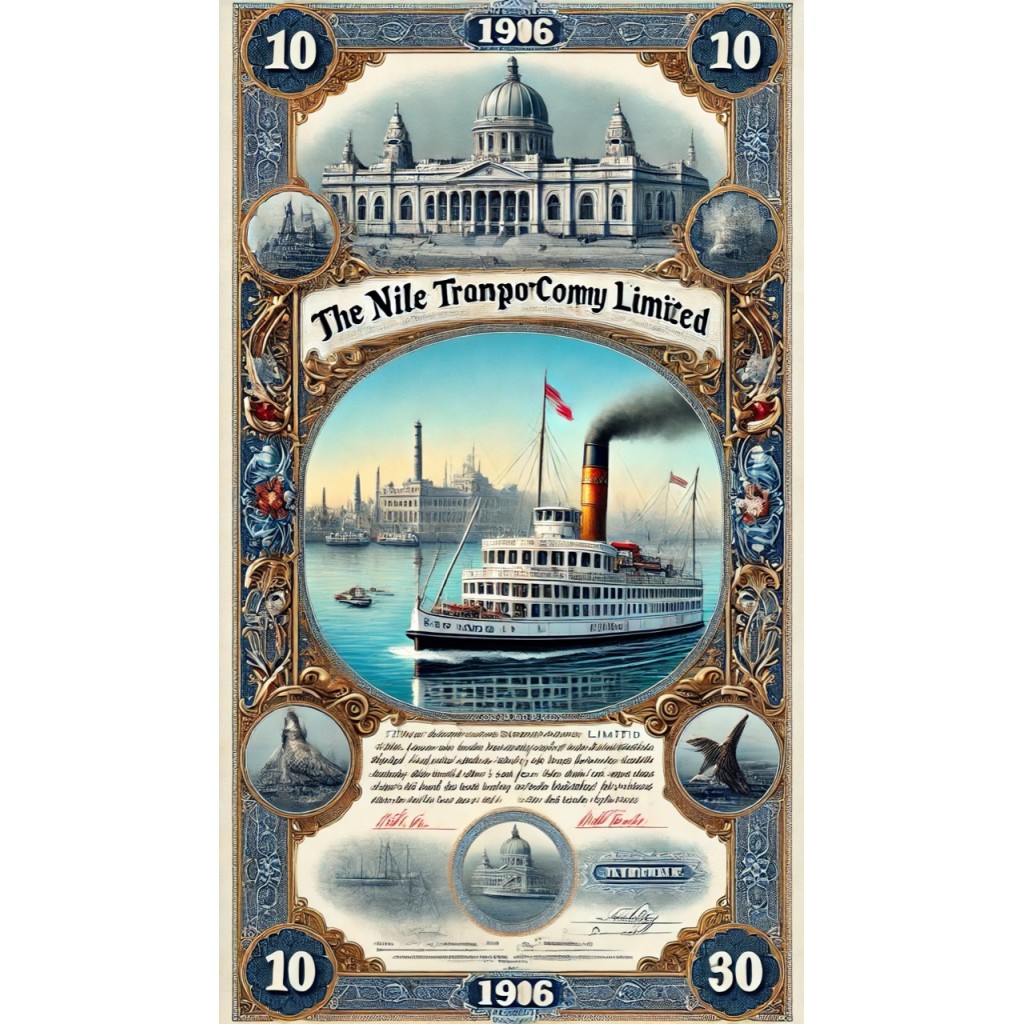
All historical documents for sale are for collection purposes only. The documents have no economic or financial value (no economic or financial value); the images that are not the historical document are representative of the company's object and the historical period of reference. They are not provided but can be freely downloaded from the website and printed.