Shopping Cart
There are no more items in your cart

Historical Profile of the Company
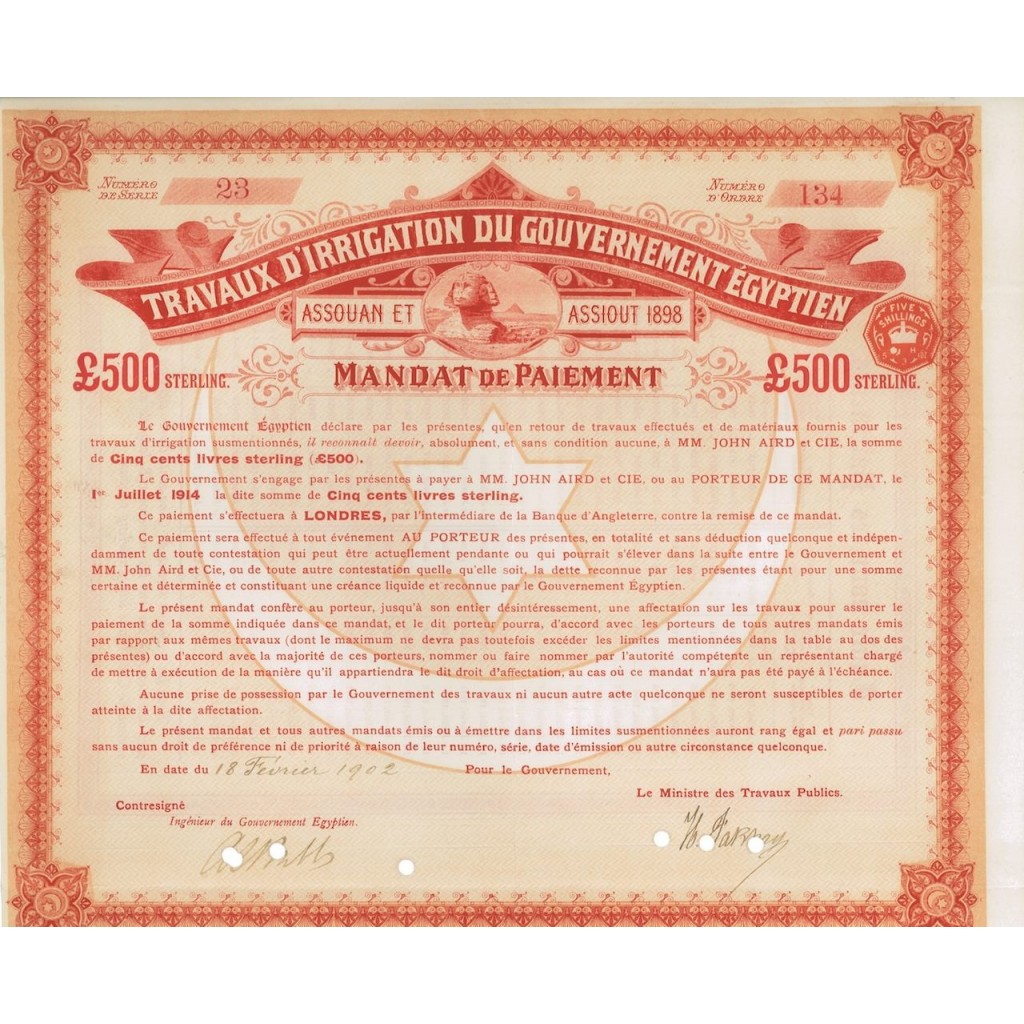
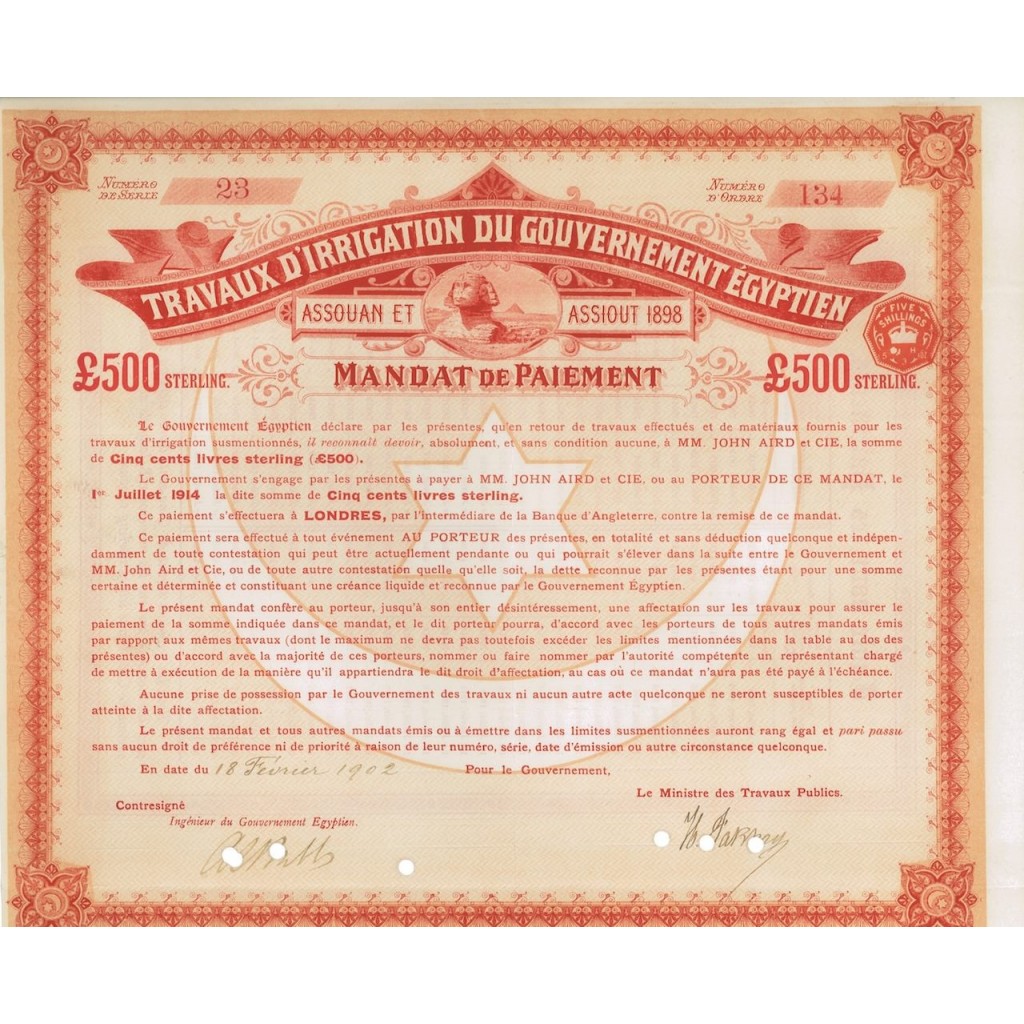
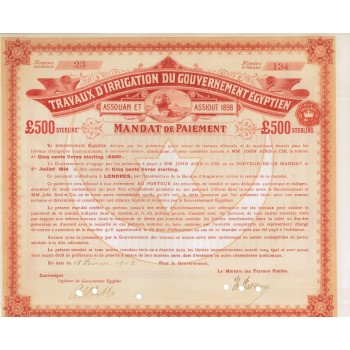
The document in question represents a payment mandate issued by the Egyptian Government for irrigation works in Assuan and Assiut in 1898. This mandate, worth 500 pounds sterling, represents a contractual obligation of the Egyptian government towards the company John Aird & Cie., a significant British construction firm involved in numerous infrastructure projects in Egypt, including the construction of the Aswan Dam.
During a period characterized by major agricultural and infrastructural development projects, the Egyptian government needed to improve irrigation systems to support the country's agricultural expansion. Irrigation works were essential for controlling the waters of the Nile, preventing floods, and ensuring optimal water distribution for agriculture, especially in crucial regions like Assuan and Assiut.
Historical Data of the Company
| Year | Description | Value |
|---|---|---|
| 1898 | Year of project commencement | 1898 |
| 1902 | Date of document | February 18, 1902 |
| - | Registered office | Cairo, Egypt |
| - | Initial share capital | Data not available |
| - | Share capital at dissolution | Data not available |
| - | Revenue per year | Data not available |
| - | Year of stock exchange listing | Not applicable |
| - | Year of delisting from stock exchange | Not applicable |
| - | Year of company dissolution | Not applicable |
Document Features
| Feature | Description |
|---|---|
| Document type | Payment mandate |
| Nominal value | 500 pounds sterling |
| Serial number | 134 |
| Issue date | February 18, 1902 |
| Place of issuance | Cairo |
| Decorations | Red ornamental border, text in French |
| Printer | Not specified on the document |
Historical Context
This mandate was issued at a time when Egypt was under British rule, with significant influence over its infrastructure and economic policies. The management of Nile waters and the development of an efficient irrigation system were crucial for supporting the country's agrarian economy, which heavily relied on irrigated agriculture. The collaboration between the Egyptian government and British firms like John Aird & Cie. reflected the British dominance but also the commitment to modernizing the country's infrastructure.
Artistic and Typographic Details
The document features a red ornamental border that frames the text, predominantly in French, the diplomatic language of the time. The design includes the image of a sphinx, a symbol of Egypt's ancient heritage, underscoring the historical and cultural significance of the document. The high-quality print reflects the formality and importance of the mandate.
Provenance
The certificate was issued in favor of John Aird & Cie., a British firm that played a crucial role in developing Egypt's infrastructure during the colonial period. The provenance of this document can be traced through the stamps and signatures present, providing a rich and historically significant context for collectors.
Valuation and Rarity
This payment mandate is a relatively rare document, especially considering its connection to major infrastructure projects like the Aswan Dam. The rarity and condition of the document can significantly affect its collectible value. Compared to other similar documents from the period, this represents a significant piece of Egypt's economic and infrastructural history under British rule.
Importance of Scripophily Collecting
Collecting certificates like this payment mandate offers not only aesthetic value but also an immersion into a country's economic and political history. Owning a document like this means possessing a tangible piece of history, linked to projects that have had a lasting impact on the development of modern Egypt.
For collectors, displaying a historical certificate in an elegant frame or preserving it in a specialized album can enhance its appeal and preserve its quality. Additionally, these documents are ideal not only for personal collection but also as unique gifts, historical decorations, or works of art that combine history and beauty.
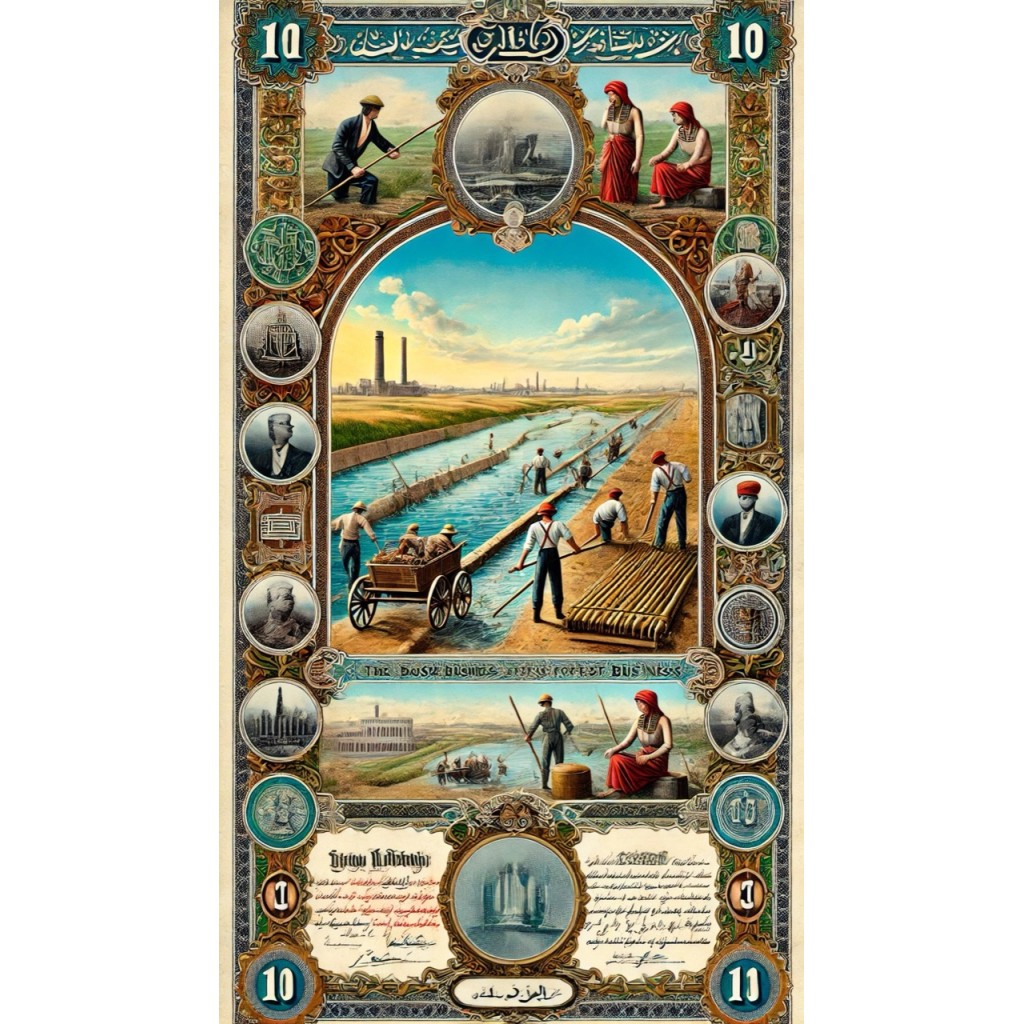
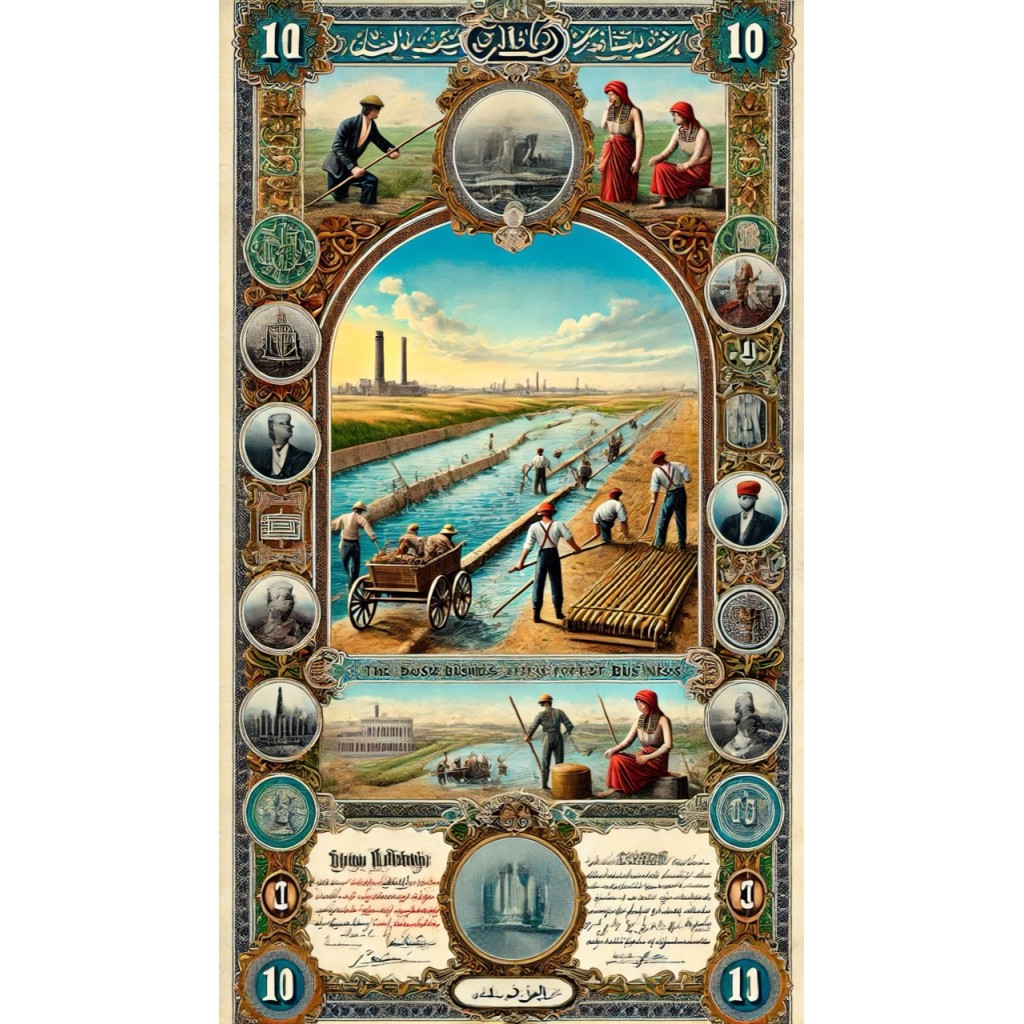
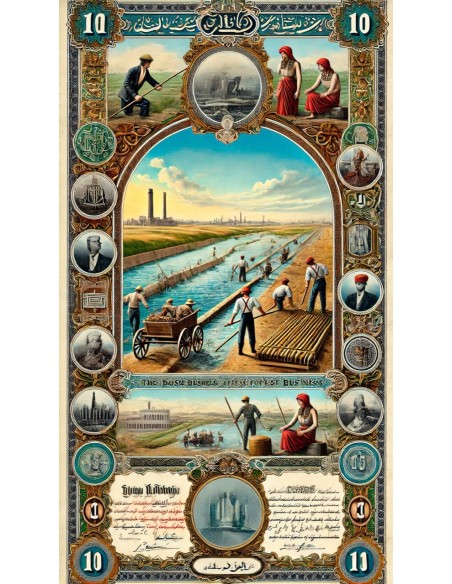
All historical documents for sale are intended for collection. The documents have no economic or financial value (no economic or financial value), and images that are not the historical document are representative of the company's object and the historical period referenced. These can be freely downloaded from the website and printed.