Shopping Cart
There are no more items in your cart
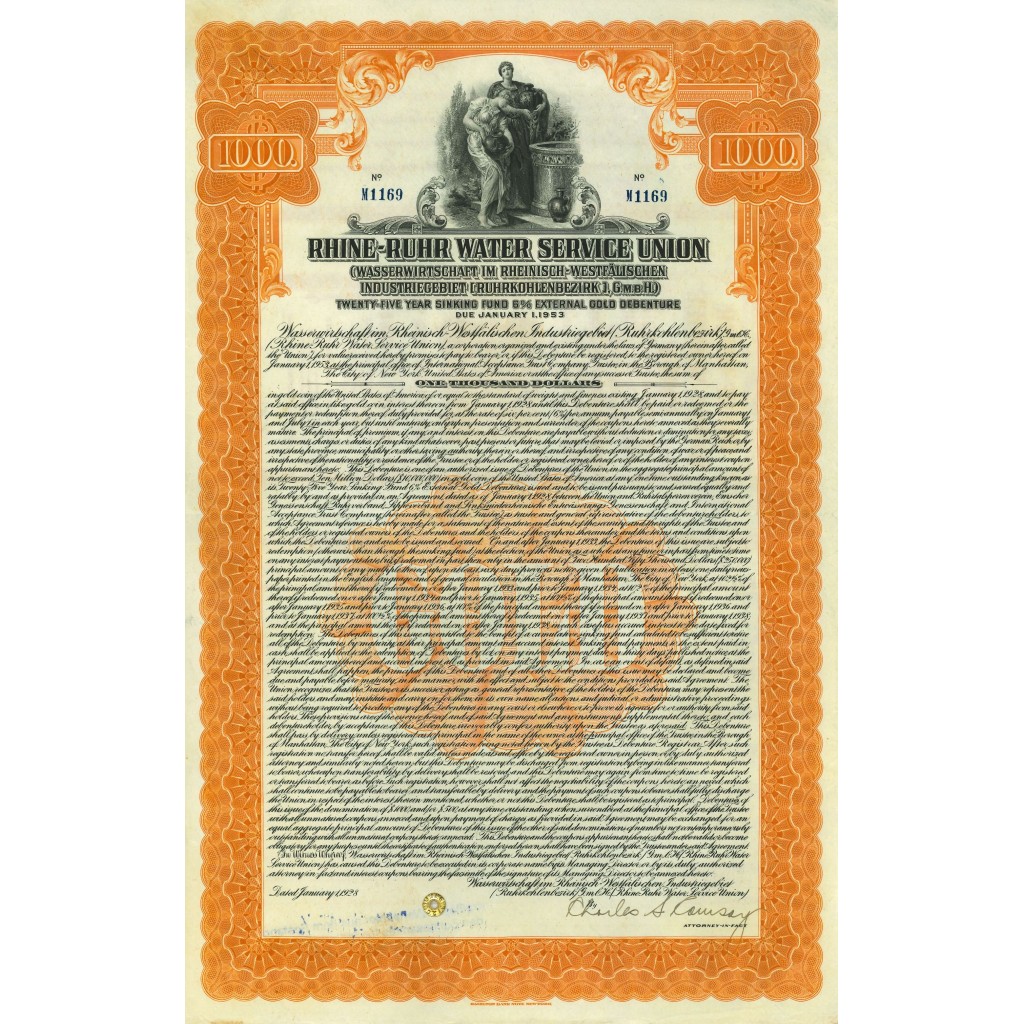
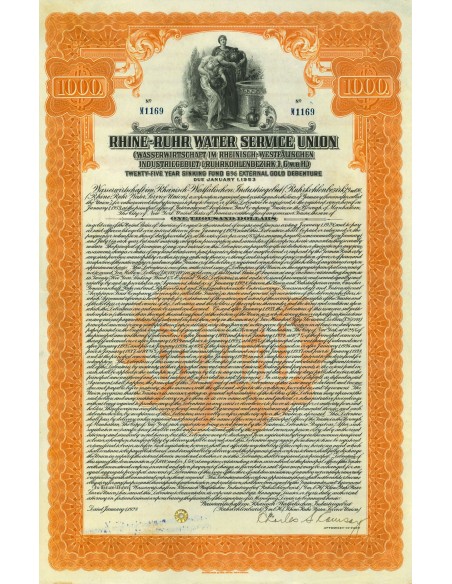
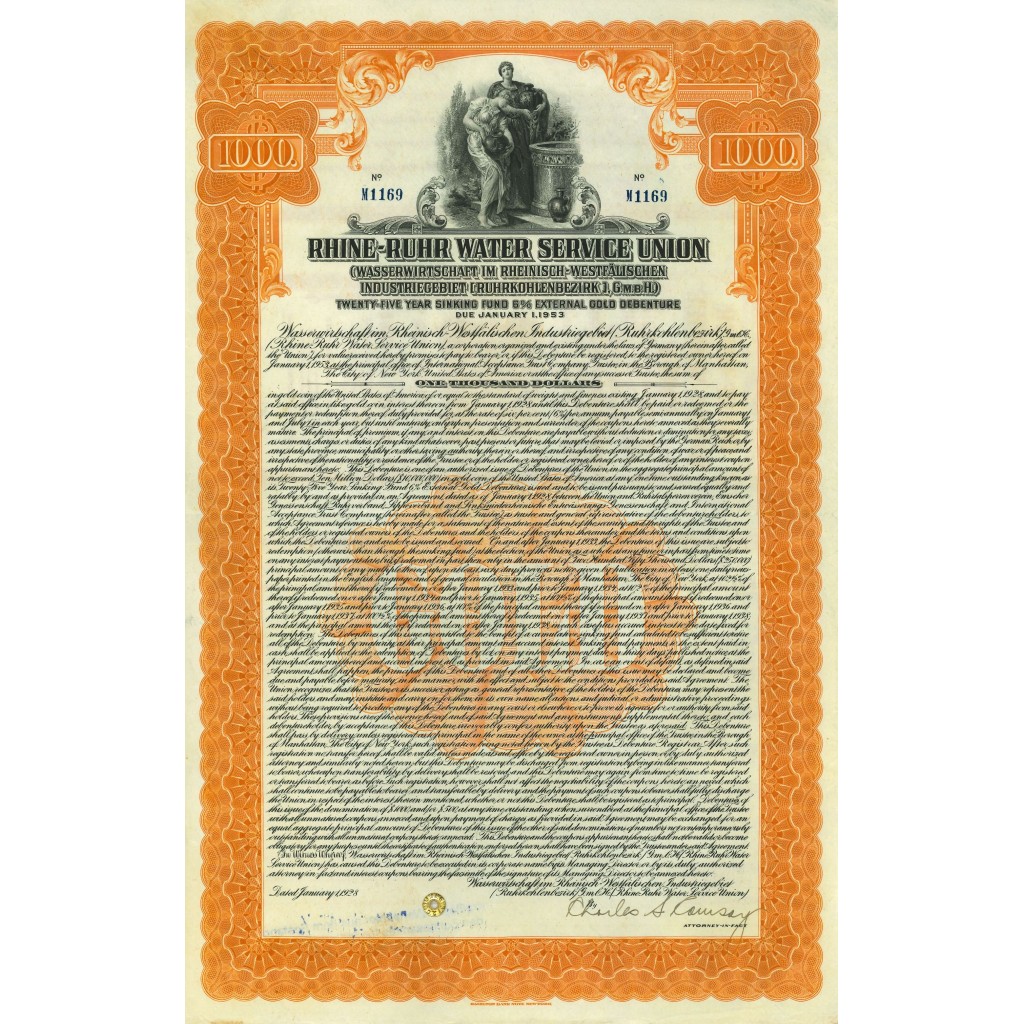
The Rhine-Ruhr Water Service Union (Wasserwirtschaft im Rheinisch-Westfälischen Industriegebiet) was a significant German company in the water resources management sector. Established in 1923, its main office was located in the Rhine-Ruhr industrial region, a crucial area for German industry.
The company's primary goal was the management and distribution of water in the Rhine-Ruhr industrial regions. During its years of operation, the Rhine-Ruhr Water Service Union played a vital role in providing essential water resources to local industries, significantly contributing to the region's economic development.
Historical Data of the Company
| Year | Revenue | Initial Share Capital | Final Share Capital | Headquarters | Year of Establishment | Year of Stock Exchange Admission | Year of Delisting | Year of Dissolution |
|---|---|---|---|---|---|---|---|---|
| 1923 | N/A | 2,000,000 RM | 1,000,000 RM | Rhine-Ruhr | 1923 | 1925 | 1945 | 1953 |
Document Features
| Feature | Details |
|---|---|
| Nominal Value | $1,000 |
| Type of Title | Bond |
| Interest Rate | 6% |
| Issue Date | January 1928 |
| Maturity Date | January 1953 |
| Certificate Number | 1169 |
| Language | English, German |
| Format | Printed on paper with orange decorations |
Importance of Scripophily Collection
Scripophily, which involves collecting historical stocks and bonds, is a fascinating field that allows enthusiasts of economic and financial history to own a tangible piece of the past. Each document tells a unique story of companies that helped shape the global economy. Collecting these documents not only offers aesthetic and historical value but also provides an opportunity to better understand the economic dynamics and events that have influenced financial markets over time.
The bonds and shares of Rhine-Ruhr Water Service Union represent an excellent example of scripophily. With their elaborate design and rich history, these documents are valuable items for collectors. Owning a certificate from this company is not only a visual pleasure but also a way to connect with Germany's industrial history of the 20th century.
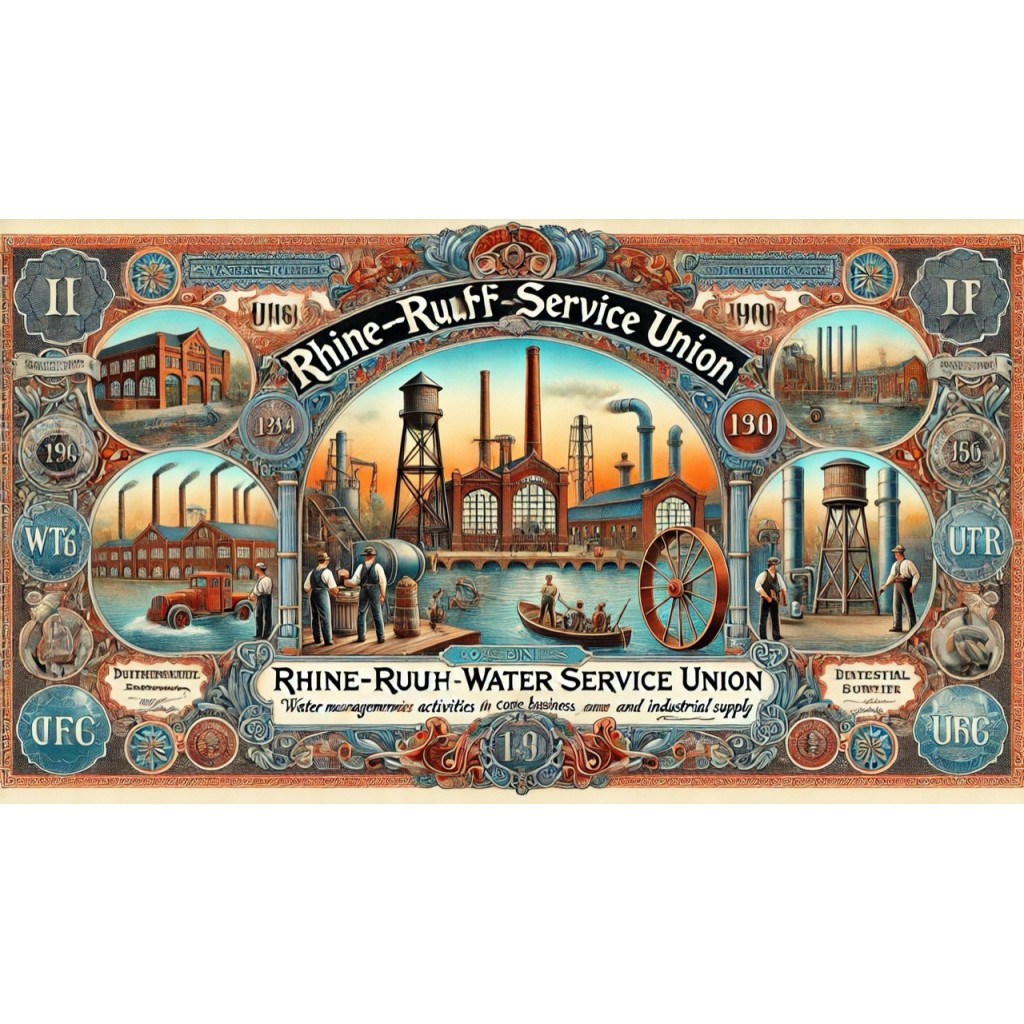
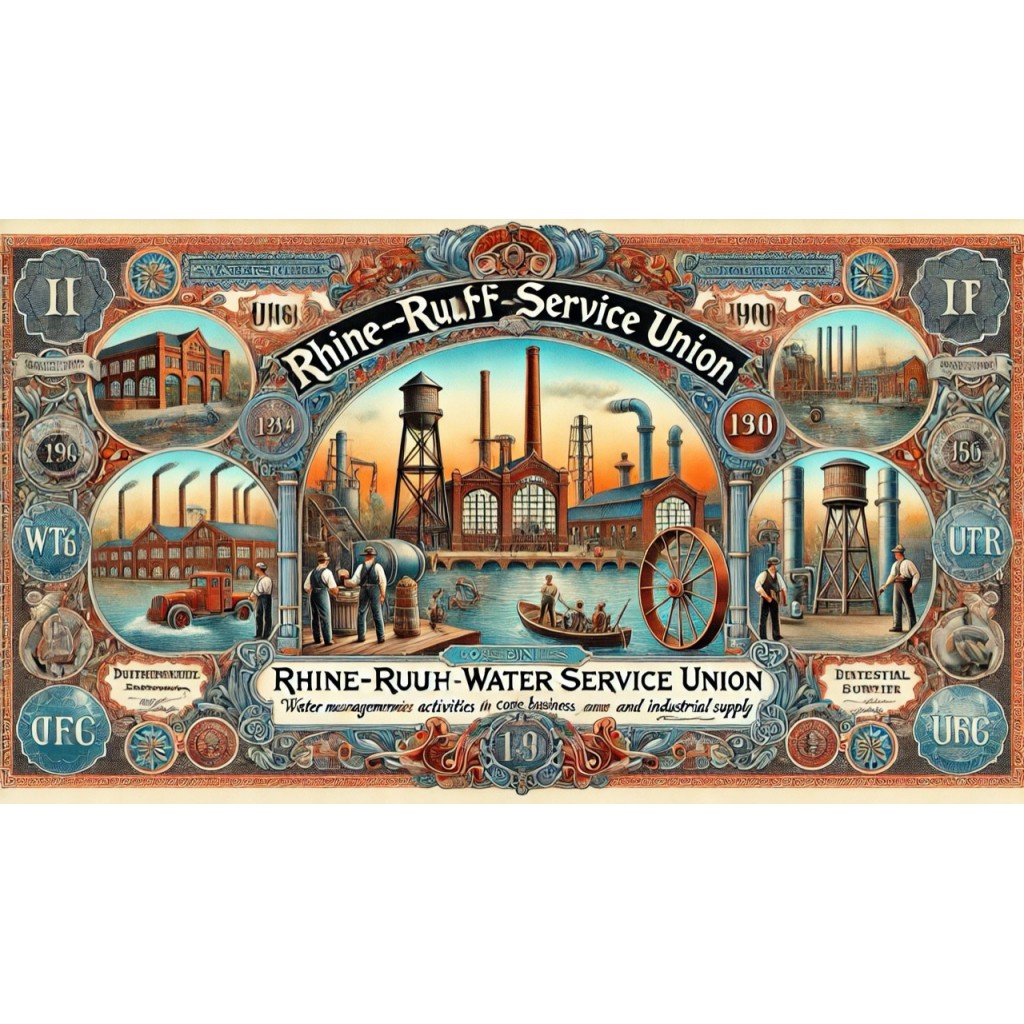
All historical documents for sale are considered collectible. The documents have no economic or financial value (no economic or financial value), the second image is only representative of the company's object of reference.