Shopping Cart
There are no more items in your cart
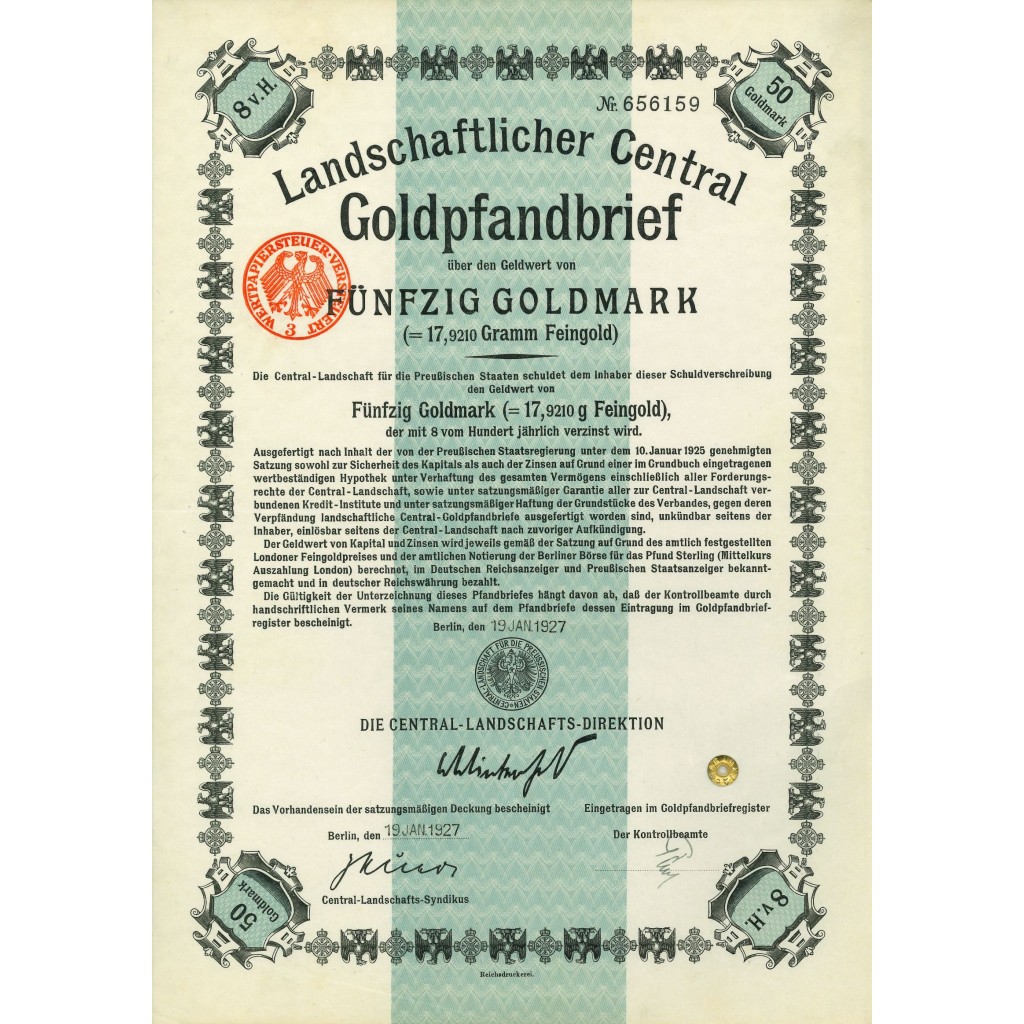
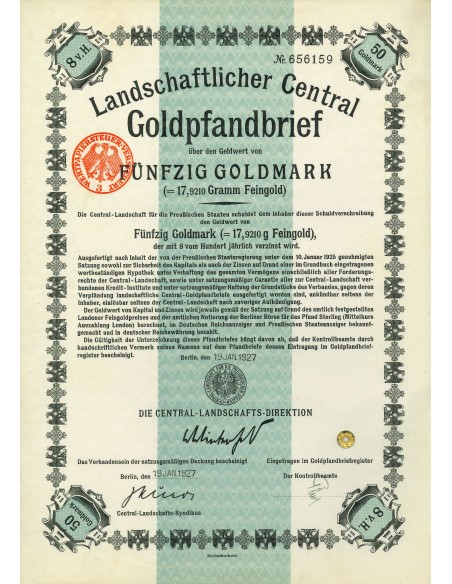
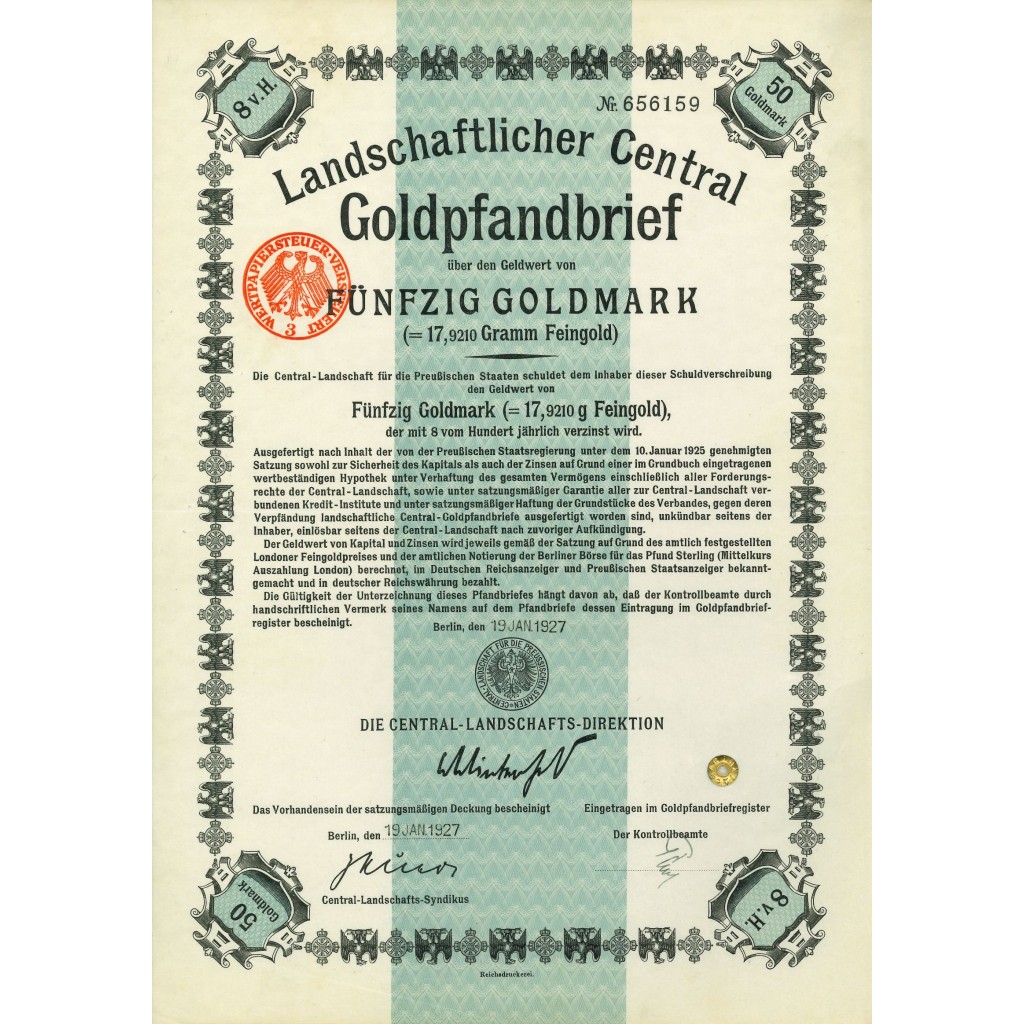
The Central-Landschaft for the Prussian States was a significant financial institution in early 20th century Germany. Issued on January 19, 1927, the Goldpfandbrief was a form of bond backed by physical gold, reflecting the stability and confidence the company aimed to convey to its investors.
Historical Data of the Company
| Year | Revenue | Capital | Headquarters | Name at Delisting | Year of Incorporation | Year of Stock Market Listing | Year of Delisting | Year of Dissolution |
|---|---|---|---|---|---|---|---|---|
| 1927 | - | - | Berlin, Germany | - | 1927 | - | - | - |
Document Characteristics
| Feature | Detail |
|---|---|
| Document Type | Goldpfandbrief (Gold-backed bond) |
| Nominal Value | 50 Goldmark |
| Issue Date | January 19, 1927 |
| Interest Rate | 8% per annum |
| Guaranteed Capital | 17.9210 grams of fine gold |
| Validity | Confirmed by the Central-Landschaft Directorate |
| Signature | Central-Landschaft-Syndikus, Central-Landschaft Directorate |
Importance of Scripophily Collection
Scripophily represents a fascinating window into the economic and financial past. Collecting historical titles such as stocks and bonds is not just a hobby but a journey through the economic and industrial history of various nations. Each document tells a unique story of trust, investment, and economic development.
The Goldpfandbrief from the Central-Landschaft is an exceptional example of how gold-backed bonds were used to attract investors during periods of economic instability. This specific document, issued in 1927, not only reflects Germany's economic history but also offers tangible evidence of the trust placed in the financial system of the time.
Collecting such documents allows the preservation of a piece of economic history and a better understanding of past financial dynamics. For collectors, owning a piece like this is not just a cultural investment but also a tribute to the history of the global economy.
All historical documents for sale are considered collectibles. The documents have no economic or financial value (no economic or financial value), the second image is only representative of the subject of the reference company.