Shopping Cart
There are no more items in your cart
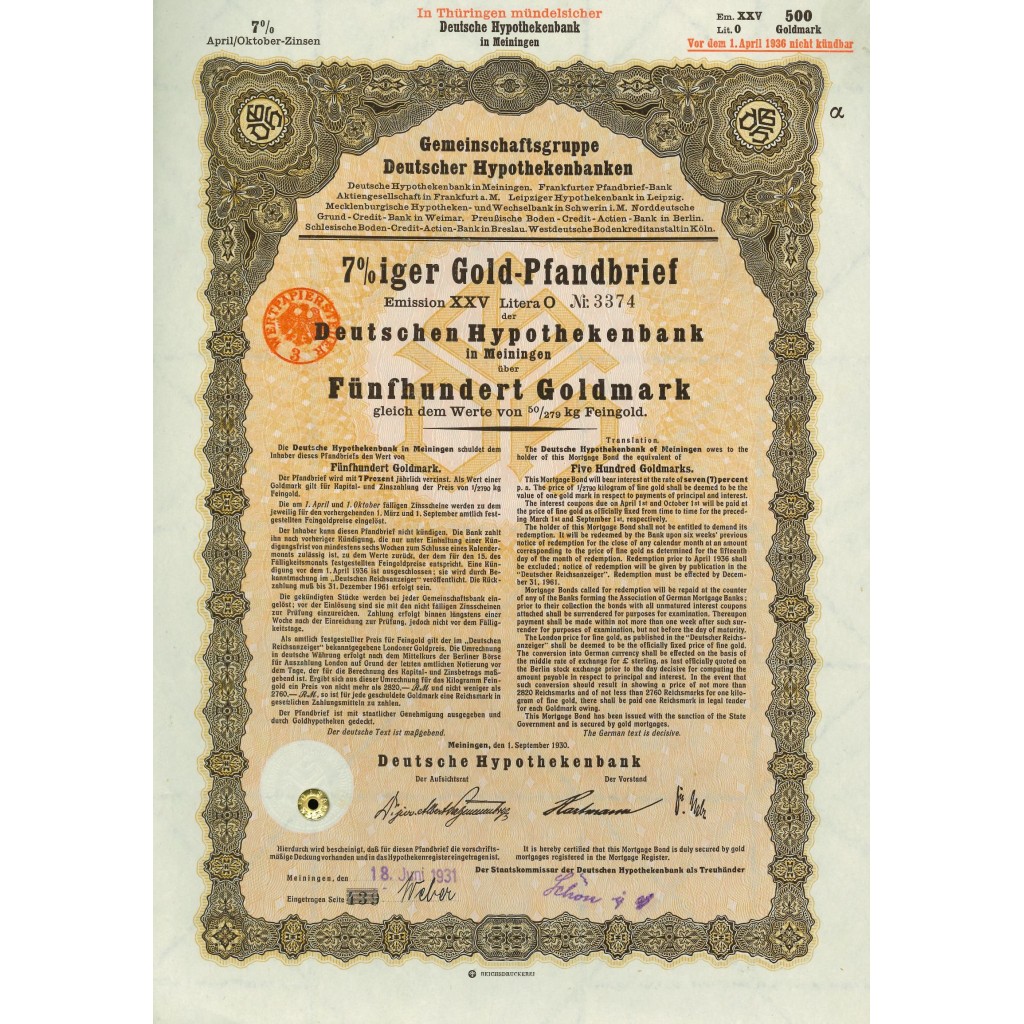
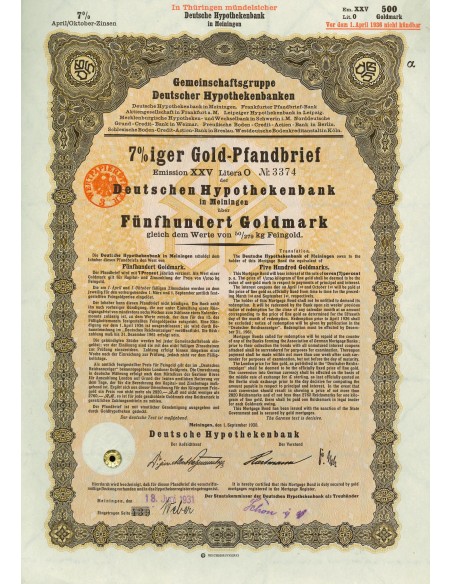
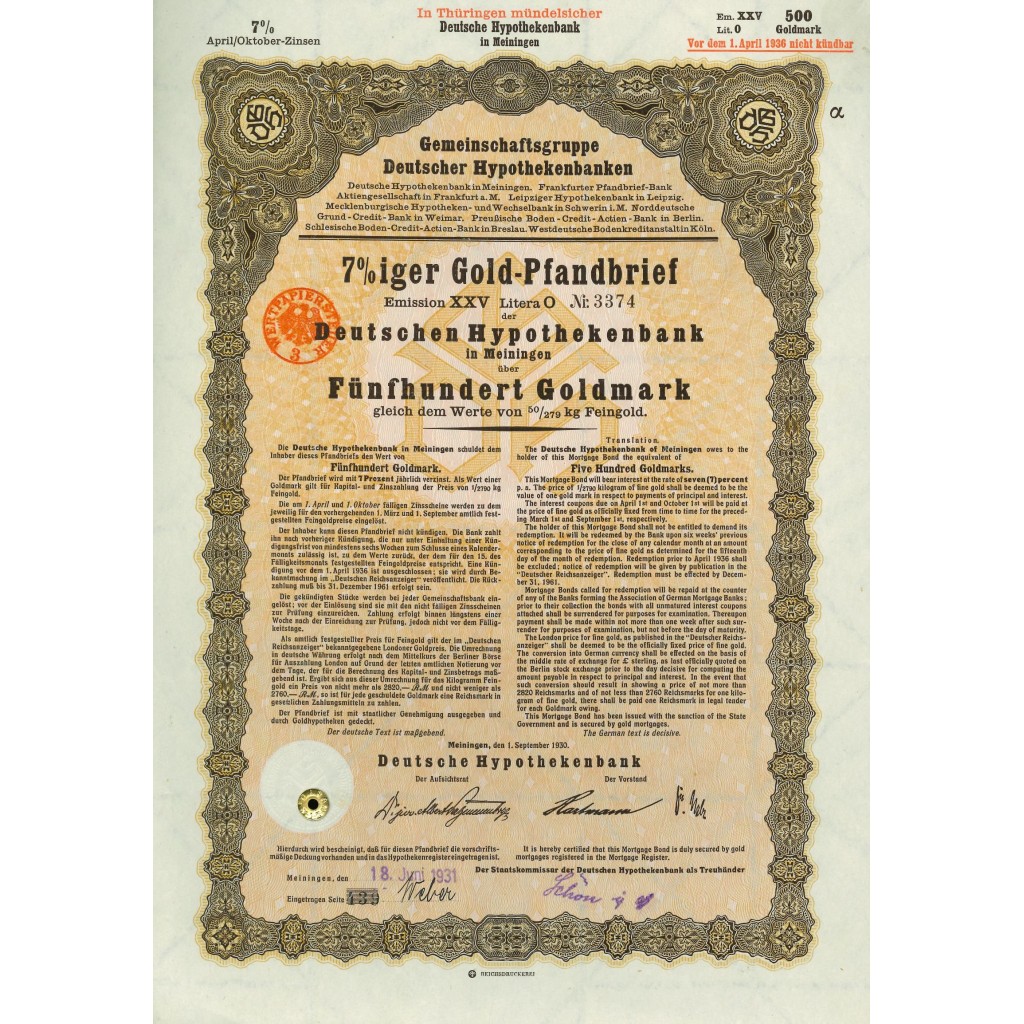
Deutsche Hypothekenbank in Meiningen was one of the most significant financial institutions in German history, specializing in mortgage lending. Founded in 1871, this bank played a crucial role in the economic development of the region, financing the construction of residential and commercial buildings.
The bank was part of a consortium of German financial institutions, collaborating with other banks to ensure the stability and security of financing. The document in question is a Gold-Pfandbrief issued by the bank, a type of bond secured by mortgages on real estate, representing a safe and long-term investment.
Historical Data of the Company
| Item | Details |
|---|---|
| Year of establishment | 1871 |
| Headquarters | Meiningen, Germany |
| Year of stock listing | 1881 |
| Year of delisting | 1945 |
| Year of cessation | 1945 |
| Share capital at establishment | 10,000,000 Marks |
| Share capital at cessation | 50,000,000 Marks |
| Revenue per year | Not available |
Document Characteristics
| Characteristic | Details |
|---|---|
| Issue | XXV |
| Date | September 1, 1930 |
| Interest rate | 7% |
| Amount | 500 Goldmark |
| Gold value | 50/279 kg Feingold |
| Interest payment period | April and October |
| Not callable before | April 1, 1936 |
| Headquarters | Meiningen, Germany |
Text for Scripophilia Collectors
Scripophilia, or the collection of historic stocks and bonds, offers enthusiasts the opportunity to own a tangible piece of economic and financial history. Each document represents not only an investment from the past but also a work of art with detailed designs and elegant calligraphy. Collecting these documents means preserving the memory of institutions that contributed to economic development.
The presented document, issued by Deutsche Hypothekenbank in Meiningen, is a significant example of such historical securities. With its detailed design and engraved historical information, this bond is a valuable addition to any collection. Its authenticity and condition increase its historical and collectible value.
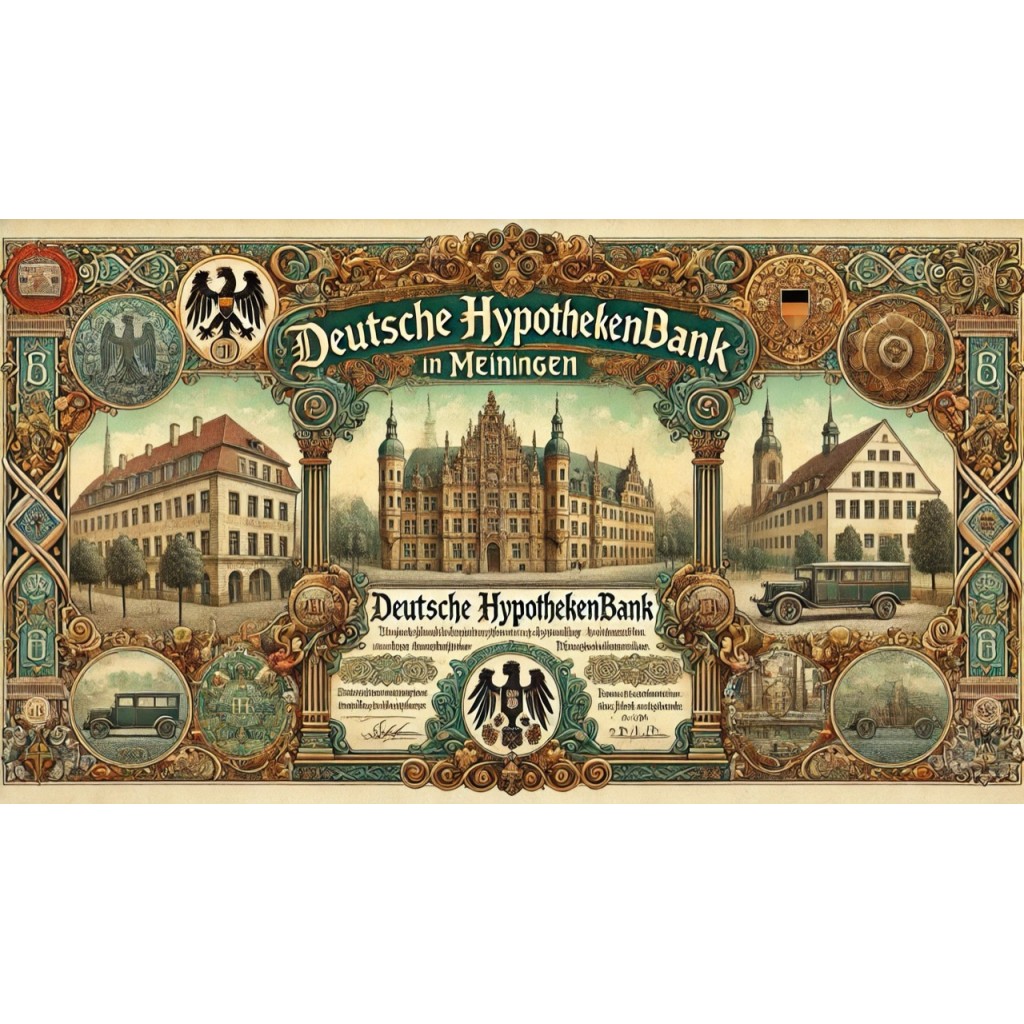
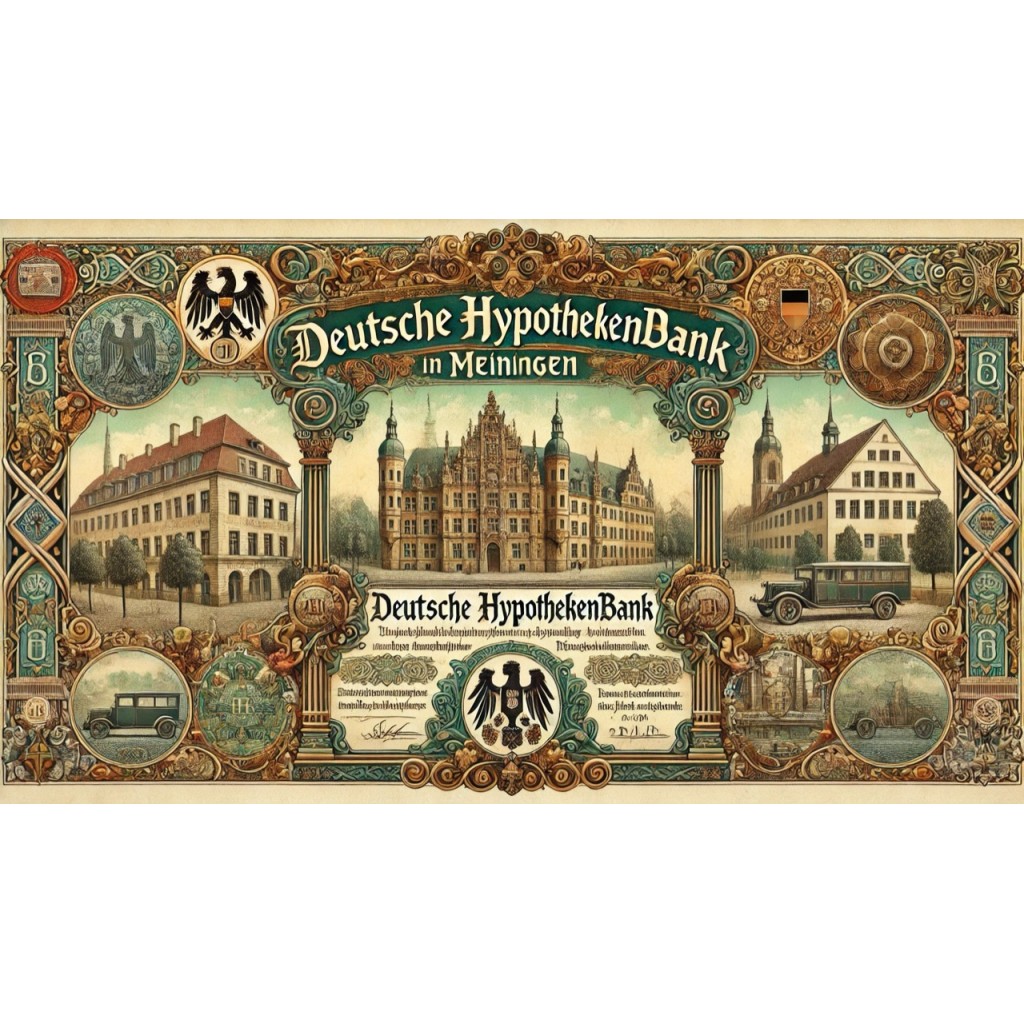
All historical documents for sale are intended for collection purposes. The documents have no economic or financial value (no economic or financial value), the second image is only representative of the object of the referenced company.