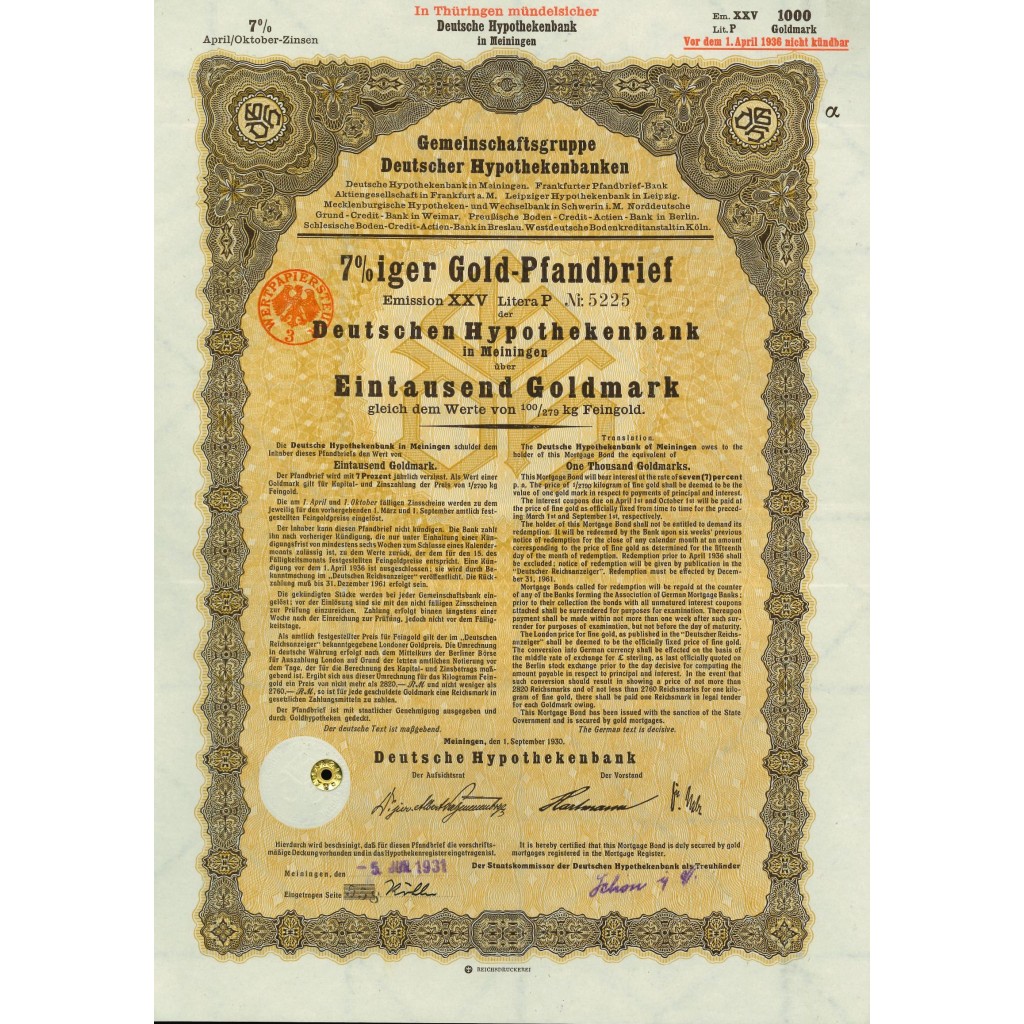
Shopping Cart
There are no more items in your cart
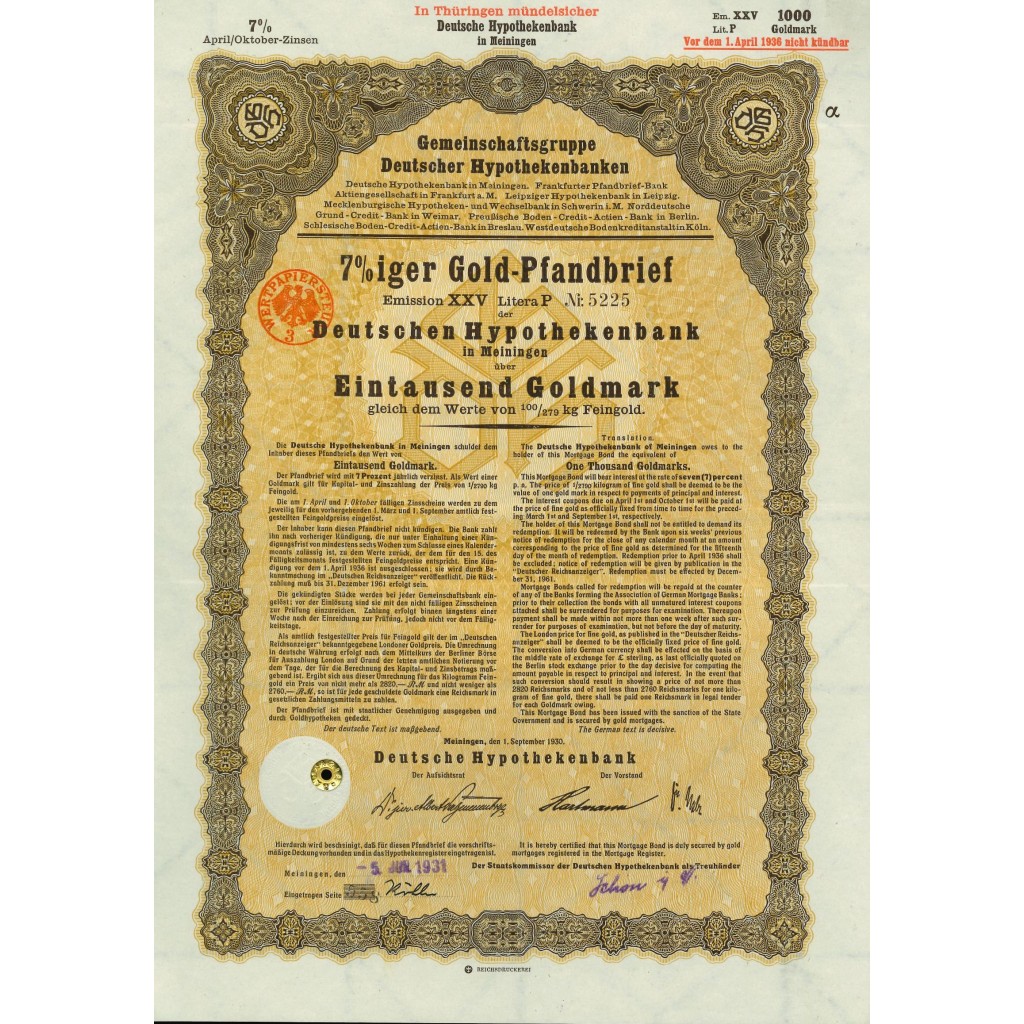
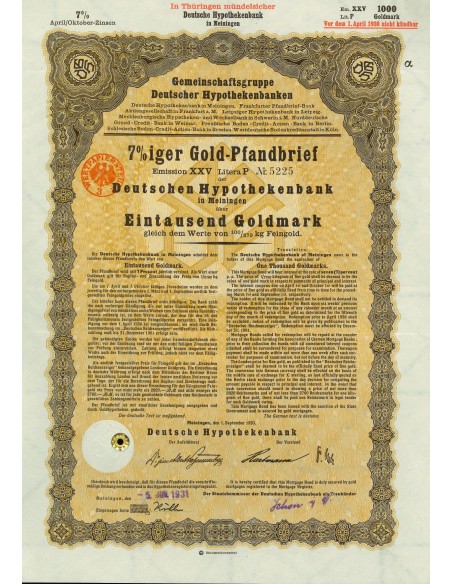
Deutsche Hypothekenbank in Meiningen was a prominent financial institution in early 20th-century Germany. Founded to support real estate and infrastructure development, this bank played a crucial role in financing construction during a period of significant urban and industrial expansion. Its history is a testament to its ability to navigate periods of prosperity and crisis, adapting to the changing needs of the financial market.
Historical Profile of the Company
| Entry | Detail |
|---|---|
| Year of Establishment | Not specified |
| Registered Office | Meiningen, Germany |
| Year of Stock Exchange Listing | Not specified |
| Year of Delisting from Stock Exchange | Not specified |
| Year of Cessation of the Company | Not specified |
| Share Capital at Establishment | Not specified |
| Share Capital at Cessation or Latest Available Data | Not specified |
| Annual Revenue | Not available |
Document Features
| Feature | Detail |
|---|---|
| Issue | Issue XXV |
| Interest Rate | 7% |
| Value | 1000 Goldmark |
| Date of Issue | September 1, 1930 |
| Redemption Date | After April 1, 1936 |
| President's Signature | Included |
| Director's Signature | Included |
| Certification | Certified by the State Commissioner |
| Special Conditions | Not redeemable before April 1, 1936 |
Importance of Scripophilia Collecting
The collecting of historical documents such as stocks and bonds, known as scripophilia, represents a fascinating window into the economic and financial past. Each certificate tells a story, not only of the companies that issued them but also of the historical, political, and economic context in which they were created. Owning a piece of history like a bond from Deutsche Hypothekenbank in Meiningen means holding a document that witnessed periods of prosperity, crisis, war, and reconstruction.
These documents are not only fascinating historical artifacts but also works of art, often adorned with elaborate details and authentic signatures. Their preservation and collection allow history and economics enthusiasts to keep the memory of a bygone era alive.
For collectors, owning a bond like this means valuing a unique cultural and economic heritage while enjoying the artistic beauty and historical value of the document.
All historical documents for sale are intended for collection purposes. The documents have no economic or financial value (no economic or financial value), the second image is only representative of the object of the reference company.
Tutti i documenti storici in vendita si intendono da collezione. I documenti non hanno nessun valore economico o finanziario (no economic or financial value), la seconda immagine è solo rappresentativa dell'oggetto della società di riferimento.