Shopping Cart
There are no more items in your cart

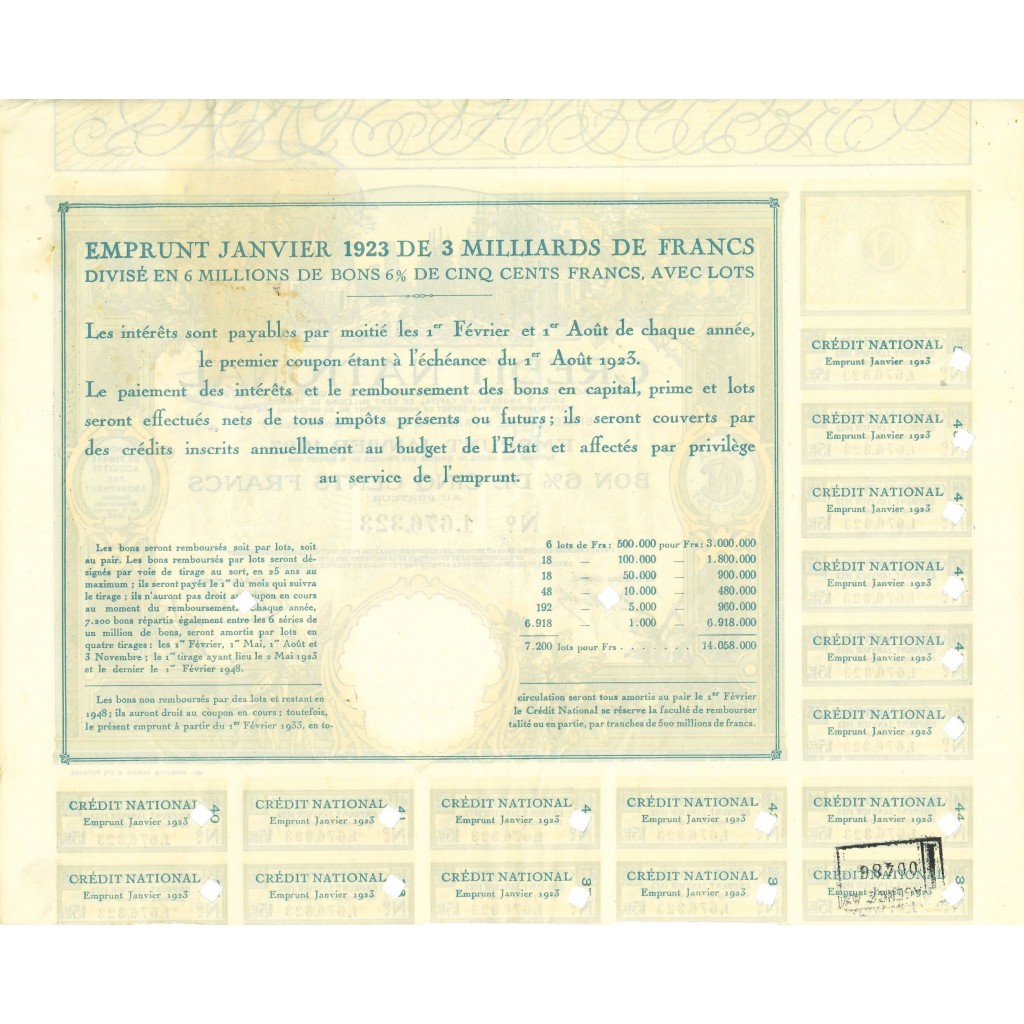
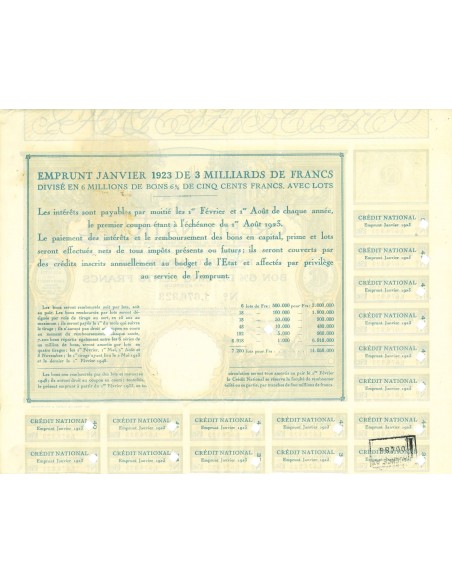
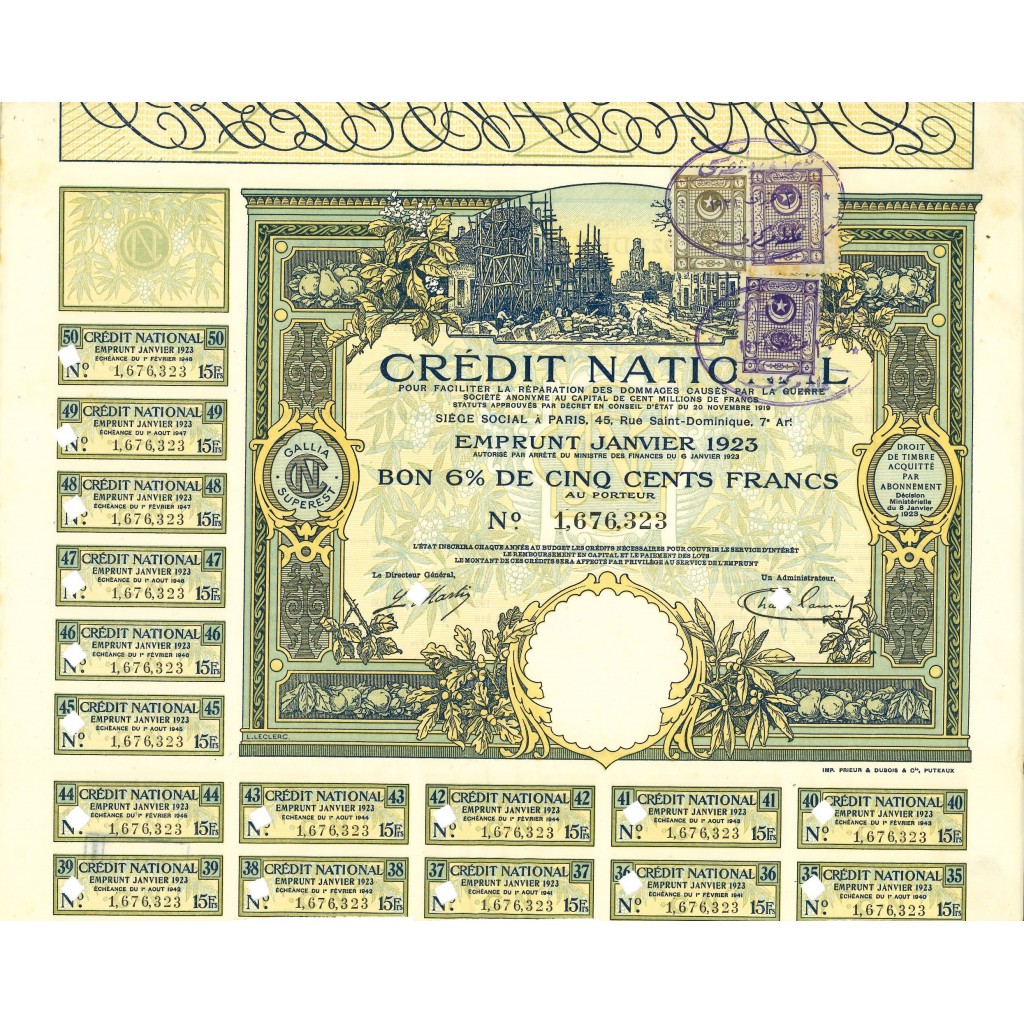
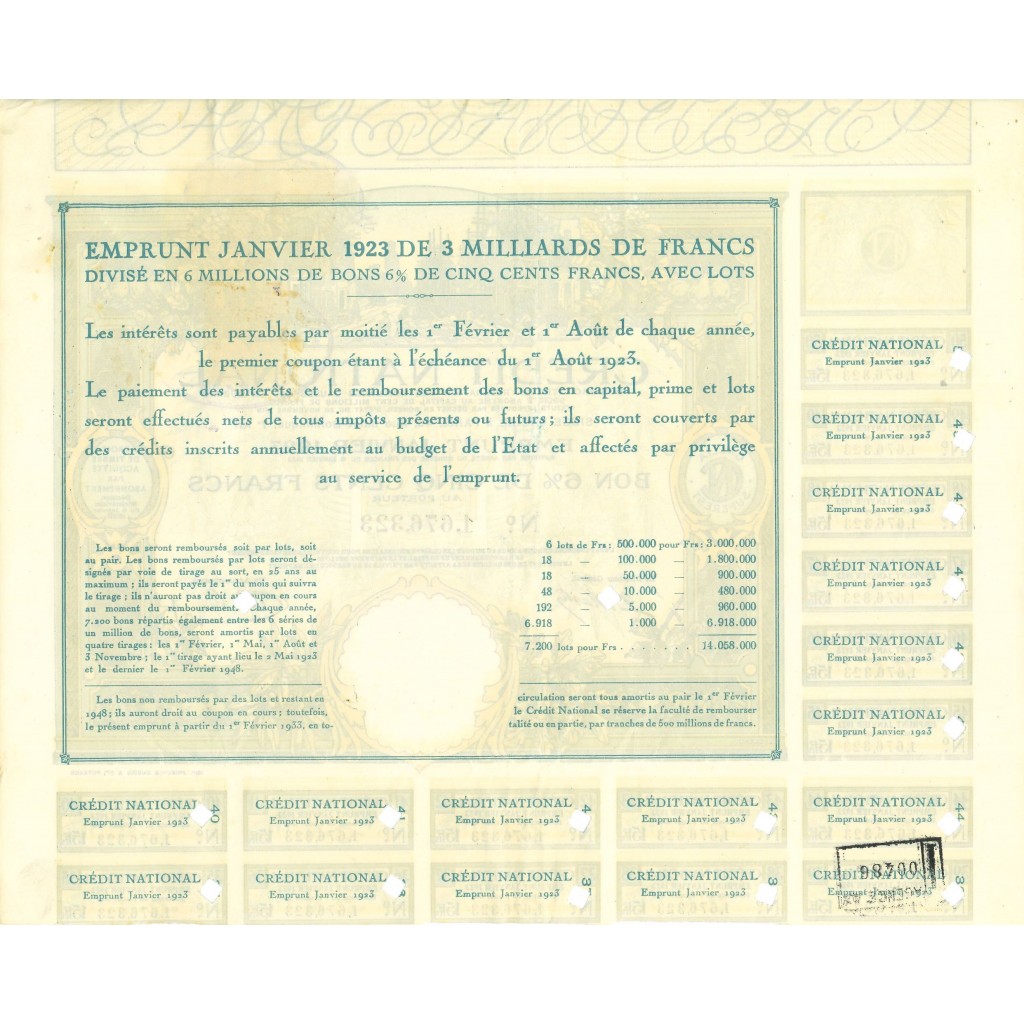
Crédit National is a former French banking establishment created under the leadership of Charles Laurent (1856-1939), an expert in international financing, by a special law on October 10, 1919, located on the border between the private sector and the sphere influence of the French state.
From creation in 1919 to the 1990s
Endowed with an initial capital of 100 million francs (60% by the banks and 40% by the industrialists), the National credit counted, at the beginning, as guarantee, on the payment of the damages of war.
It contributed to the financing of industrial SMEs, via a distribution system. It has always been governed by private law, and its employees have never had the status of civil servants, despite employment contracts and an organization very close to the public service.
On the eve of the Second World War, the amount of loans granted was estimated at 1.5 billion Francs.
In 1946, the capital was increased to 500 million.
1990s and disappearance in 1995
In 1996, following privatizations, the French Foreign Trade Bank (BFCE) was sold over-the-counter to Crédit National, under the Juppé government.
The bank resulting from this merger bears the name of Natexis, which two years later, in 1998, was bought, again by mutual agreement, by the Banques Populaires.
It is therefore the activities of Crédit national and BFCE that can be found in Natixis, created in 2006 by the merger of Natexis and Ixis, the investment bank of the Caisse des Dépôts (which was acquired in 2004 by the Caisse nationale des Caisses d'Épargne, the CNCE.)
The French Foreign Trade Bank was a joint stock company whose major shareholders were the public banks (Caisses des Dépôts) and whose director was appointed by the Ministry of Finance. It financed exports by direct intervention or surety.