Shopping Cart
There are no more items in your cart
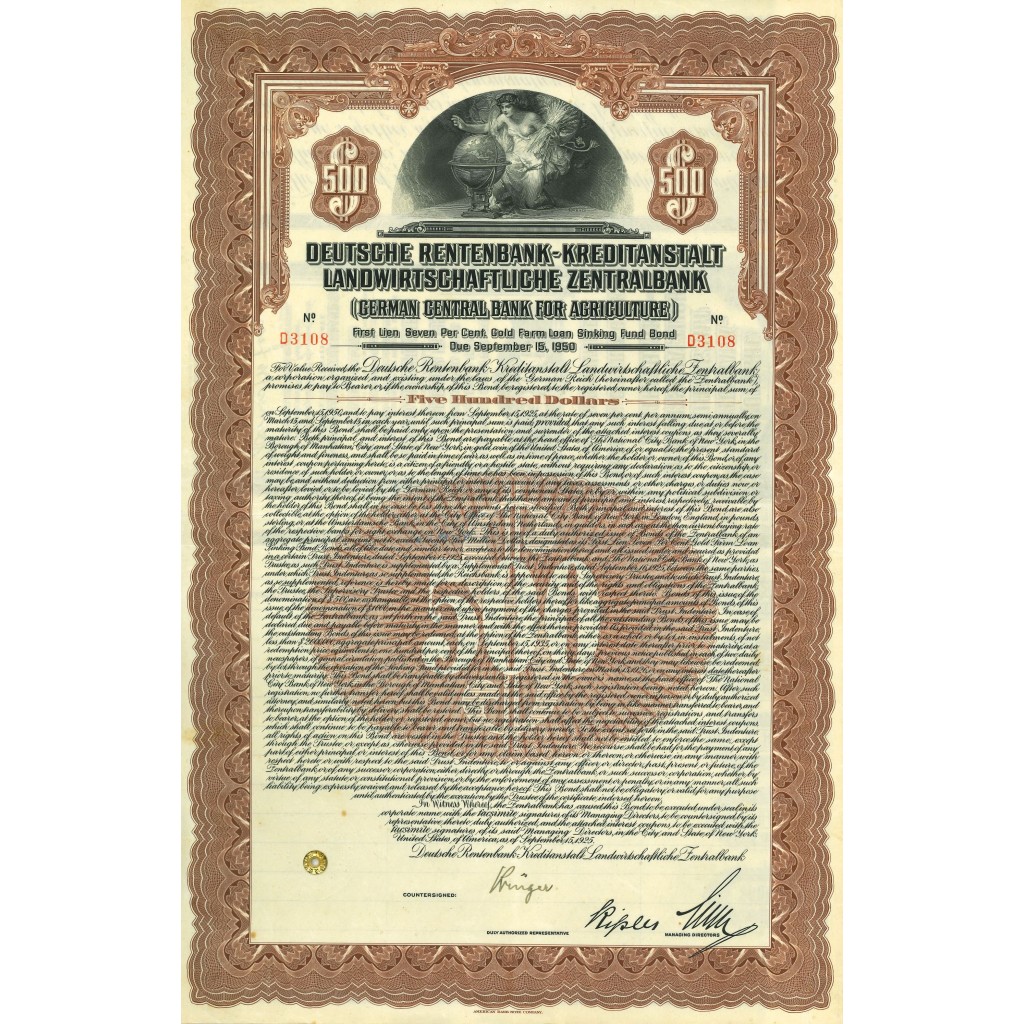
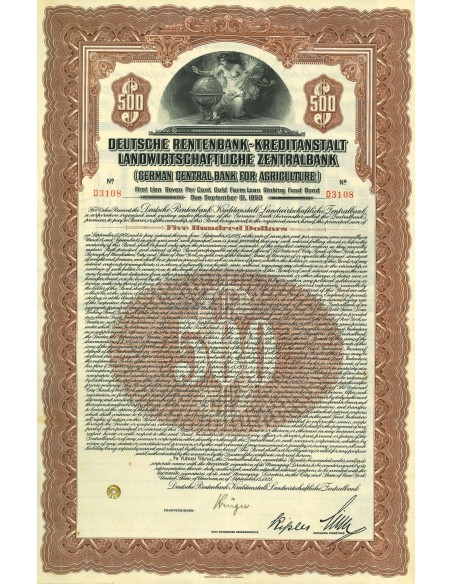
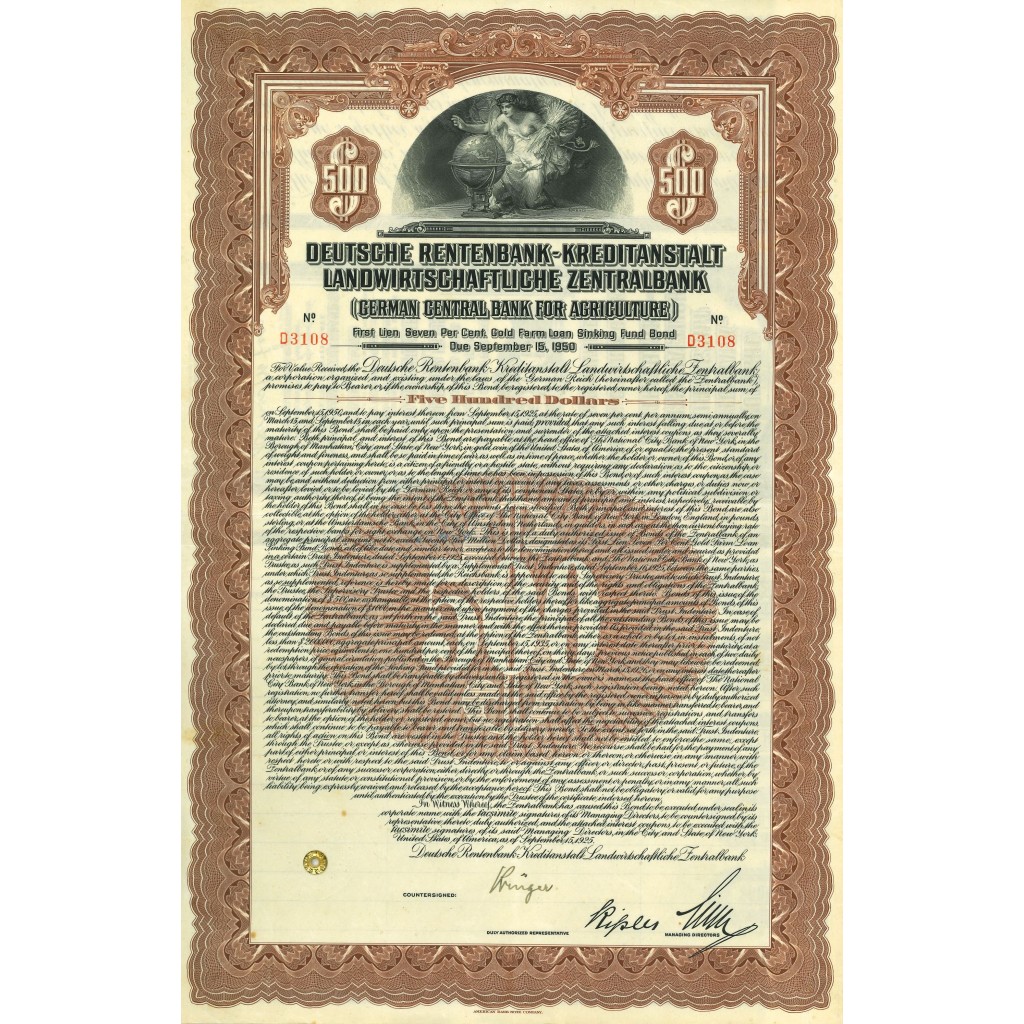
The Deutsche Rentenbank-Kreditanstalt Landwirtschafltiche Zentralbank, also known as the German Central Bank for Agriculture, played a fundamental role in supporting the German agricultural sector through targeted financing. Founded with the aim of stabilizing and promoting agriculture in Germany, this institution issued bonds that are now collectibles for their historical and artistic significance.
Historical Profile of the Company
| Historical Data | Information |
|---|---|
| Year of Incorporation | 1924 |
| Headquarters | Berlin, Germany |
| Name at Delisting | Deutsche Rentenbank-Kreditanstalt |
| Year of Stock Exchange Listing | 1924 |
| Year of Delisting | 1945 |
| Year of Dissolution | 1945 |
| Initial Capital | RM 500,000 |
| Final Capital | Data not available |
The bank was established to provide long-term loans to farmers, thereby ensuring the stability of the agricultural sector during economic crises. Through the issuance of long-term bonds, the Deutsche Rentenbank-Kreditanstalt was able to raise the necessary funds to support agricultural growth.
Document Characteristics
| Document Characteristics | Details |
|---|---|
| Type of Certificate | First Lien Bond |
| Face Value | $500 |
| Issue Date | September 15, 1930 |
| Maturity Date | September 15, 1950 |
| Interest Rate | 7% |
| Signatures | Authorized Representatives of the Bank |
| Frame | Ornate with agricultural motifs |
For Scripophily Collectors
Collecting historical stocks and bonds, known as scripophily, is not just a fascinating hobby but also a journey through economic and financial history. Each document represents a piece of history, offering a unique glimpse into past business practices and economic contexts.
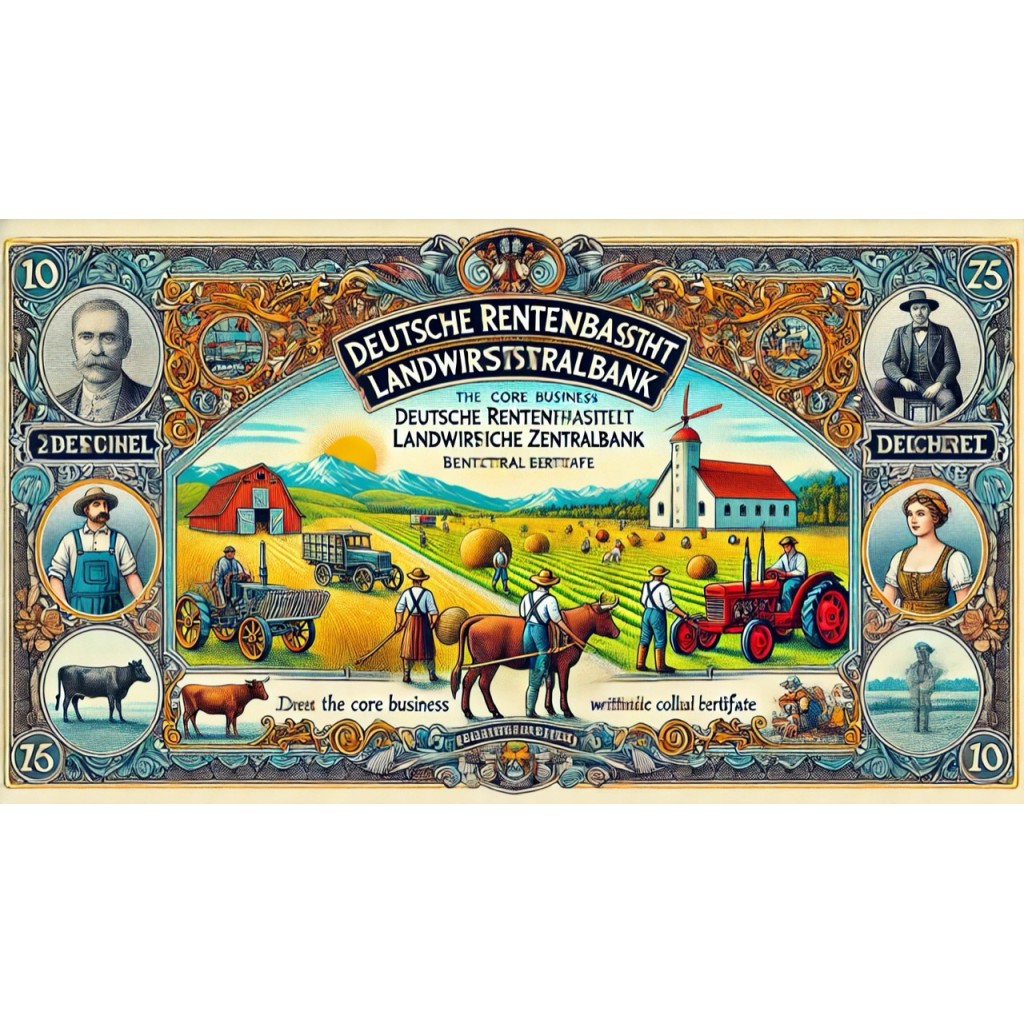
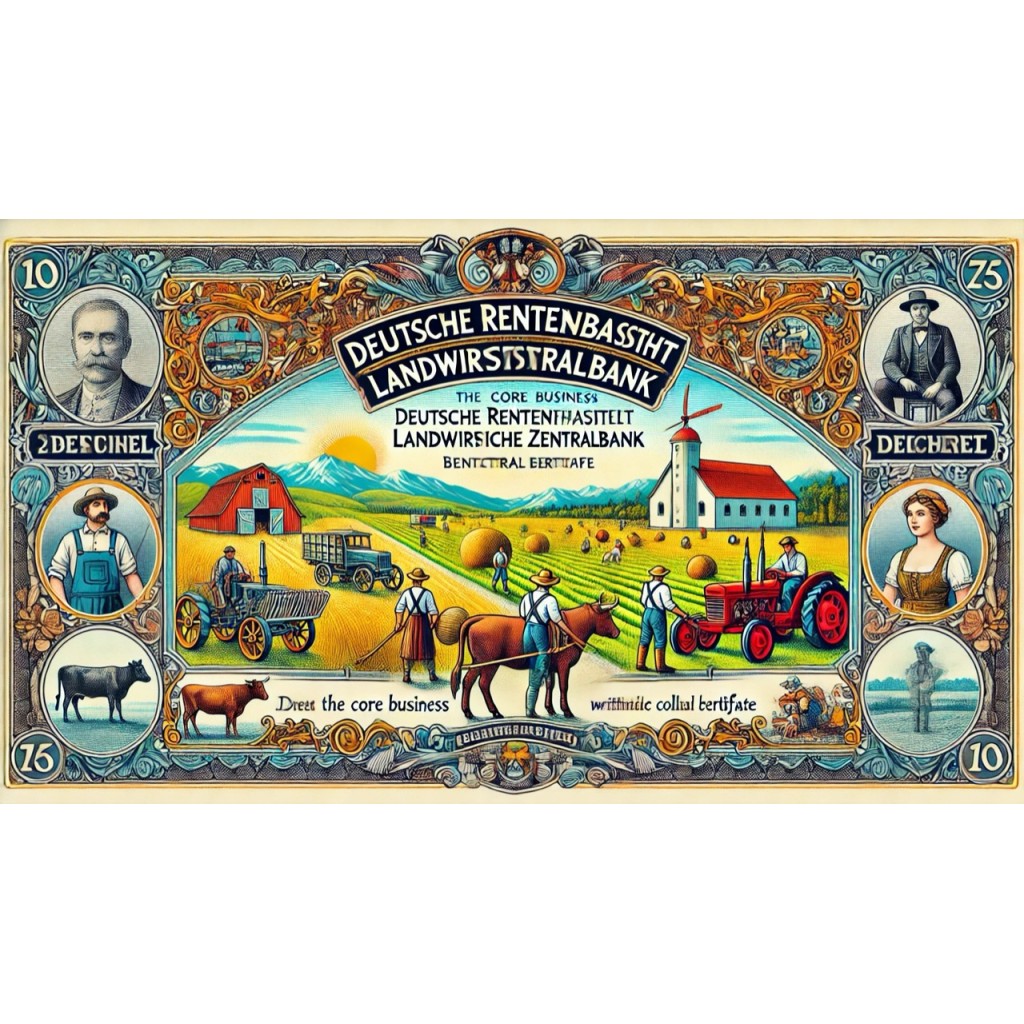
The Deutsche Rentenbank-Kreditanstalt Landwirtschafltiche Zentralbank certificate is no exception. With its ornate frame and detailed illustrations depicting agricultural scenes, this document is an exceptional example of agricultural art and history. Collecting such pieces not only enriches historical knowledge but can also be an exciting investment for the future.
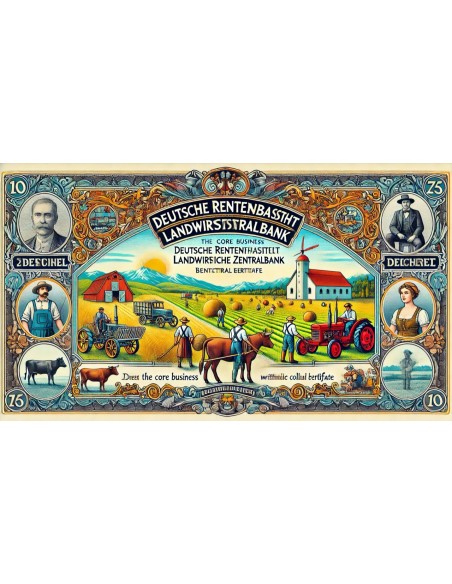
All historical documents for sale are considered collectible. The documents have no economic or financial value (no economic or financial value), the second image is only representative of the company's business.