Shopping Cart
There are no more items in your cart
Volkswagen AG, also known simply as VW, is one of the largest and most influential car manufacturers in the world. Founded in 1937, Volkswagen has played a crucial role in the development of the global automotive industry, producing iconic vehicles such as the Beetle and the Transporter.
Company History
Volkswagen was founded with the aim of creating a car for the people, hence the name "Volkswagen," which in German means "people's car." The company quickly gained international fame due to the innovative design and durability of its vehicles.
Financial Evolution
Volkswagen's financial growth has been remarkable, characterized by continuous successes and expansions. Here is an overview of key financial data over the years:
| Year | Revenue (million DM) | Share Capital (million DM) |
|---|---|---|
| 1937 | 5 | 1 |
| 1950 | 100 | 20 |
| 1960 | 500 | 50 |
| 1970 | 1,500 | 200 |
| 1980 | 4,000 | 500 |
| 1990 | 6,000 | 1,000 |
| 2000 | 10,000 | 2,000 |
Features of the Historical Document
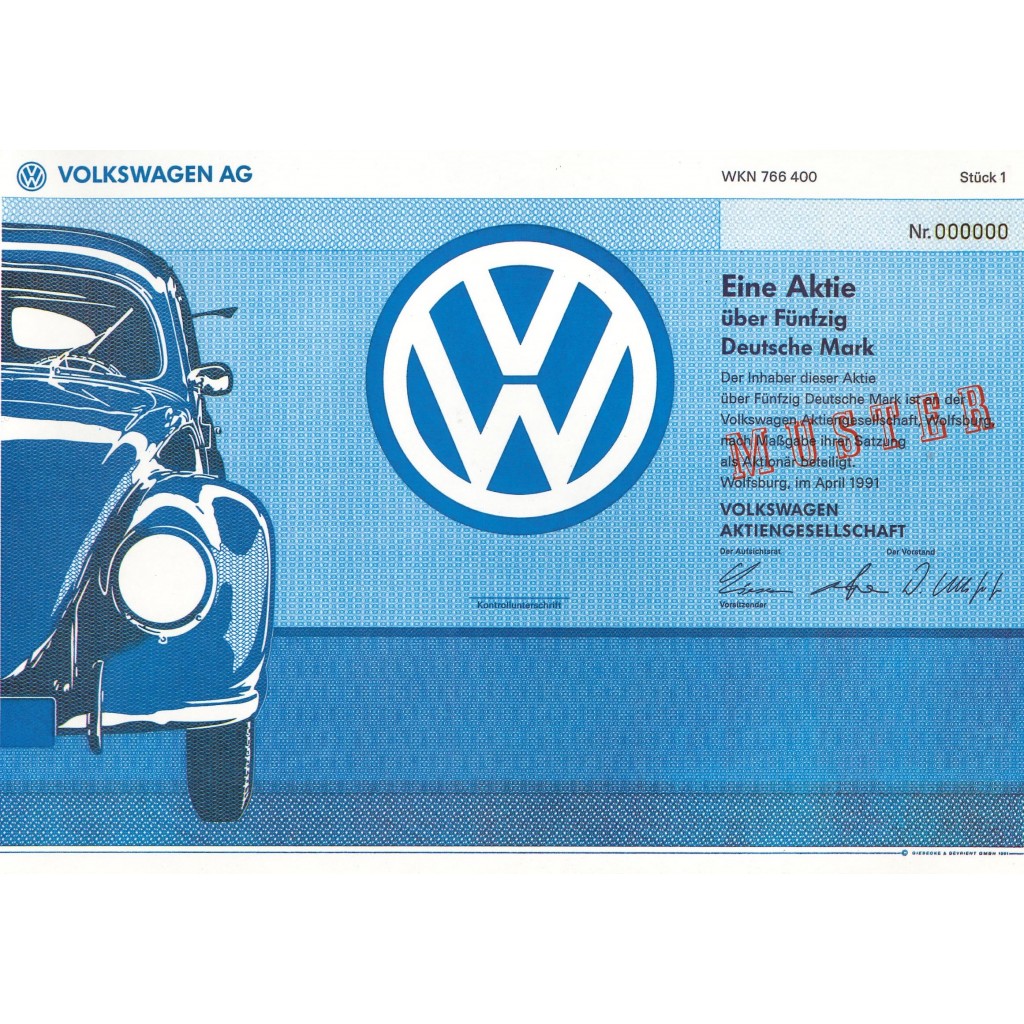
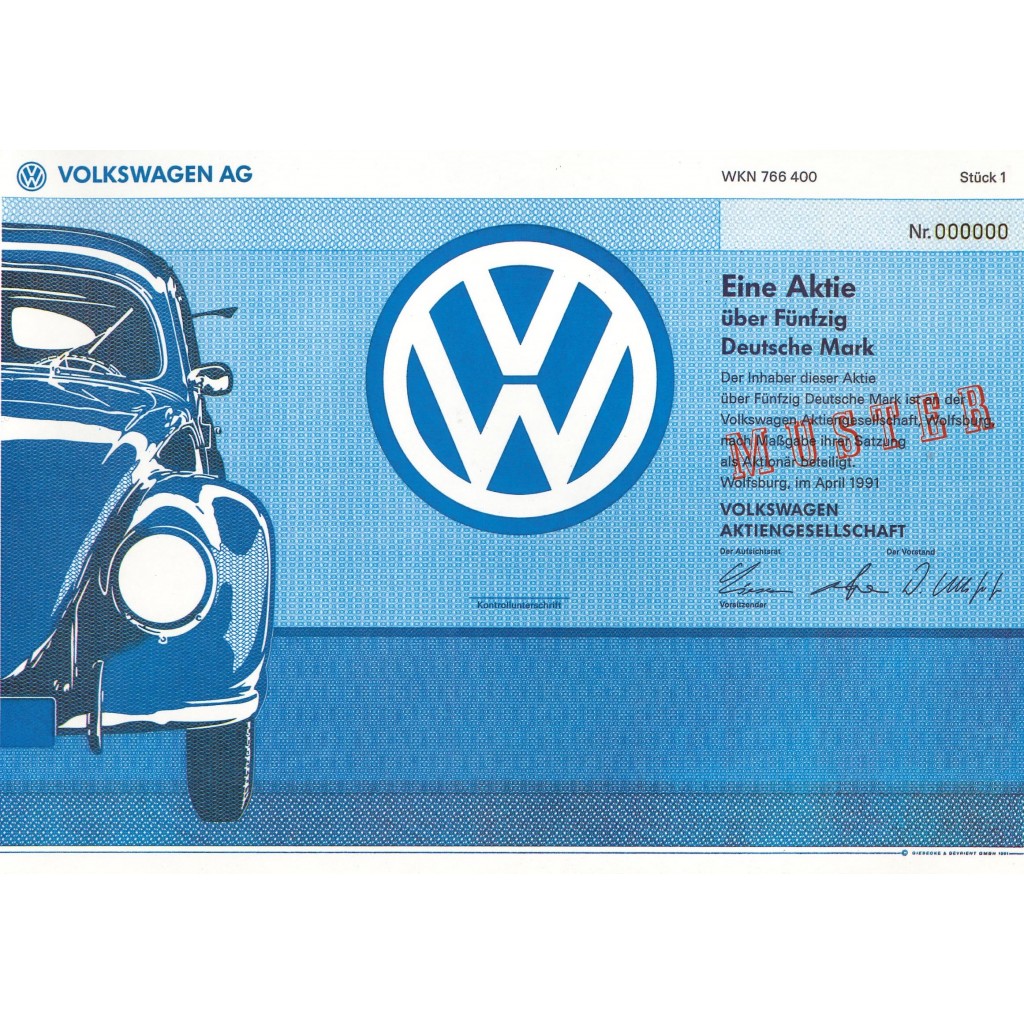
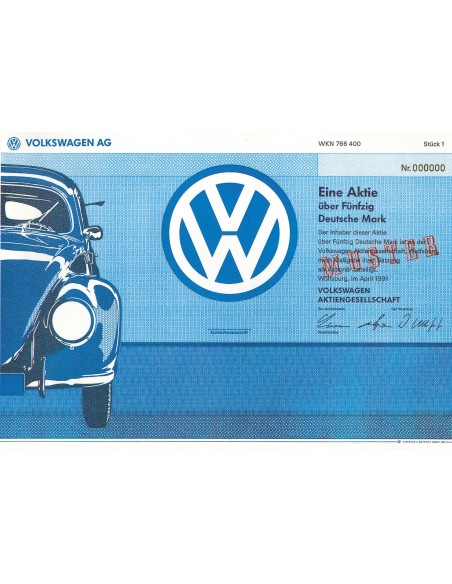
The document in question is a 1991 historical bond of Volkswagen, denominated in Deutsche Mark (DM). Key features include:
| Feature | Description |
|---|---|
| Denomination | Volkswagen Aktiengesellschaft |
| Date of Issue | 1991 |
| Nominal Value | 50 Deutsche Mark |
| Serial Number | Muster |
| Design | Image of the Beetle and VW logo |
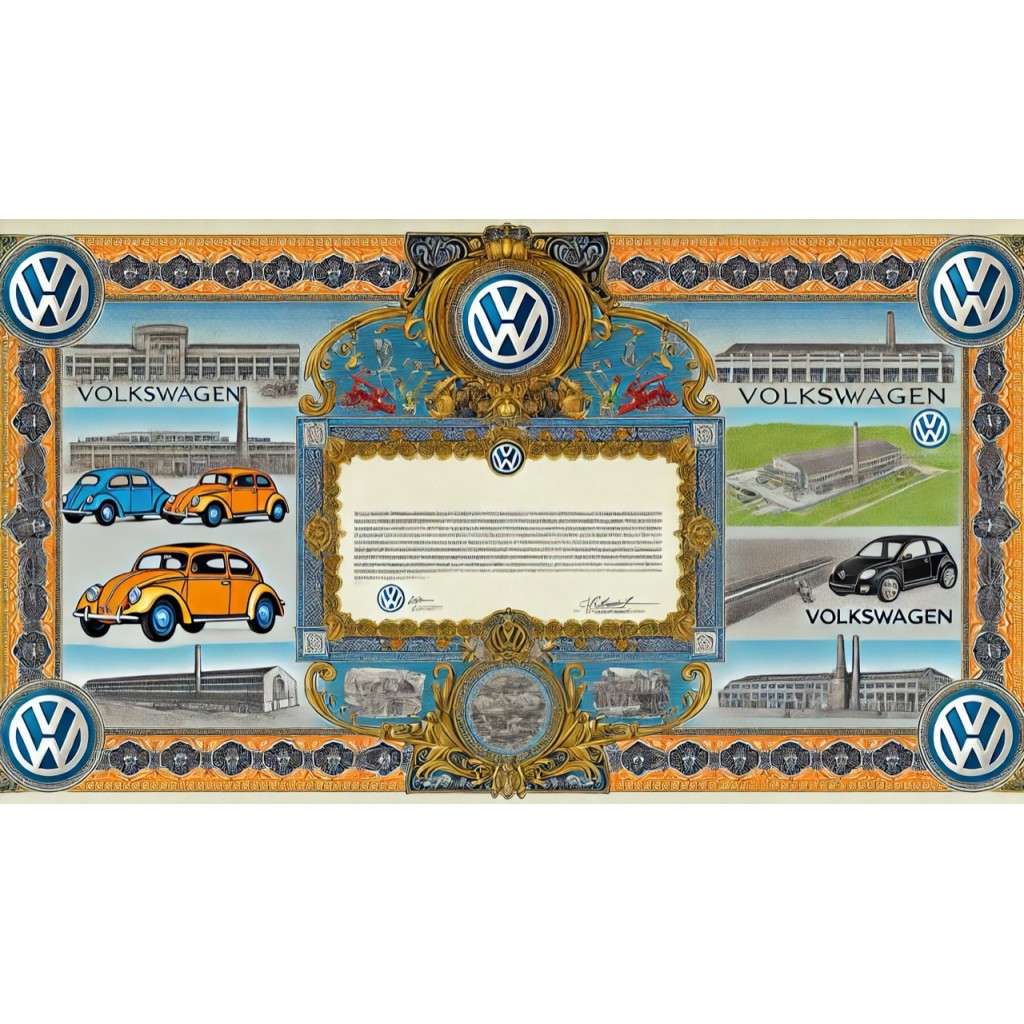
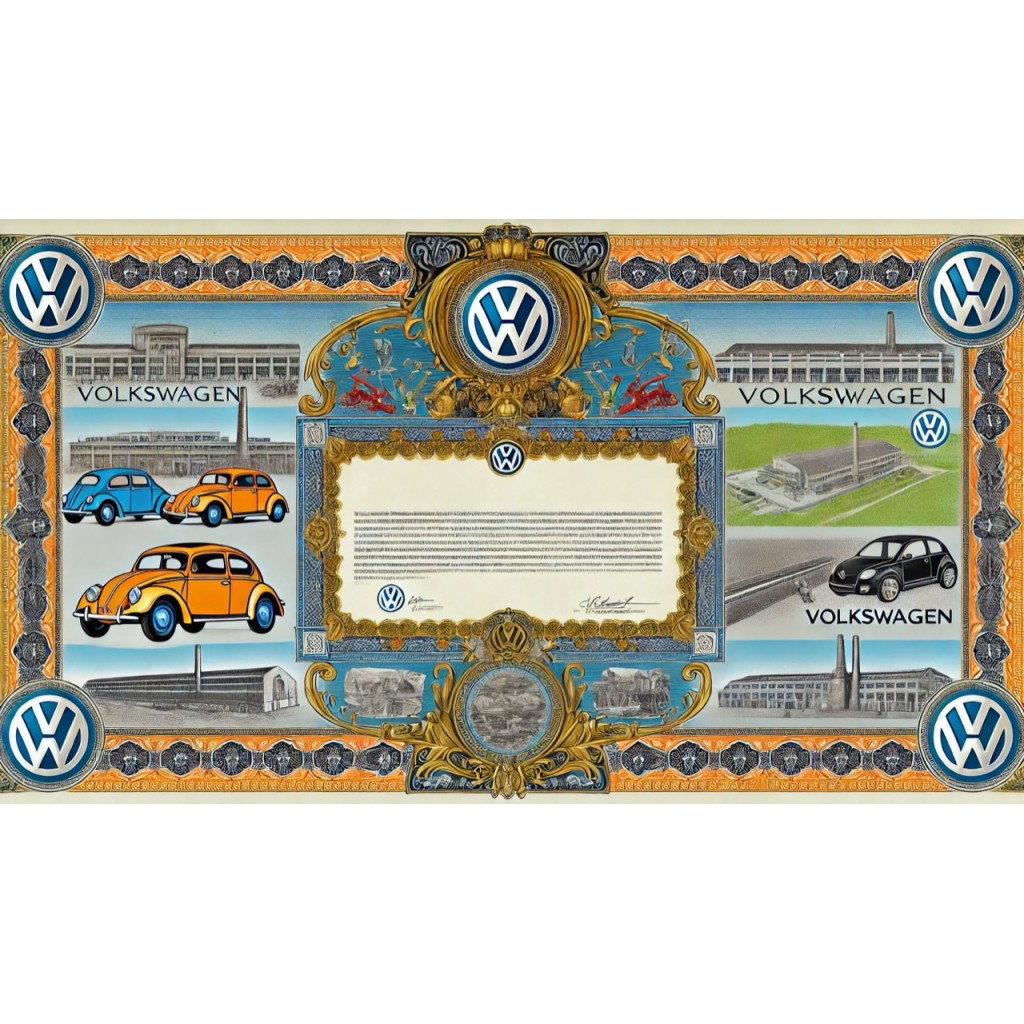
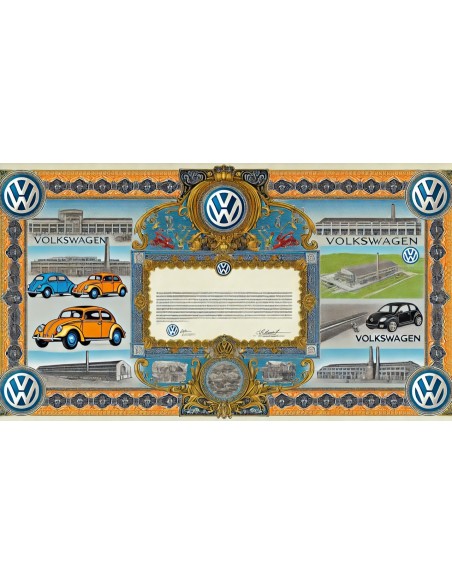
| Frame | Decorated with historical motifs and Volkswagen branding |
| Color | Shades of blue and white |
Importance for Collectors
Scripophily, the collection of historical stock and bond certificates, is a fascinating hobby that allows individuals to own pieces of economic and industrial history. Volkswagen documents are particularly sought after for their historical value and connection to one of the most iconic automotive brands in the world.
These documents not only represent a unique investment over time but also offer a window into the past, showcasing how major companies navigated periods of innovation and growth. Collecting such documents is a way to preserve and celebrate the history of the automotive industry.
All historical documents for sale are considered collectibles. The documents have no economic or financial value (no economic or financial value), the second image is only representative of the company's object of reference.