Shopping Cart
There are no more items in your cart
Historical Profile of Paris-Transports-Automobiles
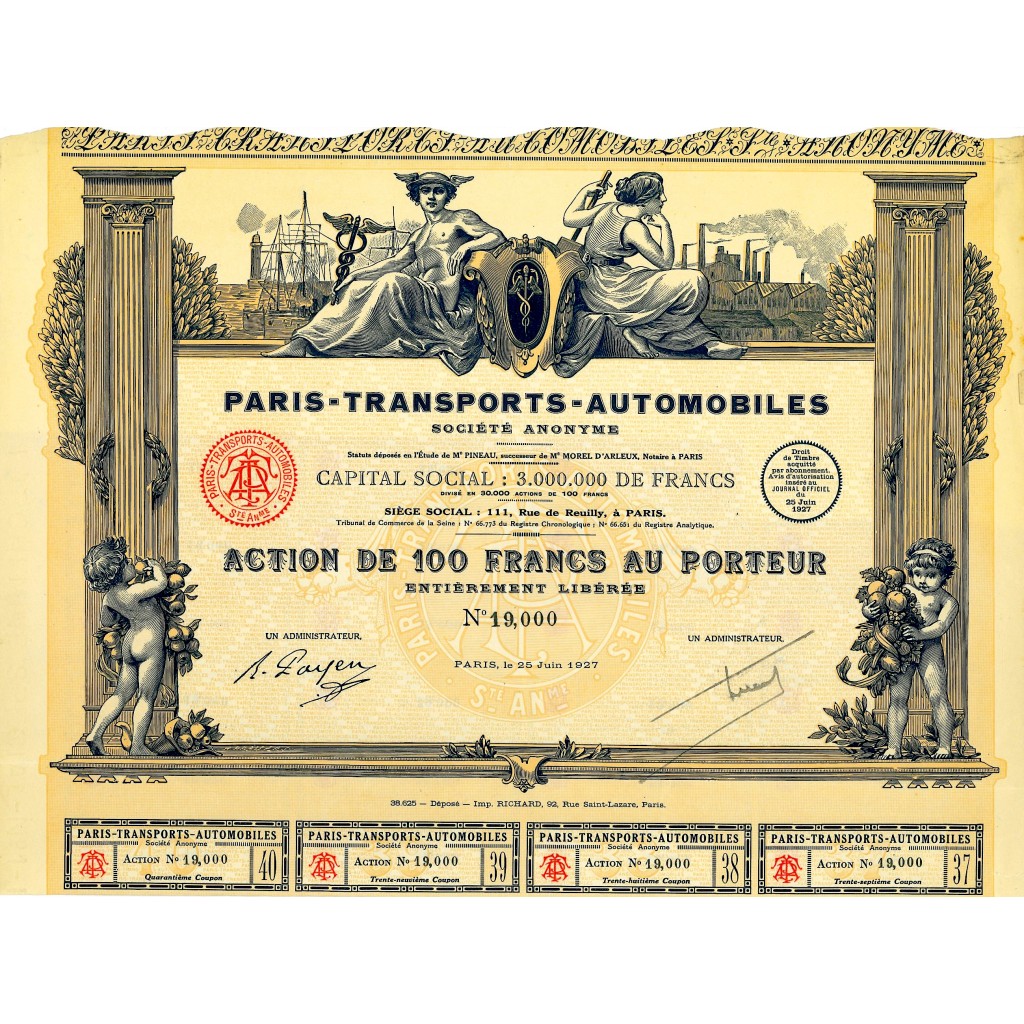
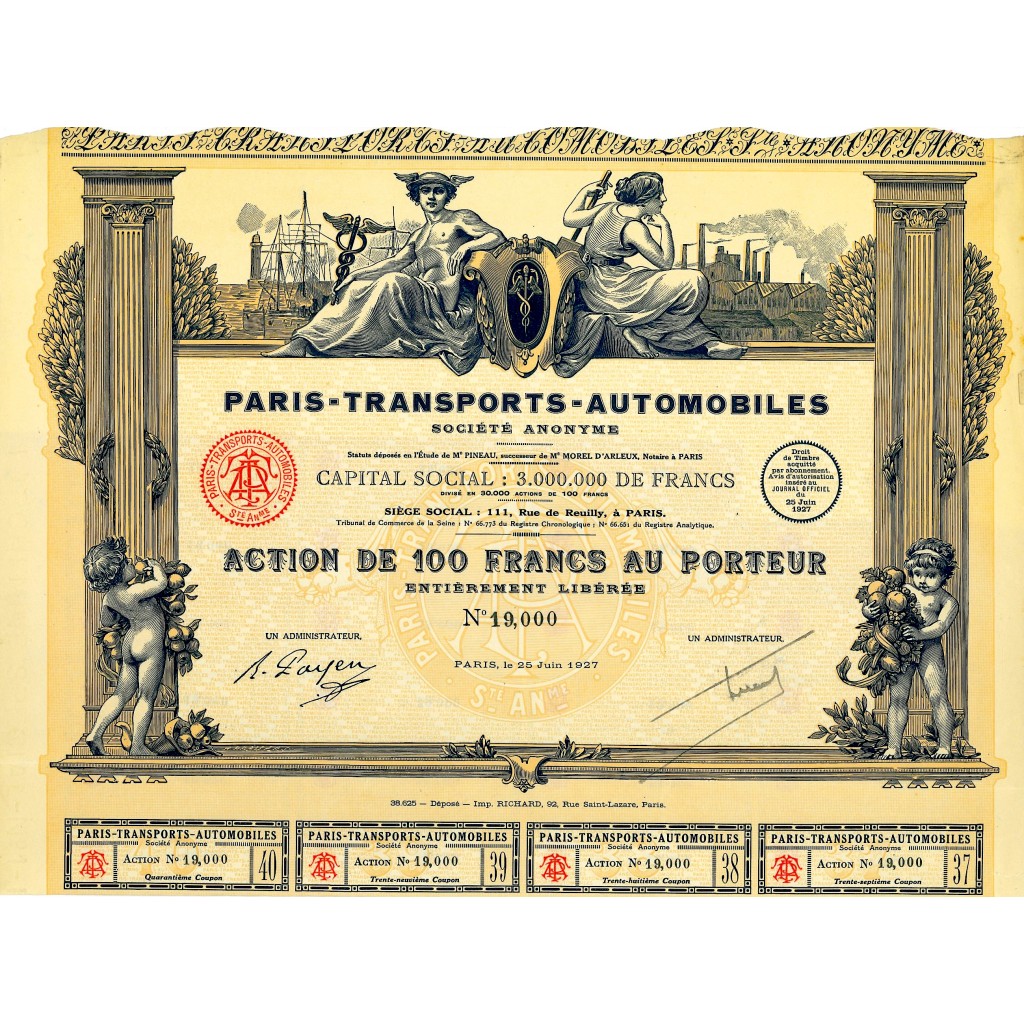
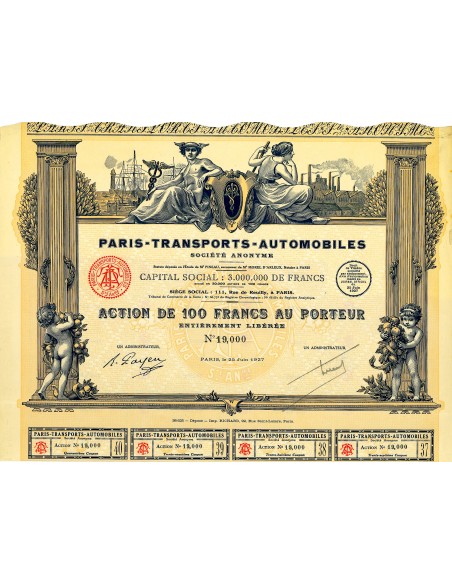
The Paris-Transports-Automobiles Société Anonyme was one of the leading French transportation and automobile companies in 1920s Paris. Founded to meet the growing demand for expanding and modernizing public and private transportation in a rapidly growing capital, the company focused on integrating automotive and urban transport services. The 100-franc bearer share issued in 1927 was part of the company's capital, divided into 30,000 shares for a total of 3,000,000 francs.
During the 1920s, Paris was experiencing a period of urban and industrial growth, and the need for an efficient transportation system was crucial to supporting this expansion. Automobiles were beginning to replace traditional transport methods such as horses and carriages, and companies like Paris-Transports-Automobiles were essential in bringing modernity to Parisian public transportation.
Historical Data of the Company
| Company Historical Data | Information |
|---|---|
| Year of Establishment | 1927 |
| Headquarters | 111, Rue de Reuilly, Paris, France |
| Year of Stock Exchange Listing | Not available |
| Year of Delisting from Stock Exchange | Not available |
| Year of Dissolution | Not available |
| Share Capital at Establishment | 3,000,000 francs |
| Share Capital at Dissolution | Not available |
| Annual Revenue (1927) | Not available |
Certificate Characteristics
| Characteristic | Description |
|---|---|
| Number of Certificates | 19,000 |
| Type of Certificate | Bearer Share |
| Nominal Value | 100 francs |
| Date of Issuance | June 25, 1927 |
| Signed by | Company administrators: L. Fayen |
| Condition of Document | Excellent preservation |
| Authenticity Status | Authentic |
| Language of Document | French |
| Stamps and Seals | Official registration stamps |
Historical Context
The year 1927 marked a period of great transformation for Paris, as the city rapidly modernized its infrastructure to accommodate automobiles and new transportation technologies. Public transport and automobile companies like Paris-Transports-Automobiles played a key role in this change. Cars were becoming an increasingly common mode of transportation, and the company capitalized on this opportunity to improve urban and private transport services in the French capital.
At the time, public transport was also facing competition from new mobility models, and companies sought to innovate to keep up with the growing demand for efficient, modern services.
Artistic and Typographical Details
The certificate is beautifully decorated with allegorical illustrations symbolizing progress and technology. At the center of the document is an allegorical figure holding a caduceus, the symbol of commerce and transport. On either side of the certificate are industrial and commercial elements, including a steamship and a factory, symbolizing the importance of transportation and industrial production.
The certificate's border is richly detailed, while the typography uses elegant, clear serif fonts. The company logo, printed in red, is located at the top left, giving the document an official and prestigious appearance.
Provenance of the Certificate
This certificate was part of a series of shares issued by Paris-Transports-Automobiles in 1927 to raise funds for the expansion and modernization of Paris's transport infrastructure. It has been maintained in excellent condition as part of a private collection and is considered an authentic document, as confirmed by scripophily experts.
Evaluation and Rarity
Shares of Paris-Transports-Automobiles are relatively rare, especially in excellent condition like this example. The market value for collectors can range from30 TO 60 euros, depending on preservation and market demand. The rarity of the certificate and its historical value make it a highly sought-after piece for scripophily collectors.
The Importance of Scripophily Collecting
Collecting historical certificates like this allows one to explore the evolution of urban transportation and the automotive industry in the 20th century. These documents not only represent the economic history of an era but are also works of art, with graphic and typographical details of great value.
Preserving these certificates is essential to maintaining their historical and aesthetic value. It is recommended to keep them in protective frames or specialized albums. In addition to their collectible value, these documents can also serve as decorations that add a touch of history and prestige to any space.
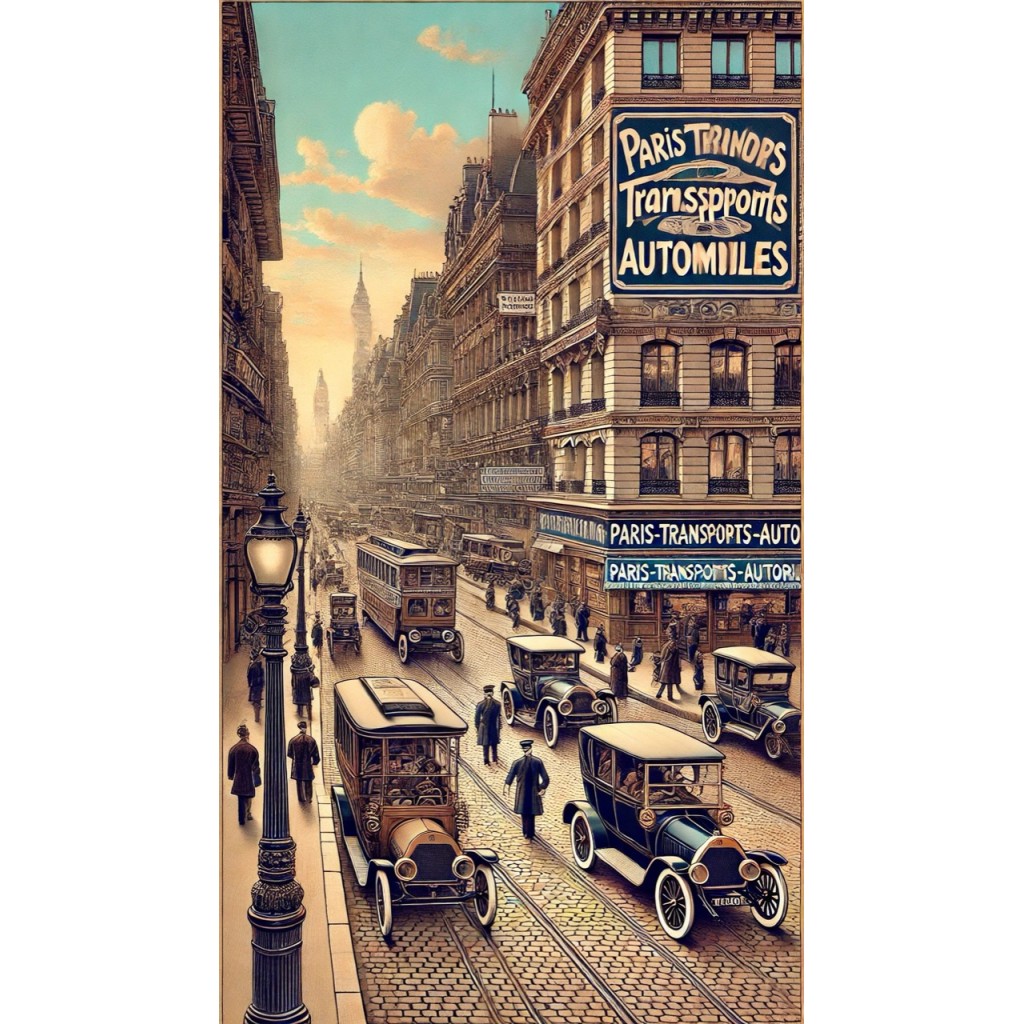
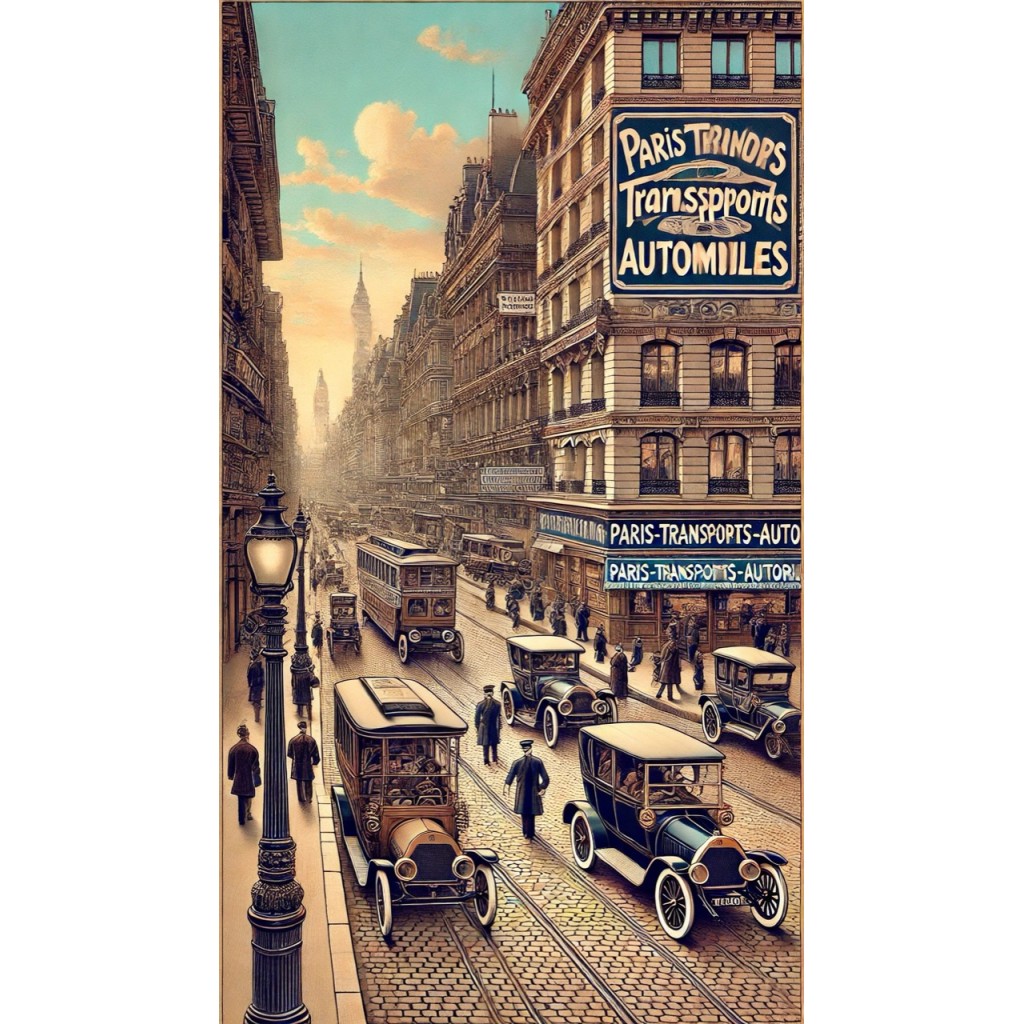
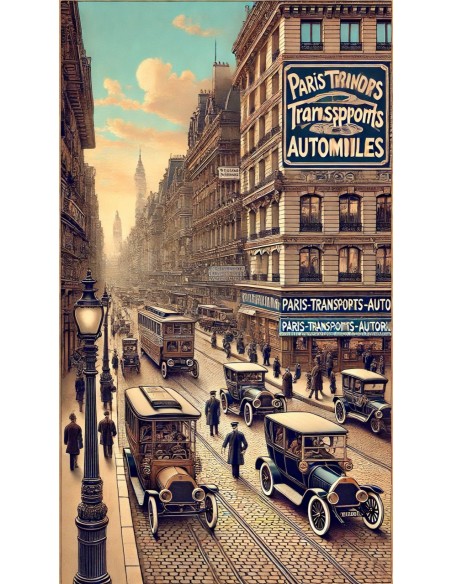
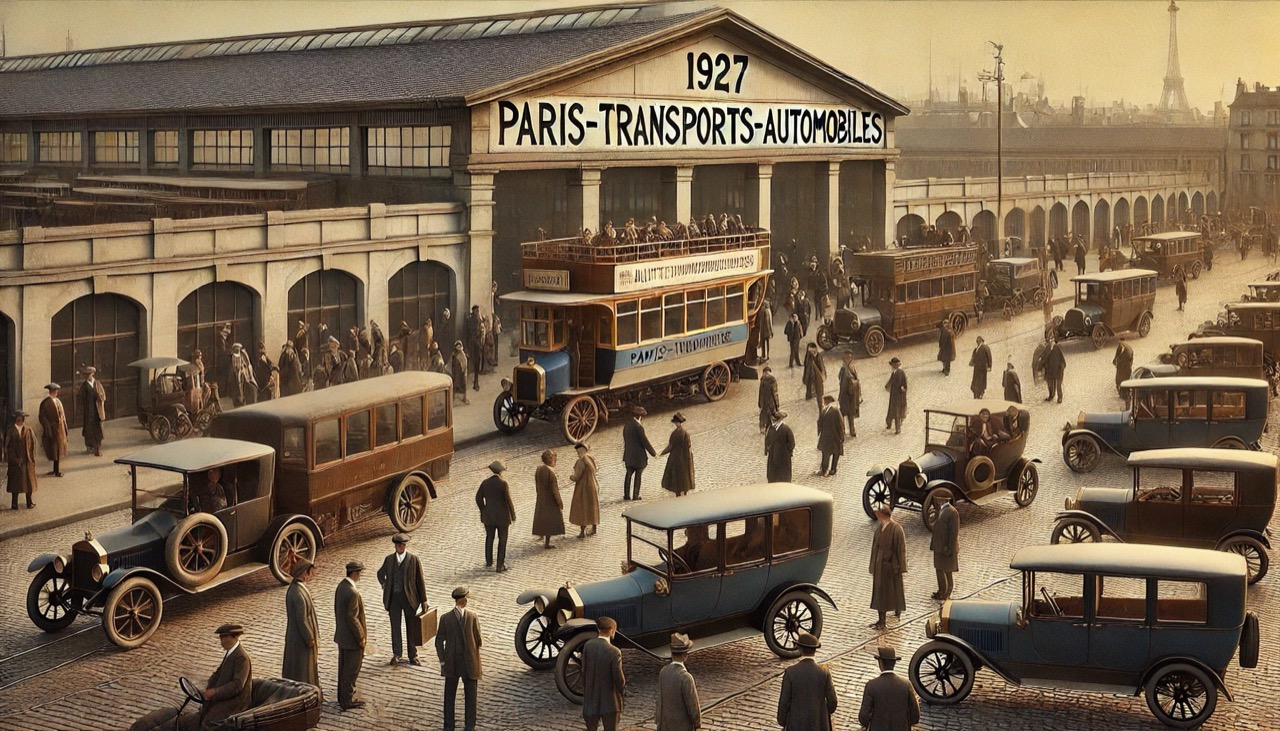
All historical documents for sale are considered collectible. They have no economic or financial value (no economic or financial value), and the images that are not of the historical document are representative of the company's object and the historical period. They are not provided but can be freely downloaded from the website and printed.