Shopping Cart
There are no more items in your cart
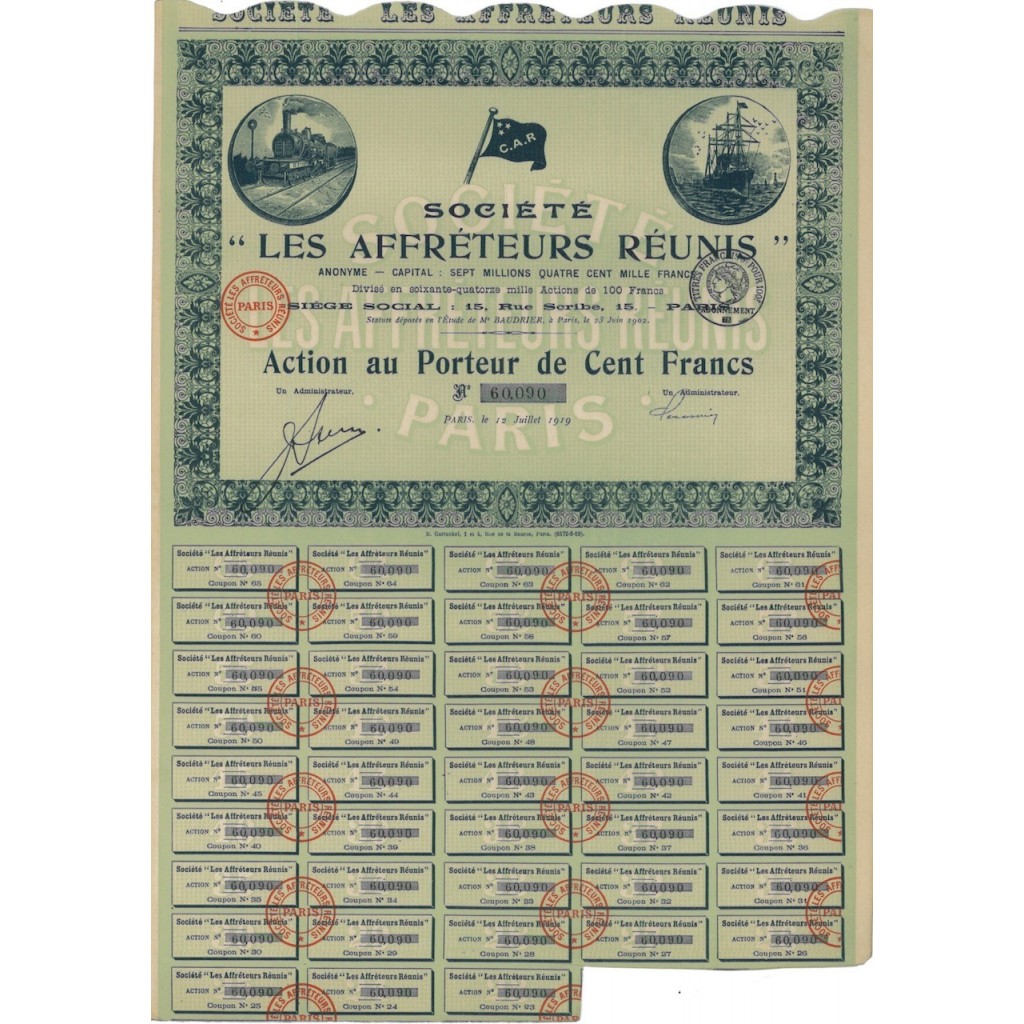
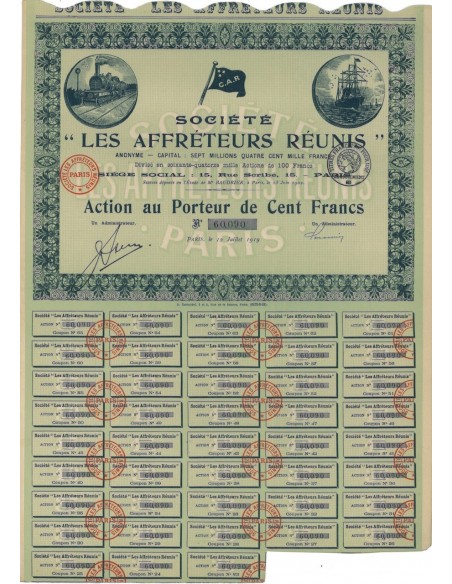
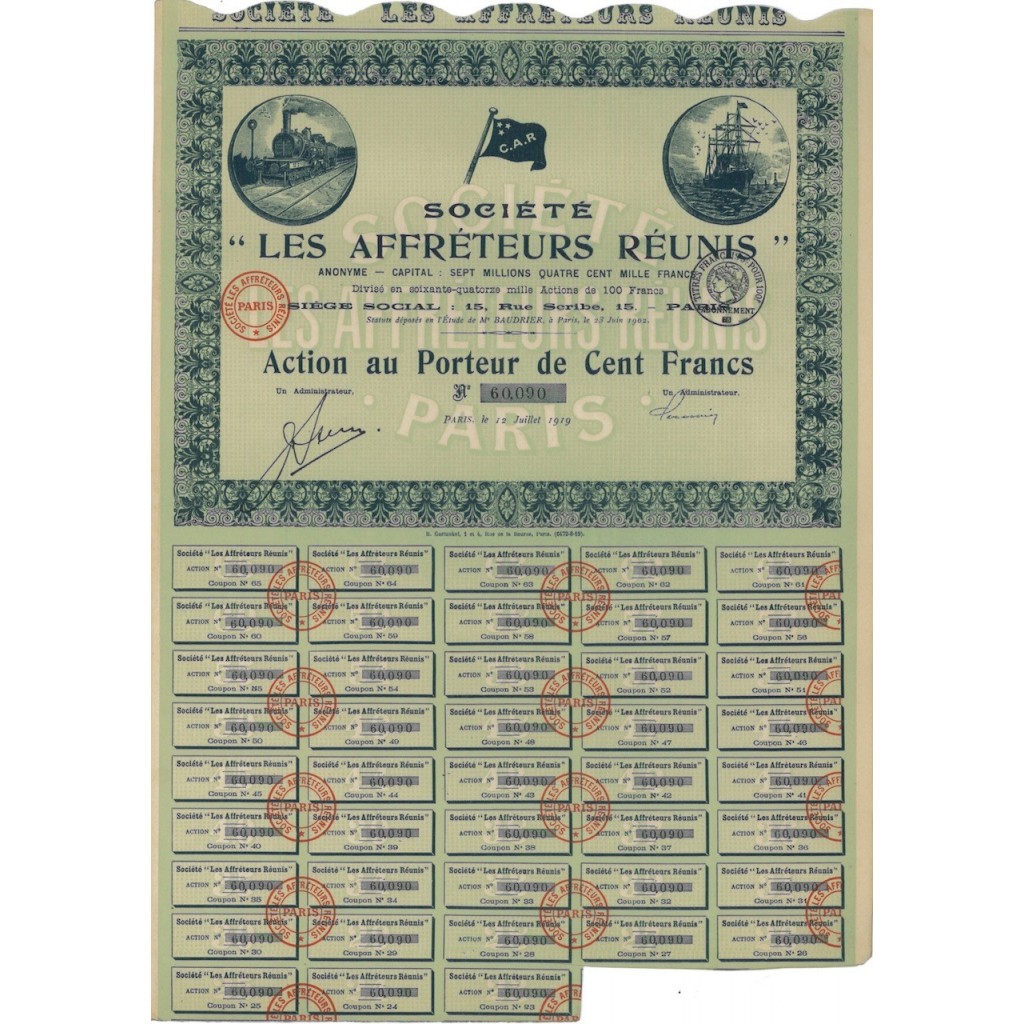
The Société "Les Affréteurs Réunis," founded on June 23, 1902, is a significant example of the dynamic French economy in the early 20th century. Based at 15 Rue Scribe in Paris, this company played a crucial role in consolidating France’s leadership in the maritime and railway transport sectors. The stock certificate issued in 1919 offers a glimpse into an era when globalization was in its infancy, and transport companies were vital in driving economic and cultural expansion.
Historical and Economic Context
At the beginning of the 20th century, the transport of goods and passengers was experiencing rapid development thanks to new technologies. In France, the railway and maritime sectors were booming, supported by industrial policies aimed at modernizing infrastructure and creating increasingly efficient transport networks.
The foundation of Société "Les Affréteurs Réunis" took place during a period of economic growth when companies sought to capitalize on the expanding international trade. The company’s objective was clear: to offer integrated maritime and railway transport services, facilitating the exchange of goods between different regions of France and the rest of the world.
Financial Structure and Shares
The company’s share capital was 7,400,000 francs, divided into 74,000 shares of 100 francs each. The stock certificate presented here, dated July 12, 1919, represents a portion of this capital and serves as tangible evidence of investor participation in the company’s success. Issuing shares was a common method to raise funds for purchasing new ships, locomotives, and other infrastructure necessary to improve transport services.
The stock certificate is accompanied by a series of coupons, each representing dividends owed to shareholders. This system ensured that holders received returns on their investments based on the company’s profits, encouraging further investment.
Iconography of the Certificate
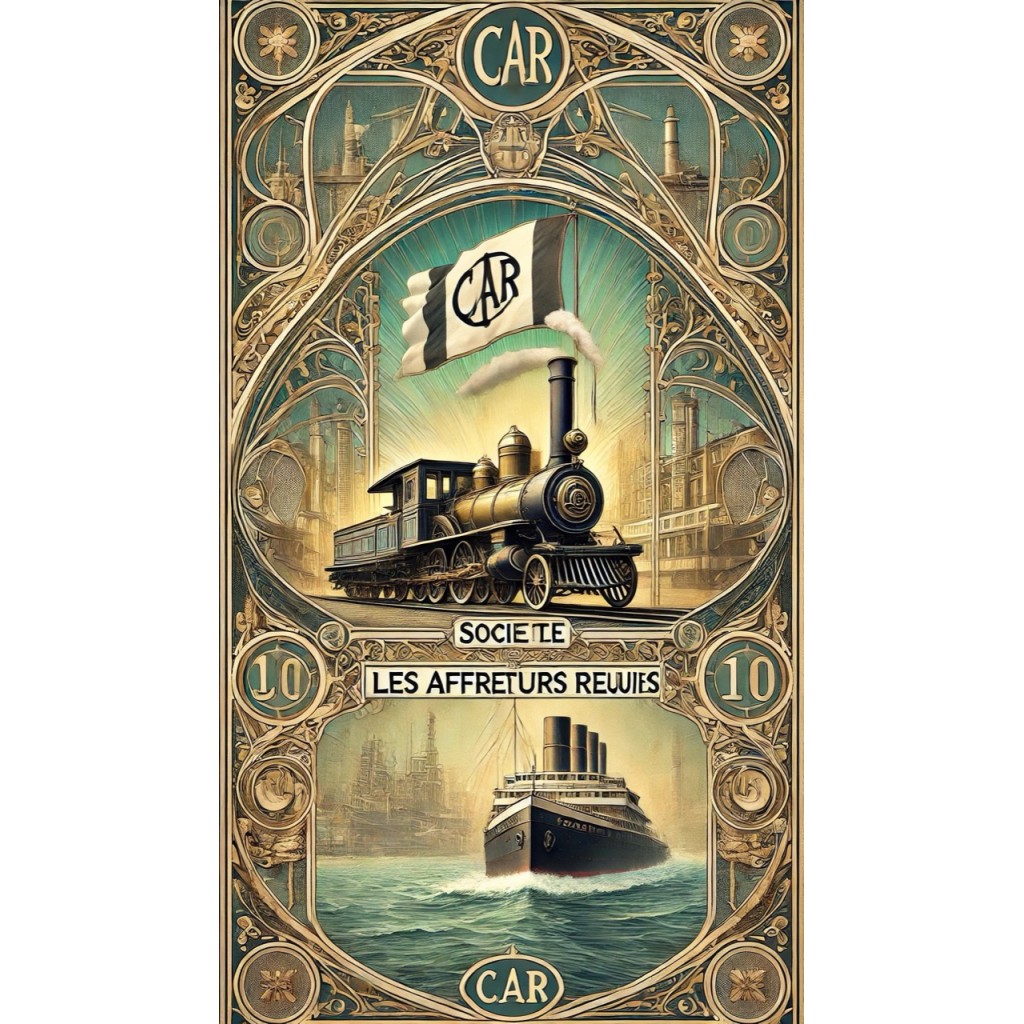
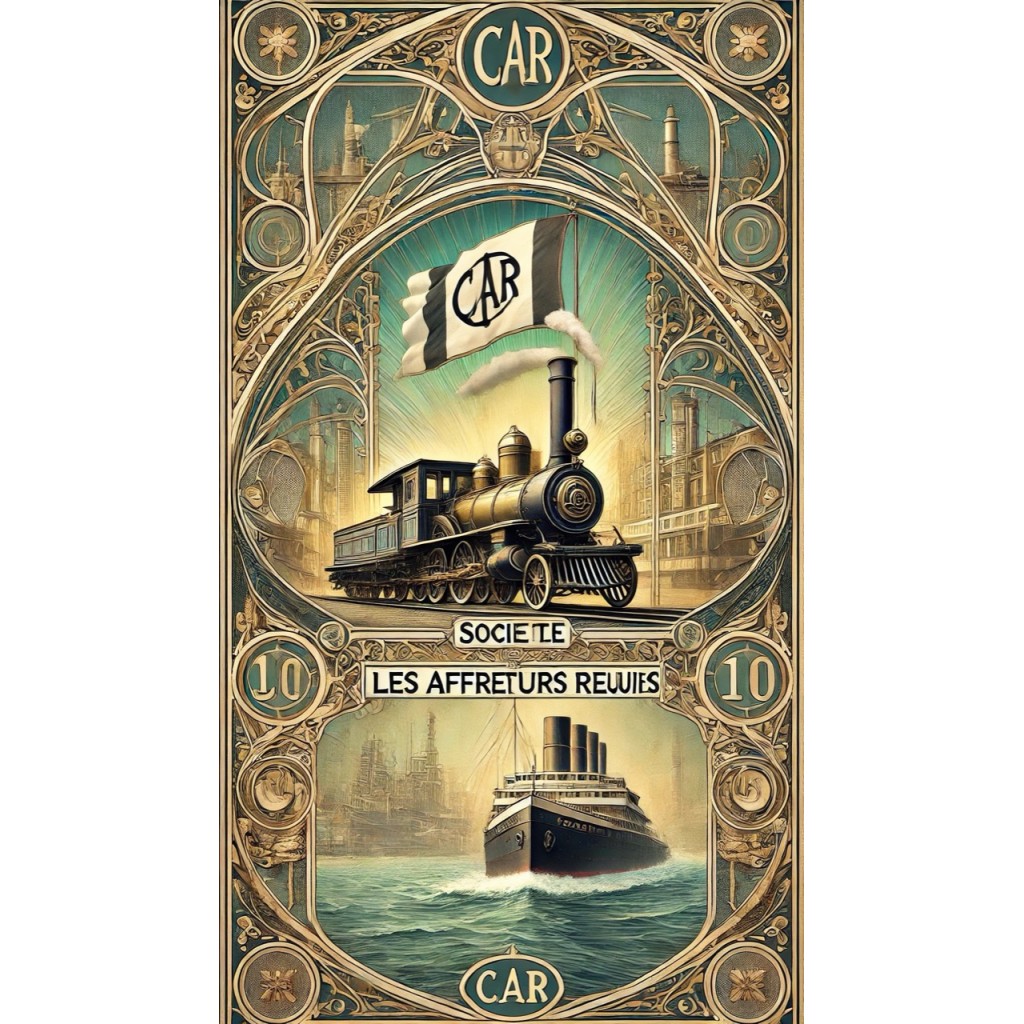
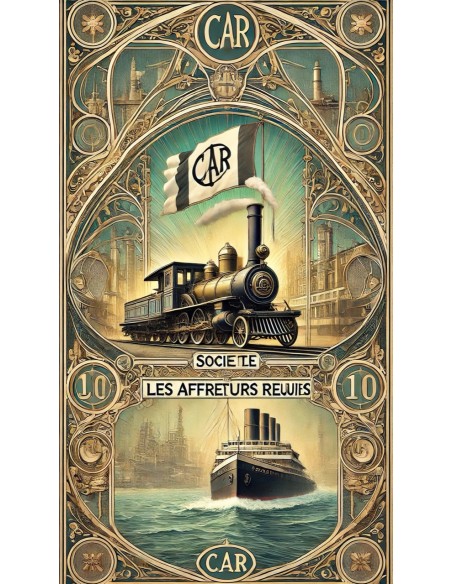
The graphic design of the stock certificate reflects the prestige and importance of the company. At the top, two symbolic images are displayed: on the left, a locomotive representing railway transport, and on the right, a steamship symbolizing maritime trade. In the center, a flag with the initials "C.A.R." (likely referring to "Compagnie des Affréteurs Réunis") emphasizes the company’s identity and reliability.
The document’s design, enriched with ornamental motifs and vibrant colors, not only certified the financial value of the stock but also served as a visual communication tool, enhancing investor confidence and promoting the company’s image.
Post-War Impact
The year 1919, when this certificate was issued, marks a pivotal moment for the French and global economies. The end of World War I ushered in a period of reconstruction and economic reorganization. Transport companies such as "Les Affréteurs Réunis" played a fundamental role in this process, ensuring the circulation of essential goods and supporting the revival of commerce.
Collectible Value
Today, stock certificates issued by Société "Les Affréteurs Réunis" are considered true pieces of history. Collectors appreciate them not only for their aesthetic and symbolic value but also for their ability to narrate the economic and social transformations of an era. Documents like this represent a perfect blend of art, finance, and history, making them sought-after treasures for scripophily enthusiasts.
Conclusion
The Société "Les Affréteurs Réunis" embodies the entrepreneurial and innovative spirit of 20th-century France. This stock certificate, with its beauty and historical significance, continues to testify to the importance of transport and commerce in building a global economy. Collecting such documents means owning a tangible piece of the past, a reminder of the ambitions and achievements of a bygone era.