Shopping Cart
There are no more items in your cart

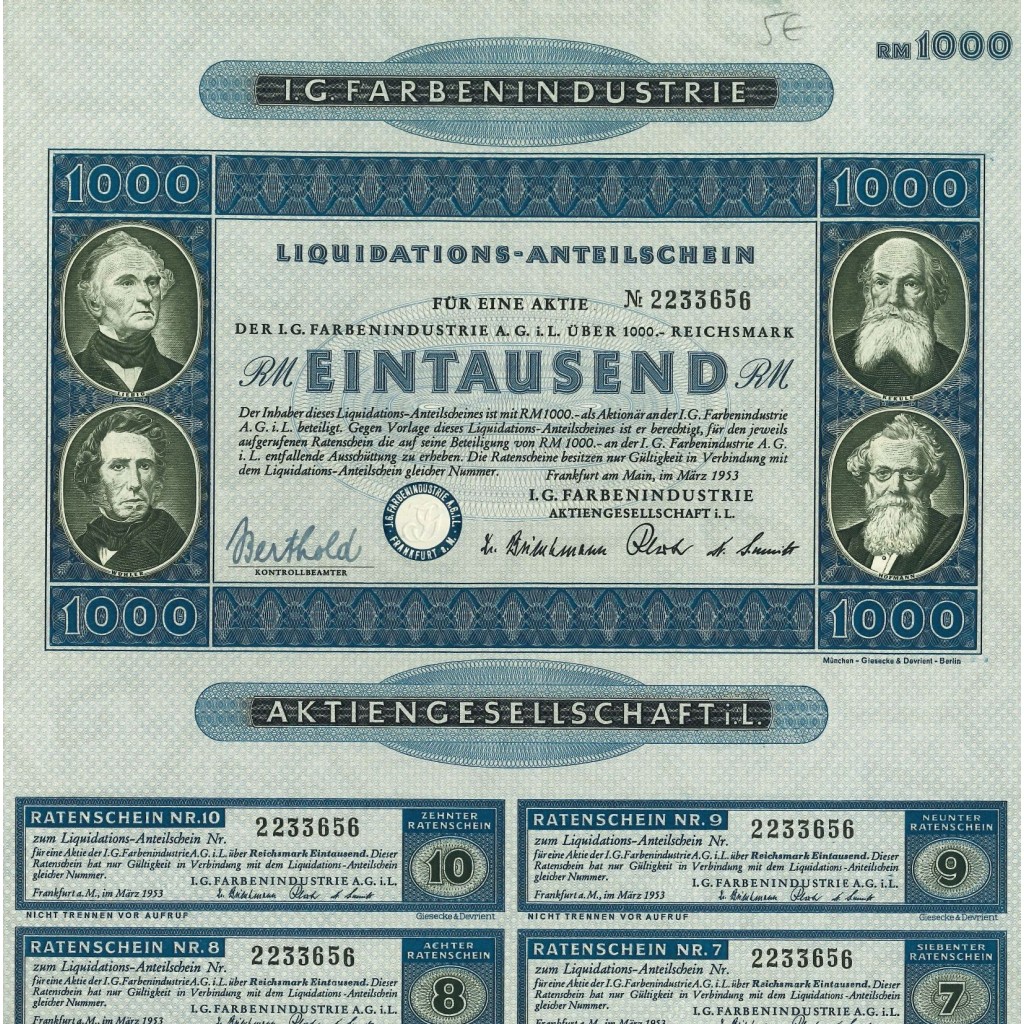
I.G. Farbenindustrie AG was one of the largest and most influential chemical companies in history. Founded on December 2, 1925, in Frankfurt am Main, Germany, the company was born from the merger of six major German chemical companies: BASF, Bayer, Hoechst, Agfa, Chemische Fabrik Griesheim-Elektron, and Chemische Fabrik vorm. Weiler Ter Meer. This merger aimed to create a giant capable of dominating the global chemical market, thanks to innovations and patents ranging from dyes to plastics, pharmaceuticals to explosives.
During the 1930s and 1940s, I.G. Farben became a key player in the German war industry, playing a crucial role in the production of synthetic materials such as rubber and fuel. However, it is infamously known for its involvement in the Nazi regime and the production of Zyklon B gas, used in extermination camps during World War II. After the war, the company was dismantled by the Allies due to its war crimes and ties to the Nazi regime.
Historical Data of the Company
| Year | Revenue (in billions of RM) | Capital (in billions of RM) | Headquarters | Year of Foundation | Year of Stock Exchange Admission | Year of Stock Exchange Delisting | Year of Company Dissolution |
|---|---|---|---|---|---|---|---|
| 1926 | 2 | 1 | Frankfurt am Main | 1925 | 1926 | 1945 | 1952 |
| 1936 | 3 | 1.5 | Frankfurt am Main | 1925 | 1926 | 1945 | 1952 |
| 1944 | 4 | 2 | Frankfurt am Main | 1925 | 1926 | 1945 | 1952 |
Document Characteristics
| Characteristic | Detail |
|---|---|
| Document Type | Share |
| Nominal Value | 1000 Reichsmark |
| Issue Date | 1933 |
| Interest | 8% per annum |
| Convertibility | Convertible to bearer securities |
| Serial Number | Not specified |
| Issuer | I.G. Farbenindustrie AG |
| Signatures | General Director, Financial Director |
Importance of Scripophily
Scripophily, the collection of historical stocks and bonds, represents a unique window into the economic and industrial past. Each document tells a story of innovation, economic growth, and sometimes, tragic historical events. Collecting these documents offers not only an aesthetic appreciation for their beauty and design but also a deep connection to the historical dynamics that shaped the modern world.
The presented document is an exceptional example of its time, issued by one of the most influential chemical companies in history. Owning a share certificate of I.G. Farbenindustrie not only means possessing a piece of industrial history but also reflecting on the ethical and historical implications of corporate activities.
All historical documents for sale are considered collectible. The documents have no economic or financial value (no economic or financial value), the second image is only representative of the company's object.