Shopping Cart
There are no more items in your cart
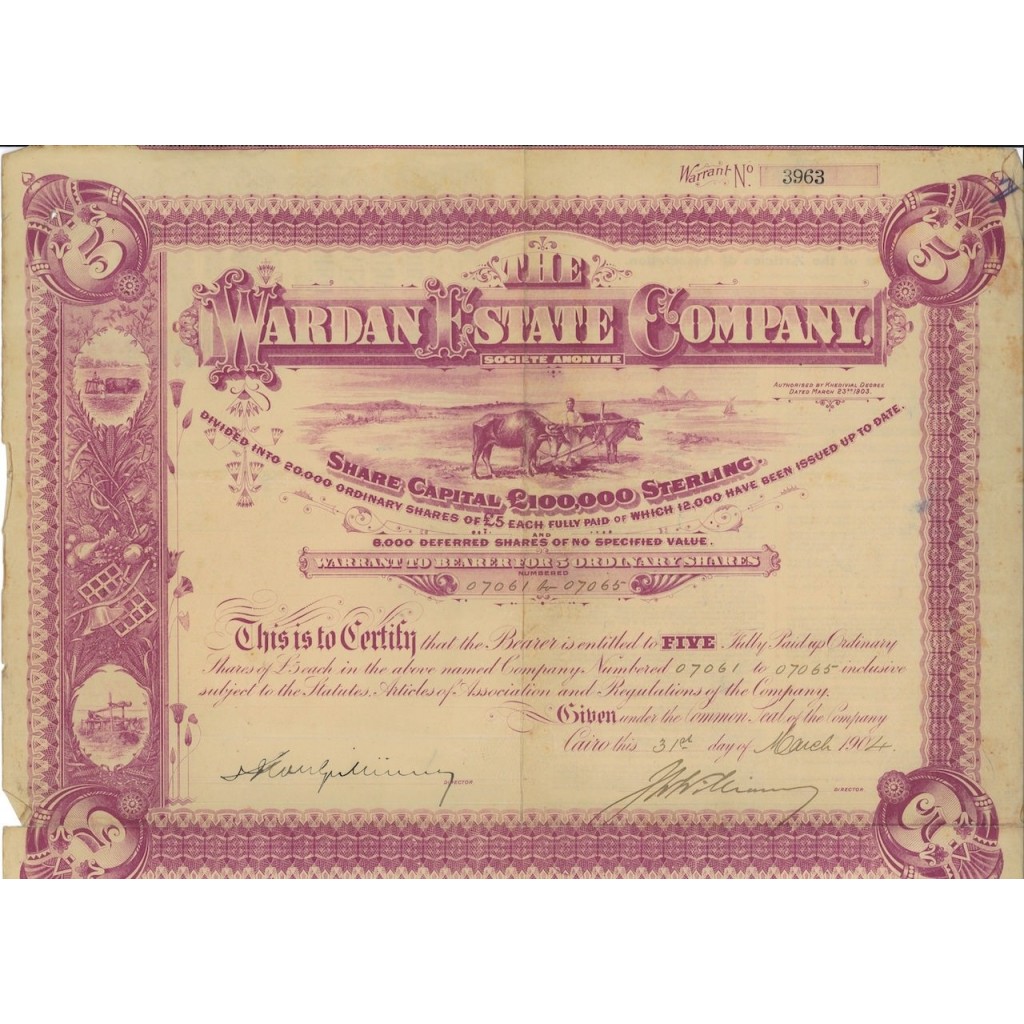
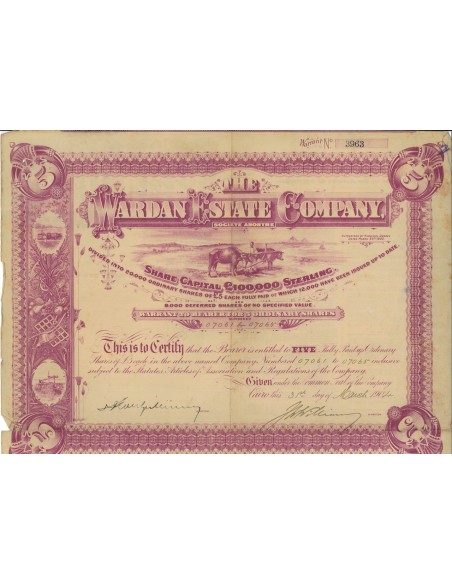
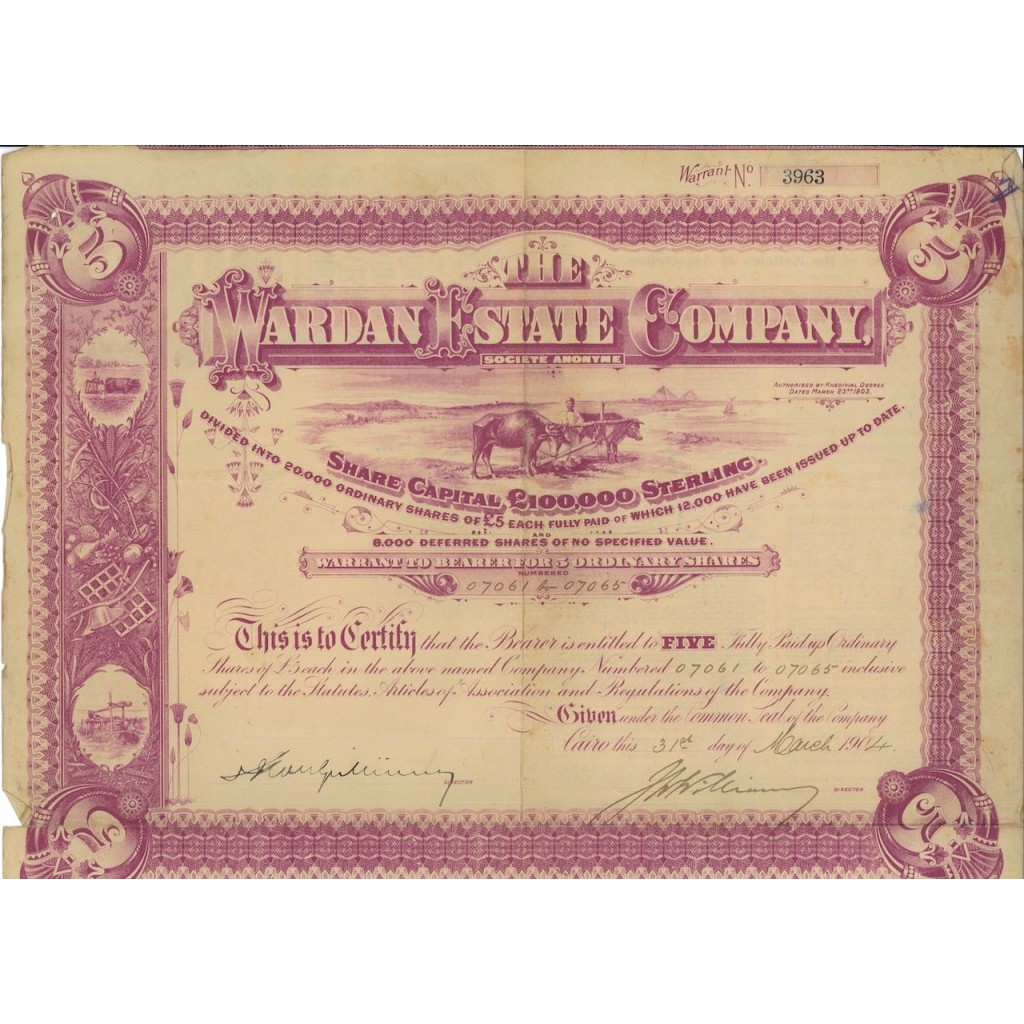
The Wardan Estate Company was established in the early 20th century with the aim of managing and developing land properties in Egypt, a region of great interest to European investors of the time. Operating as a Société Anonyme, the company is a typical example of the many European firms that capitalized on economic opportunities in Egypt during the British colonial period.
The company had a share capital of £100,000 sterling, divided into 20,000 ordinary shares of £5 each and 6,000 deferred shares of unspecified value. The certificate in question, dated March 31, 1914, represents 5 ordinary shares issued to the bearer. These stock certificates highlight the strategic importance of Egyptian lands in the context of agricultural and infrastructural investments of the era.
Historical Data of the Company
| Year | Description | Value |
|---|---|---|
| 1903 | Year of incorporation | 1903 |
| 1914 | Date of certificate | March 31, 1914 |
| - | Registered office | Cairo, Egypt |
| 1903 | Initial share capital | £100,000 |
| - | Share capital at dissolution | Data not available |
| - | Revenue per year | Data not available |
| - | Year of stock exchange listing | Data not available |
| - | Year of delisting from stock exchange | Data not available |
| - | Year of company dissolution | Data not available |
Document Features
| Feature | Description |
|---|---|
| Document type | Certificate of 5 ordinary shares |
| Nominal value | £5 each |
| Serial number | 3963 |
| Issue date | March 31, 1914 |
| Place of issuance | Cairo, Egypt |
| Decorations | Ornamental red border with agricultural illustrations |
| Printer | Not specified on the document |
Historical Context
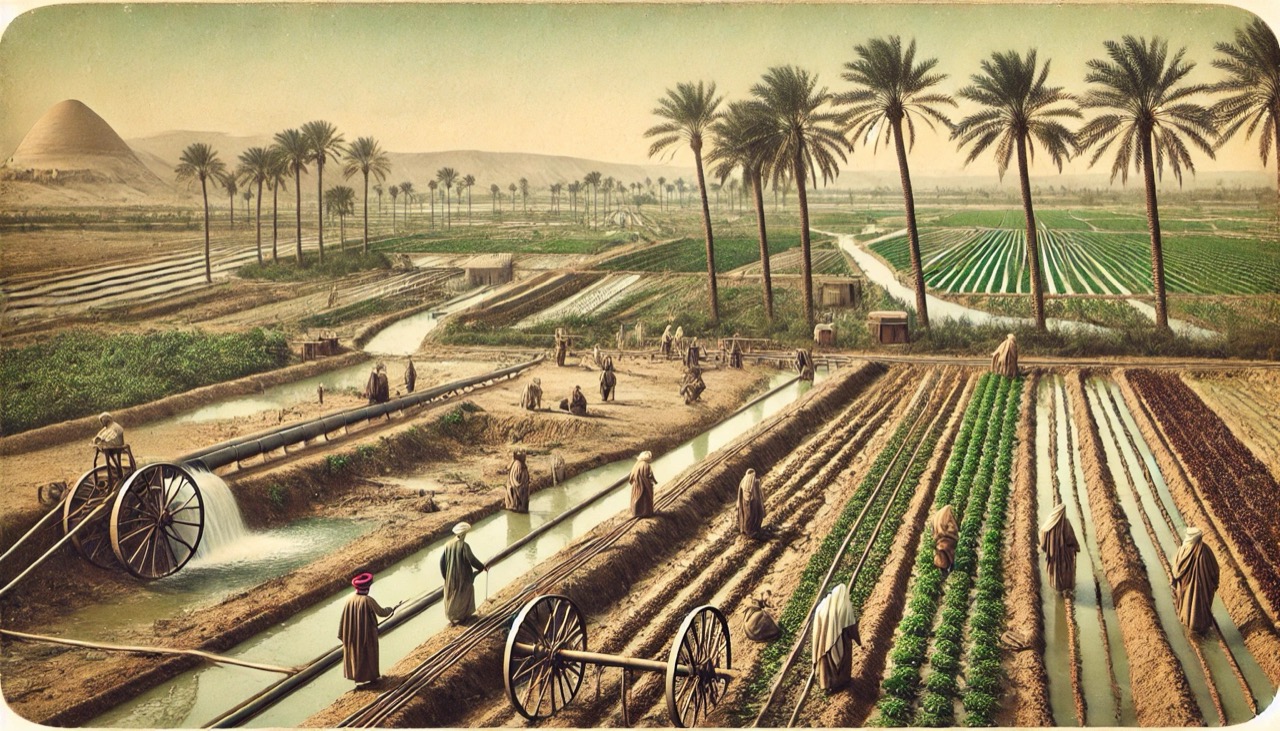
The issuance of this certificate occurs during a period of profound economic and social change in Egypt, under British influence. Agricultural lands were a crucial resource, and their control was seen as an opportunity for profit and infrastructural development. The Wardan Estate Company played an important role in transforming vast areas of land into productive agricultural zones, thanks to modern farming practices and irrigation technology.
This certificate, issued in 1914, provides a glimpse into the economic dynamics of the time, when agriculture was at the heart of Egypt's economy, strongly influenced by foreign investments.
Artistic and Typographic Details
The certificate features an elaborate red design, with decorated borders including agricultural symbols and rural landscape illustrations. The design and typography are typical of the period, combining functionality and ornamentation.
Provenance
This certificate may have been held by investors interested in participating in the agricultural development of Egypt. Its authenticity is ensured by original signatures and official stamps, adding to its historical and collectible value. An official certificate of authenticity and a historical registry can be requested to enhance the perceived value of the title.
Valuation and Rarity
Certificates from the Wardan Estate Company are relatively rare, especially those issued during the first decade of the 20th century. Their rarity and condition directly influence their value in the collectors' market. This title, in particular, represents an interesting piece of economic history, especially sought after by scripophily collectors focusing on Egypt's colonial history.
Importance of Scripophily Collecting
Collecting stock and bond certificates, known as scripophily, provides a tangible connection to the economic and political history of a past era. Owning a document like this from the Wardan Estate Company means holding a piece of history that reflects the significant transformations that characterized Egypt during the colonial era.
For collectors, displaying a historical certificate in an elegant frame or preserving it in a specialized album can enhance its appeal and preserve its quality. These documents are ideal not only for personal collection but also as unique gifts, historical decorations, or works of art that combine history and beauty.
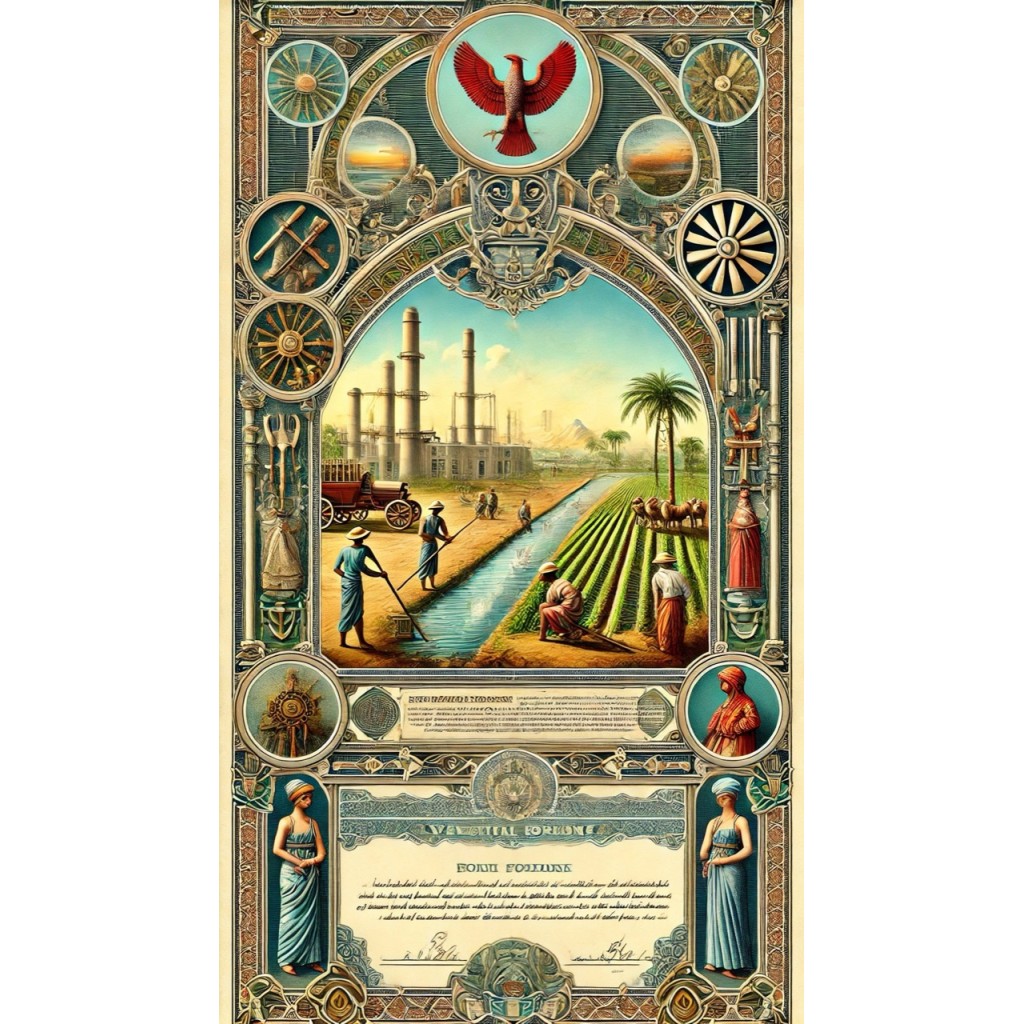
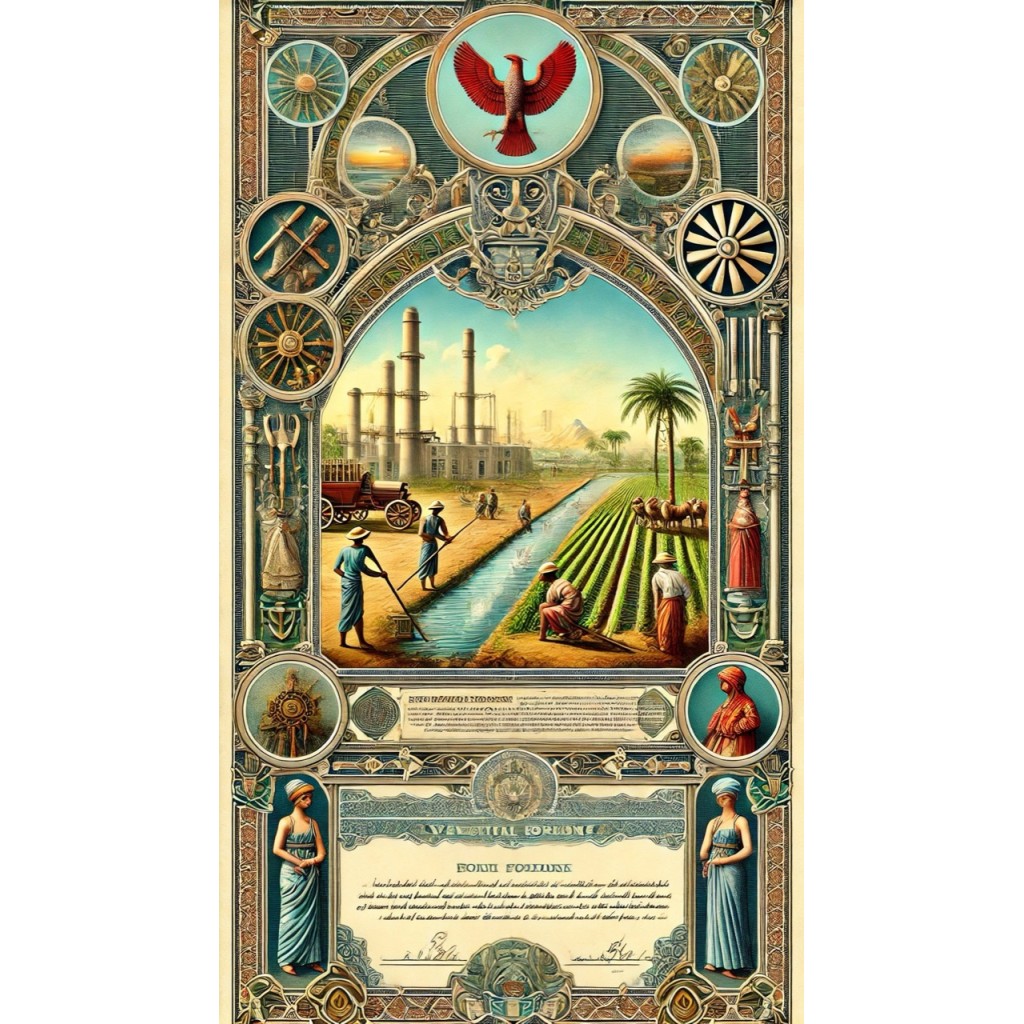
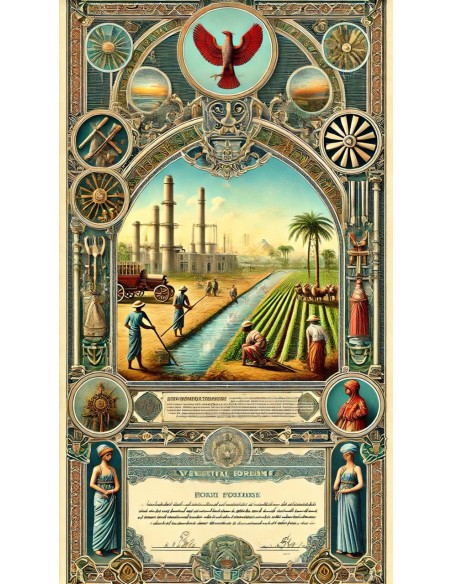
All historical documents for sale are intended for collection. The documents have no economic or financial value (no economic or financial value), and images that are not the historical document are representative of the company's object and the historical period referenced. These can be freely downloaded from the website and printed.