Shopping Cart
There are no more items in your cart
Egyptian Estates Limited: A Glimpse into Egyptian Real Estate History
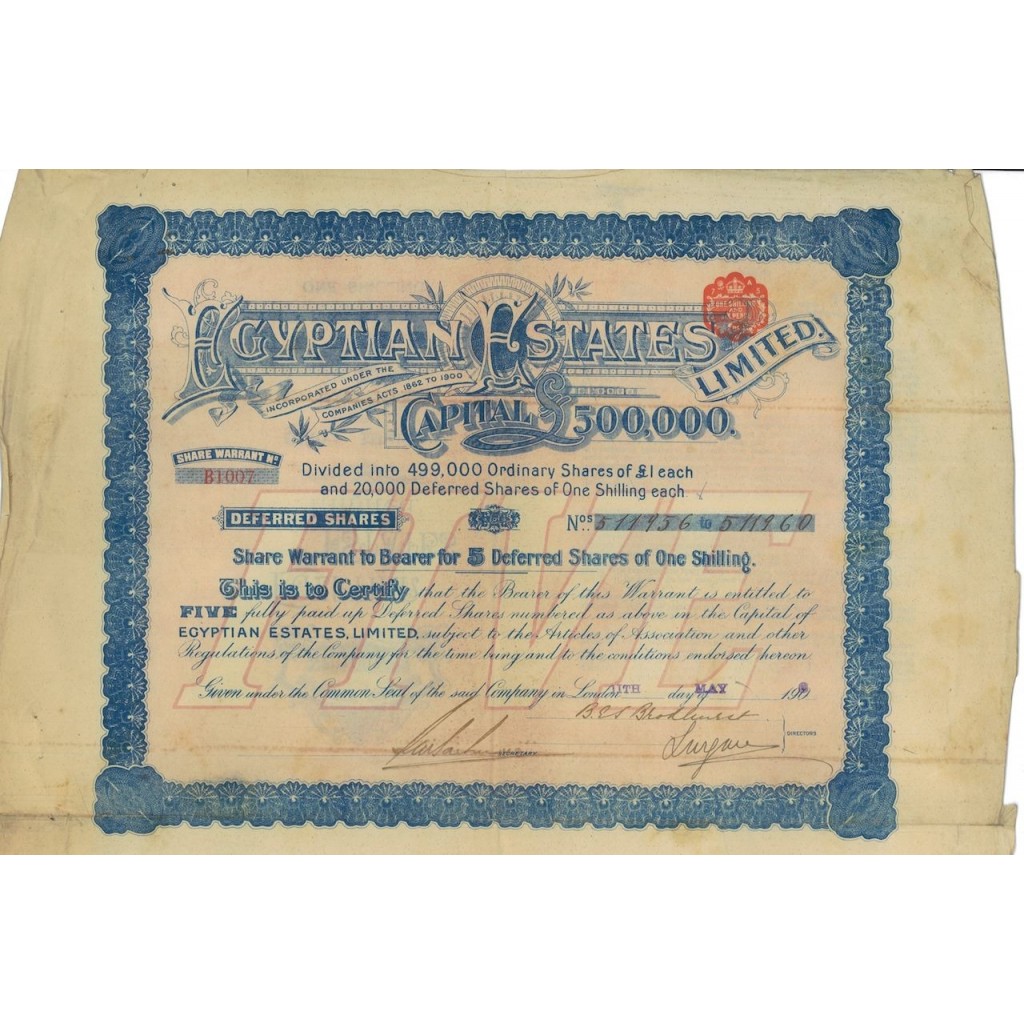
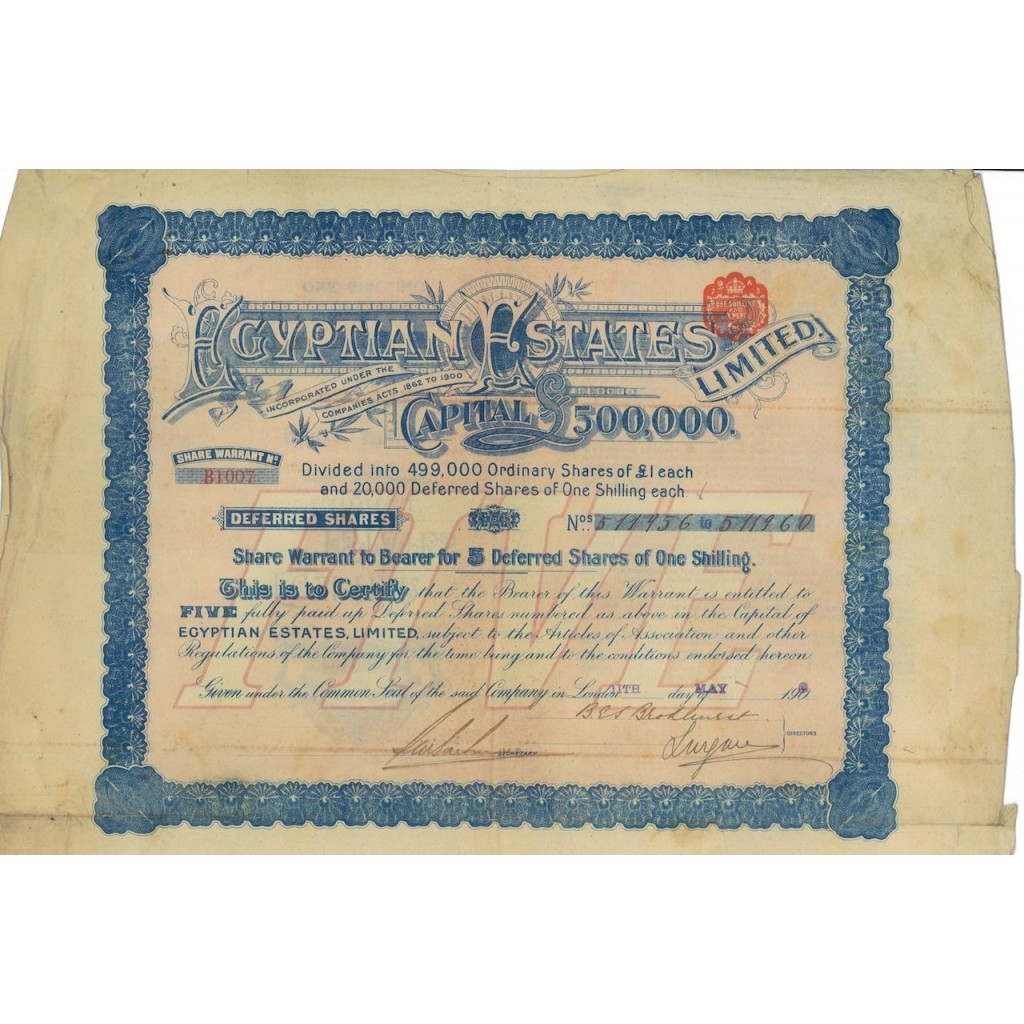
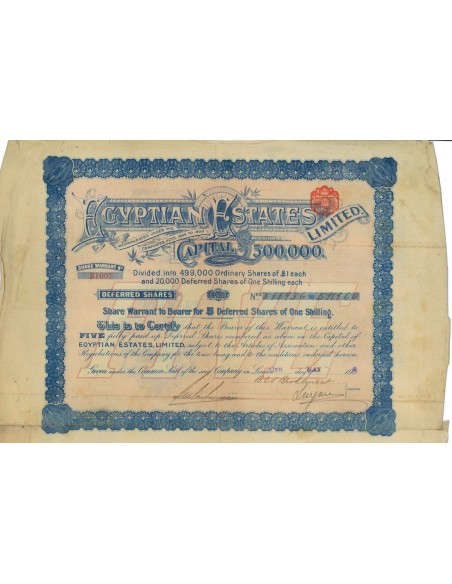
Egyptian Estates Limited represents one of the many examples of foreign companies that, at the beginning of the 20th century, sought to capitalize on the burgeoning Egyptian real estate market. Founded in 1907, the company primarily focused on real estate investments and land development in Egypt, a particularly attractive sector during the British colonial expansion. This share certificate represents ownership in the company, offering a unique window into the economic history of that period.
Historical Context
The certificate dates back to a time when Egypt was under British protectorate and experiencing a period of intense modernization and development. European powers, particularly the United Kingdom, were heavily invested in controlling Egypt's resources and land, and many companies were founded to manage and develop these assets. Egyptian Estates Limited operated in this context, acquiring and developing land, often for agriculture or infrastructure projects.
Document Features
The certificate we are examining is a share warrant representing five deferred shares in Egyptian Estates Limited, issued in London in 1907. The document's design is typical of the period, with a blue decorated border and central text detailing the share's information. The company’s name is highlighted in bold letters, while other details are written in a smaller, readable font.
- Year of Incorporation: 1907
- Head Office: London, United Kingdom
- Initial Share Capital: £500,000
- Final Share Capital: Not available
- Year of Dissolution: Not specified
- Year of Stock Exchange Listing: Not available
- Year of Delisting: Not available
- Printer: Not specified
Economic Context
In 1907, Egypt was considered one of the most promising destinations for foreign investment due to its strategic location and vast natural resources. Egyptian Estates Limited is emblematic of how foreign companies sought to exploit these opportunities. Purchasing land in Egypt was not only a safe investment but also a way to participate in the country’s modernization, which included the development of agricultural, residential, and commercial infrastructure.
Artistic and Typographic Details
The document is a classic example of early 20th-century share certificate design. The use of blue for the borders and main text gives the certificate a solid and respectable appearance, in line with the image the company wanted to project. Although the artist or printer responsible for the design is not specified, the work reflects the high standards of the time for presenting financial documents.
Provenance and Valuation
This certificate has passed through the hands of various collectors before arriving on today's market. Its condition, along with the rarity of the company and its history, contributes to its collectible value. Rarity: Medium. While several similar certificates exist, the specificity of the Egyptian real estate sector and the issuance period make it particularly interesting for collectors of historical documents related to Egypt.
The Importance of Scripophily
Collecting historical certificates like this is not just a fascinating hobby but also a way to preserve a piece of economic history. Every certificate tells a story, not only of a company but also of a historical period, the people who invested in it, and the economic contexts in which it was issued. Egyptian Estates Limited represents a unique window into real estate investment in Egypt during the colonial period, making this certificate a valuable piece for collectors.
These documents, besides enriching a personal collection, are perfect as unique gifts, decorative items, and pieces of historical and modern art. Their value lies not only in their aesthetics but also in their historical and cultural significance.
All historical documents for sale are intended as collectibles. The documents have no economic or financial value (no economic or financial value), and images that are not of the historical document are representative of the company's object and the historical period of reference; they are not provided but can be freely downloaded from the website and printed.