Shopping Cart
There are no more items in your cart
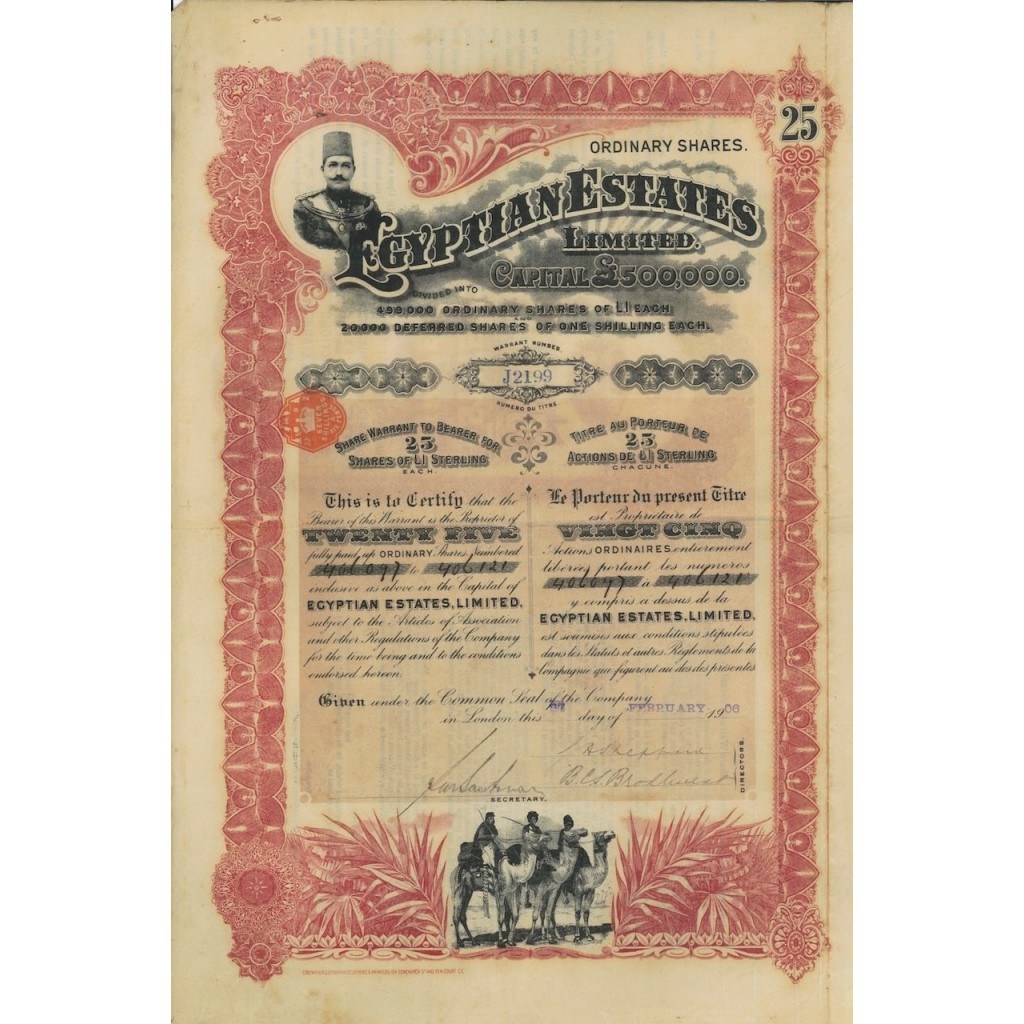
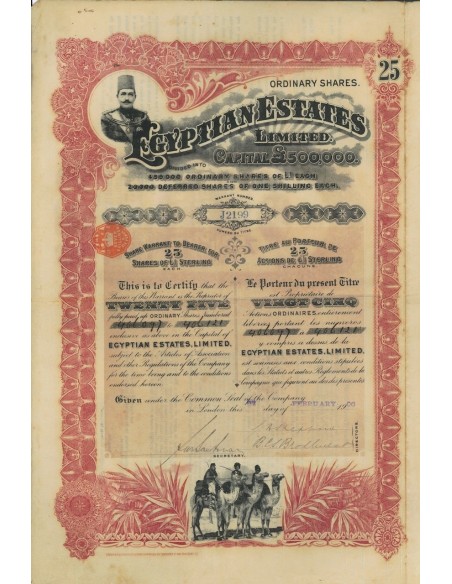

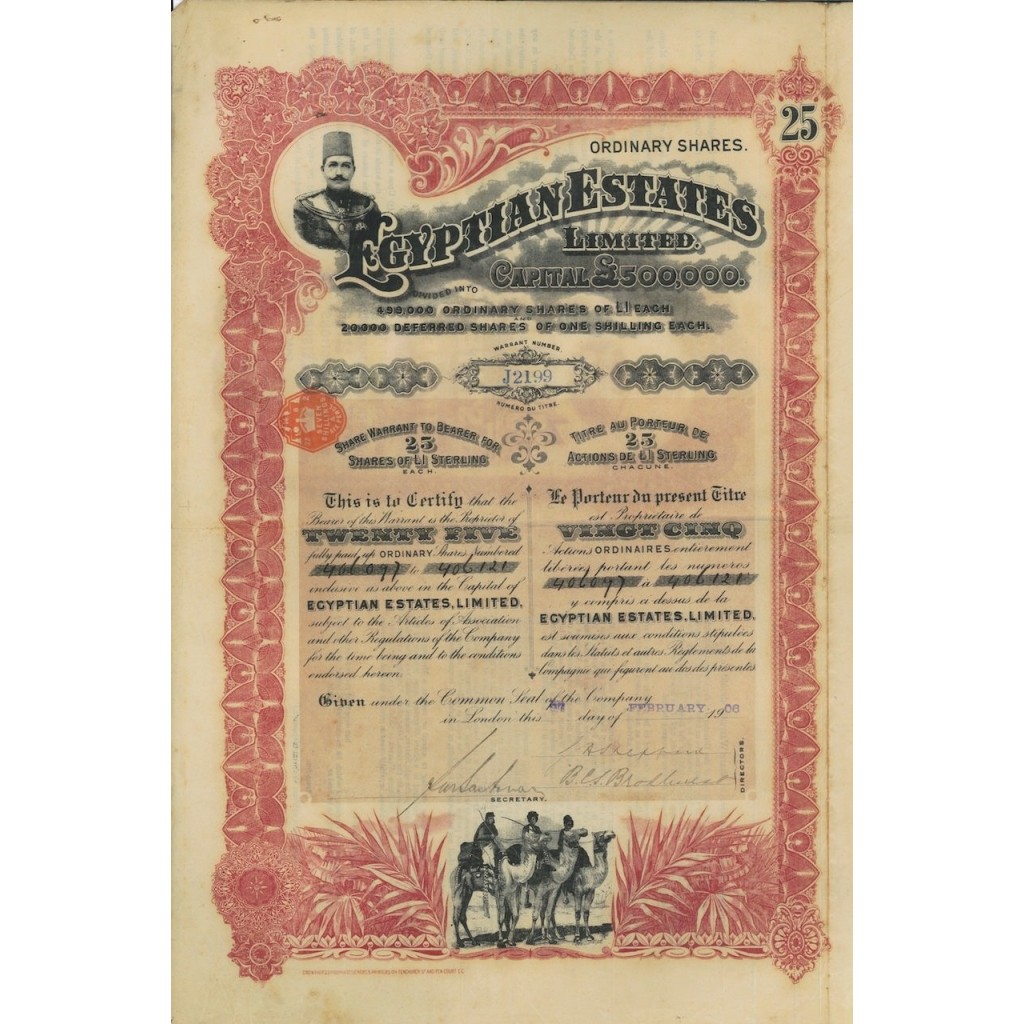
Egyptian Estates Limited was established in 1906 with a share capital of £500,000. The company operated in the real estate sector in Egypt, focusing on the acquisition, development, and management of agricultural land and real estate properties. The business was set during a period of significant interest in European expansion in Egypt, a country undergoing profound economic and political changes. The primary objective of the company was to profit from the development of vast agricultural areas in the Nile Delta and surrounding regions, leveraging the growing demand for cotton and other valuable crops.
Company Historical Data
| Information | Detail |
|---|---|
| Year of Incorporation | 1906 |
| Registered Office | London, United Kingdom |
| Share Capital at Incorporation | £500,000 |
| Share Capital at Cessation | N/A (latest available data from 1910) |
| Year of Stock Market Listing | 1906 |
| Year of Delisting | N/A |
| Year of Company Cessation | N/A |
| Annual Revenue (estimate 1908) | N/A |
| Name at Stock Delisting | N/A |
Document Characteristics
| Characteristic | Detail |
|---|---|
| Serial Number | N/A |
| Number of Shares | 25 ordinary shares |
| Value per Share | 1 £ sterling |
| Date of Issue | February 1908 |
| Signed by | Director: R. B. Mollett |
| Printed by | Waterlow & Sons Limited, London |
| Typographic Elements | Decorated frame with floral motifs and palms; central image depicting three men riding camels. |
| Artist (hypothetical) | Probably a local artist commissioned by Waterlow & Sons Limited |
Historical Context
The bond was issued in 1908, a crucial period for Egypt under British rule. The country was experiencing an economic boom driven by the expansion of agriculture, particularly cotton production, destined for European markets. This period was also marked by increasing European influence, with significant investments in infrastructure and industry. Egyptian Estates Limited fits into this context, representing an example of how Western interests sought to capitalize on the economic opportunities offered by the region.
Artistic and Typographic Details
The document is an excellent example of early 20th-century typographic and lithographic art. The elaborate frame with floral motifs and depictions of local fauna, such as palm trees, reflects the ornamental style typical of the time. The central scene, showing three men riding camels, evokes the exotic allure of Egypt, a land of vast spaces and natural wealth. The printing was executed by the renowned firm Waterlow & Sons Limited of London, a company famous for producing high-quality credit certificates and official documents.
Provenance of the Title
This specific title was originally owned by a British investor, likely attracted by the profit prospects offered by real estate developments in Egypt. The document was later acquired by a private collector in the 1990s, who preserved it in excellent condition. It is now available for purchase through our e-commerce platform specializing in scripophily.
Valuation and Rarity
This title is considered rare in the scripophily market, particularly for its excellent condition and its connection to a specific historical period of interest. The rarity of the document is accentuated by its limited issuance and the fact that few copies have survived to this day.
Importance of Scripophily Collection
Scripophily collecting is a hobby that allows a connection with history through unique and meaningful documents. Stock and bond certificates are not only a reminder of the economic past but also works of art that testify to the ambitions and challenges of past eras. Displaying these documents in appropriate frames not only preserves their integrity but also enhances their visual impact, making them ideal for enriching home or professional environments.
These documents, besides being for personal collection, are perfect to be used as a gift, as a piece of interior decor, or as a piece of historical and modern art. Their uniqueness makes them particularly valuable and suitable for those who wish to own or give something truly special.
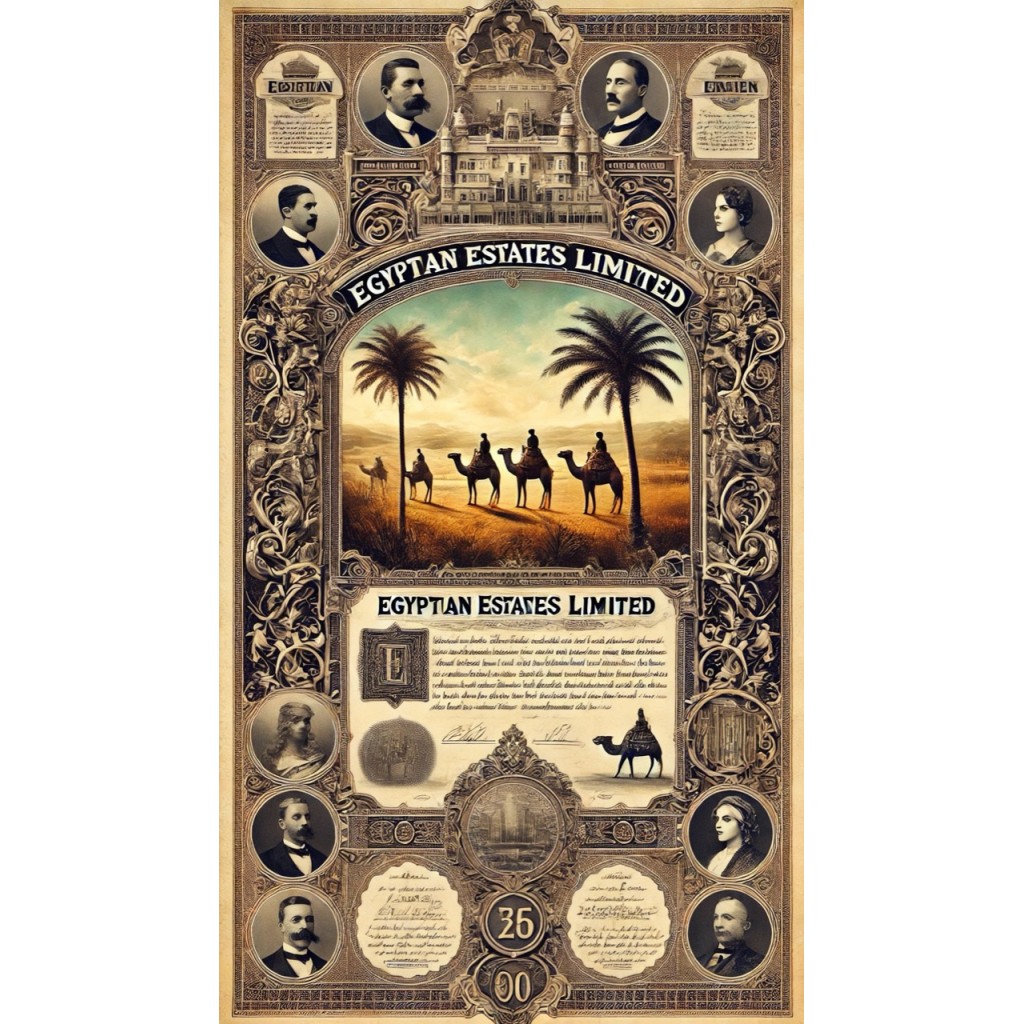
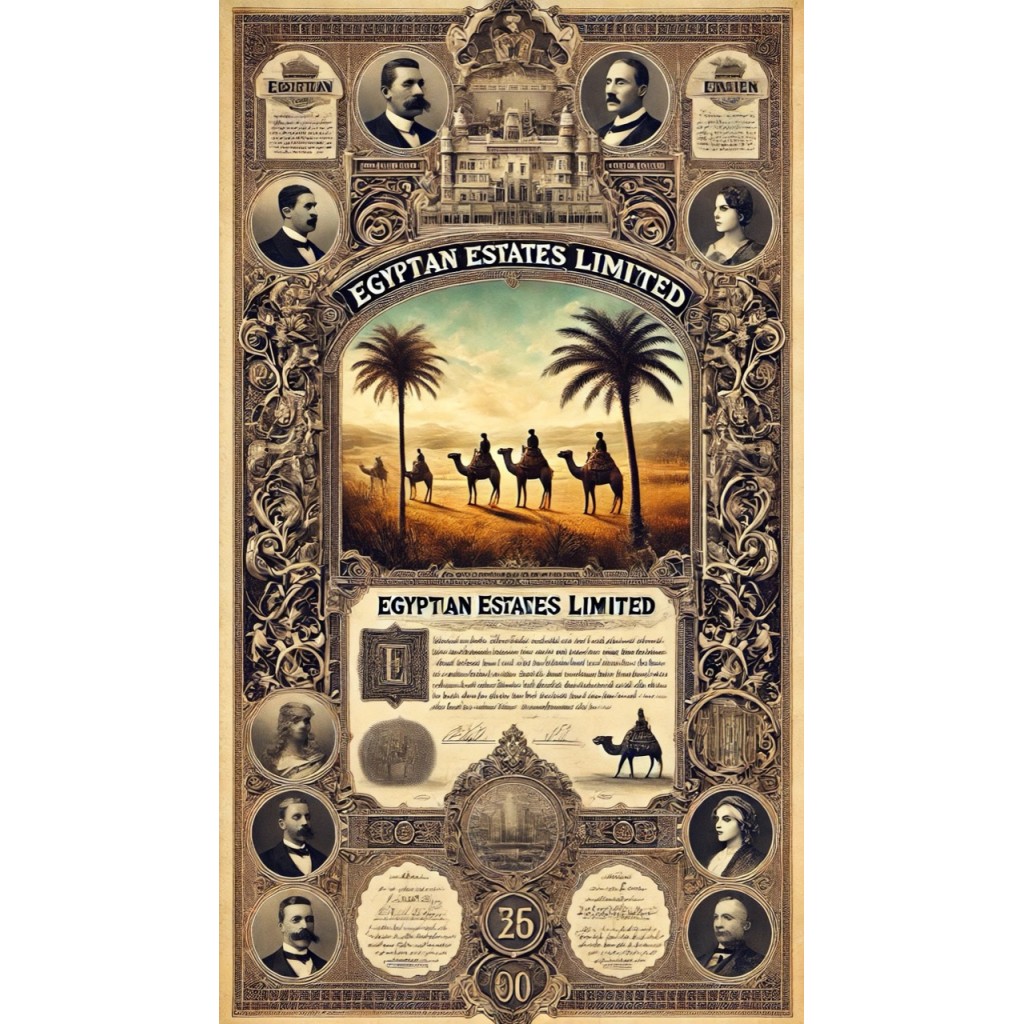
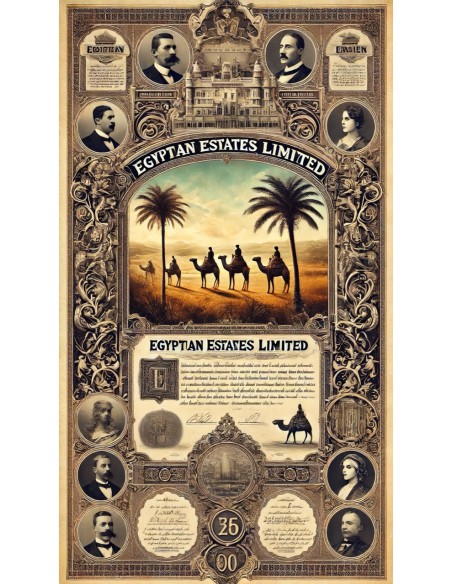
All historical documents for sale are intended for collection purposes only. The documents have no economic or financial value (no economic or financial value), images that are not the historical document are representative of the company's object and the historical period referenced, they are not provided but can be freely downloaded from the website and printed;