Shopping Cart
There are no more items in your cart
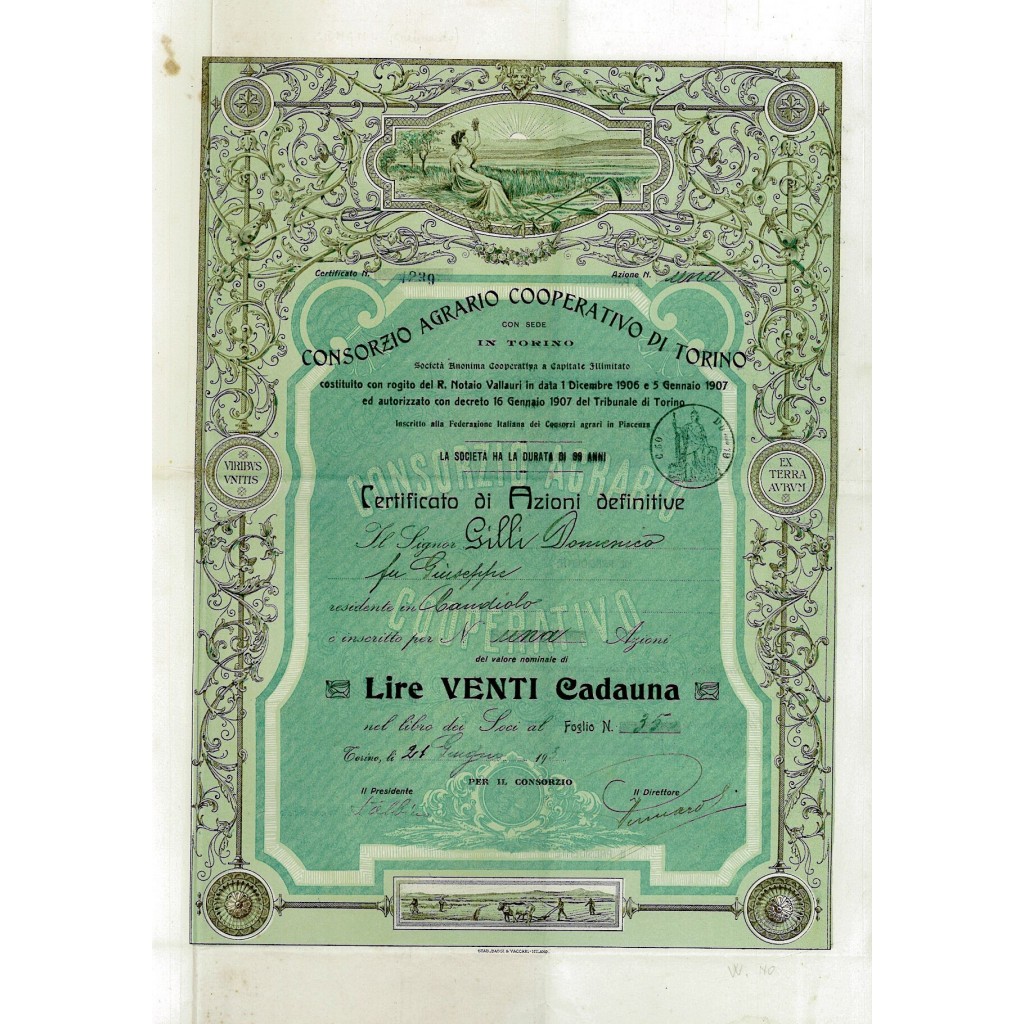
The agrarian consortiums were born in the form of cooperative societies in the late nineteenth century, to mainly perform the function of buying groups (especially chemical fertilizers and agricultural machines) in favor of farmers. Over the years they absorbed many of the functions that were previously assumed by other institutions created in favor of farmers, in particular the agricultural rallies, which were regulated by the R.D. 3452 of December 23, 1866, and of the Italian Farmers' Society, which had struggled to take off. Even in the Austrian Empire in 1881 the Tyrolean diet had favored the birth of the Provincial Agriculture Council, a public agency with the task of encouraging the recovery and rationalization of the primary sector. The district agricultural consortia were direct emanations of this organ. These bodies were responsible for promoting agricultural improvements, agricultural education, discussing and interfering with subsidies offered by the state but also promoting the cumulative purchase of seeds or agricultural stocks. It was precisely the democratic ideal developed within these bodies that succeeded in overcoming the mistrust of the peasants and was the basis for the subsequent development of the cooperative families in the Trentino area. An example of this was the birth of the first cooperative family promoted by the Judicial priest Don Lorenzo Guetti.
In 1892 the Federconsorzi was established in Piacenza, a national organization. During the First World War they carried out an important logistic task for the importation of cereals and to favor the supply of troops to the front.
During fascism
From 1926 the various agrarian consortia became "the commercial organ of the Provincial Federation of Farmers": in fact, they offered an agricultural credit without interest towards the purchases of seeds, fertilizers, agricultural machines, livestock and all that was necessary for the productive activity agricultural: in this way the banking usury and the speculation realized by the great private distributors were demolished.
The agrarian consortiums, perfectly inserted in the agrarian policy of fascism (supporting integral reclamation, Battle of the wheat, etc.), also organized the management of masses. In this case it was a matter of "amassing" precisely all the primary food products in the agricultural Consortia to promote greater rationalization and efficiency in the sector and keep the nation ready in case of need, transforming the civil economy more easily into the economy of war. In 1935 there was the first voluntary clustering of wheat, when the agricultural consortia amassed 12 million quintals of wheat, while in 1938, 40 million quintals were amassed for autarchic needs.
On May 30, 1932, with Law No. 752, the financial institution of agricultural consortia was established, to facilitate the financial structure of the consortia themselves; while with the royal decree law of 5 September 1938 and the law of 2 February 1939 the provincial agricultural consortia were established, which combined the tasks and functions of the agricultural consortia and the Federation, undergoing a rationalization which reduced them from 196 to 94 (one in the province).