Shopping Cart
There are no more items in your cart
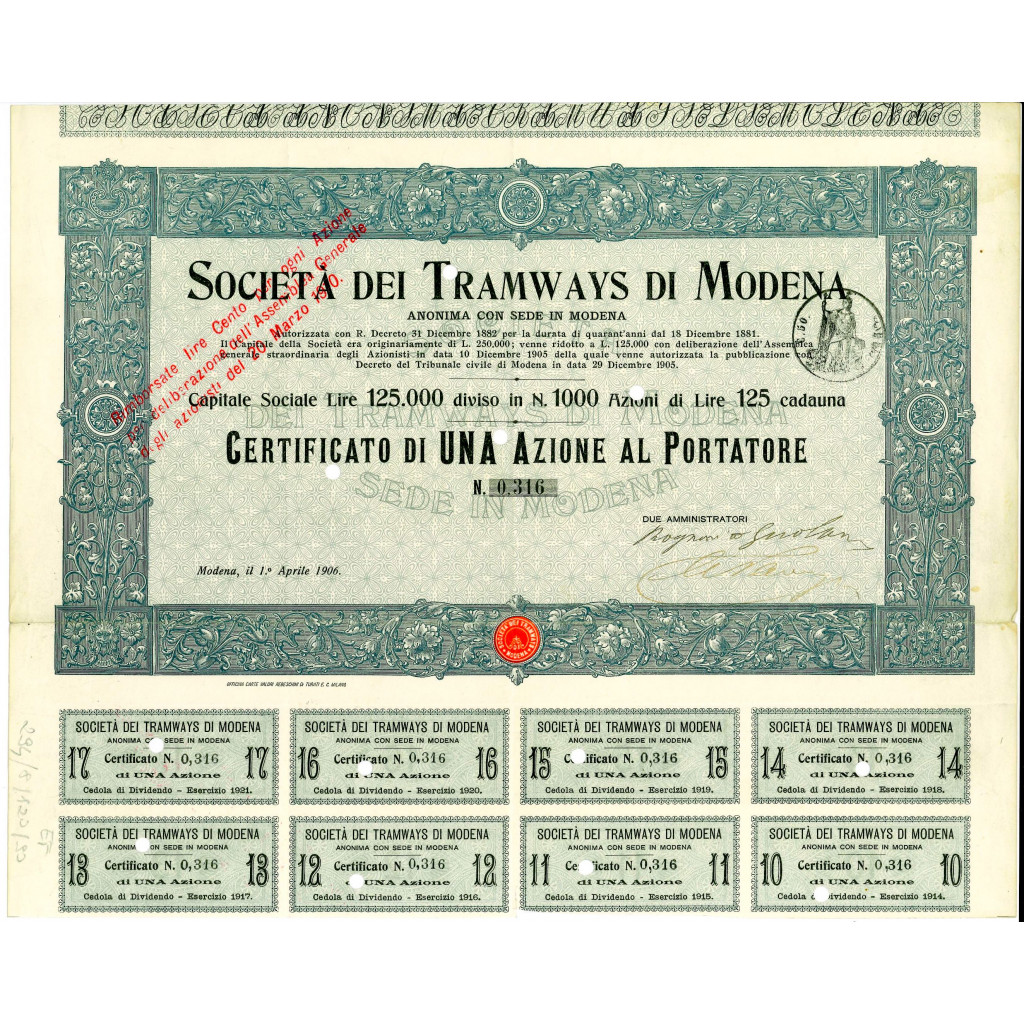
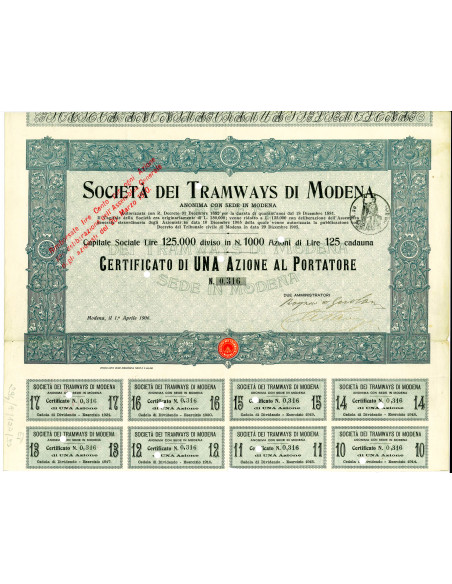
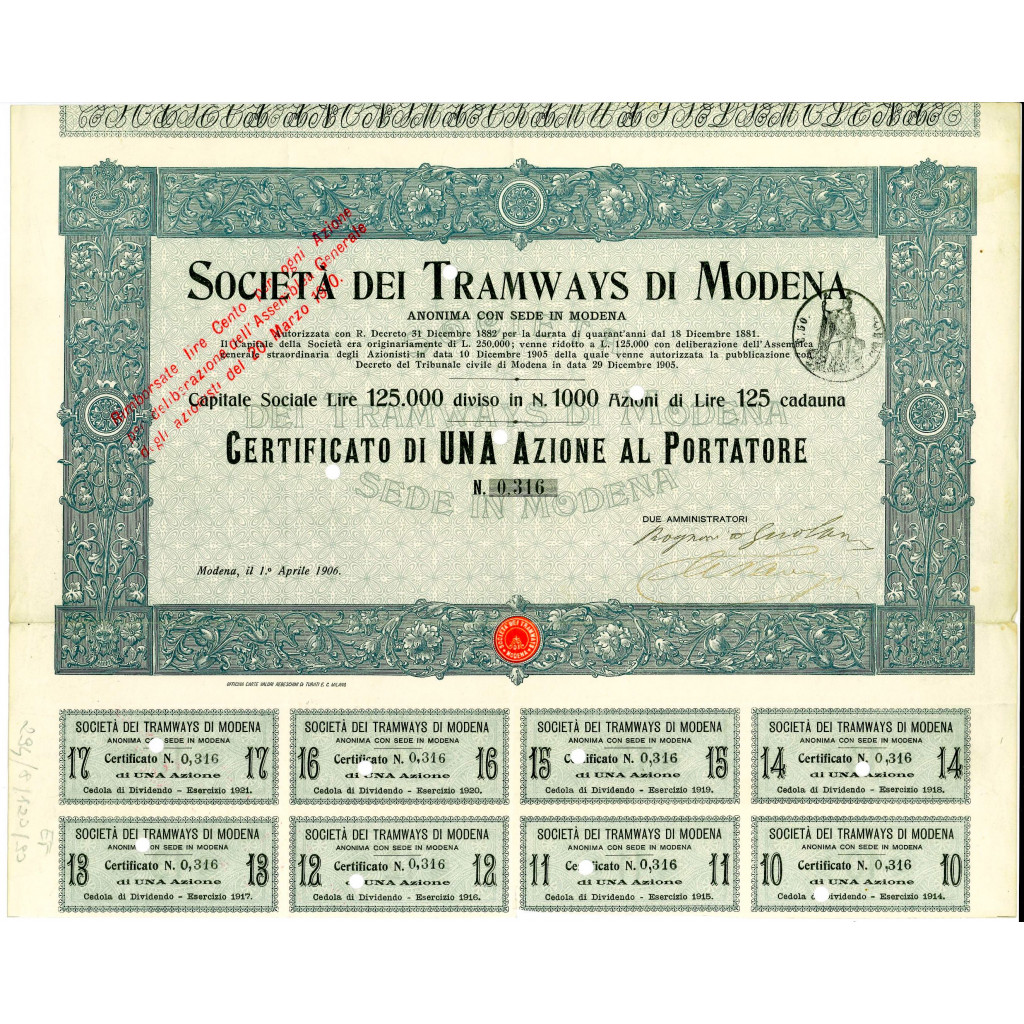
Modena's tramway network characterized urban mobility in that Emilian city between 1881 and 1950.
Established initially as a horse-drawn tramway and later electrified and converted to narrow gauge, the network survived the two world wars until it was supplanted in 1950 by a trolleybus.
Following the inauguration of the Military School of Infantry and Cavalry on January 1, 1863, Modena increased its role as an attractive center of traffic, prompting the adoption of modern public transportation systems.
A first horse-drawn, ordinary-gauge tramway project was presented in 1881 by engineers Galli, Manzini and Baseveri, enabling the Modena Tramways Company to inaugurate the line between the railway station and Porta Sant'Agostino in the same year.
In 1883 the construction of the urban section of the Provincial Railways, which had its station at what later became Reiter Avenue, entailed the construction of a new road axis, favoring the extension of the tramway to Largo Garibaldi and later to San Lazzaro. The maximum extension of the first network was reached in 1885, with the inauguration of the section to San Francesco.
Electric tramways
As part of the master plan discussed at the beginning of the 20th century, which led, among other things, to the demolition of the city walls, in 1909 the municipality took over the tramway network and municipalized the electric network, the management of which passed to the Aziende Elettriche Municipalizzate (AEM). The latter was entrusted with the task of operating and upgrading the tramway systems, the extension of which was planned to serve the newly built districts.
The electric traction operation[2] was inaugurated on April 22, 1912 on a circular route that followed that of the pre-existing system from the station to Porta Sant'Agostino, and then followed Viale Barozzi (then Viale Leoni), Via Giardini, Porta San Francesco, Corso Canalchiaro thus returning to Via Emilia. The depot on Via Sigonio could be reached via the service branch to Via Giannone. To it was added, on May 1 of the same year, a diametrical line that followed the axis of the via Emilia, between the Madonnina and San Lazzaro.
In September, the last remaining horse-drawn routes were permanently decommissioned, and the following month the network was enriched with two additional circular routes on the routes Ferrovia-via Paolo Ferrari-via Menotti-via Emilia-viale Storchi-viale Montecuccoli and centro-viale Trento Trieste-Archirola-Carlo Sigonio-via Emilia-corso Canalchiaro. An important junction was Piazza Libertà (later Piazza Mazzini), where there were two tracks for shunting and parking cars.
Only a year later, some changes and simplifications were implemented, consisting in the elimination of the sections along Via Montecuccoli and Via Leoni (later Via Jacopo Barozzi), with simultaneous extension on Via Giardini to Saliceta San Giuliano, serving the military installation there.
In 1916, during World War I, the San Cataldo cemetery was extended and also connected to the tramway network, the service on which was reformed by constituting two diametrical lines, two radial lines and one circular line. Further extensions took place in 1920 toward Baggiovara, as far as Due Mulini and in 1922 to San Damaso.
In 1925 it was the turn of the track along Via Buon Pastore (then Gino Tabaroni), a route being urbanized, which gave rise to an additional line to the railway station. With this expansion, the network reached an extension of 27.086 km.
Beginning in the late 1920s, new urban transformations were initiated, with asphalting of the first roads and the complete renovation of the provincial railways; at the same time in some streets, such as Corso Vittorio Emanuele, Largo Porta Bologna, Largo Garibaldi and the Viale Crispi, of access to the FS station, the tracks were laid on their own seat consisting of long flower beds. This change culminated in 1932 with the inauguration of the new railway station in Piazza Manzoni, reached by a special tramway track along Viale delle Medaglie d'Oro (then Viale Umberto I), engaged by the runs of an "interstationary" line. As a result of the activation of the new urban railway line, it took to intersect the tramway network with two level crossings placed respectively on the Vignolese road and via Emilia Est. Translated with www.DeepL.com/Translator (free version)