Shopping Cart
There are no more items in your cart
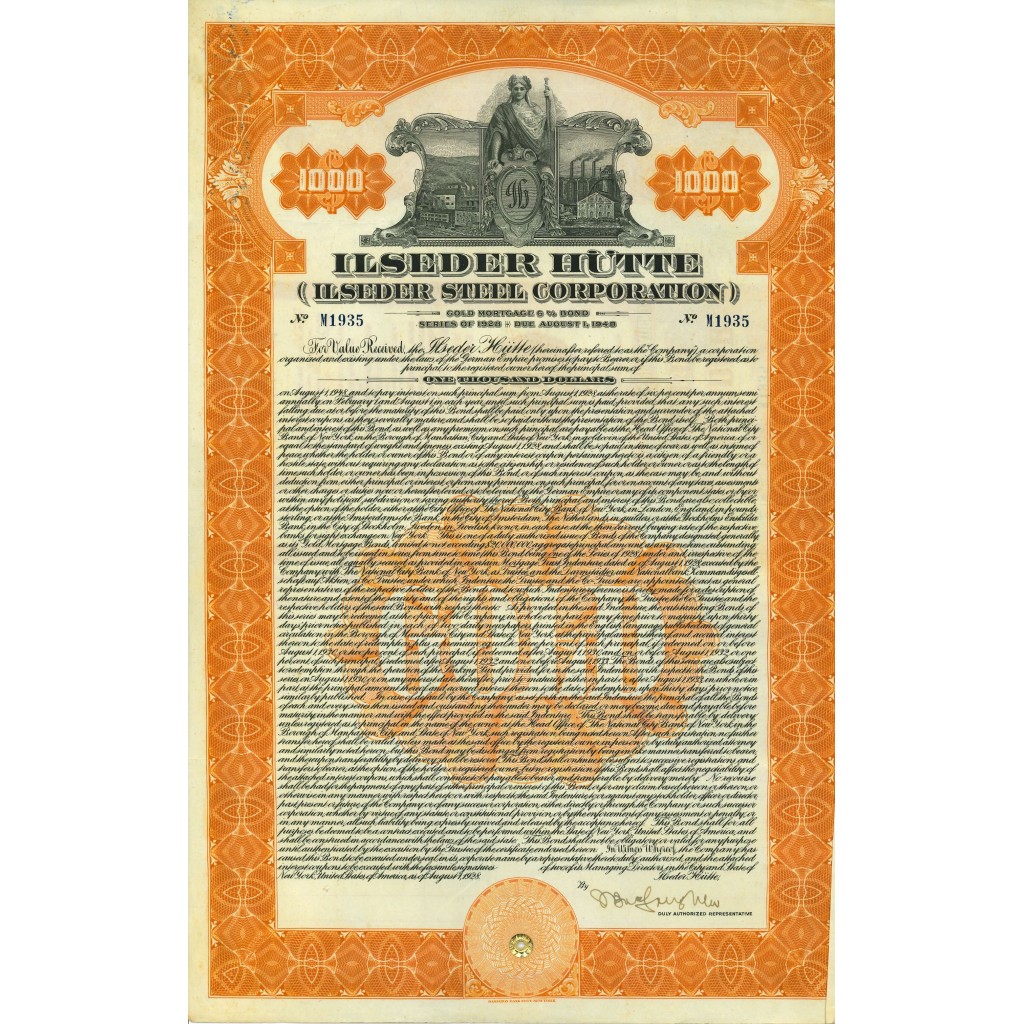
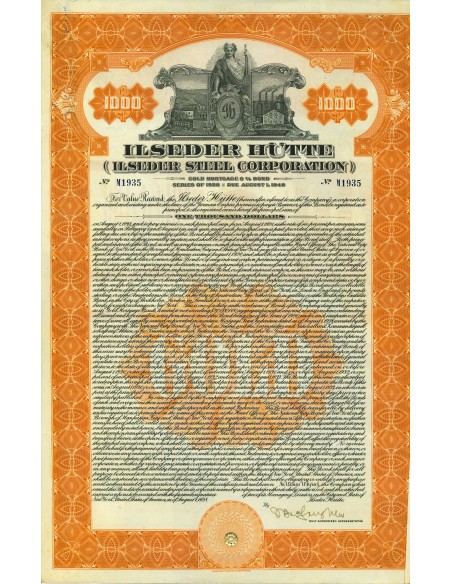
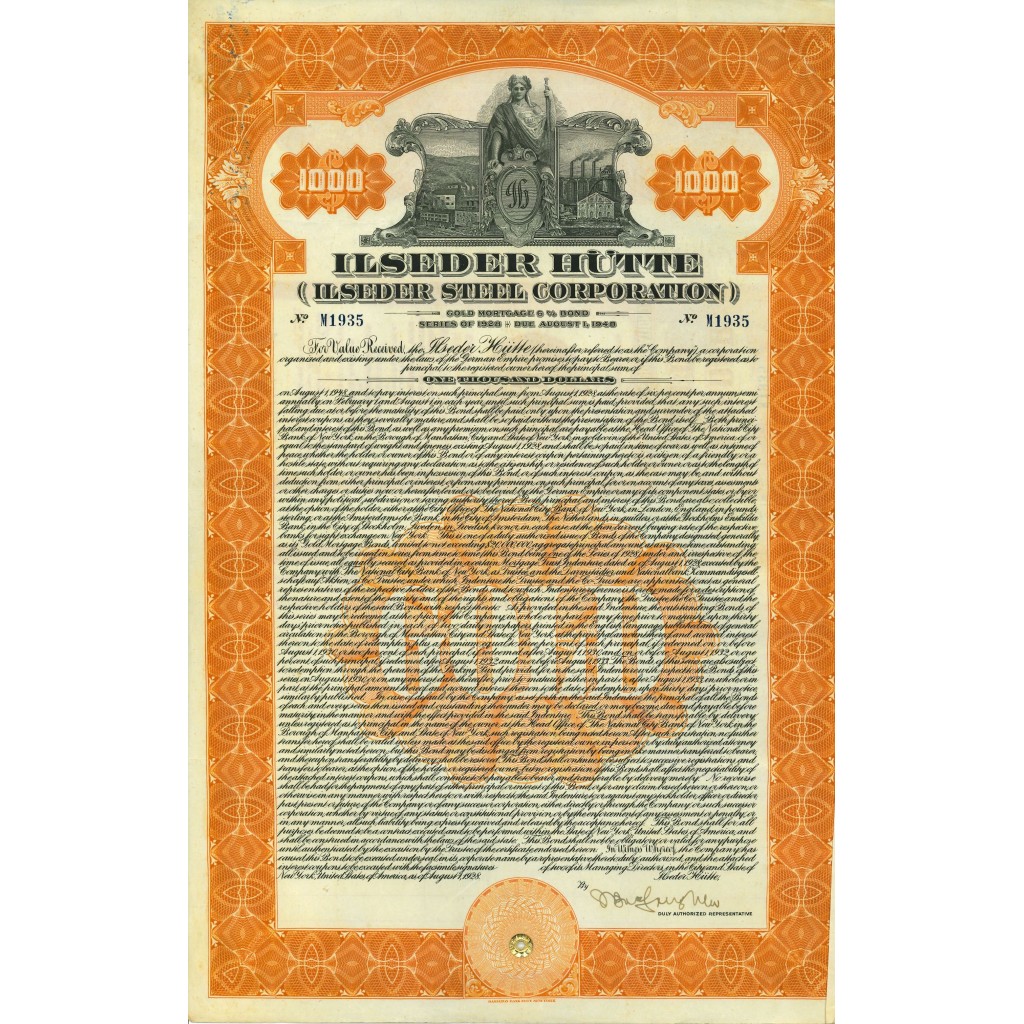
Ilseder Hütte, also known as Ilseder Steel Corporation, was one of the leading steel companies in Germany. Founded to exploit the rich mineral resources of the Ilsede region, the company played a crucial role in the development of the German steel industry. The production of steel and other metals significantly contributed to the region's economy and Germany's industrial modernization. The issuance of bonds like the one in 1928 allowed the company to raise the necessary funds to expand its operations and improve production infrastructure.
Historical Data of the Company
| Data | Value |
|---|---|
| Year of Establishment | 1858 |
| Headquarters | Ilsede, Germany |
| Name at Delisting from Stock Exchange | Ilseder Hütte (Ilseder Steel Corporation) |
| Year of Stock Exchange Admission | Not available |
| Year of Delisting from Stock Exchange | Not available |
| Year of Company Cessation | 1978 |
| Initial Capital | Not available |
| Final Capital | Not available |
| Revenue in 1928 | Not available |
| Revenue in 1930 | Not available |
Characteristics of the Historical Document
| Characteristic | Detail |
|---|---|
| Type of Document | Bond (Gold Bond) |
| Nominal Value | $1000 |
| Interest Rate | 6% |
| Duration | 20 years |
| Issue Date | 1928 |
| Maturity Date | 1948 |
| Issuer | Ilseder Hütte |
| Country | Germany |
| Language | English |
Scripophily collecting offers a unique opportunity to own a piece of industrial and financial history. Each document tells a story of production, growth, and transformation, reflecting the economic dynamics of a bygone era. The aesthetic beauty of these documents, with their intricate details and illustrations, makes them art pieces as well as historical testimonies.
The bond of Ilseder Hütte represents a significant piece of German and world industrial history. Issued in Germany, it symbolizes the importance and influence of the company in the production of steel, a fundamental material for industry and economy. Collecting a document like this not only enriches one's collection but also provides a tangible link to the past, allowing for exploration and understanding of the roots of the modern steel industry.
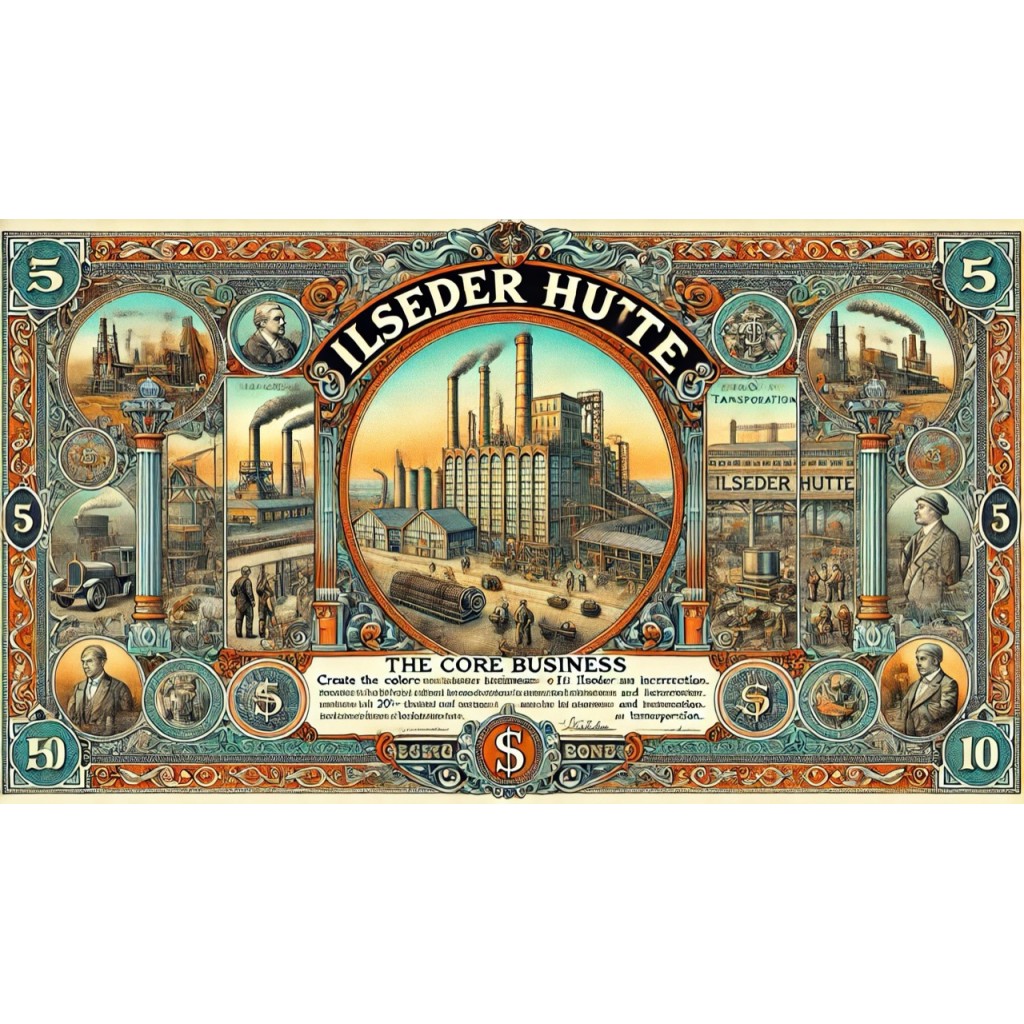
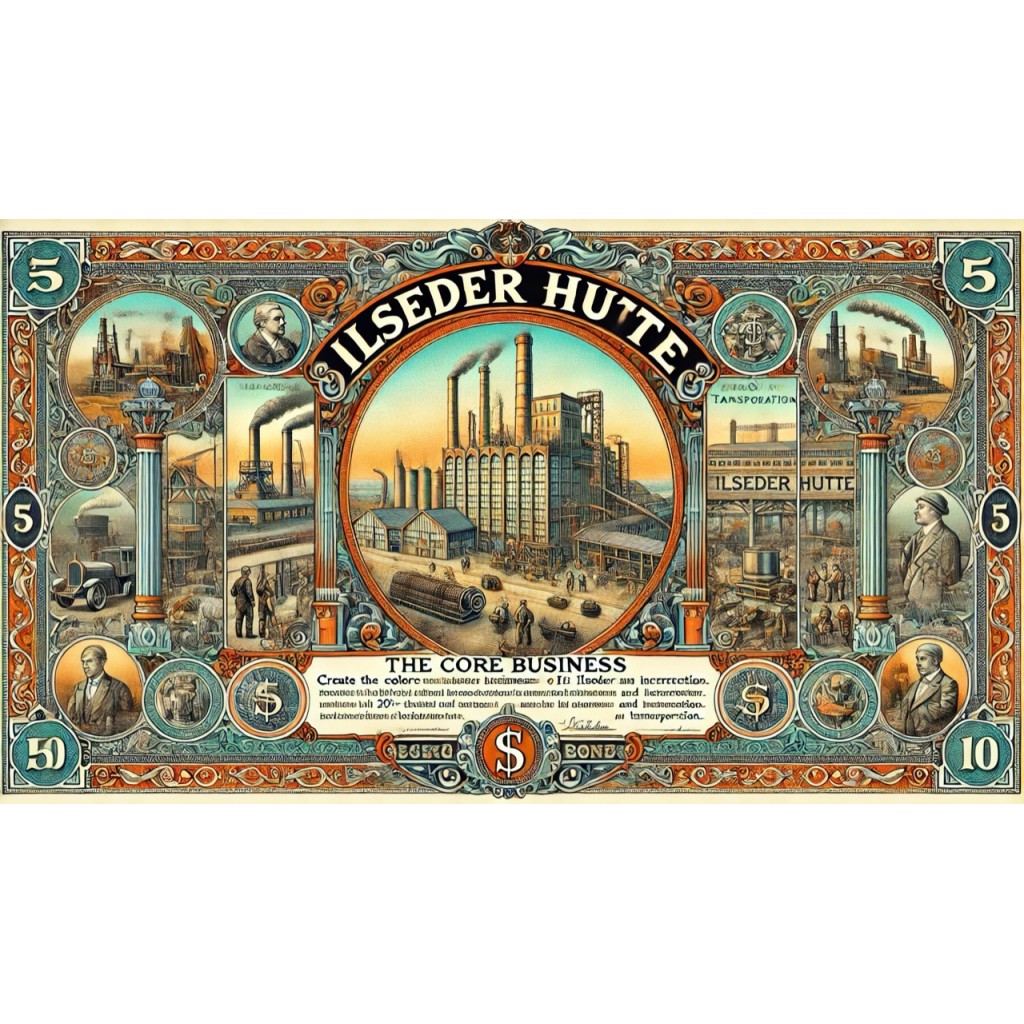
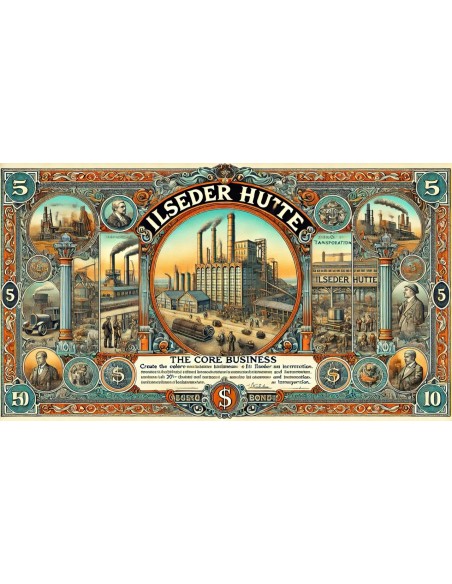
All historical documents for sale are intended for collection purposes only. The documents have no economic or financial value (no economic or financial value), the second image is only representative of the company's business.
Funded by the bank Ephraim Meyer & Sohn Carl Hostmann founded a steel industry based on alleged coal and mineral deposits in this area. Although not enough coal deposits were found, the company, called "Bergbau und Hüttengesellschaft
Under Fritz Hurtzig and Carl Haarmann on 6 September 1858 the "Aktiengesellschaft Ilseder Hütte" was taking over the business and in 1861 production began. Despite the
In the era of the German Empire, the company became one of the main players in the German coal and steel industry. In 1872 a rolling mill was added and in 1879 a third blast furnace began to operate.
In 1928 the Alseder Hütte obtained a loan of 10 billion dollars from the National City Bank of New York.
In 1929 the opening of the Mittelland canal reduced transport costs.
World War II caused no damage and the company expanded until the economic crisis of the 1970s.
In 1970 the company merged with the state-owned Salzgitter AG. The extraction of the mineral ended in 1978 and in 1983 the last blast furnace was closed.
In 1989 the company became part of Preussag. Preussag stopped the remaining production parts such as the coking plant, the power plant and the by-products in 1995.
The area became an industrial park. The blowing engine building is in use for various events while the steam production building was demolished in the spring of 2010.
Tutti i documenti storici in vendita si intendono da collezione. I documenti non hanno nessun valore economico o finanziario (no economic or financial value).