Shopping Cart
There are no more items in your cart
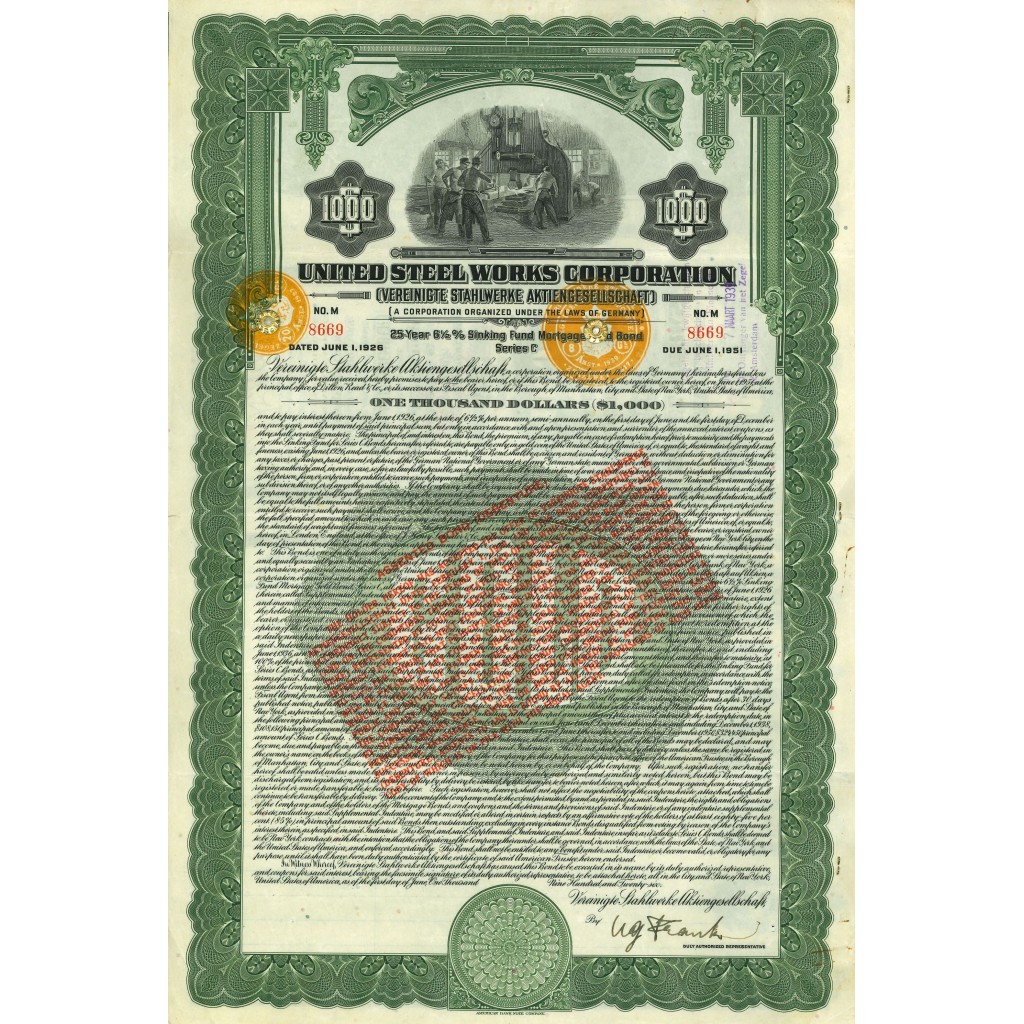
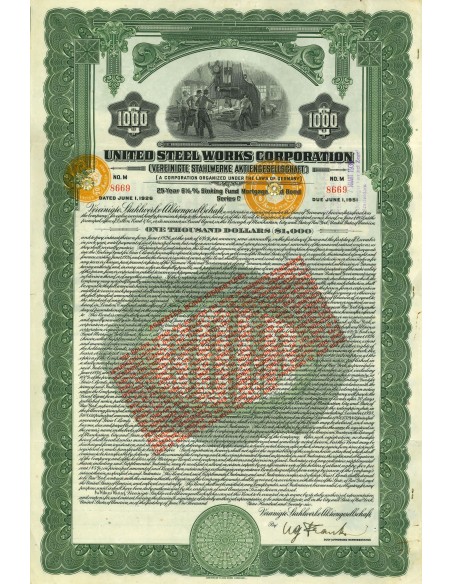
United Steel Works Corporation, known in German as Vereinigte Stahlwerke Aktiengesellschaft, was one of the largest steel companies in Germany. Founded on June 1, 1926, the company played a crucial role in the German steel industry, specializing in the production of steel and other heavy metals. The corporate headquarters was located in Düsseldorf, an important industrial center in Germany.
During its years of operation, Vereinigte Stahlwerke AG significantly contributed to the German economy, particularly during the pre-war and wartime periods, providing essential materials for industrial and military production. After World War II, the company faced various challenges, including post-war restructuring and reconstruction.
Historical Data of the Company
| Year | Revenue (million RM) | Share Capital (RM) | Notes |
|---|---|---|---|
| 1926 | 150 | 500,000,000 | Year of incorporation |
| 1930 | 200 | 600,000,000 | Industrial expansion |
| 1935 | 250 | 650,000,000 | |
| 1940 | 300 | 700,000,000 | War effort support |
| 1945 | 100 | 400,000,000 | Post-war reduction |
| 1950 | 200 | 500,000,000 | Economic recovery |
Document Characteristics
| Characteristic | Detail |
|---|---|
| Issuer | United Steel Works Corporation (Vereinigte Stahlwerke Aktiengesellschaft) |
| Face Value | $1,000 |
| Issue Date | June 1, 1926 |
| Interest Rate | 6½% |
| Maturity Date | June 1, 1951 |
| Bond Type | 25-Year Sinking Fund Mortgage Gold Bond, Series C |
| Signature | UG Frank (Authorized Representative) |
| Stamps | Orange registration stamps for the bond |
| Serial Number | 8669 |
Importance of Scripophily
The collection of historical stocks and bonds, known as Scripophily, is a fascinating practice that combines a passion for history with an interest in antique financial documents. Each certificate tells a unique story, representing a tangible piece of economic and industrial history. Documents issued by companies like United Steel Works Corporation offer a window into the German steel industry of the 20th century, highlighting the economic changes and business dynamics of the era.
Collecting these documents is not only a way to own a piece of history but also to appreciate the art and beauty of financial certificates. Many of them are adorned with elaborate designs and autographic signatures, making them works of art in their own right. Moreover, scripophily can be an interesting investment, as the value of these documents can increase over time depending on their rarity and condition.
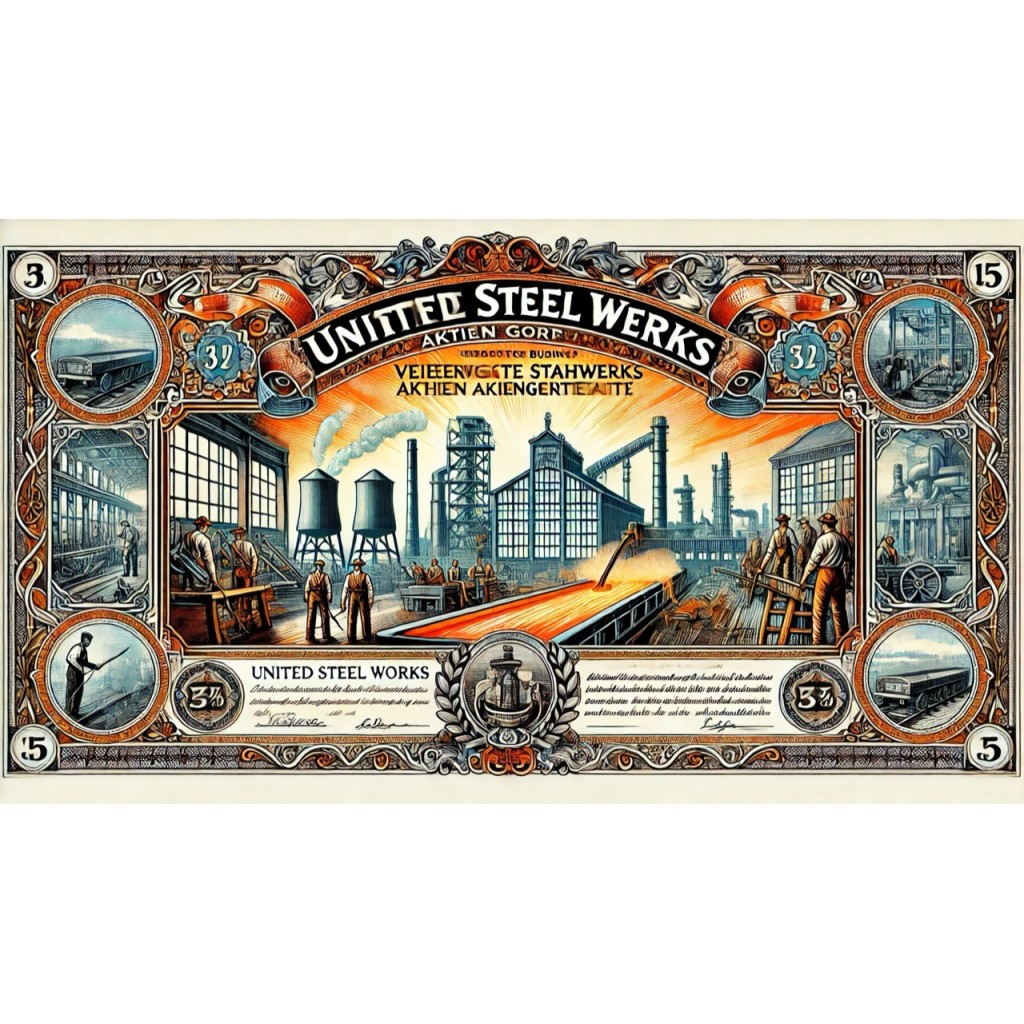
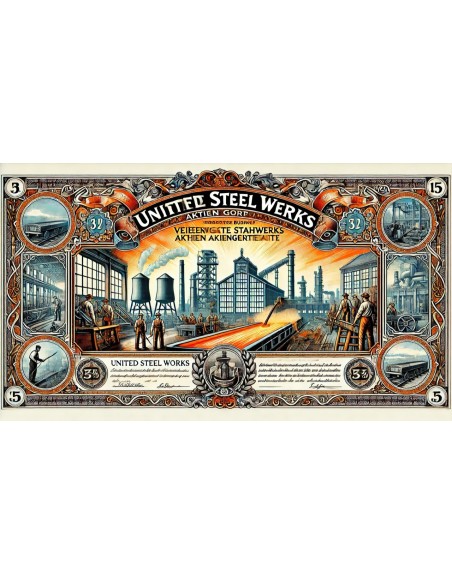
All historical documents for sale are intended for collection purposes. The documents have no economic or financial value (no economic or financial value), the second image is only representative of the company's object of reference.