Shopping Cart
There are no more items in your cart
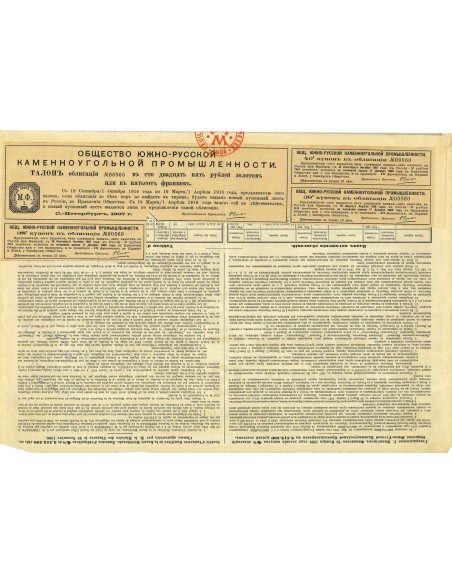
The Société d'Industrie Houillères de la Russie Méridionale is one of the many industrial companies that emerged during the economic and industrial expansion of the Russian Empire in the late 19th century. The company, which was mainly involved in coal extraction and processing in the southern region of Russia, represents a significant example of how heavy industry played a crucial role in the economic development of the era.
Historical Profile of the Company
The Société d'Industrie Houillères de la Russie Méridionale was established with the aim of exploiting the rich coal resources in the region. Coal, a fundamental energy resource for industry and transportation, represented a strategic sector for the Russian Empire, which aimed to reduce its dependence on imports and enhance its internal production capacity.
The company's headquarters were located in Saint Petersburg, the economic and commercial heart of the Empire. The company was officially founded on April 9, 1872, with an initial capital of 7,500,000 rubles, divided into shares and bonds to finance extraction and production operations.
Historical Data of the Company
| Company Data | Details |
|---|---|
| Year of Foundation | April 9, 1872 |
| Headquarters | Saint Petersburg, Russia |
| Initial Capital | 7,500,000 rubles |
| Year of Stock Exchange Admission | Not available |
| Year of Delisting from Stock Exchange | Not available |
| Year of Company Closure | Not available |
| Annual Revenue | Not available |
| Capital at Closure or Last Known | Not available |
| Bonds Issued | 500 rubles gold per bond |
| Annual Interest | 4% |
| Document Date | 1897 |
Document Features
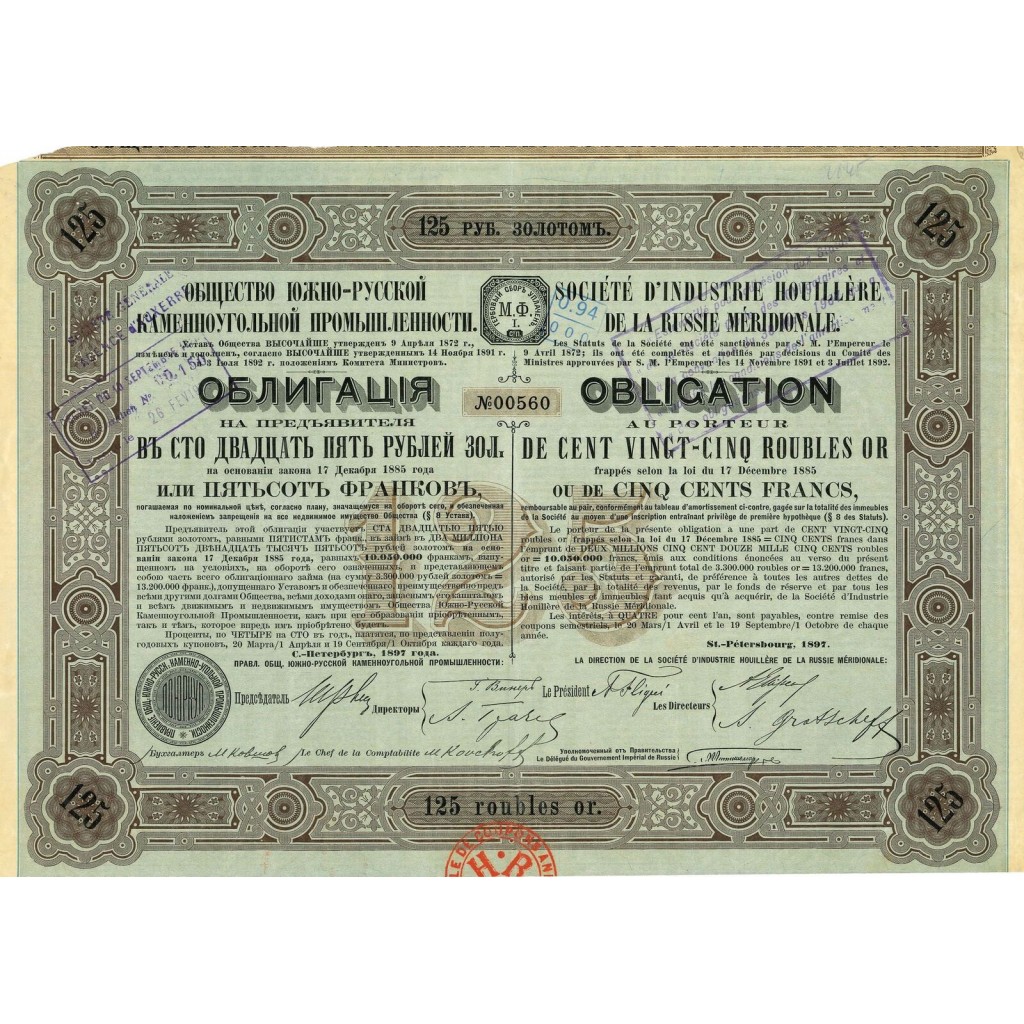
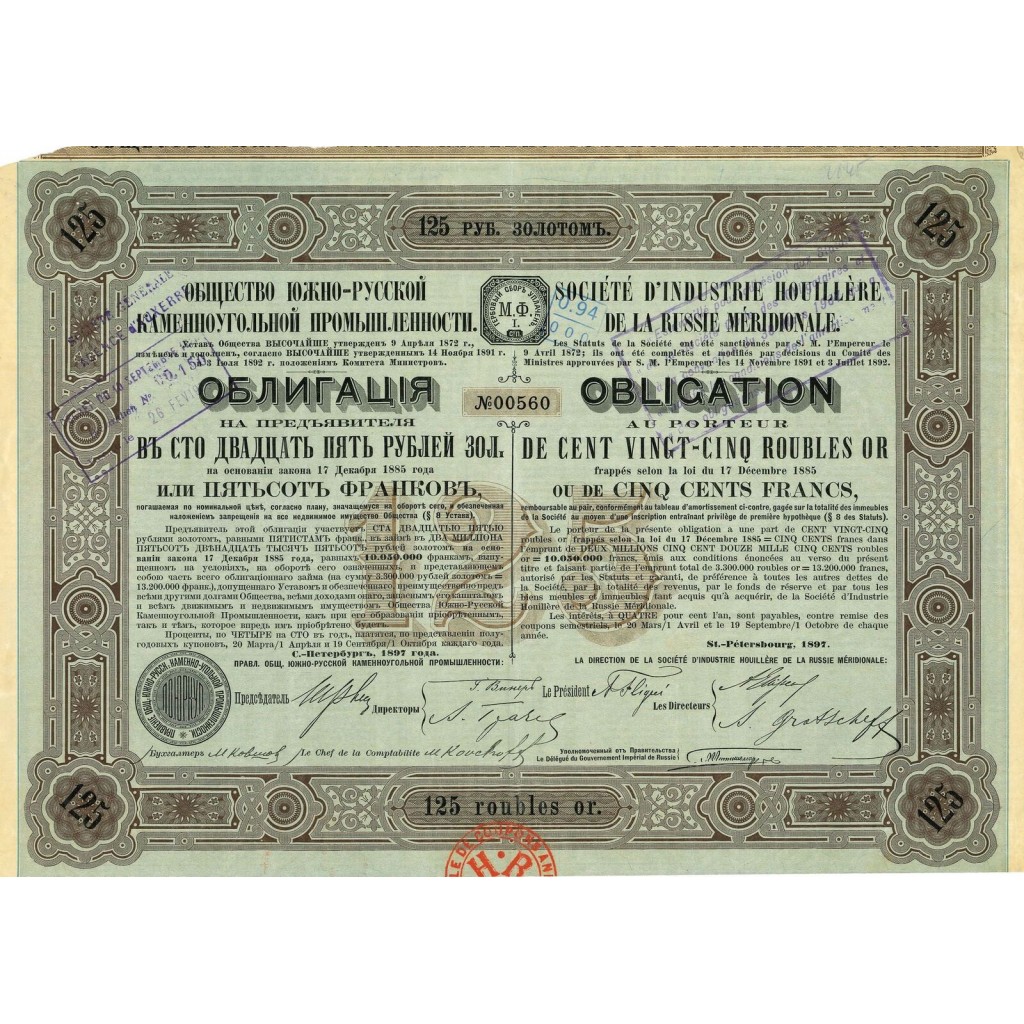
| Document Features | Details |
|---|---|
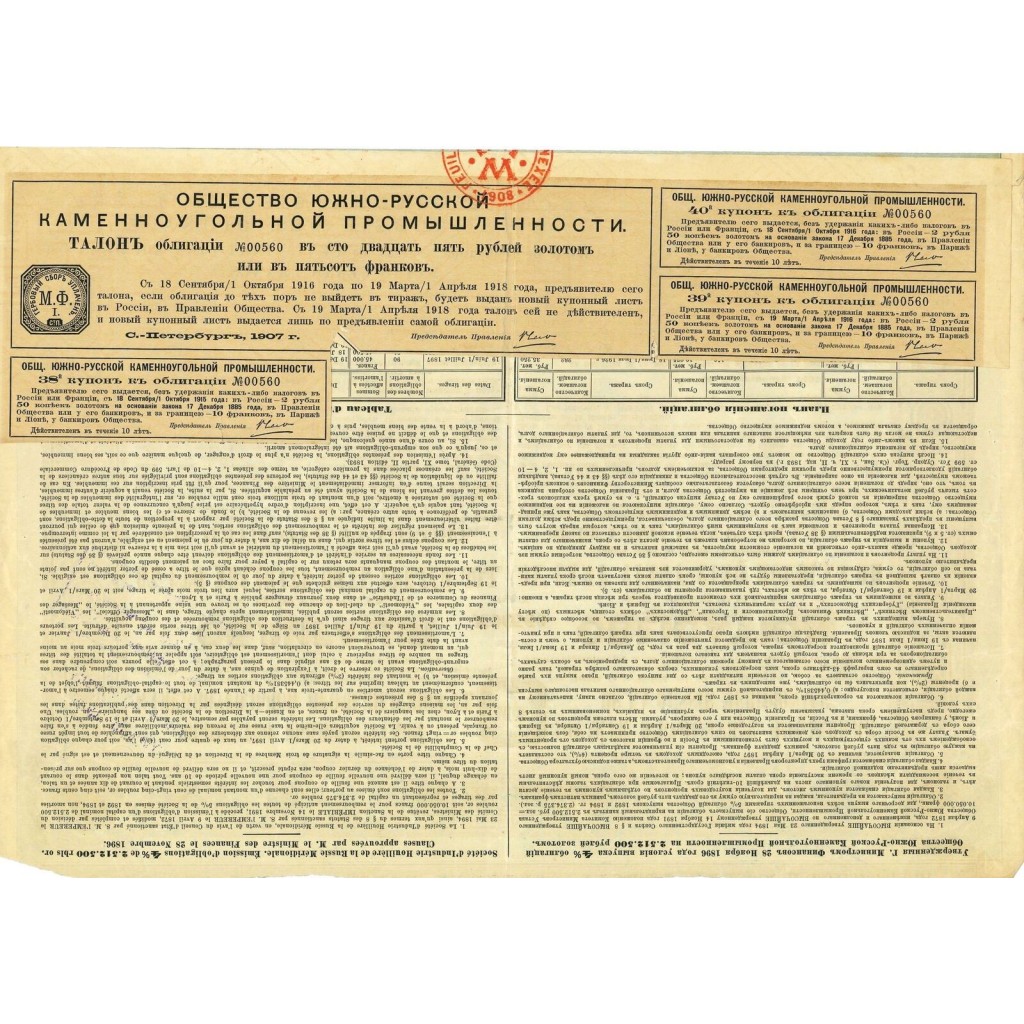
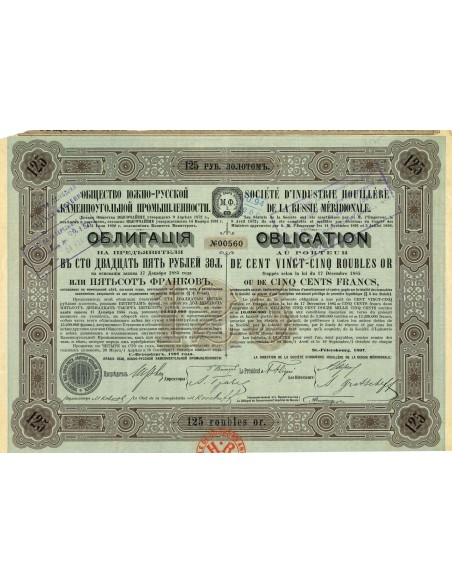
| Nominal Value of the Bond | 125 rubles gold |
| Annual Interest | 4% |
| Issuance Date | 1897 |
| Signature of the Chairman of the Board | Present |
| Stamps and Seals | Present |
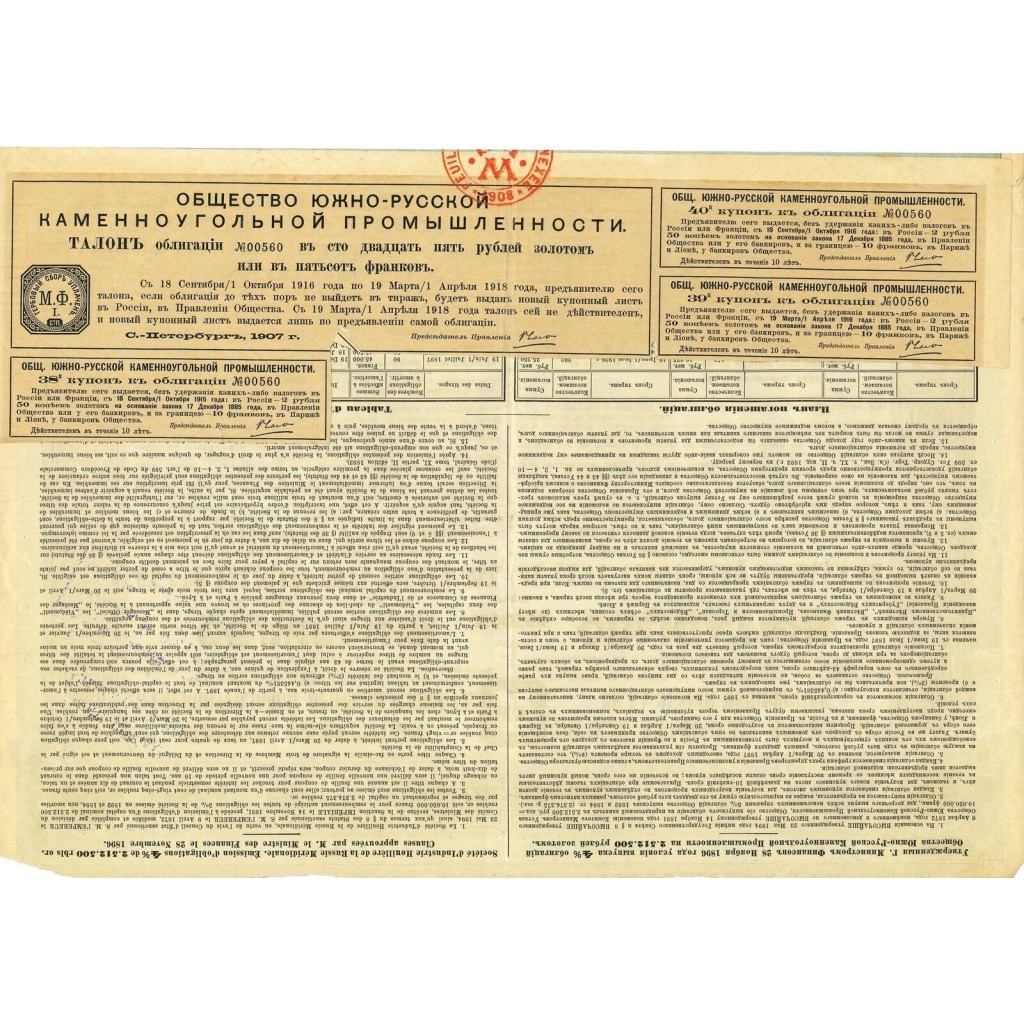
| Document Language | Russian and French |
The document represents one of the bonds issued by the company to finance its activities. Bonds were crucial financial instruments for companies at the time, used to raise capital necessary for infrastructure and industrial operations.
For Scripophily Collectors
Collecting historical financial documents, known as Scripophily, has gained increasing interest in recent decades. These documents, once simple tools of economic transactions, today represent historical testimonies of past eras, offering a unique window into the economic and industrial world of bygone times.
Owning a document like this bond from the Société d'Industrie Houillères de la Russie Méridionale is not only a way to appreciate the art and calligraphy of the era but also to preserve a piece of economic and industrial history. Each document tells a story, not just of the company that issued it but also of the economic and political context in which it was created.
This bond, with its elaborate design and original signatures, is a perfect example of how the financial documents of the time combined functionality and art. For collectors, it is an opportunity to own a fragment of Russian industrial history, a witness to an era when coal was the king of energy resources.
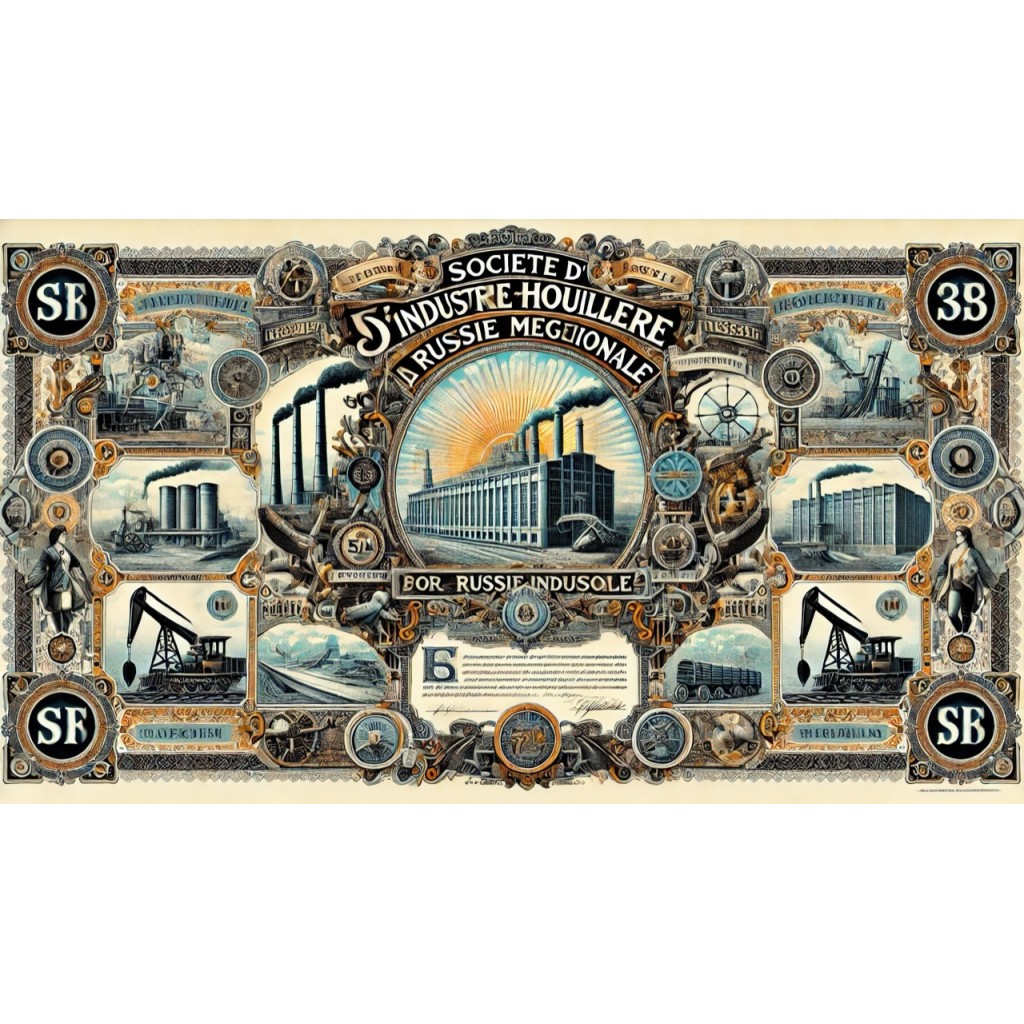
All historical documents for sale are considered collectibles. The documents have no economic or financial value (no economic or financial value), the second image is only representative of the object of the referenced company.