Shopping Cart
There are no more items in your cart
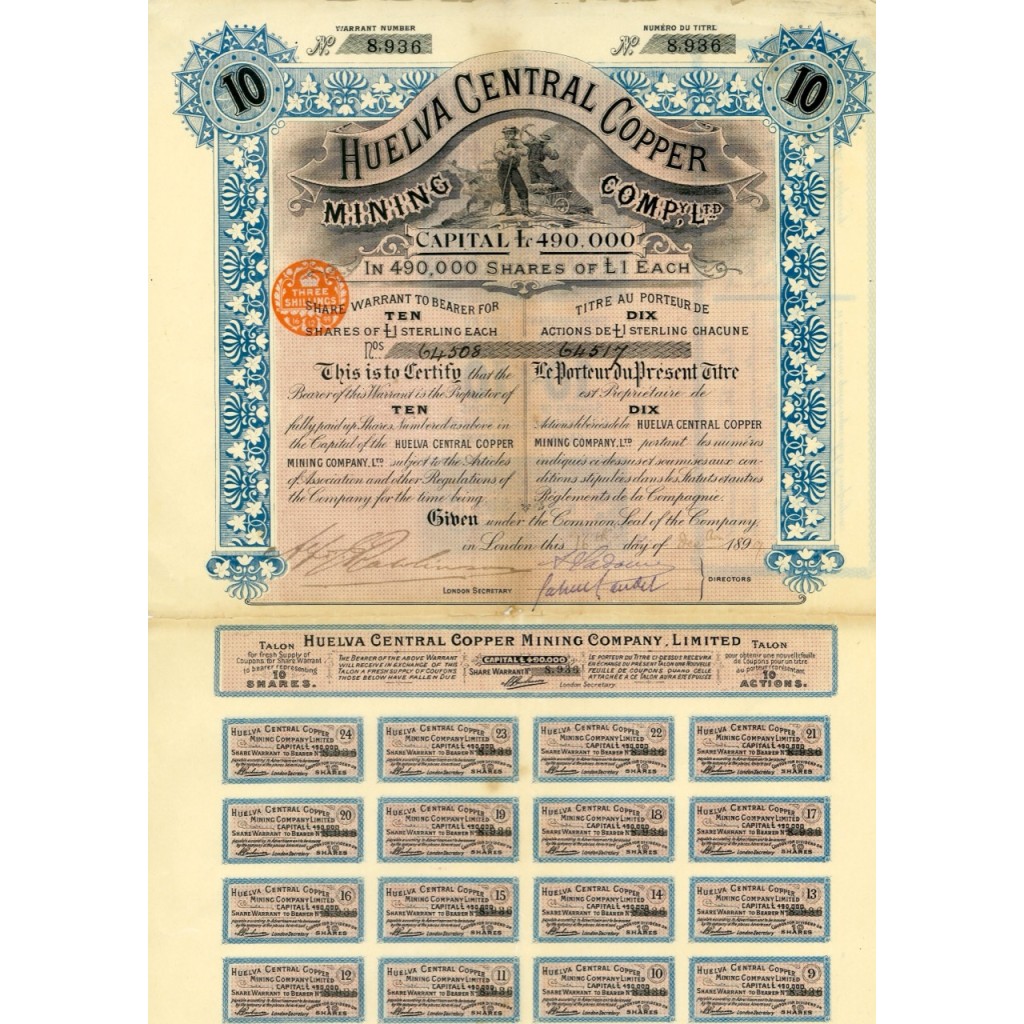
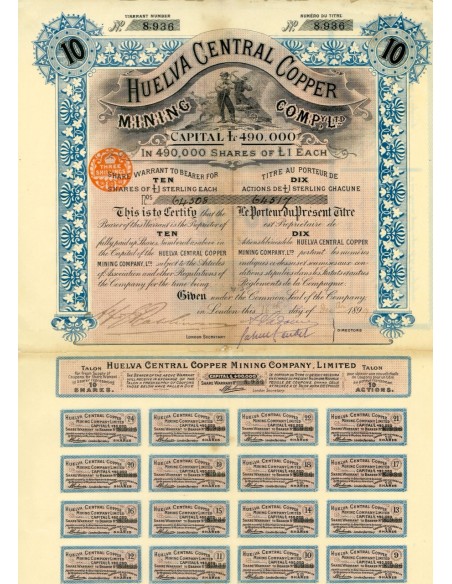
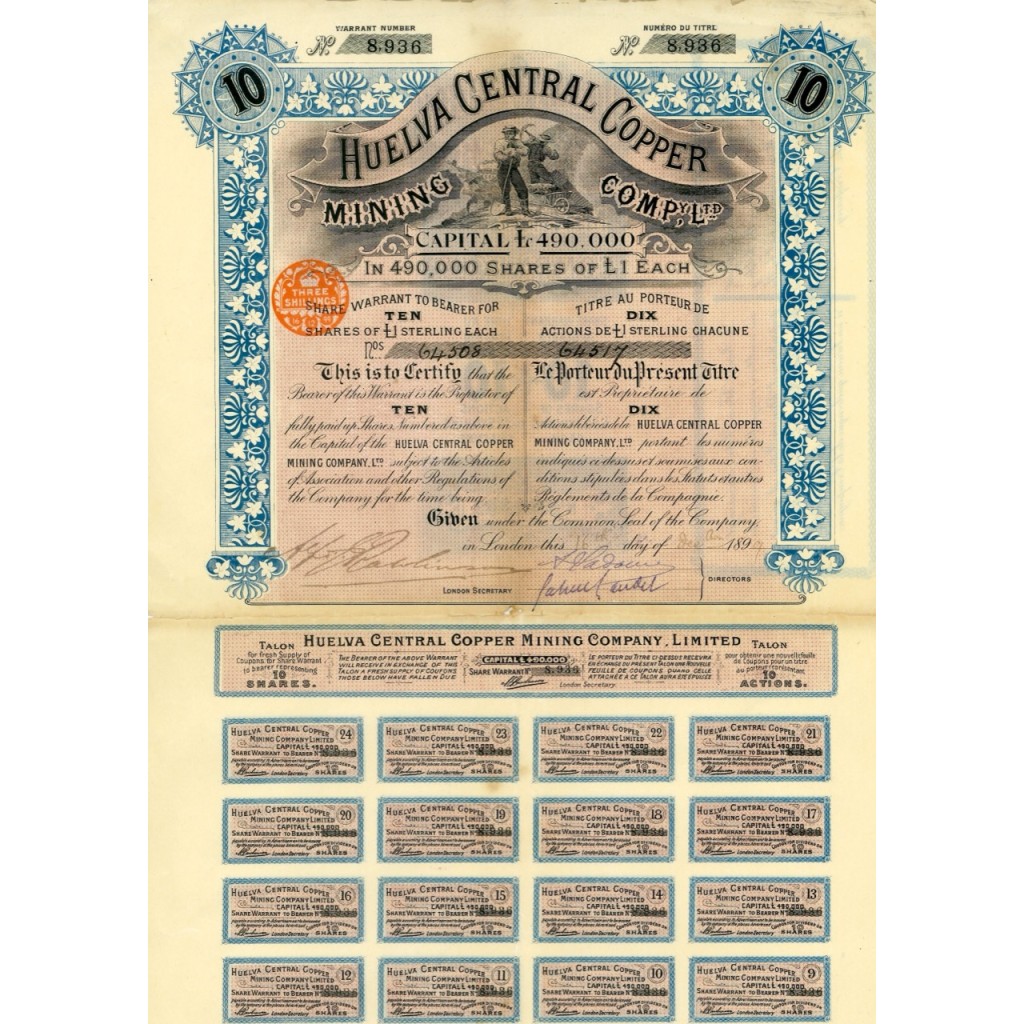
The Huelva Central Copper Mining Company was a mining company headquartered in Spain, with registered capital in London. Founded in 1899, the company aimed to exploit the rich copper deposits in the Huelva region of southern Spain. The region, known for its mines since ancient times, was one of Europe's primary sources of copper. With a share capital of £490,000, divided into 490,000 shares of £1 each, the company sought to further develop the infrastructure for copper extraction and processing, attracting investors from both the United Kingdom and continental Europe.
In the late 19th century, the mining industry was experiencing a significant expansion due to the growing demand for copper, used in construction, electrical wiring, and heavy industries. The Huelva Central Copper Mining Company was part of this broader context of economic and industrial growth, contributing to the development of Spain's mining resources.
Historical Data of the Company
| Company Historical Data | Information |
|---|---|
| Year of Establishment | 1899 |
| Headquarters | London, United Kingdom |
| Year of Stock Exchange Listing | Not available |
| Year of Delisting from Stock Exchange | Not available |
| Year of Dissolution | Not available |
| Share Capital at Establishment | £490,000 |
| Share Capital at Dissolution | Not available |
| Annual Revenue (1899) | Not available |
Certificate Characteristics
| Characteristic | Description |
|---|---|
| Number of Certificates | 8,936 |
| Type of Certificate | Bearer Share |
| Nominal Value | £1 sterling |
| Number of Shares per Certificate | 10 |
| Date of Issuance | 1899 |
| Signed by | Company Directors |
| Condition of Document | Excellent preservation |
| Authenticity Status | Authentic |
| Language of Document | English and French |
| Stamps and Seals | Not available |
Historical Context
At the end of the 19th century, the Huelva region was at the center of intense mining activity. Its copper mines were among the oldest and most productive in Europe, exploited since Roman times. The demand for copper was rapidly increasing due to the Industrial Revolution, and companies like the Huelva Central Copper Mining Company were essential to meet this demand. Copper was used in various sectors, including electricity, infrastructure, and industrial production, making it a crucial mineral for global economic development.
The issuance of shares like those from 1899 was a common practice to raise capital needed to expand mining operations and modernize infrastructure. The connection between Spain and the United Kingdom reflected the economic cooperation between the two nations and the importance of Spanish mines to the British industrial economy.
Artistic and Typographical Details
The certificate is decorated with elaborate designs reflecting the mining theme. At the top center of the document is an image of a miner at work, surrounded by typical industrial equipment of the era. The blue border of the certificate is adorned with floral and geometric motifs, giving the document an elegant and prestigious appearance.
The text is printed in well-defined serif fonts, with key information highlighted for easy reading. The bottom of the certificate includes a series of coupons used to redeem the shares. Despite the industrial nature of the document, the artistic design shows great attention to detail and aesthetics.
Provenance of the Certificate
This certificate was part of a series of shares issued by the Huelva Central Copper Mining Company in 1899 to raise capital from international investors. It has been preserved in excellent condition as part of a private collection, and its authenticity is certified by scripophily experts.
Evaluation and Rarity
Shares of the Huelva Central Copper Mining Company are considered relatively rare, especially in excellent condition like this example. The market value for scripophily collectors can range from 200 to 500 euros, depending on condition and market demand. The combination of mining history and artistic quality makes these certificates particularly sought after.
The Importance of Scripophily Collecting
Collecting historical certificates like this provides insight into the history of the mining industry and European economies at the end of the 19th century. Documents like these represent the growth of industry and infrastructure, and they are tangible testimonies of how international capital was used to finance natural resources.
Preserving these certificates, perhaps in frames or specialized albums, not only maintains their collectible value but also adds a decorative and historical element to any space.
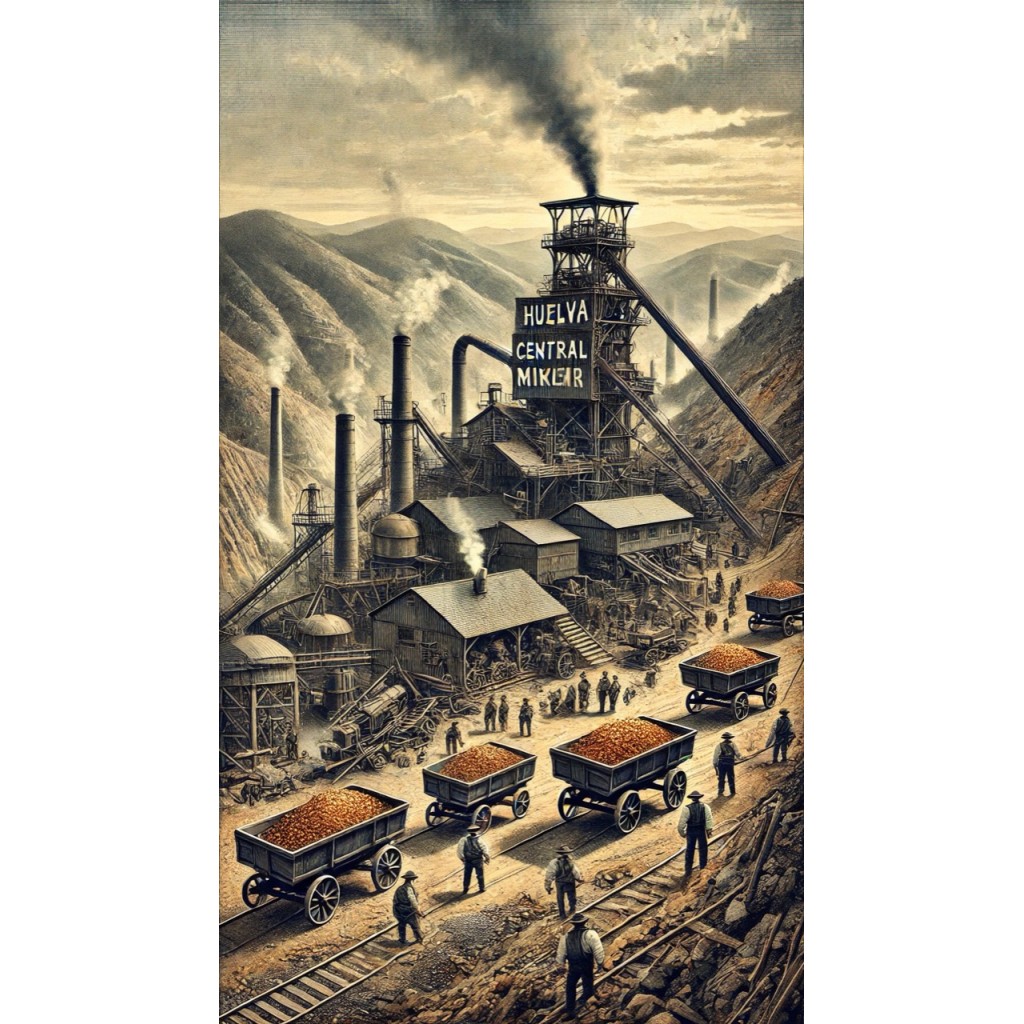
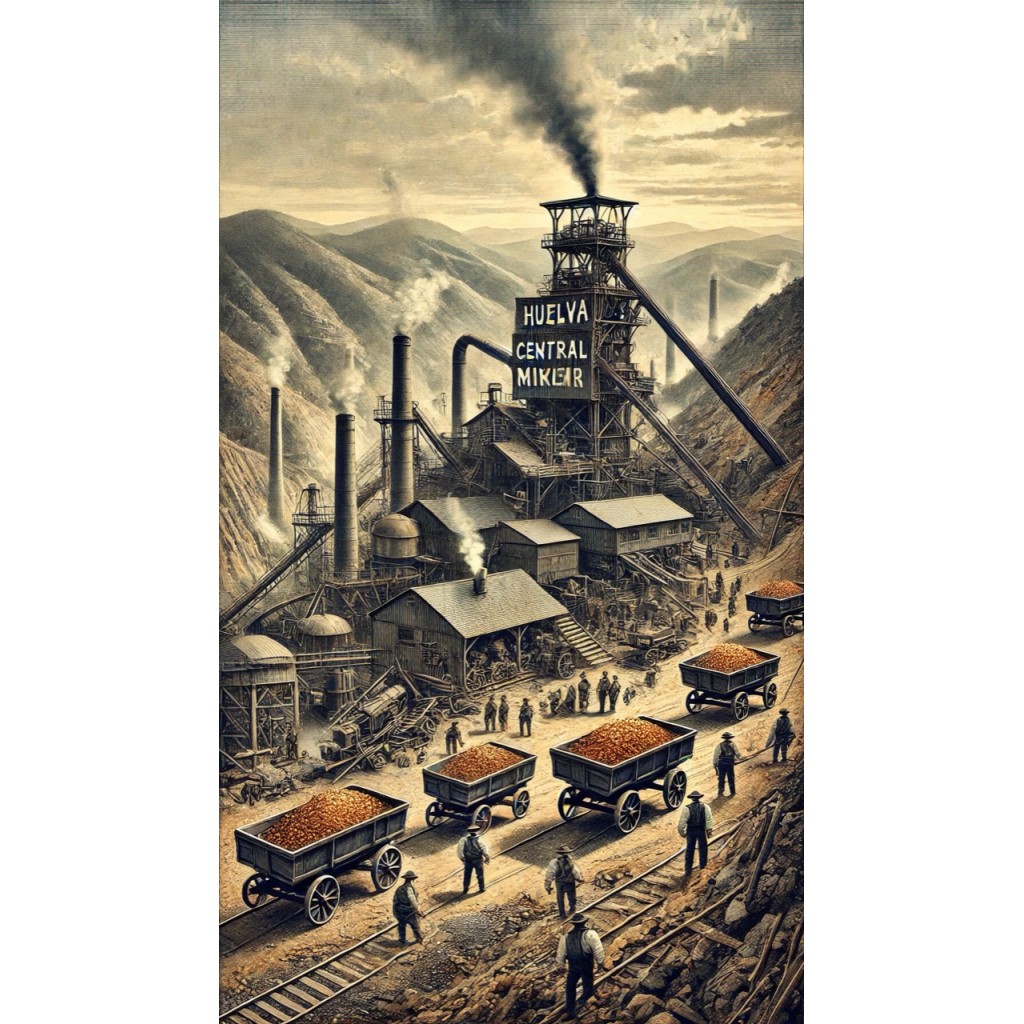
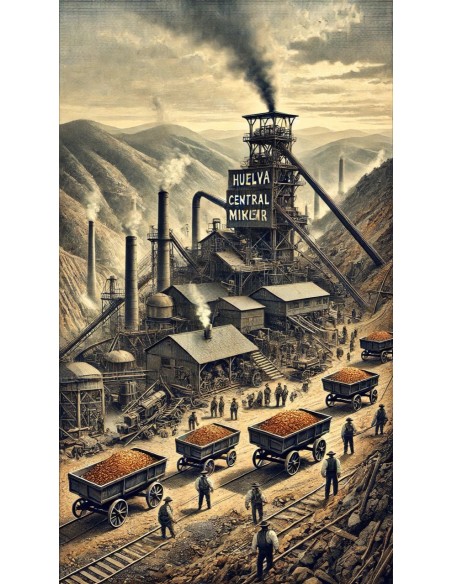
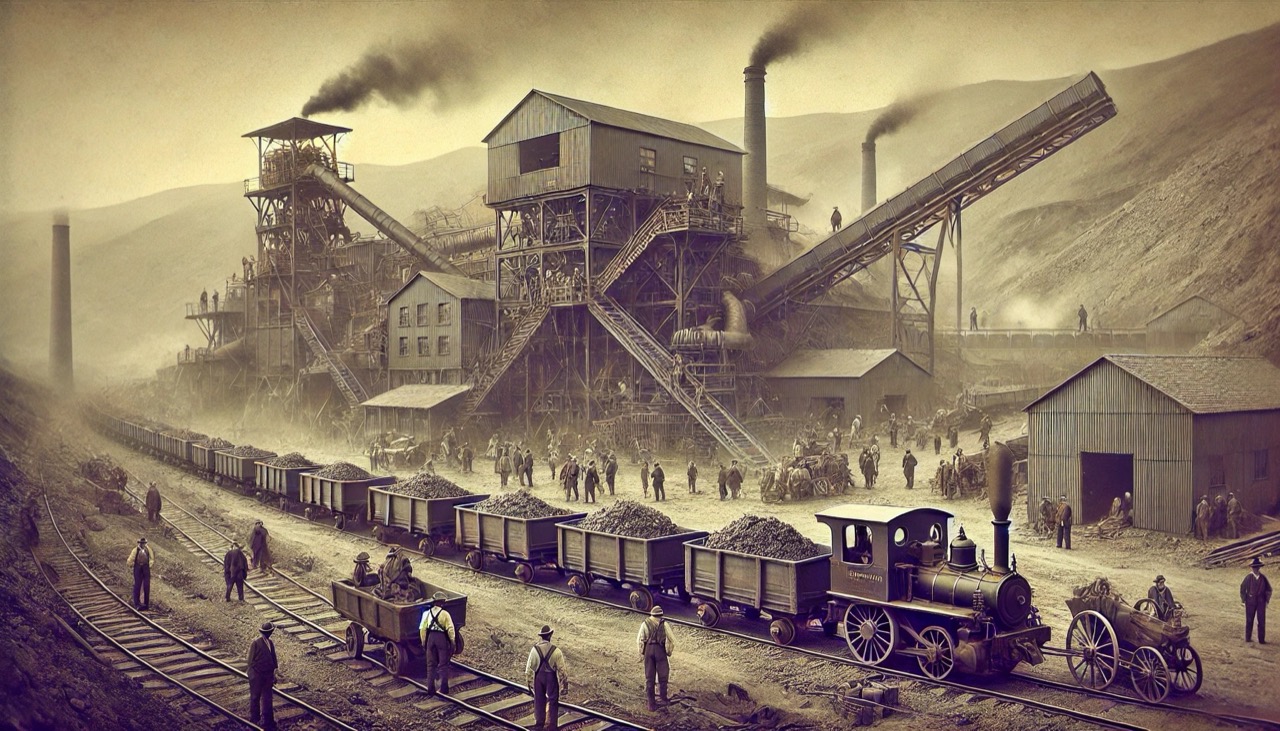
All historical documents for sale are considered collectible. They have no economic or financial value (no economic or financial value), and the images that are not of the historical document are representative of the company's object and the historical period. They are not provided but can be freely downloaded from the website and printed.