Shopping Cart
There are no more items in your cart
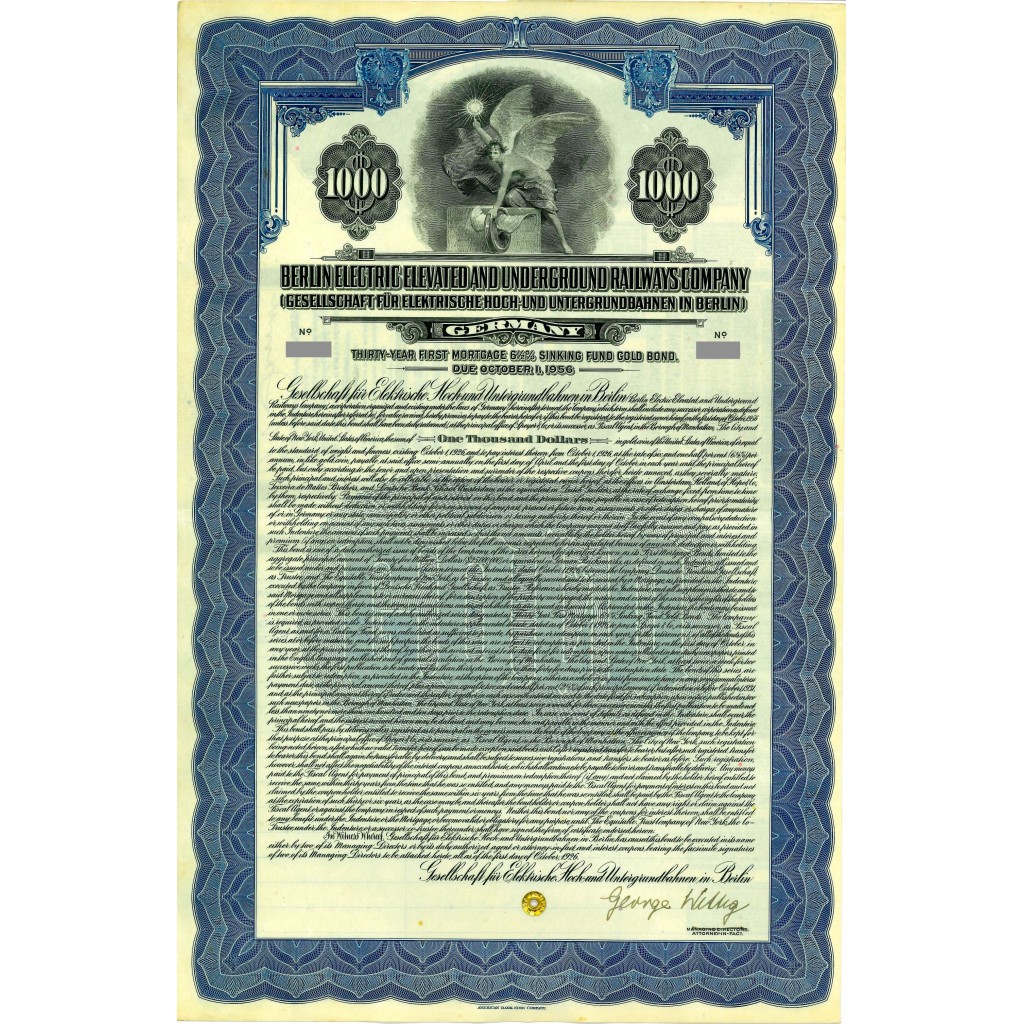
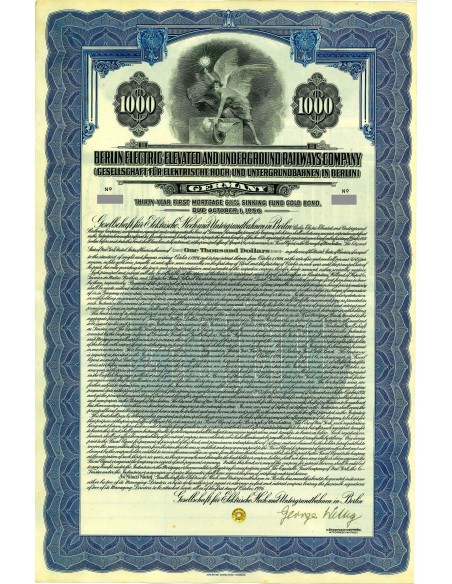
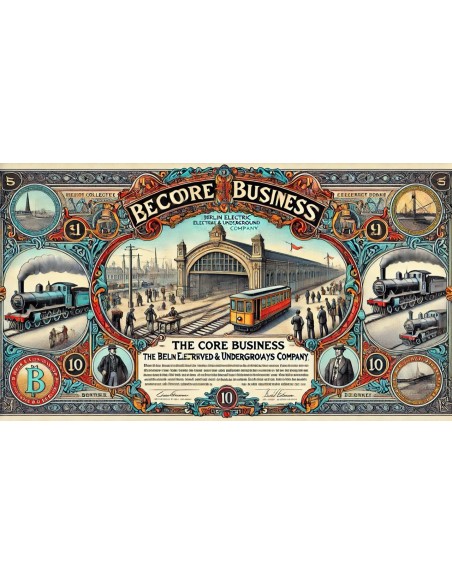
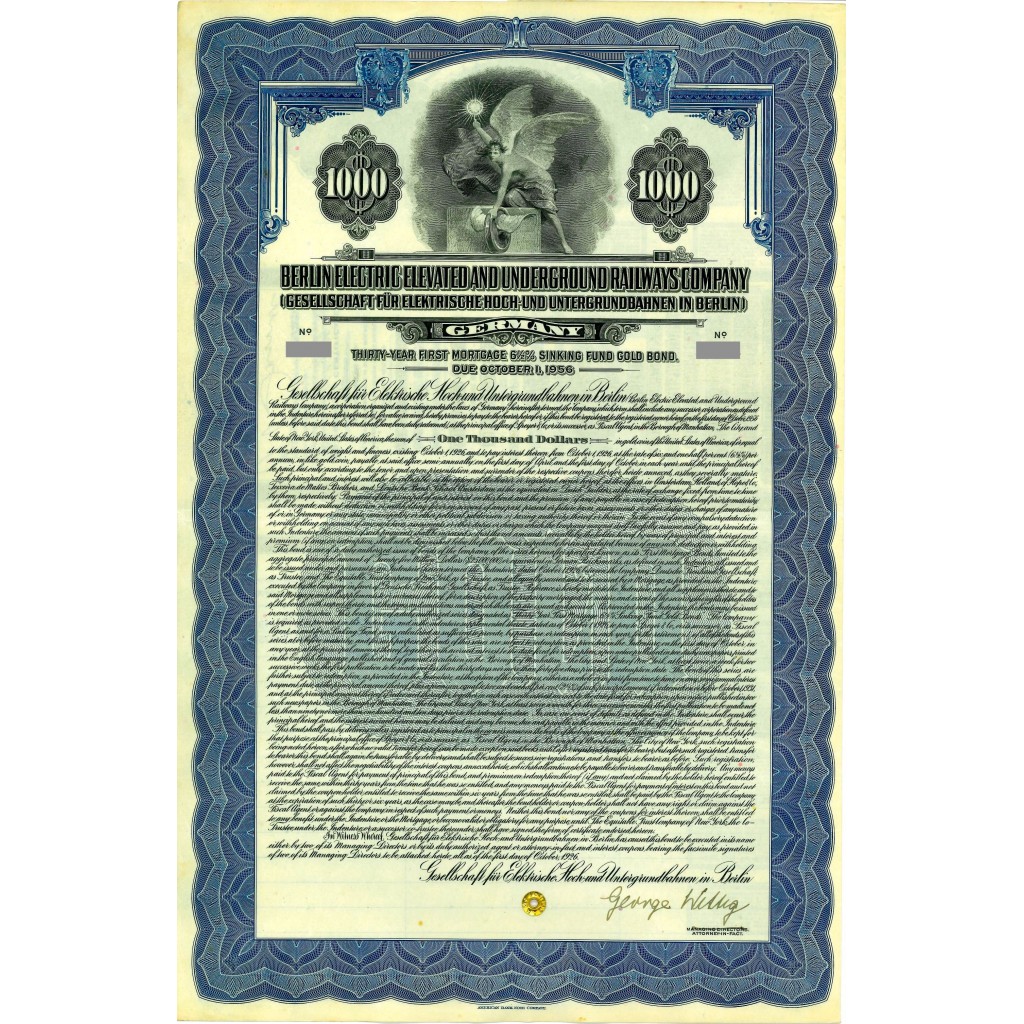
The Berlin Electric Elevated and Underground Railways Company, also known as Gesellschaft für Elektrische Hoch- und Untergrundbahnen in Berlin, was one of the main public transport companies in Berlin. Founded to develop and operate the city's elevated and underground railway lines, the company played a crucial role in modernizing Berlin's urban transport system in the early 20th century. Bonds issued by the company, like the one shown in the document, were essential for raising the funds needed to expand and improve the railway infrastructure.
Historical Data of the Company
| Data | Value |
|---|---|
| Year of Establishment | 1901 |
| Headquarters | Berlin, Germany |
| Name at Delisting from Stock Exchange | Berlin Electric Elevated and Underground Railways Company |
| Year of Stock Exchange Admission | Not available |
| Year of Delisting from Stock Exchange | Not available |
| Year of Company Cessation | Not available |
| Initial Capital | RM 10.000.000 |
| Final Capital | Not available |
| Revenue in 1925 | Not available |
| Revenue in 1930 | Not available |
Characteristics of the Historical Document
| Characteristic | Detail |
|---|---|
| Type of Document | Bond (Gold Bond) |
| Nominal Value | $1,000 |
| Interest Rate | 6.5% |
| Duration | 30 years |
| Issue Date | 1925 |
| Maturity Date | 1955 |
| Issuer | Berlin Electric Elevated and Underground Railways Company |
| Country | Germany |
| Language | English |
Scripophily collecting offers a unique opportunity to own a piece of industrial and financial history. Each document tells a story of production, growth, and transformation, reflecting the economic dynamics of a bygone era. The aesthetic beauty of these documents, with their intricate details and illustrations, makes them art pieces as well as historical testimonies.
The bond of the Berlin Electric Elevated and Underground Railways Company represents a significant piece of Berlin's urban transport history. Issued in Germany, it symbolizes the importance and influence of the company in developing elevated and underground railway lines, a fundamental service for urban mobility. Collecting a document like this not only enriches one's collection but also provides a tangible link to the past, allowing for exploration and understanding of the roots of modern transport infrastructure.
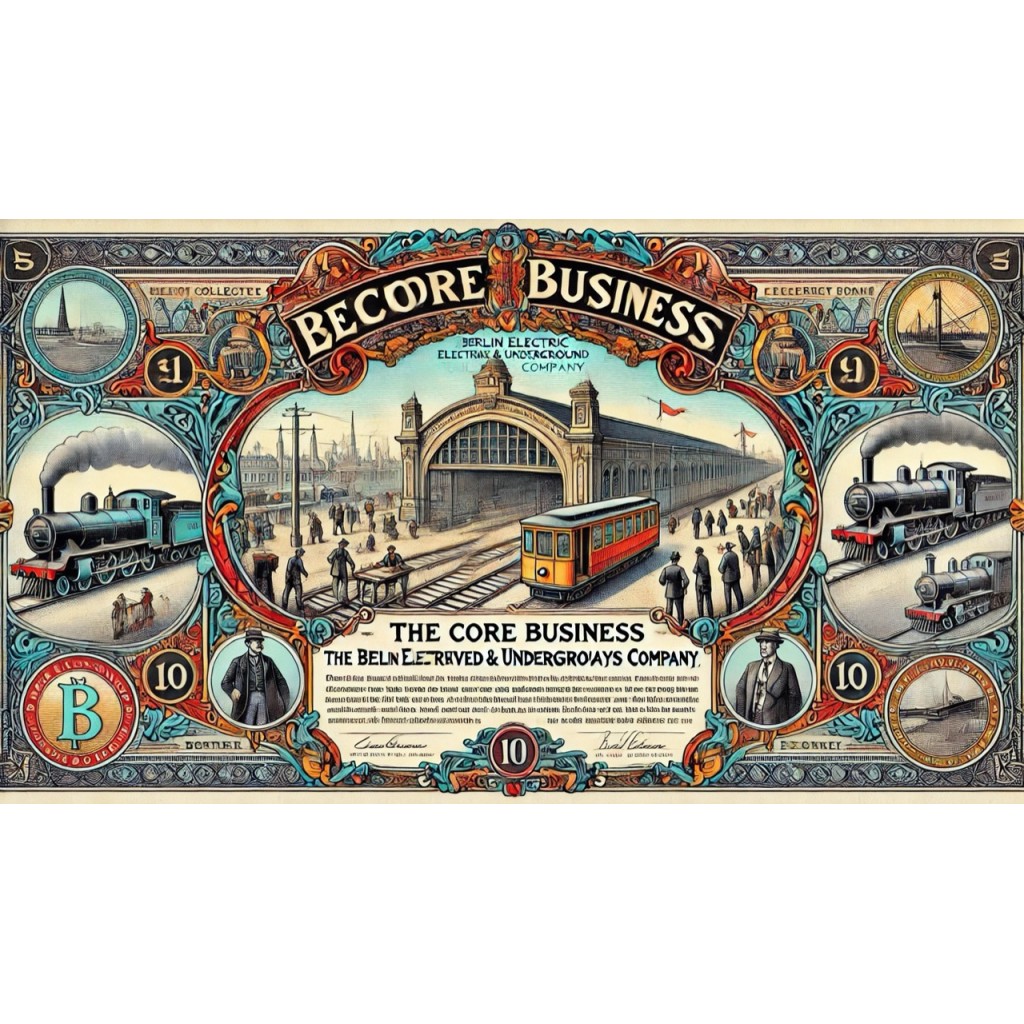
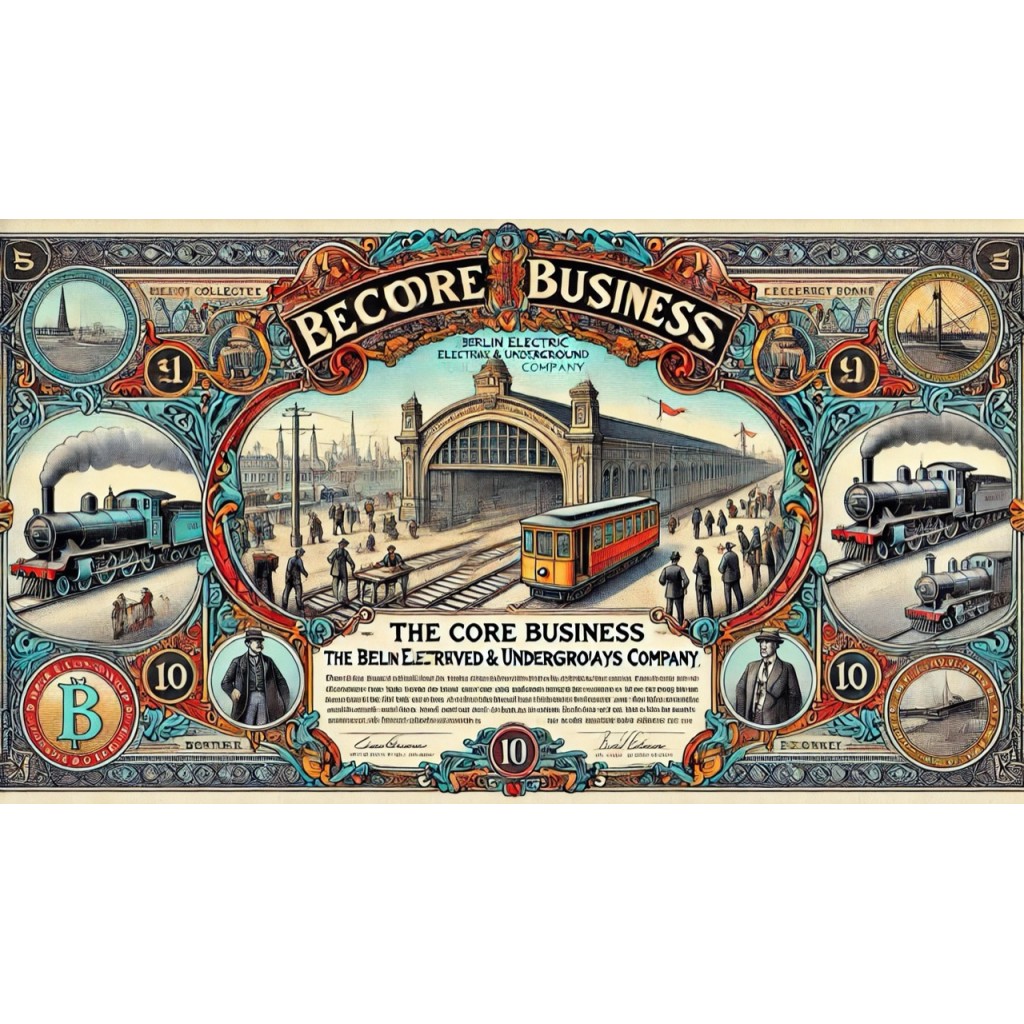
All historical documents for sale are intended for collection purposes only. The documents have no economic or financial value (no economic or financial value), the second image is only representative of the company's business.