Shopping Cart
There are no more items in your cart
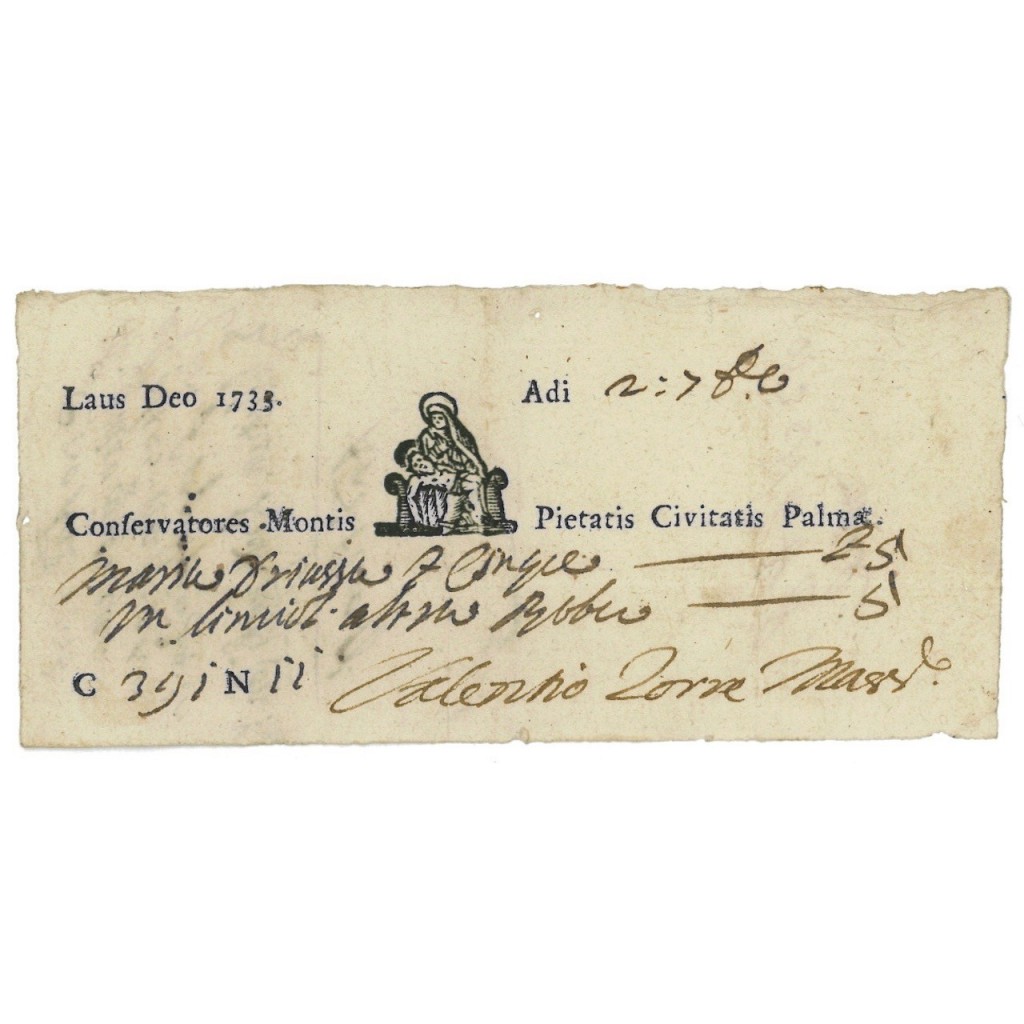
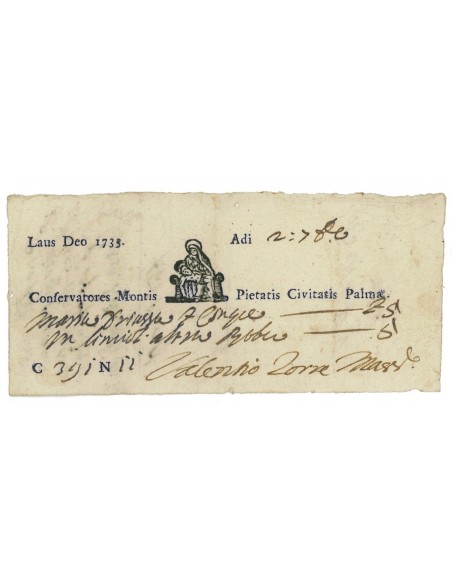
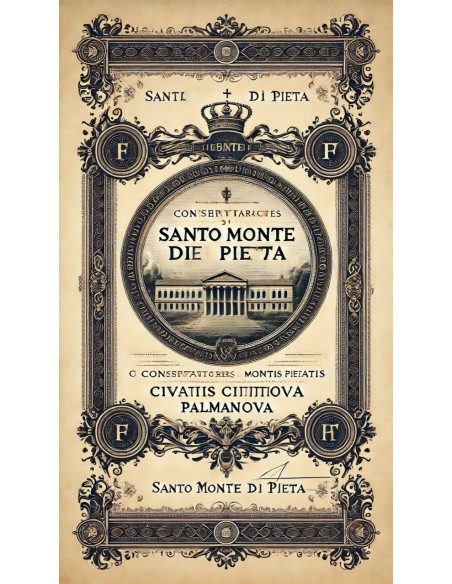
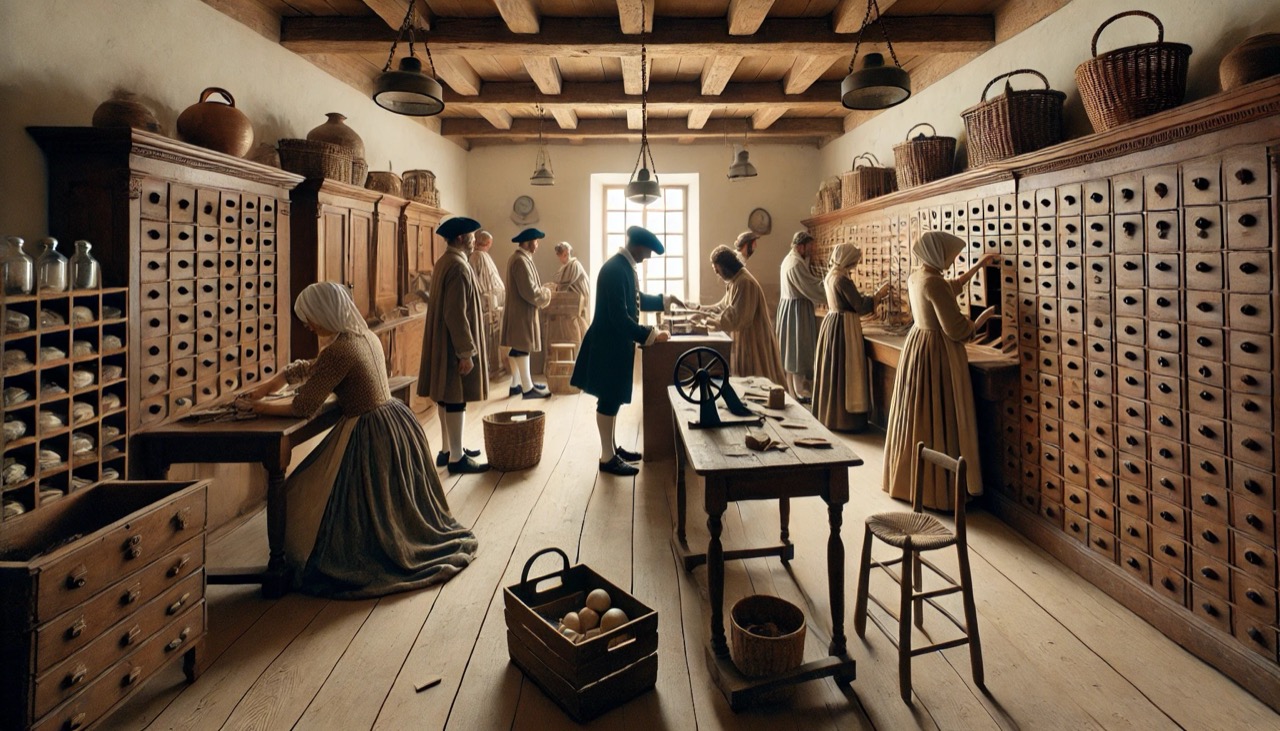
The Santo Monte di Pietà of Palmanova, founded with the goal of providing financial support to the needy, represents one of the many charitable institutions born in Italy to combat usury and promote social solidarity. The document under review, dated 1733, is a tangible testimony of the social function performed by this Monte di Pietà and its fundamental role in the Palmanova community.
Historical Context
At the beginning of the 18th century, Italy was a mosaic of independent states, each with its own laws and institutions. In this context, the Monti di Pietà played a crucial role, offering a safe alternative to the widespread usury. Palmanova, a fortress city built for defensive purposes, saw the birth of its Monte di Pietà in response to the growing social needs of its population. The document from 1733 attests to the issuance of a loan against collateral, allowing citizens to obtain credit in exchange for personal belongings, with the guarantee that these items would be returned once the loan was repaid.
Historical Data of the Society
| Historical Data | Information |
|---|---|
| Year of Establishment | Not available (presumably in the 17th century) |
| Headquarters | Palmanova, Italy |
| Share Capital at Establishment | Not available |
| Share Capital in 1733 | Not available |
| Year of Stock Exchange Listing | Not applicable |
| Year of Delisting | Not applicable |
| Year of Company Cessation | Not available |
| Type of Loan | Loan against collateral |
Certificate Features
| Feature | Detail |
|---|---|
| Issue Date | 1733 |
| Type of Document | Loan Certificate |
| Text | Handwritten, in Italian |
| Stamp | Present, with an image of the Madonna and Child |
| Signature | Signed by an officer of the Monte di Pietà |
| Printing | Probably done by a local artisan |
| State of Preservation | Good, with signs of wear consistent with age |
Artistic and Typographical Description
The document features a simple yet significant design, with the image of the Madonna and Child printed in the center, symbolizing divine protection and Christian charity. The text is mostly handwritten, with some elements printed, such as the date "1733" and the wording "Conservatores Montis Pietatis Civitatis Palmanova." The paper is thick and of high quality, typical of official documents of the time. The name of the artisan who created the document is unknown, but it is clear that it was produced with care and attention to detail.
Provenance of the Certificate
This certificate comes from a private collection and has been passed down through the centuries. It is a rare example of historical documentation related to the Monti di Pietà of Northern Italy and represents an important piece of economic and social history. Its preservation has been careful, allowing the document to maintain much of its original integrity.
Valuation and Rarity
Given the age of the document and its provenance, this certificate from the Monte di Pietà of Palmanova is considered extremely rare. Its rarity and good condition make it highly sought after by scripophily collectors and economic history scholars. Compared to other similar documents, it is clear that this certificate represents a unique opportunity to own a tangible fragment of Palmanova's history.
The Importance of Scripophily Collecting
Collecting historical documents such as this Monte di Pietà certificate is not just an activity of acquisition but a way to preserve and enhance our cultural and historical heritage. Each document tells a unique story, enriching our understanding of the past and connecting us to the roots of our society. Scripophily collectors, through their passion, help keep the memory of institutions like the Monte di Pietà alive, which played a crucial role in supporting local communities.
Display and Preservation Tips
To best preserve this document, it is advisable to keep it in a controlled environment, away from direct light and humidity. Framing with anti-reflective and UV-protected glass can help maintain the document in optimal conditions. This certificate can be displayed as a refined decoration, a historical artwork, or as part of a larger collection dedicated to economic and social history.
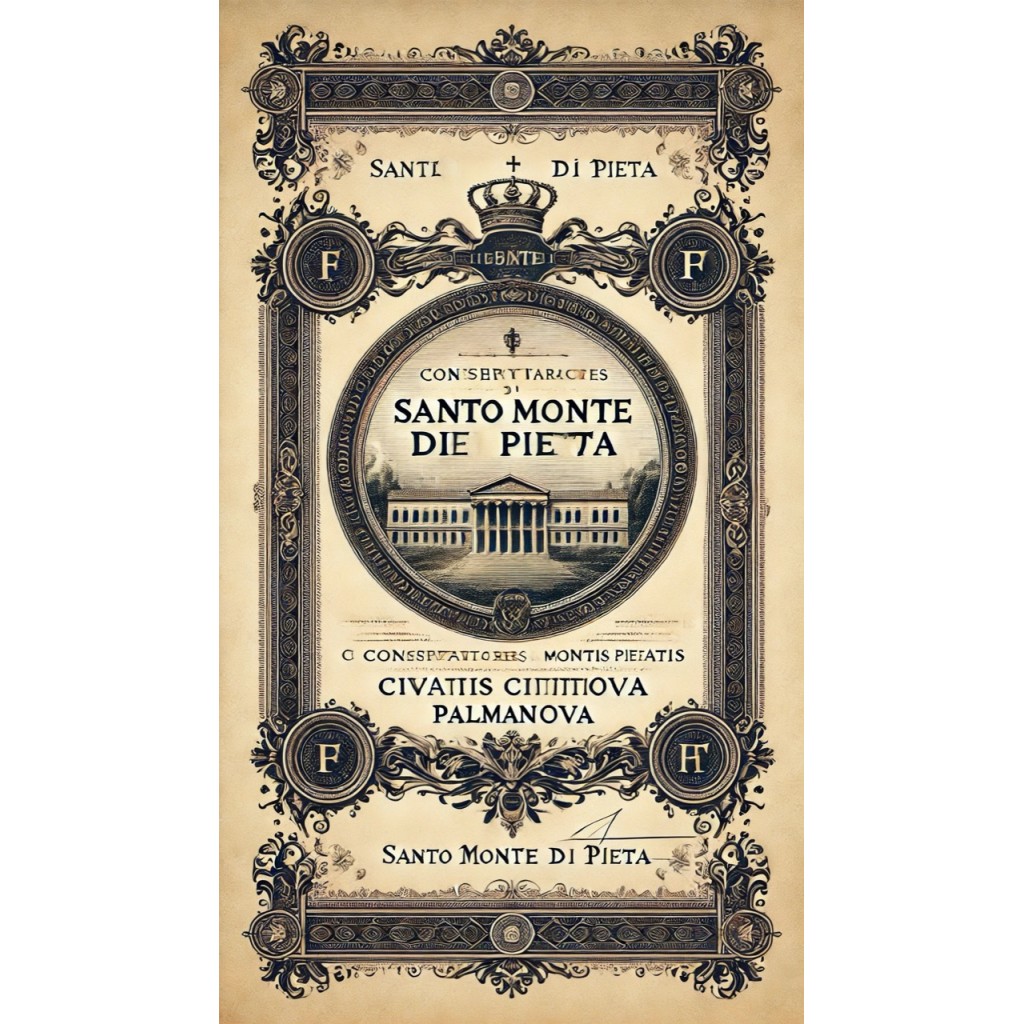
All historical documents for sale are intended for collection purposes only. The documents have no economic or financial value (no economic or financial value), and images that are not the historical document are representative of the company's object and the historical period of reference. They are not provided but can be downloaded freely from the website and printed.