Shopping Cart
There are no more items in your cart
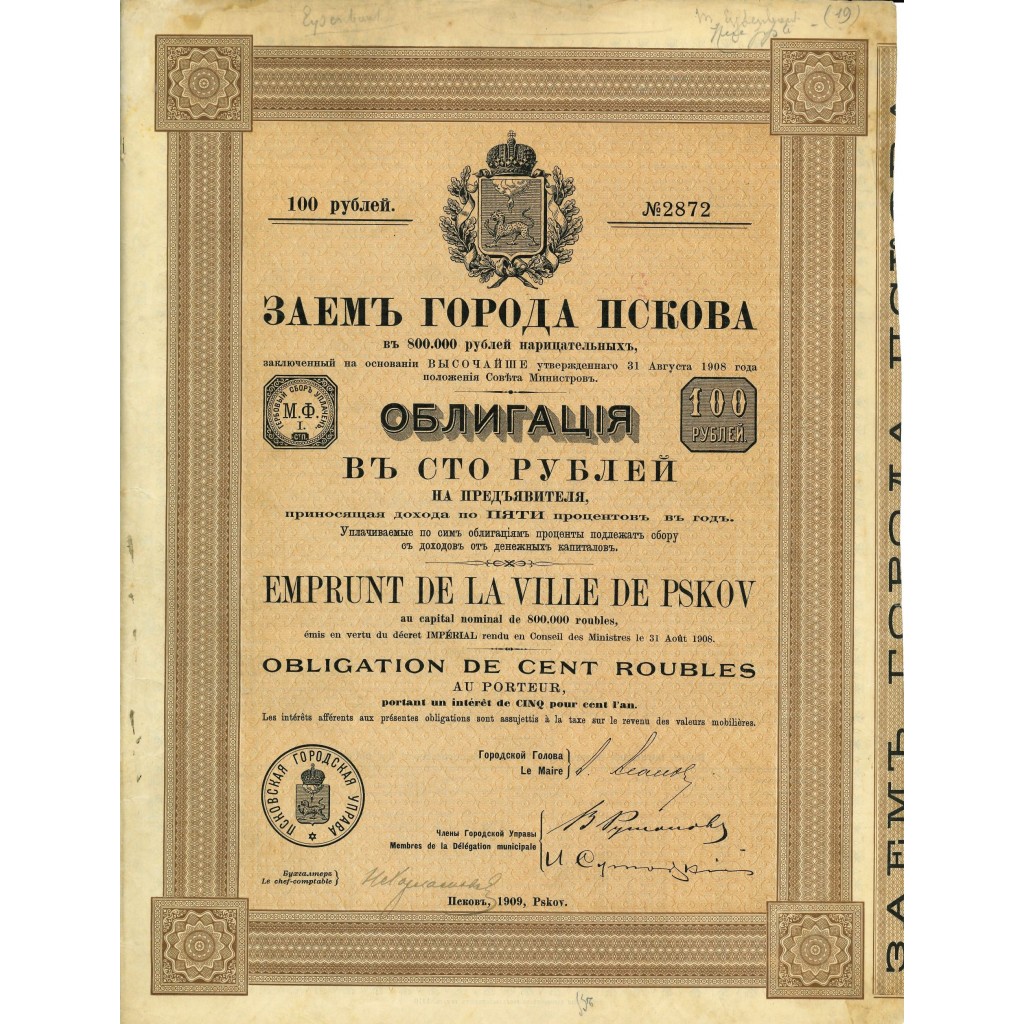
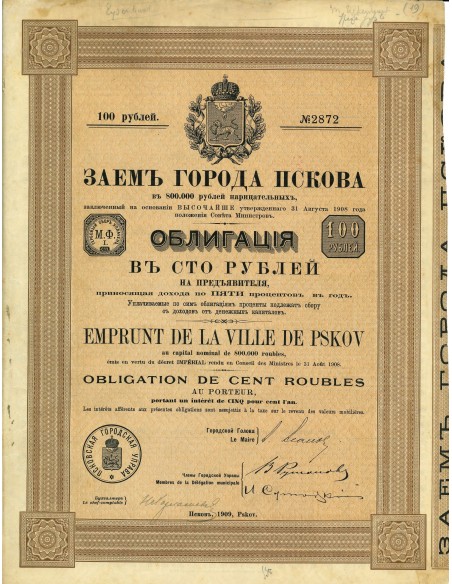
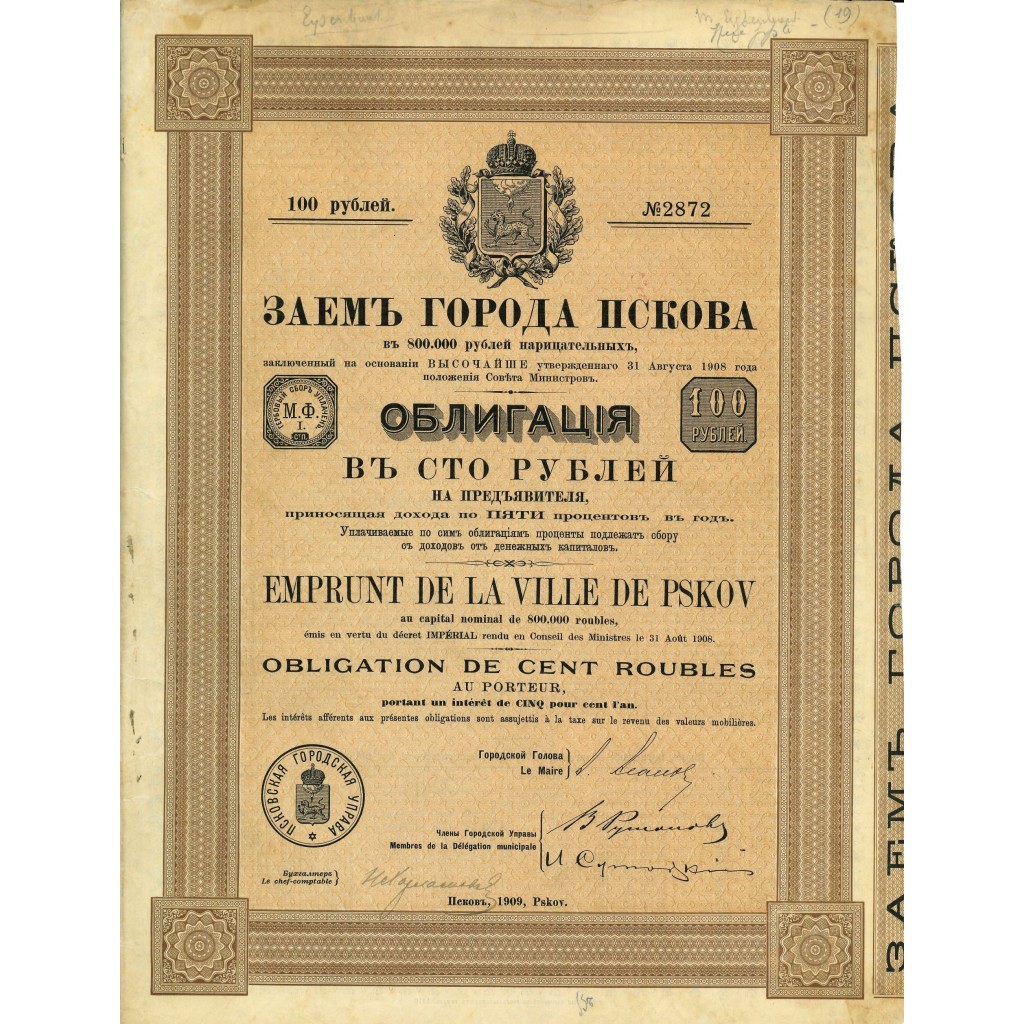
The city of Pskov, located in the northwestern part of Russia, has an ancient history rich in tradition. During the Russian Empire, Pskov held a strategic role both commercially and militarily. In 1908, the Imperial Russian Council of Ministers approved an imperial decree authorizing the city of Pskov to issue bonds with a nominal value of 800,000 rubles. These bonds were issued to finance infrastructure projects and urban improvements necessary to support the city's growth and development.
The bond presented here, issued in 1909, represents a significant piece of the city's economic history. With a nominal value of 100 rubles and an annual interest rate of 5%, this bond was part of an issuance designed to attract investors and fund Pskov's development. The beauty of the document, with its elaborate design and the city's emblem, reflects the importance attributed to this financial initiative.
Historical Data of the Emprunt de la Ville de Pskov
| Historical Data | Values |
|---|---|
| Year of Establishment of the City of Pskov | 9th-10th centuries |
| Headquarters | Pskov, Russian Empire |
| Year of Bond Issuance | 1909 |
| Nominal Value of the Bond | 100 Rubles |
| Interest Rate | 5% |
| Total Nominal Capital | 800,000 Rubles |
| Year of Delisting | Not applicable |
| Year of Company Dissolution | Not applicable |
| Bond Maturity | 19XX (not specified) |
Bond Characteristics
| Document Characteristics | Details |
|---|---|
| Year of Issue | 1909 |
| Face Value | 100 Rubles |
| Interest Rate | 5% |
| Total Nominal Capital | 800,000 Rubles |
| Place of Issue | Pskov, Russian Empire |
| Serial Number | N2872 |
Collecting historical bonds like the one from the city of Pskov offers a fascinating insight into the financial and urban history of the Russian Empire. These documents, once used as financial instruments, are now valued for their artistic beauty and the historical significance they represent. They are tangible evidence of the economic policies and development projects that characterized an era of great change and transformation.
Owning a bond like this means holding a piece of history, a document that tells the story of a city in expansion and the investors' confidence in its growth. The quality of the print, the accuracy of the details, and the rarity of these documents make them particularly valuable to scripophilia collectors.
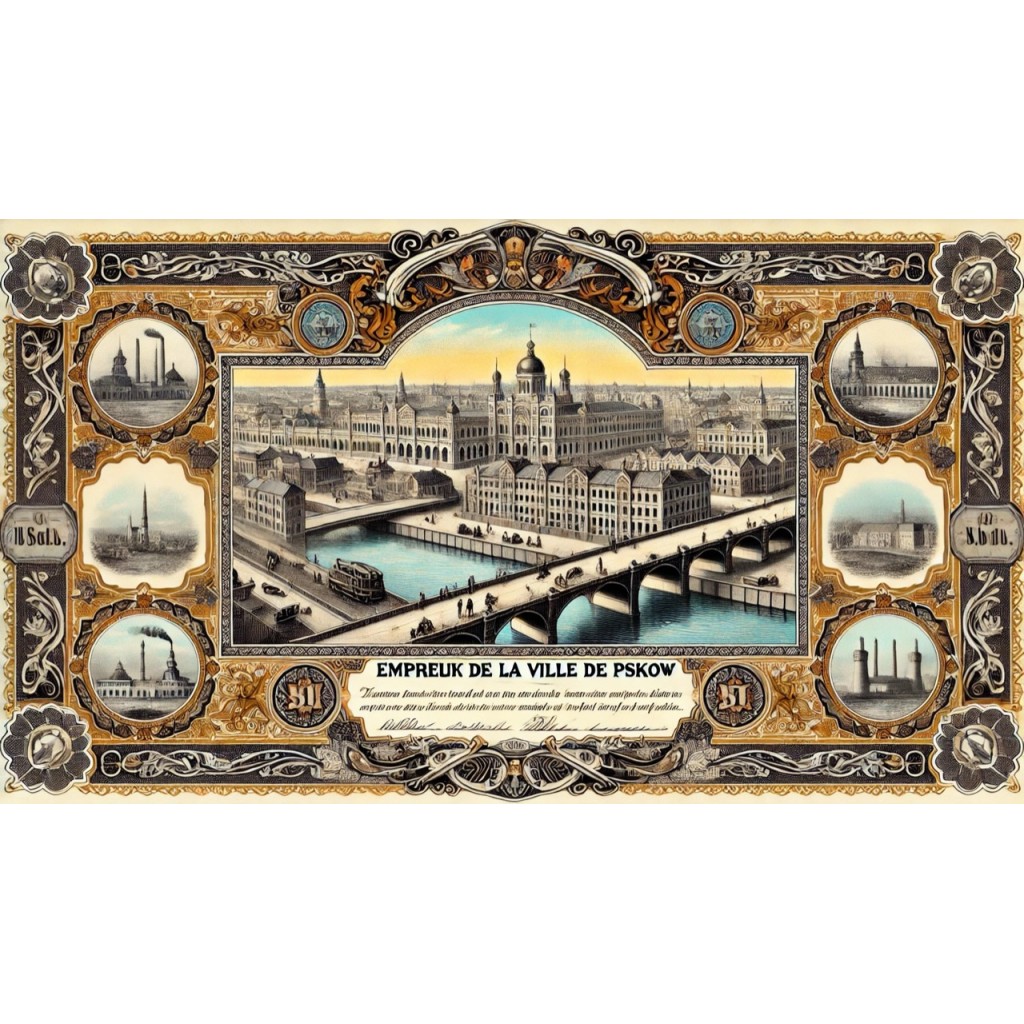
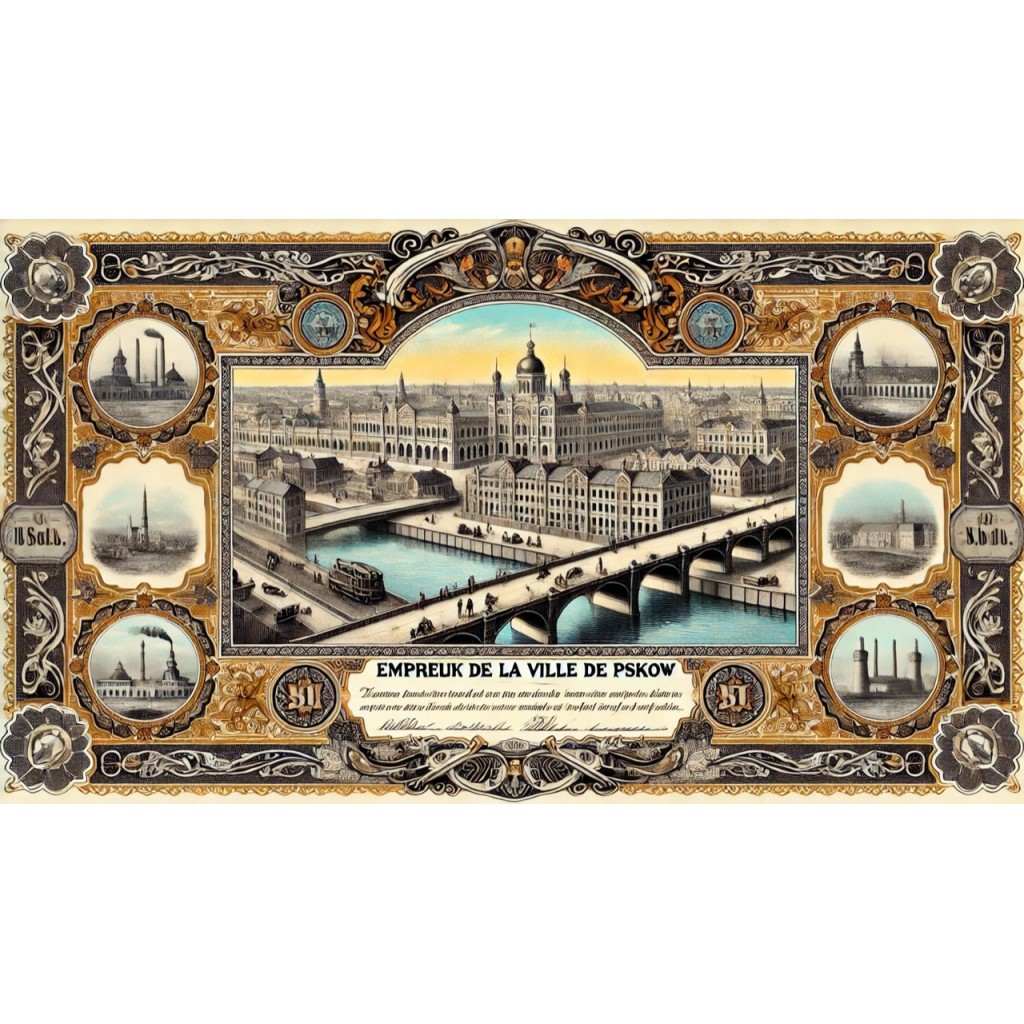
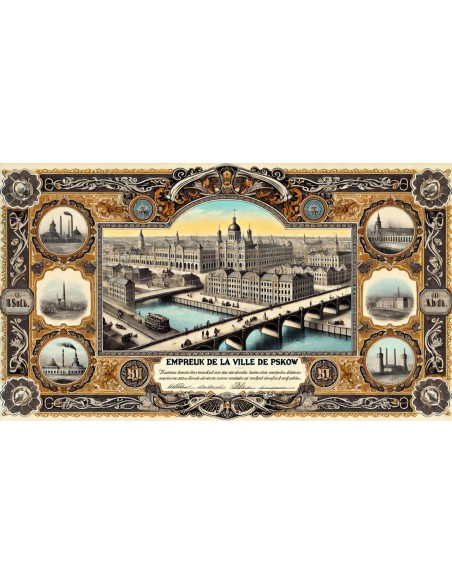
All historical documents for sale are intended for collection purposes. The documents have no economic or financial value (no economic or financial value), the second image is only representative of the company's object of reference.