Shopping Cart
There are no more items in your cart
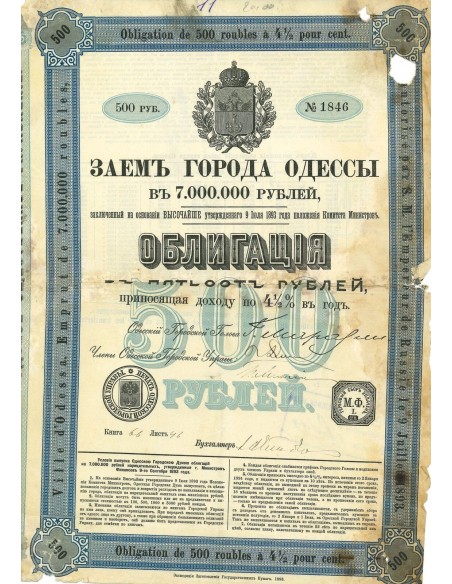
The city of Odessa, founded in 1794 by Catherine the Great, became one of the main ports of the Russian Empire due to its strategic location on the Black Sea. Odessa experienced rapid economic and demographic growth, becoming a major commercial hub. During the 19th century, the city developed modern infrastructure and established an efficient public administration.
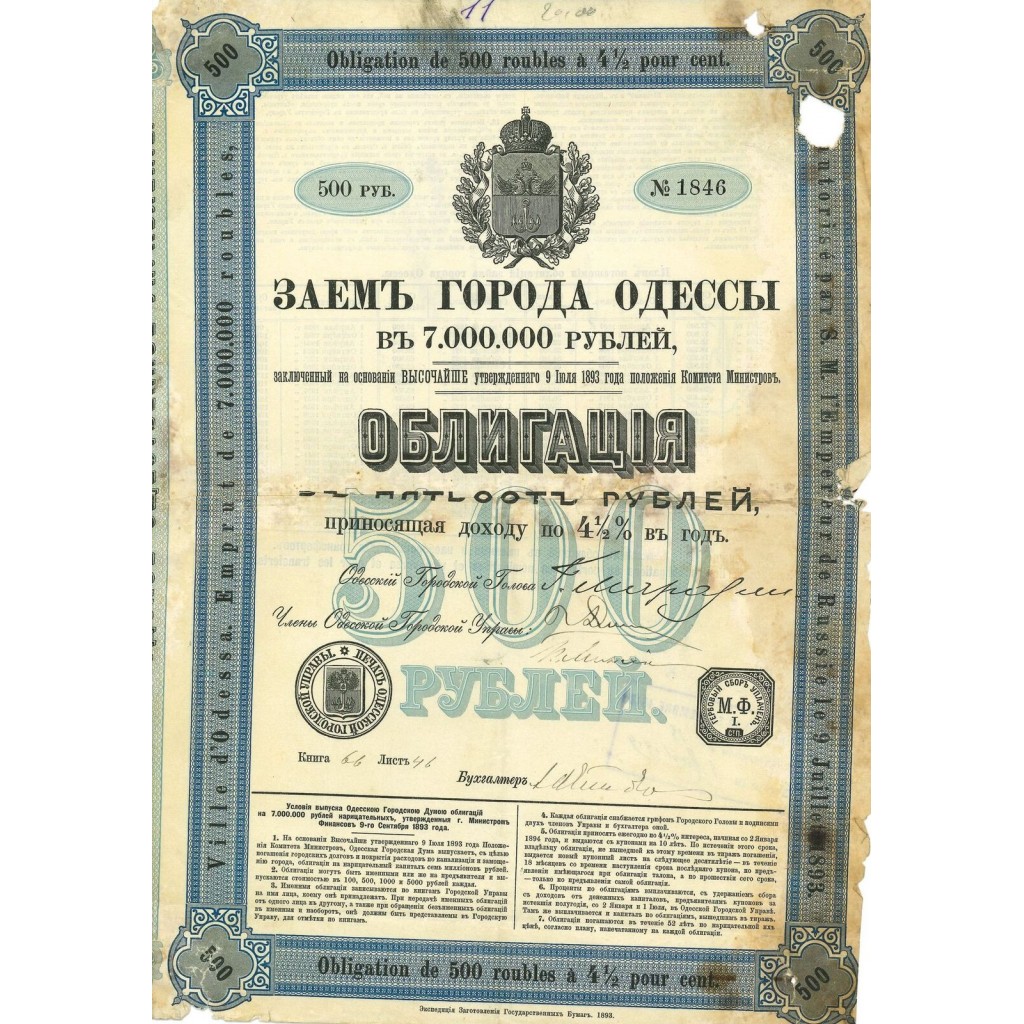
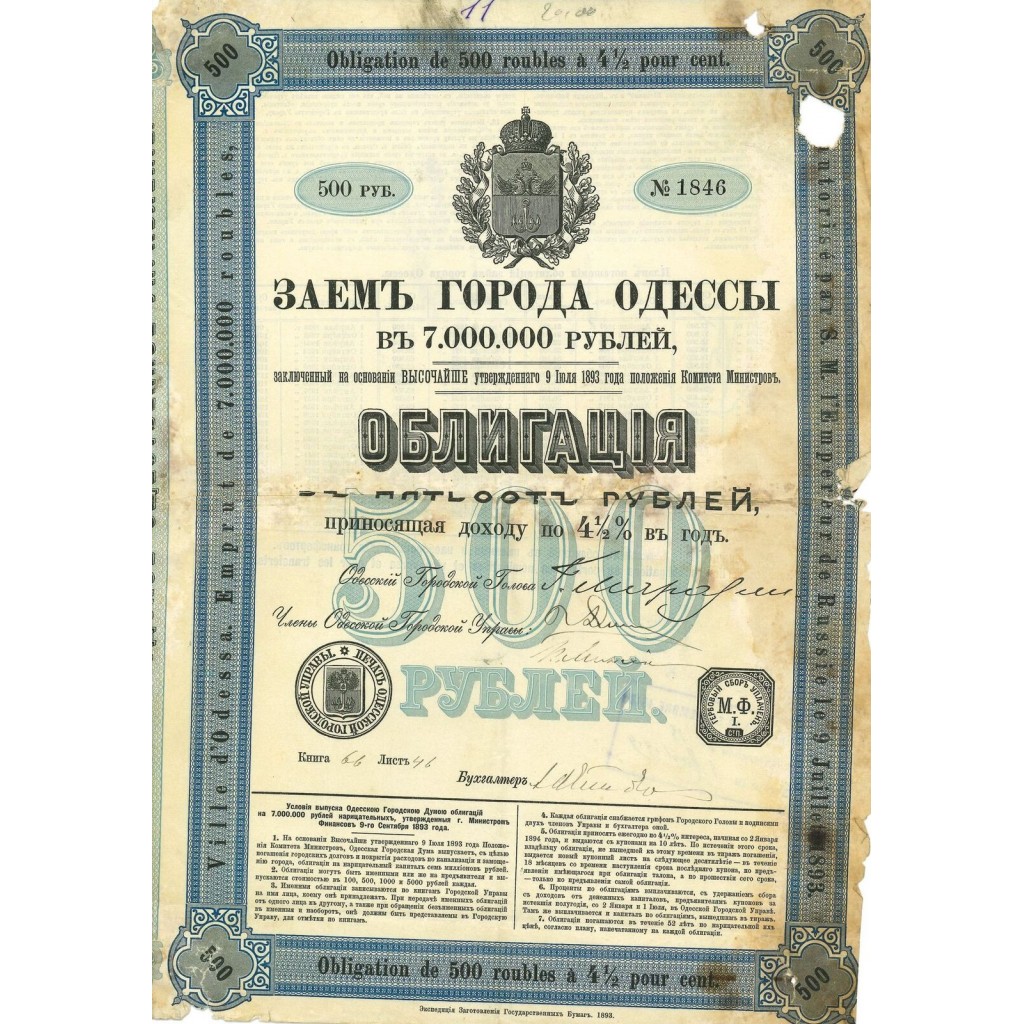
The 1893 bond issuance, which represents the historical document in question, is linked to a municipal loan from the city of Odessa for an amount of 7,000,000 rubles. This loan, guaranteed by the Russian Imperial Government, was used to finance public works and infrastructure improvements, such as the construction of roads, bridges, schools, and other essential infrastructures for the city's economic and social growth.
The bond, issued with a nominal value of 500 rubles, guaranteed an annual interest of 4.5%, and represented one of the most widely used forms of municipal financing at the time. Thanks to this issuance, Odessa was able to maintain and enhance its role as a commercial and industrial hub in the southern Russian Empire.
| Historical Data of the Company | Information |
|---|---|
| Year of Establishment | 1794 |
| Year of Bond Issuance | 1893 |
| Headquarters | Odessa, Russian Empire |
| Initial Capital | 7,000,000 Rubles |
| Capital at Dissolution | Not available |
| Name at Delisting | Not applicable |
| Year of Listing | Not available |
| Year of Delisting | Not available |
| Year of Dissolution | The city continues to exist as an entity |
| Estimated Annual Revenue | Not available |
| Bond Characteristics | Nominal value: 500 Rubles, Interest: 4.5% per annum |
Text for Scripophilia Collectors
The historical document presented here is a fascinating testimony to the economic prosperity of the city of Odessa under the Russian Empire. This bond, issued in 1893, represents not only a financial investment of that era but also a piece of history that helped shape the future of one of the most important cities on the Black Sea. Collecting documents like this means owning a fragment of economic and social history, a unique opportunity to explore and better understand the past.
The beauty and historical significance of these documents make them valuable objects for any scripophilia collector. In addition to their economic and historical meaning, these documents are often adorned with artistic and calligraphic details that increase their appeal. Purchasing and collecting such bonds offers not only an investment in history but also a piece of art in itself.
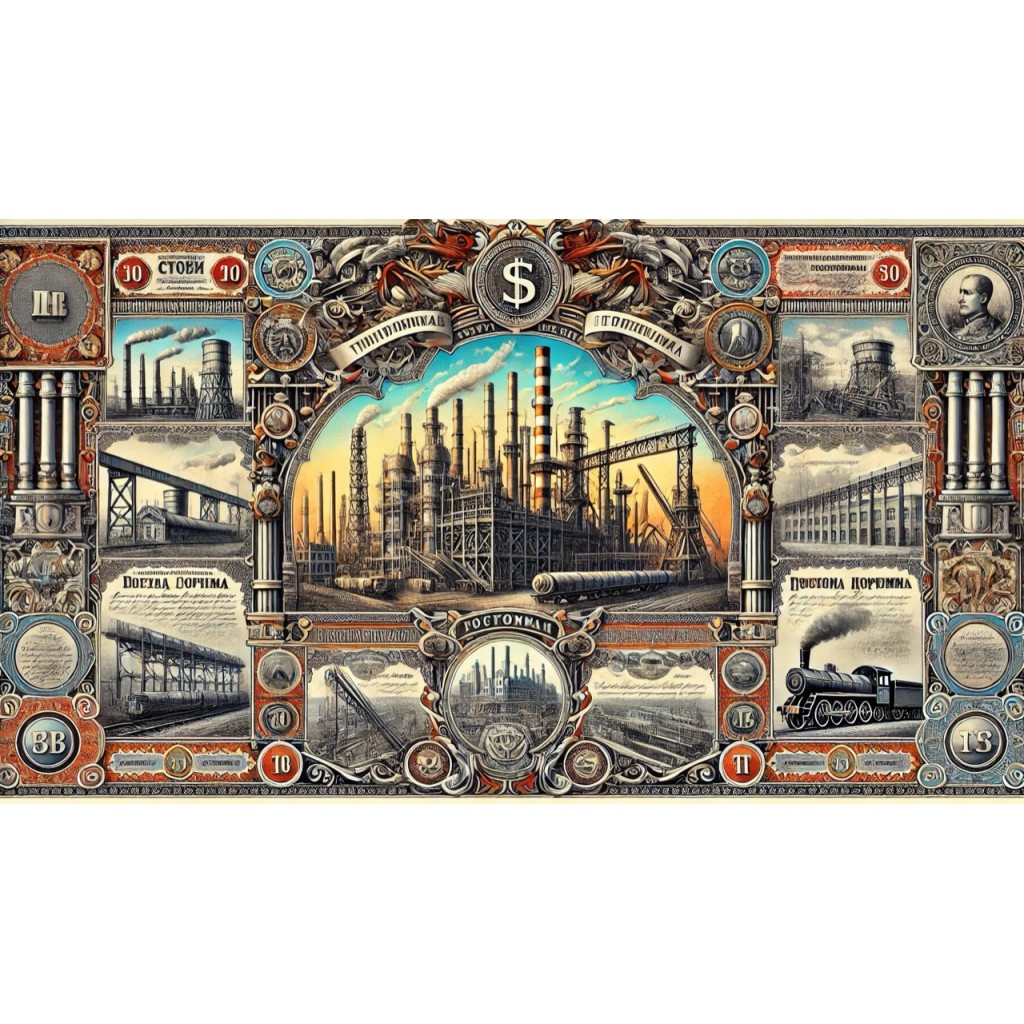
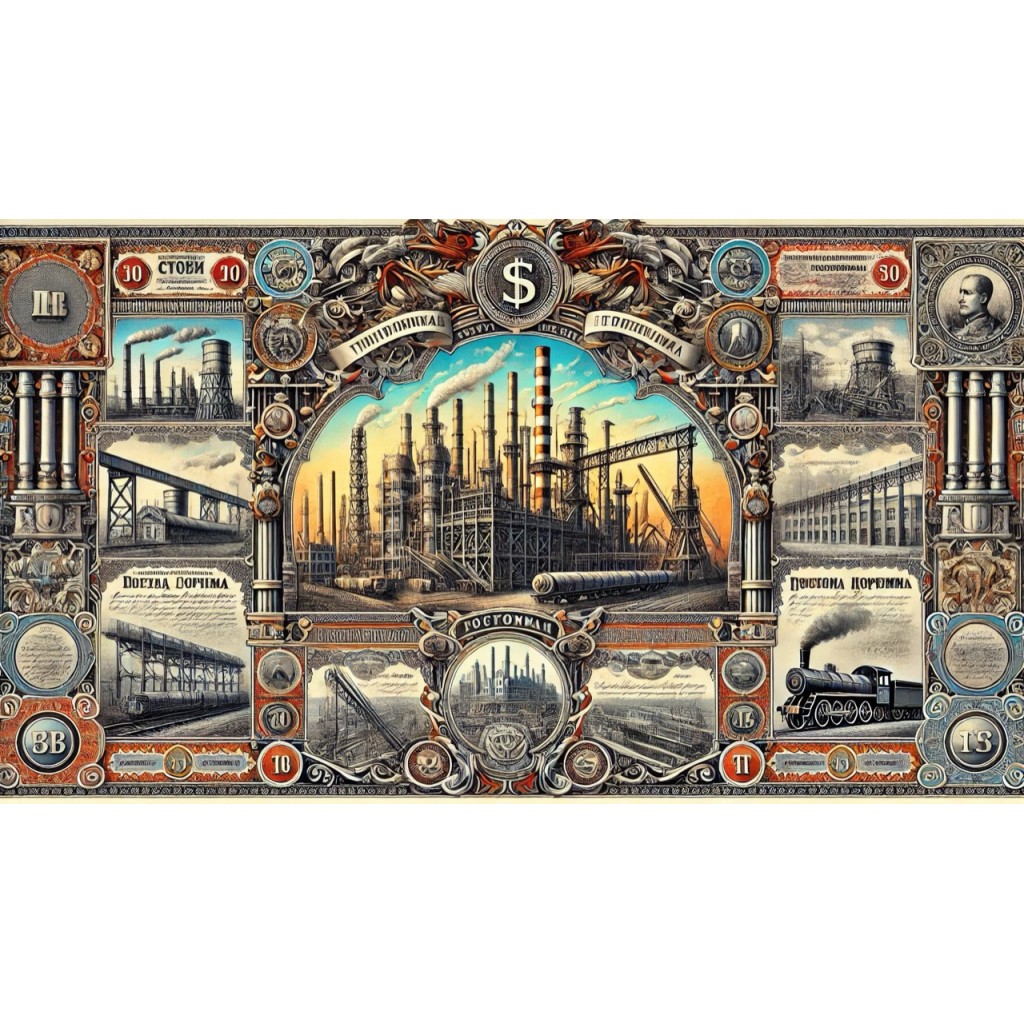
All historical documents for sale are intended for collection purposes. The documents have no economic or financial value (no economic or financial value), the second image is only representative of the object of the reference company.