Shopping Cart
There are no more items in your cart
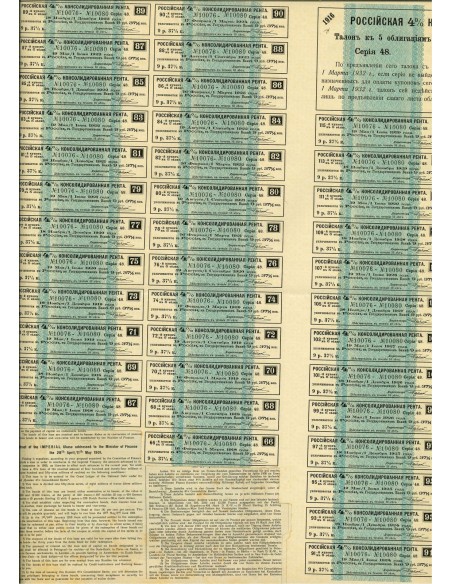

Historical Article: 4% Consolidated Rent of the Imperial Russian Government (Российская 4% Консолидированная Рента)
Historical Profile of the Company
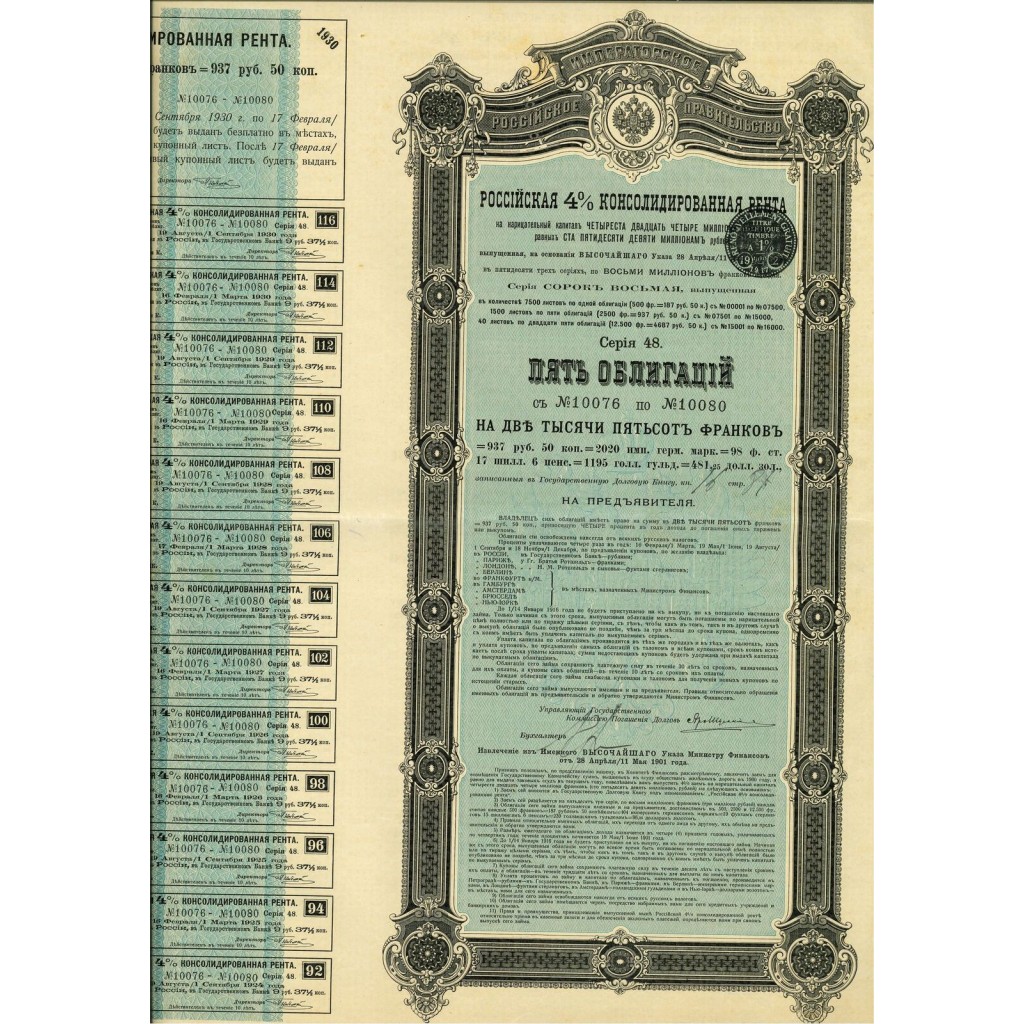
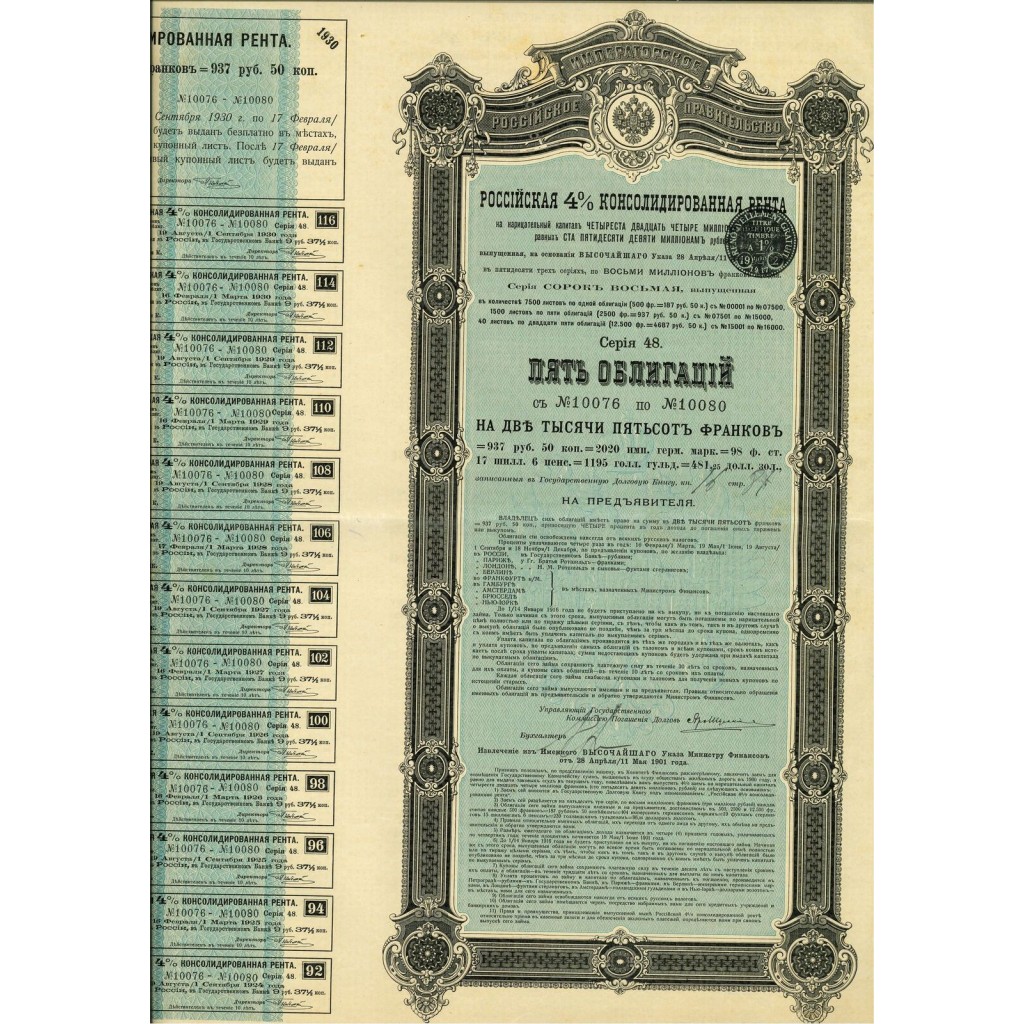
The 4% Consolidated Rent of the Imperial Russian Government represents one of the key financial instruments issued by the Russian Empire at the beginning of the 20th century. This bond, dated 1901, was part of a broader initiative to consolidate public debt and finance the large infrastructure projects needed to support the empire's growing economic demands. The bonds issued under this rent were long-term and guaranteed by the state with a 4% annual interest rate, a significant value at the time, reflecting the stability and confidence in the imperial finances.
Russia in 1901 was a rapidly evolving country, with great industrial and military ambitions, but also with growing social and political tensions. While Tsar Nicholas II sought to modernize the economy and strengthen the empire's power, opposition to the autocratic regime was growing, with socialist and liberal movements gaining ground. These factors made the management of public finances a critical issue, and the success of bond issues like this one was essential for maintaining stability.
Historical Data of the Company
| Data | Value |
|---|---|
| Year of establishment | 1901 (issuance date) |
| Headquarters | St. Petersburg, Russian Empire |
| Initial Capital | Not applicable (state issuance) |
| Year of bond issuance | 1901 |
| Interest rate | 4% per annum |
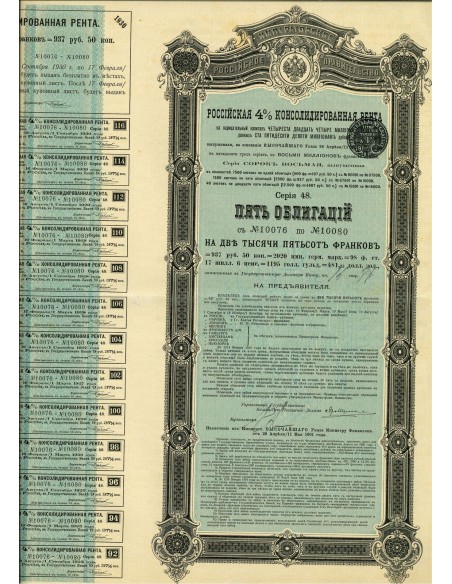
| Bond value | 2500 francs (equivalent to 937.5 rubles, 2020 German marks, 1195 Dutch guilders) |
| Bond duration | Perpetual |
| Year of company dissolution | 1917 (Russian Revolution) |
| Last available data | Not available |
Historical Context
The issuance of this bond took place during a period of great political and social uncertainty for the Russian Empire. The transition from the 19th to the 20th century marked an era of intense change for Russia. Agrarian reforms, accelerated industrialization, and railway expansion represented massive investments for the government, and the need to raise funds through bond issuance was crucial. At the same time, growing unrest among the working classes and pressure from foreign powers added further complexities to state management.
Artistic and Typographic Details
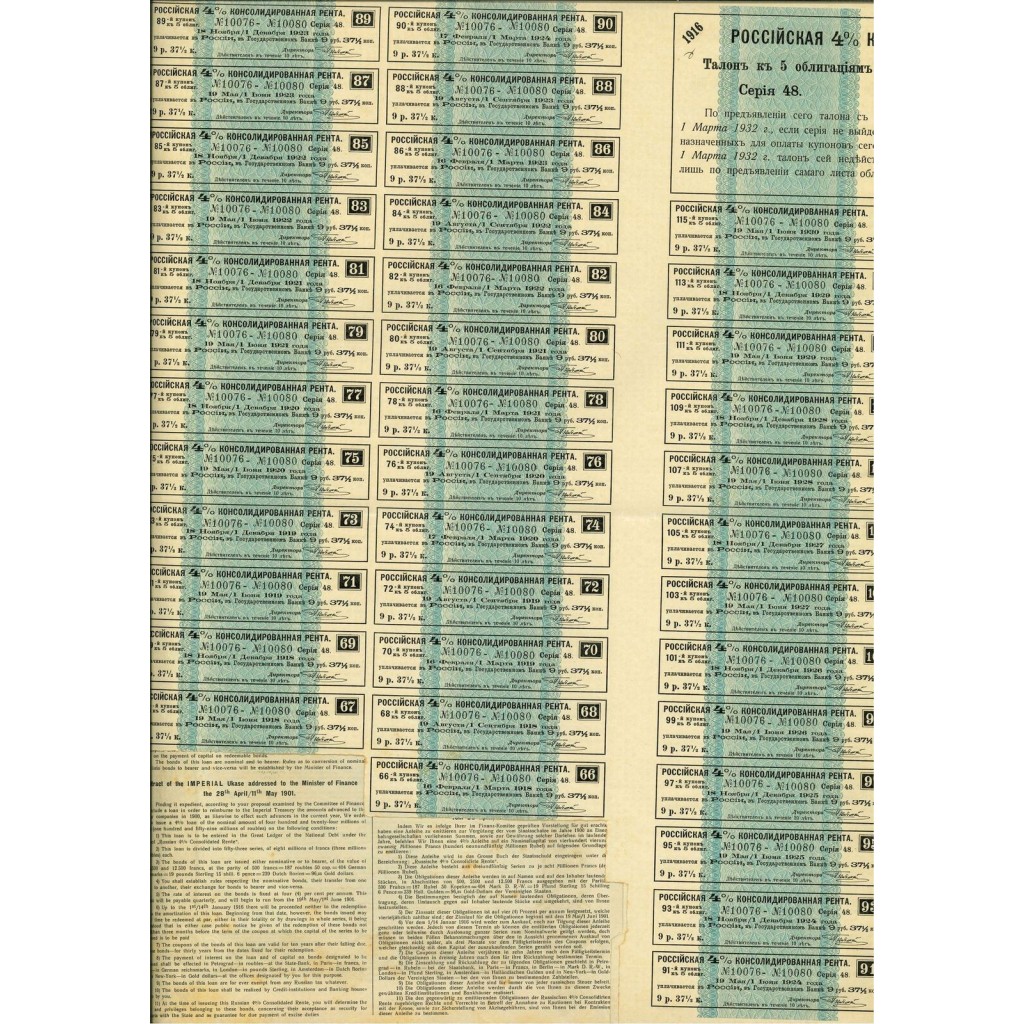
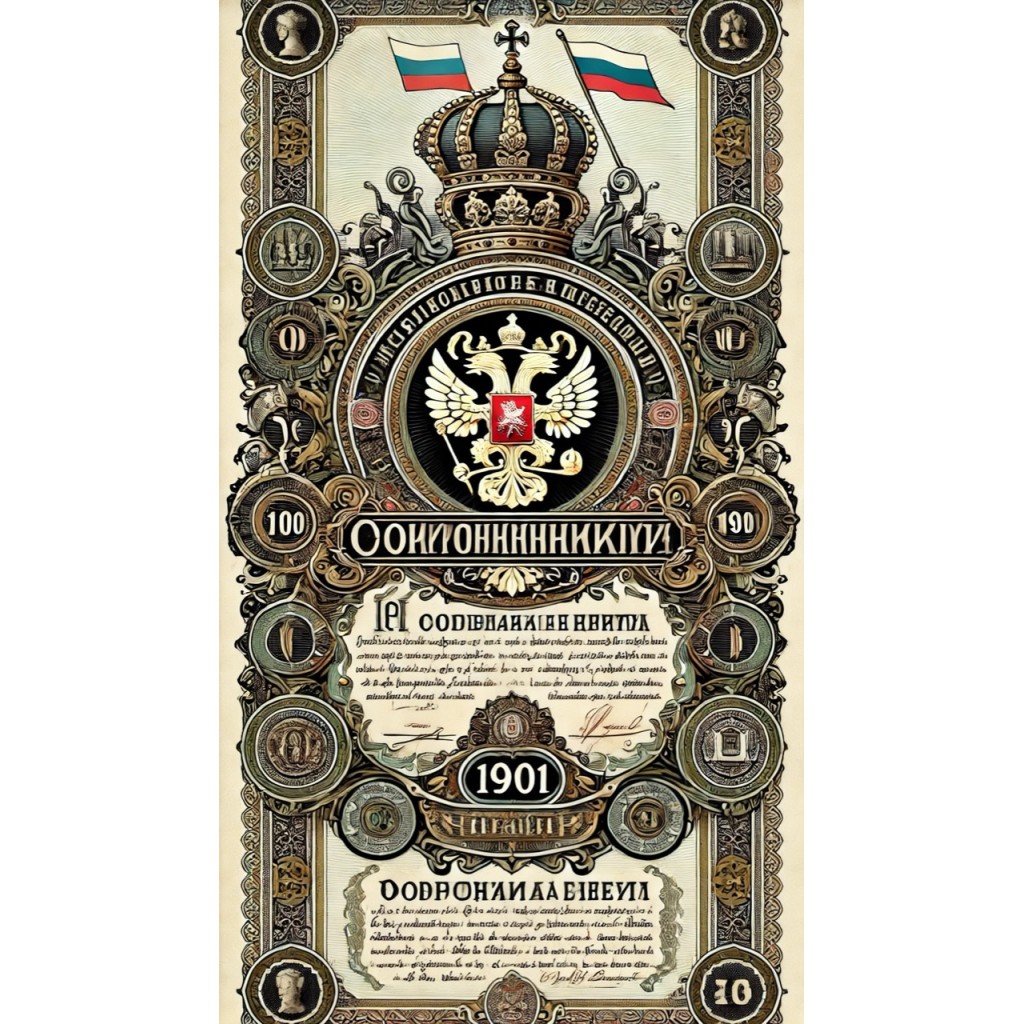
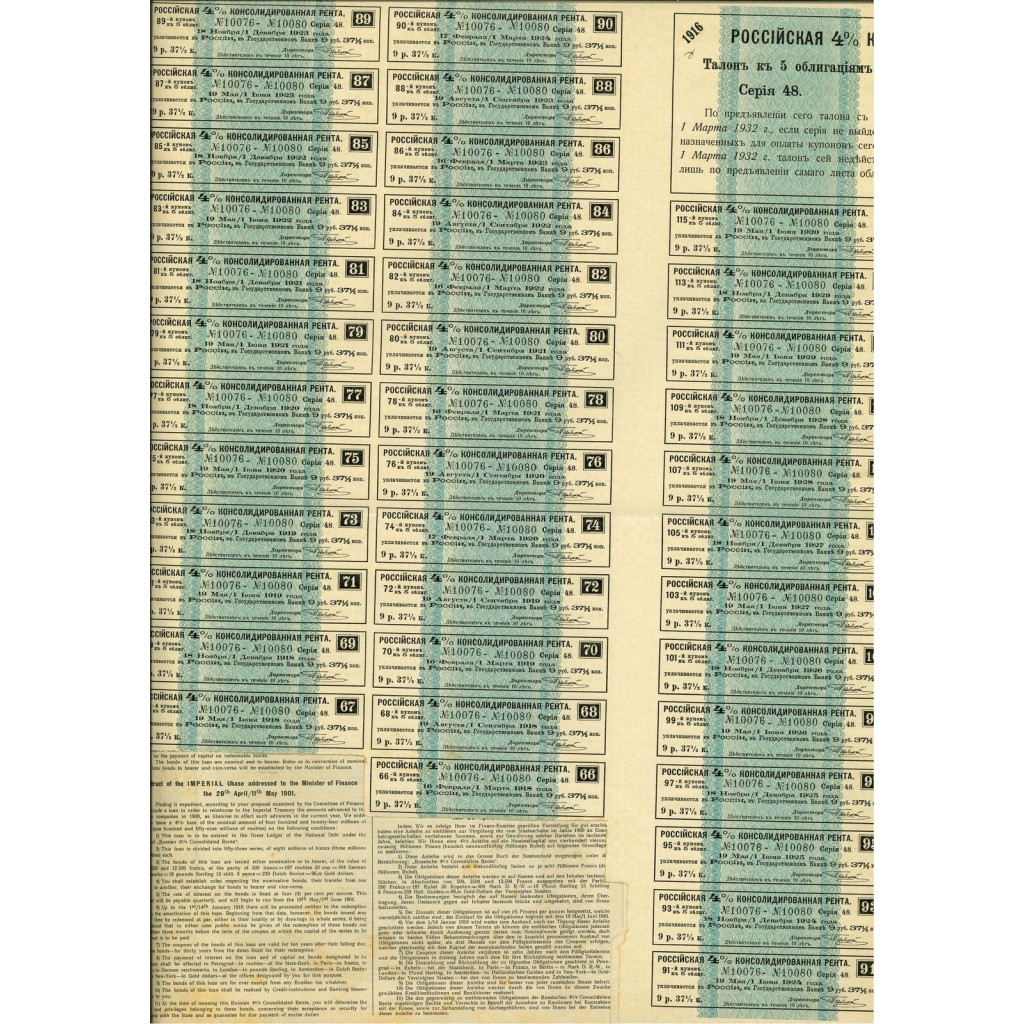
The 1901 bond features a design typical of financial documents from the Russian imperial era, with an elaborate decorative frame and the use of Cyrillic text. The color scheme, predominantly green and black, gives the document an authoritative and official appearance. The imperial government's seal, present at the top of the document, ensures the authenticity and solemnity of the bond. The entire layout reflects the importance of this bond as a key financial instrument for the empire.
Provenance of the Bond
This bond has a rich history, having passed through various private collections before arriving on the current collector's market. An official certificate of authenticity is available for those who wish to further enhance the piece with a detailed historical registry. Certification by recognized experts can significantly increase the value of the document, especially for discerning collectors.
Valuation and Rarity
The 1901 4% Consolidated Rent bonds are considered relatively rare, especially in good condition. The market value of these documents is rising, fueled by interest in the history of the Russian Empire and the end of the Tsarist regime. Recent auctions have seen an increase in value for similar pieces, making these bonds an interesting investment for collectors.
The Importance of Scripophily Collecting
Scripophily collecting allows one to own unique pieces of world economic and financial history. These documents are not only witnesses to a fascinating past but can also be displayed as works of art, used as valuable gifts, or as decorative elements that add a touch of history and refinement. Buying scripophily means connecting with history in a tangible way and appreciating the cultural value of these documents.
All historical documents for sale are for collection purposes. The documents have no economic or financial value (no economic or financial value), images that are not the historical document are representative of the company and the historical period of reference, they are not provided but can be freely downloaded from the website and printed.