Shopping Cart
There are no more items in your cart
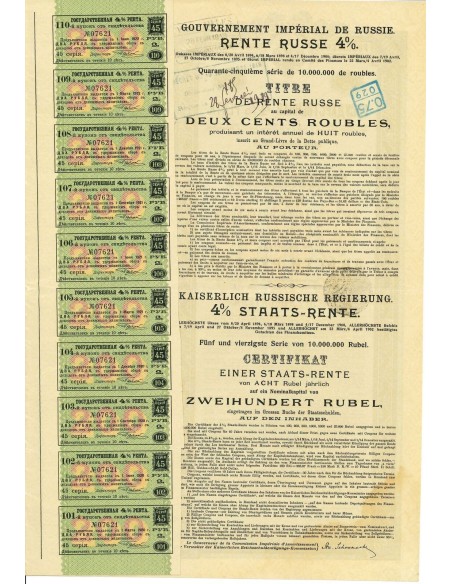

Historical Article: 4% State Rent of the Imperial Russian Government (Государственная 4% Рента)
Historical Profile of the Company
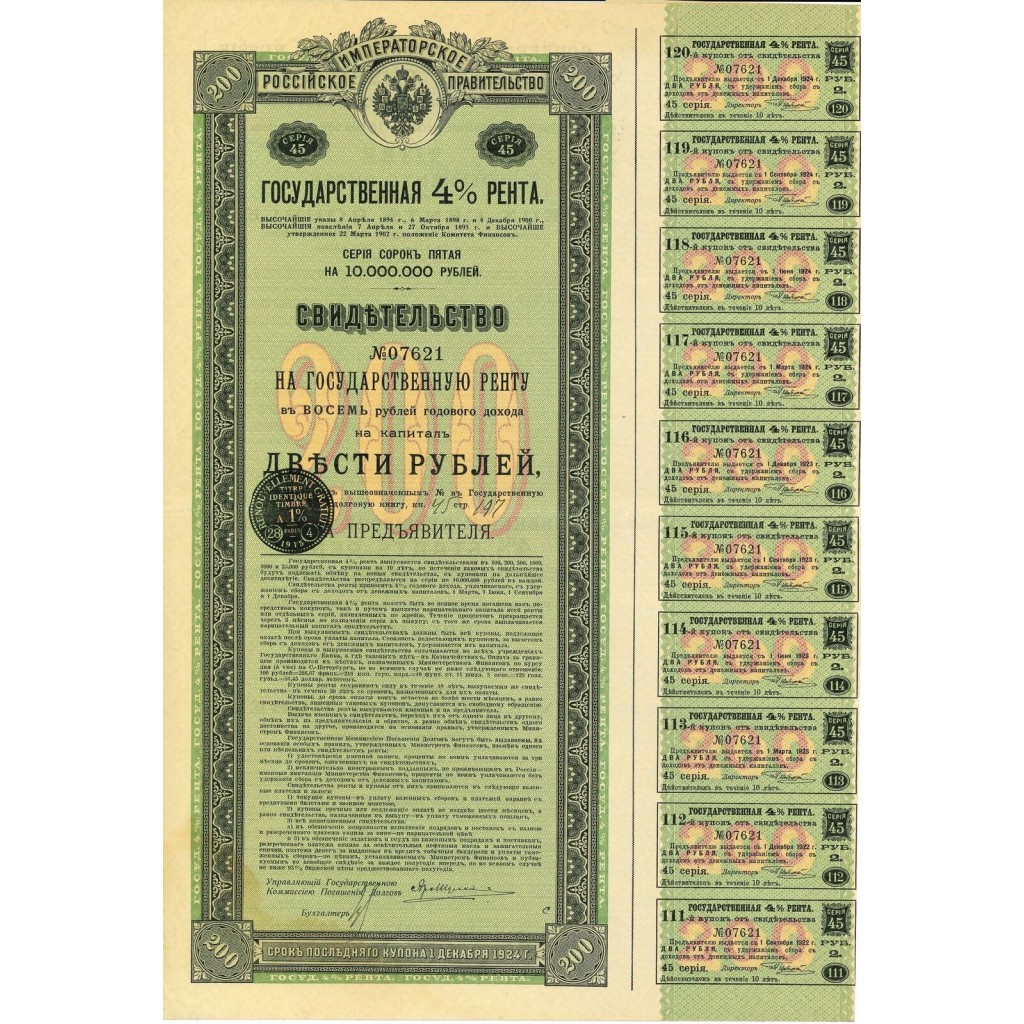
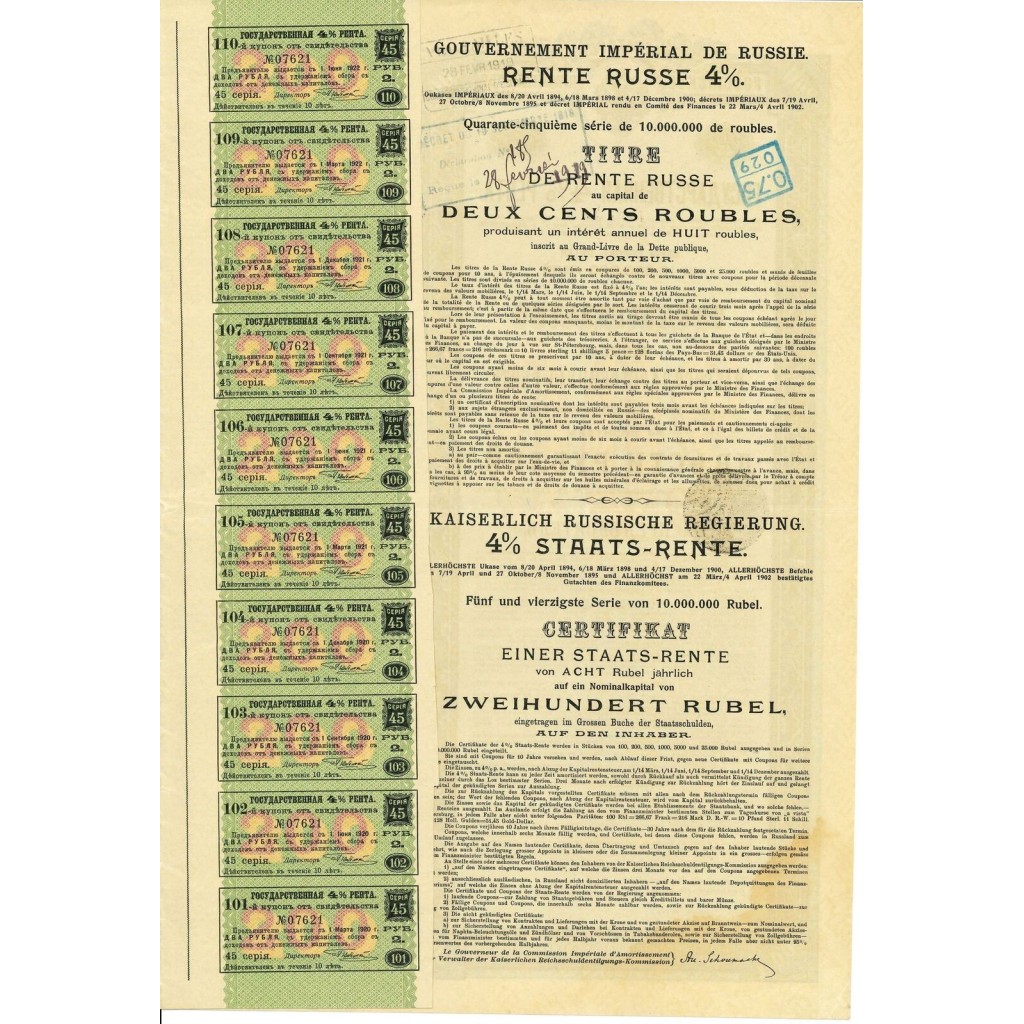
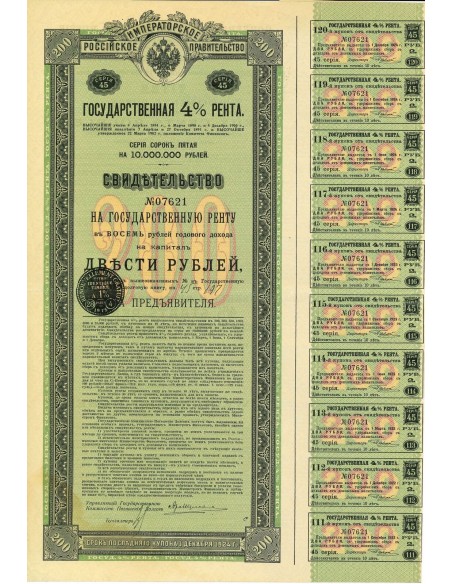
The 4% State Rent of the Imperial Russian Government represents an important bond issuance of the Russian Empire at the beginning of the 20th century. This bond, issued in 1902, was part of a series of rents aimed at financing government expenditures and consolidating public debt. The Tsarist government issued these bonds to attract both domestic and foreign capital, offering an annual interest rate of 4%. These bonds were considered a safe investment, guaranteed by the State, during a period of economic growth but also of increasing political and social tensions.
Russia in 1902 was undergoing rapid industrial expansion, with large infrastructure projects underway and a strong need for capital to support these developments. However, the early 20th century was also marked by serious social problems and growing dissatisfaction with the Tsarist regime, which would later culminate in the 1917 Revolution. Bonds like this were crucial tools for maintaining financial stability and creating an impression of economic solidity, even in times of crisis.
Historical Data of the Company
| Data | Value |
|---|---|
| Year of establishment | 1902 (issuance date) |
| Headquarters | St. Petersburg, Russian Empire |
| Initial Capital | Not applicable (state issuance) |
| Year of bond issuance | 1902 |
| Interest rate | 4% per annum |
| Bond value | 200 rubles |
| Bond duration | Perpetual |
| Year of company dissolution | 1917 (Russian Revolution) |
| Last available data | Not available |
Historical Context
The issuance of this state rent took place in a complex historical context. Russia at the time was trying to assert itself as an economic and industrial power, with a particular focus on building infrastructure such as railways and heavy industries. However, social and political tensions were growing, fueled by economic inequalities and political repression. The issuance of state bonds was one of the strategies used by the Tsarist government to maintain market confidence and finance the growing public debt.
Artistic and Typographic Details
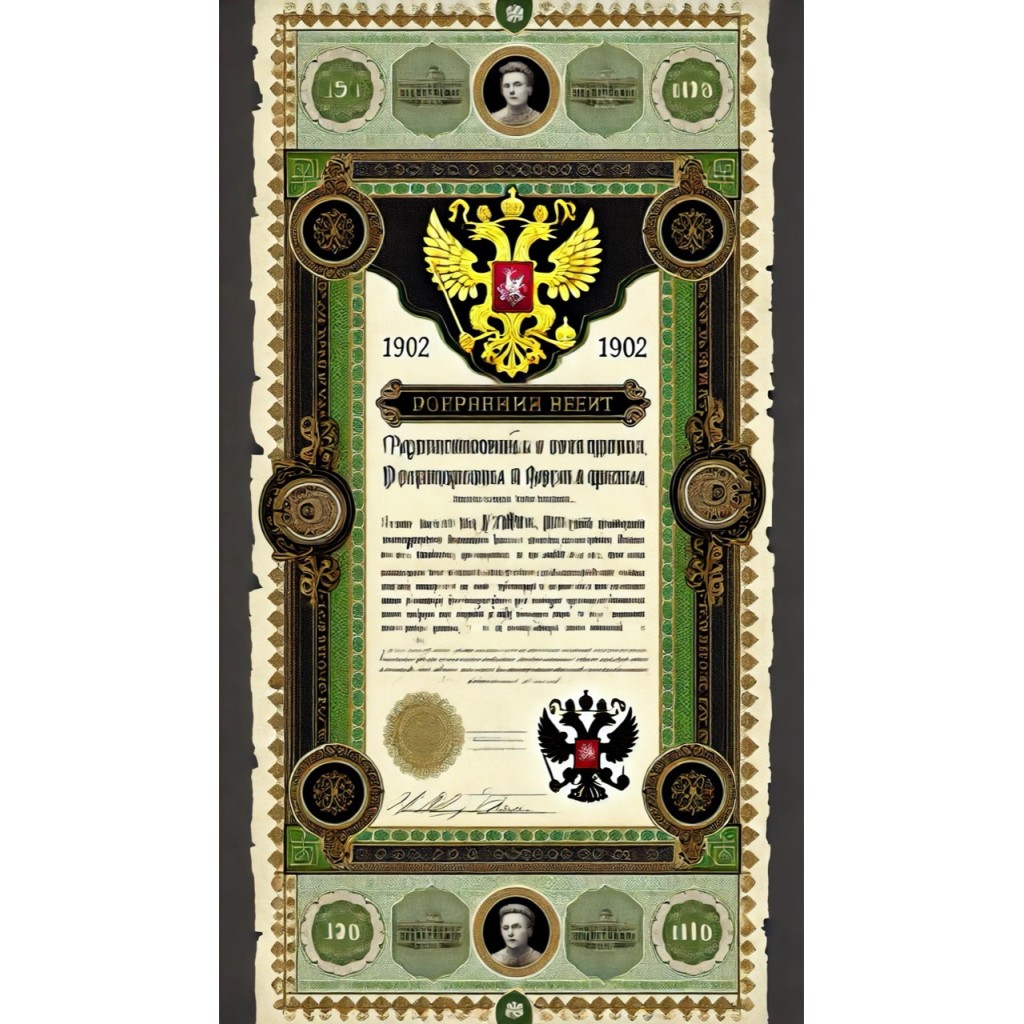
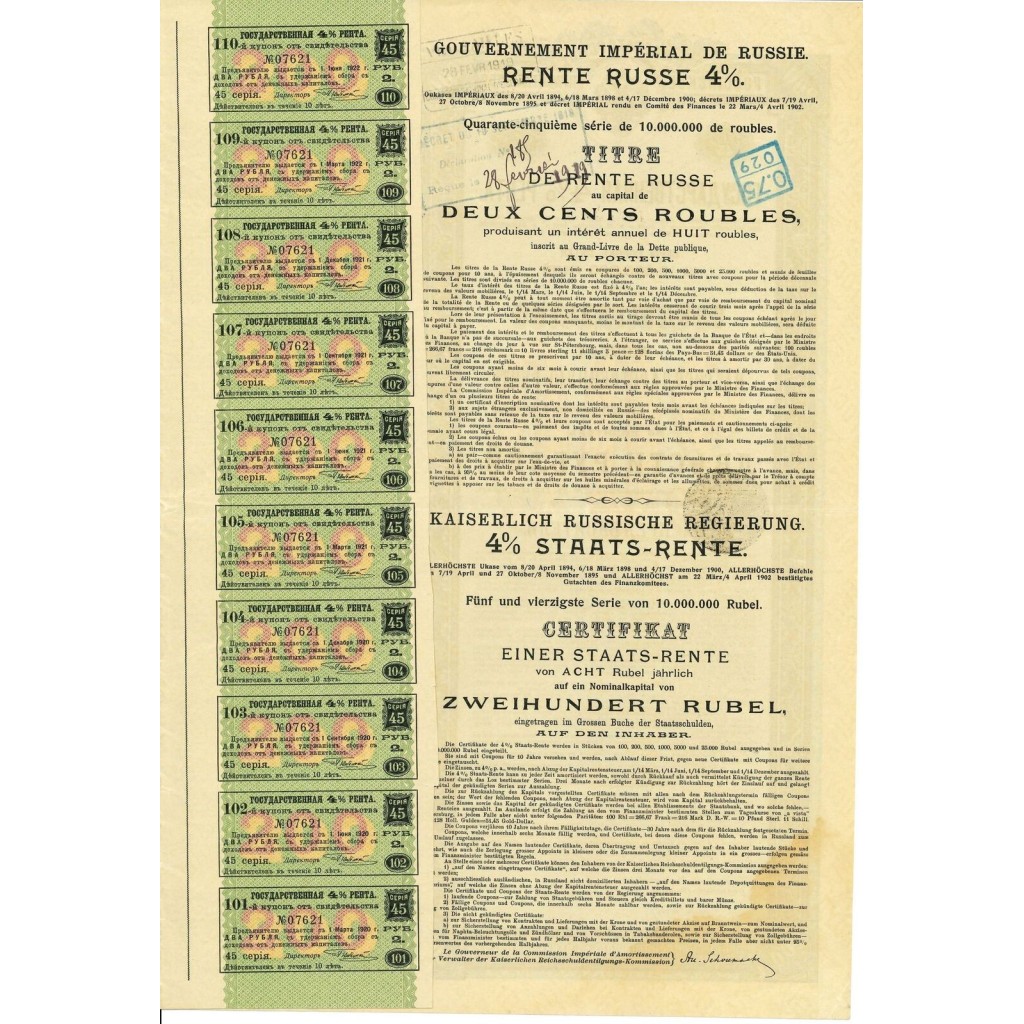
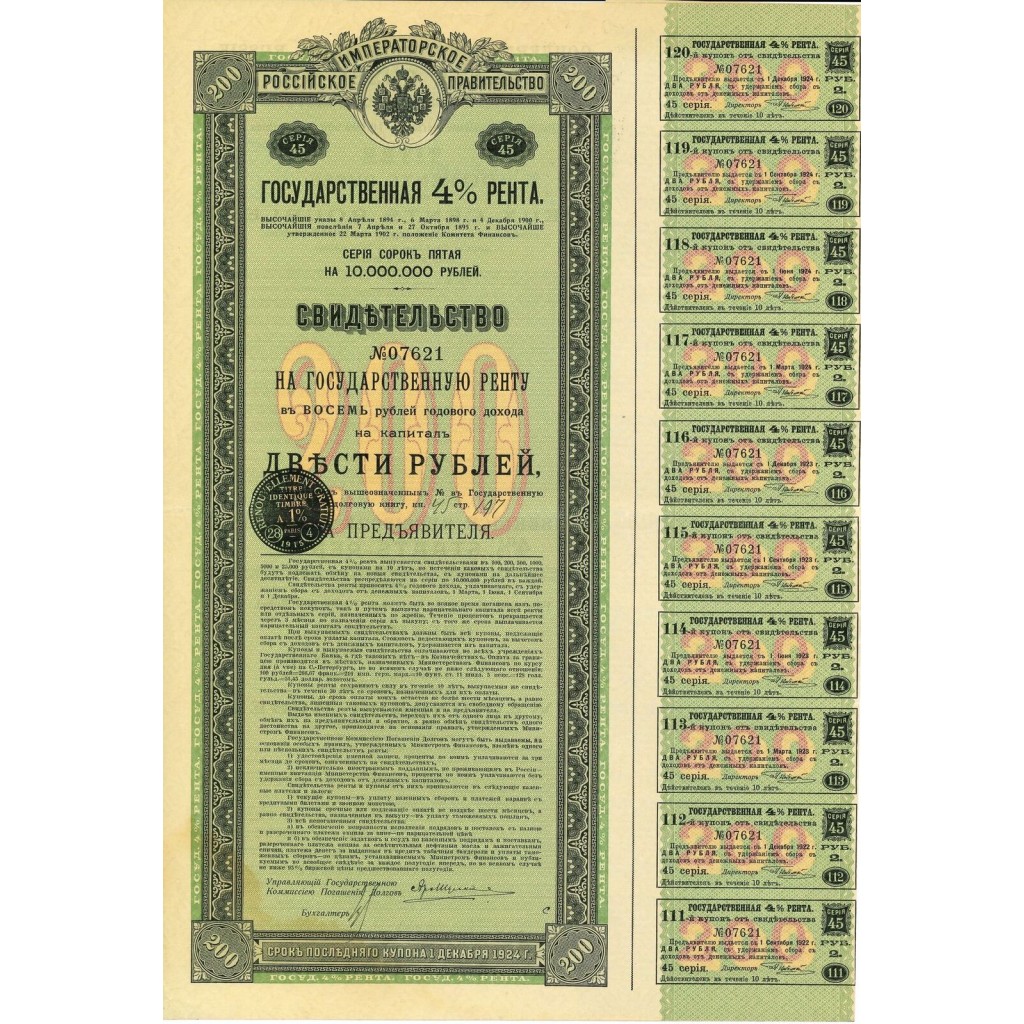
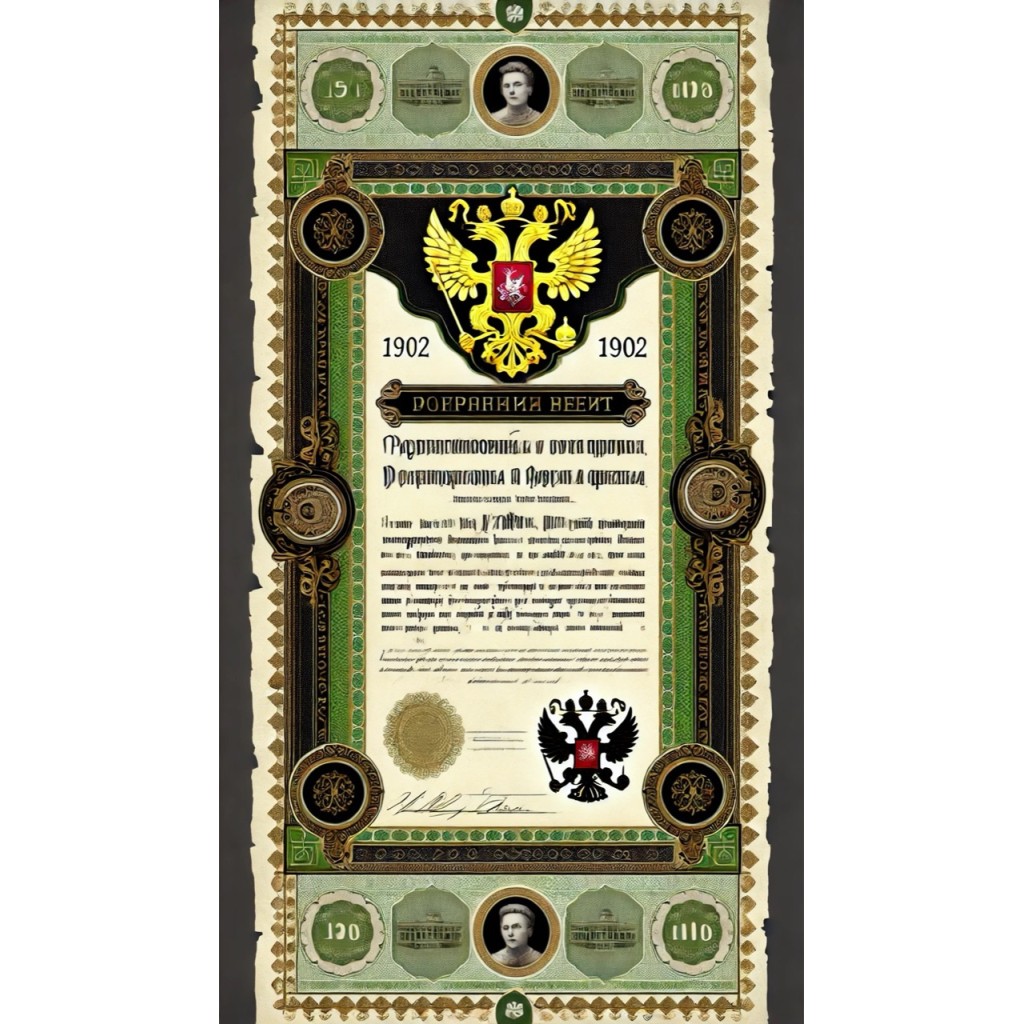
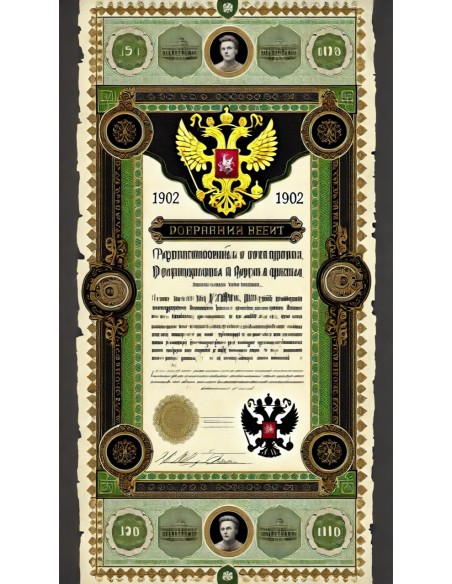
The 1902 document features a design characteristic of financial certificates of the era, with an elaborate frame and predominant use of green and black. The text is in Cyrillic, and the emblem of the Imperial Russian government is prominently displayed, symbolizing the authority and security of the issuance. The certificate is rich in typographic details, including serial numbers and stamps that attest to the authenticity of the document. The presence of coupons for interest payments clearly indicates the practical use of this financial instrument.
Provenance of the Bond
This bond has been preserved in excellent condition, passing through various hands before reaching today's collectors. An official certificate of authenticity is available, providing a detailed historical registry that adds value to the document. Certification increases the appeal of the bond for serious collectors and helps preserve the integrity of the piece.
Valuation and Rarity
The 4% State Rent bonds of 1902 are considered documents of particular historical and collectible interest. Although not extremely rare, their value can vary significantly depending on the condition and documented history of the bond. Recent auction sales have shown an increase in interest and value for these pieces, making them a good investment for those passionate about financial history and scripophily.
The Importance of Scripophily Collecting
Collecting scripophily is not just about owning unique pieces of economic history but also about exploring the political and social dynamics of the past through tangible documents. These certificates are ideal for display in private collections, used as prestigious gifts, or as decorative elements that tell stories of a bygone era. Investing in scripophily means appreciating and preserving the culture and history of a period that has profoundly shaped the modern world.
All historical documents for sale are for collection purposes. The documents have no economic or financial value (no economic or financial value), images that are not the historical document are representative of the company and the historical period of reference, they are not provided but can be freely downloaded from the website and printed.