Shopping Cart
There are no more items in your cart
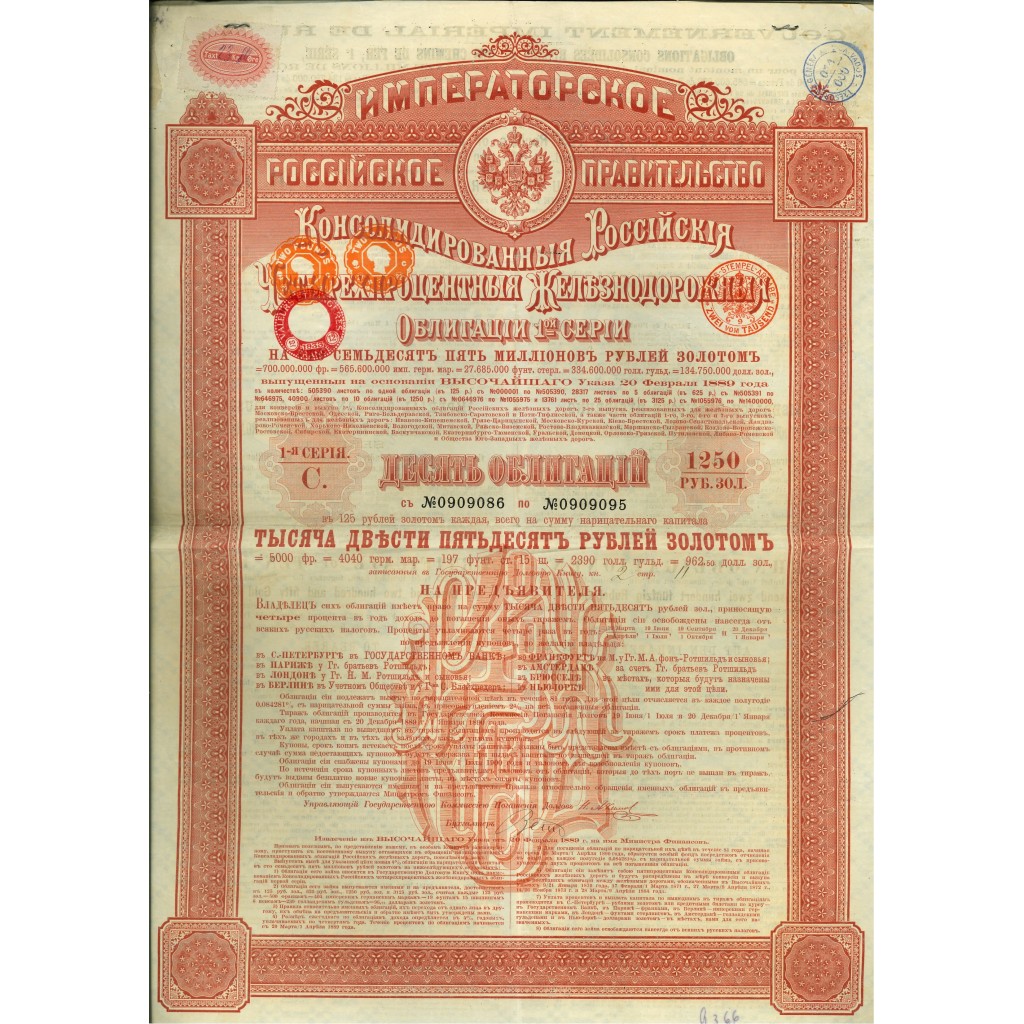
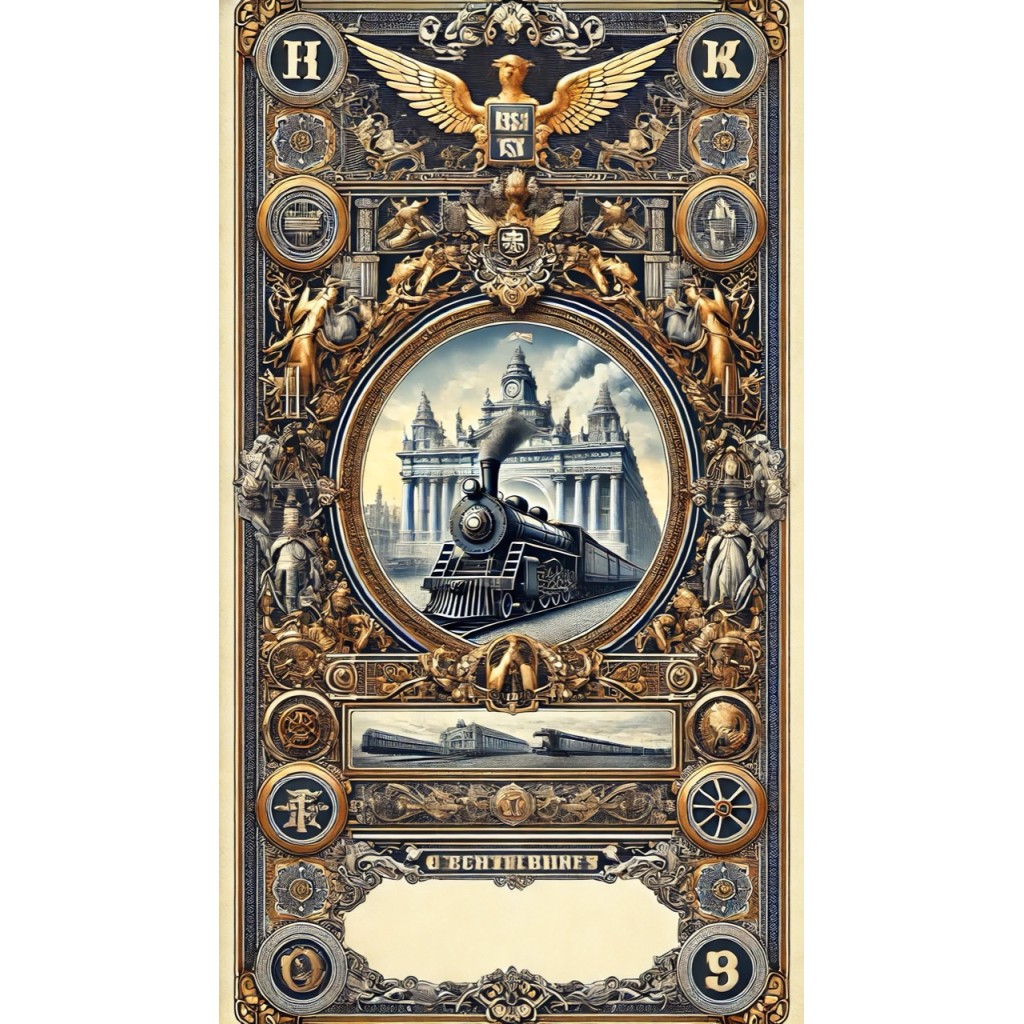
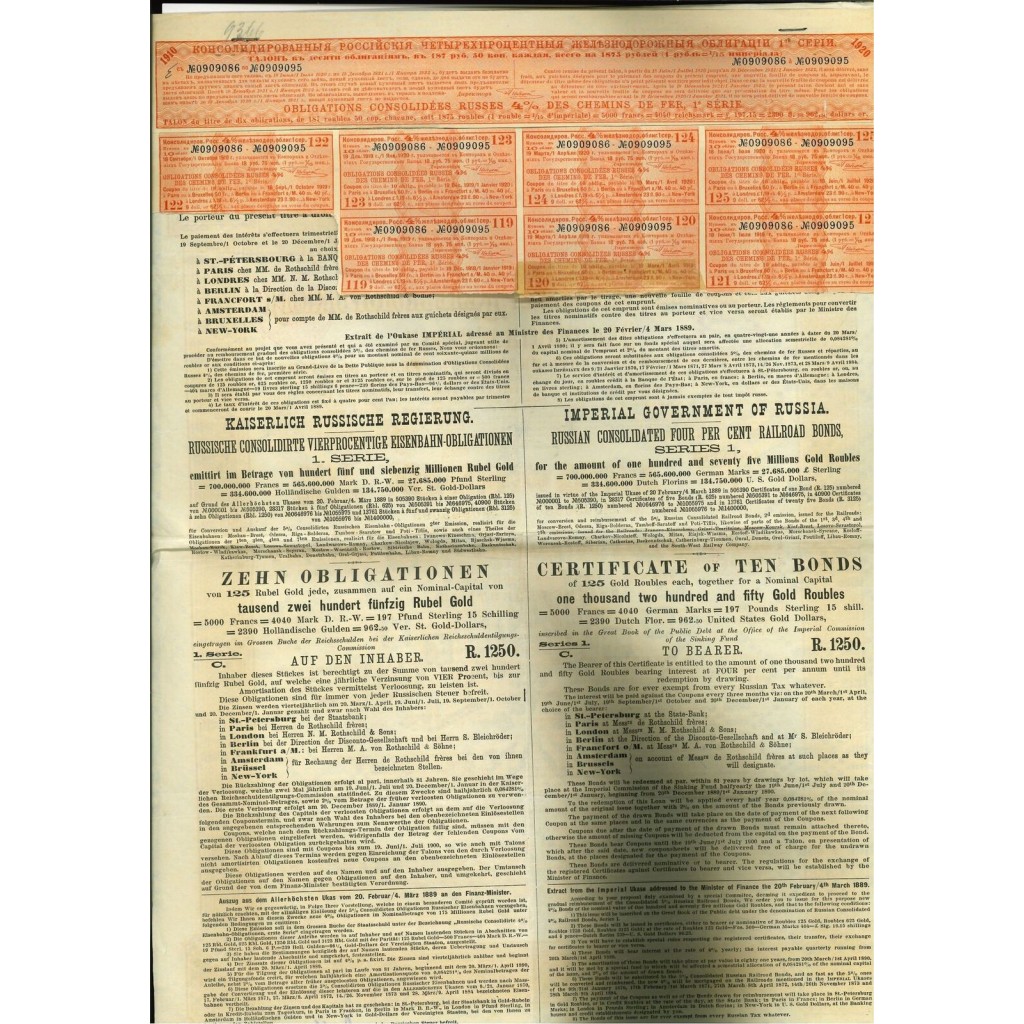
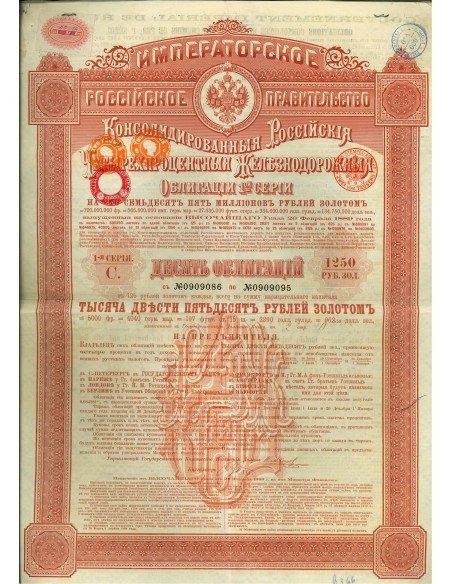
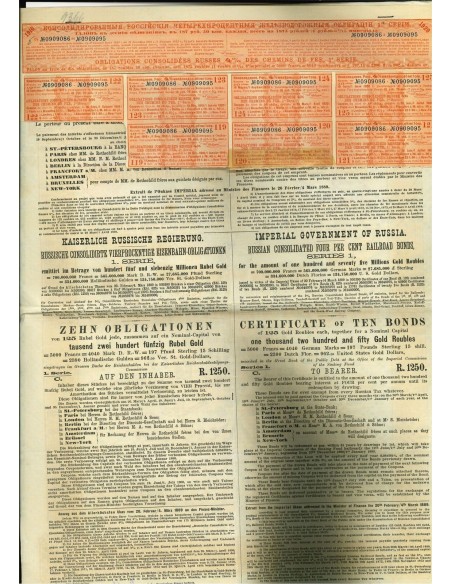

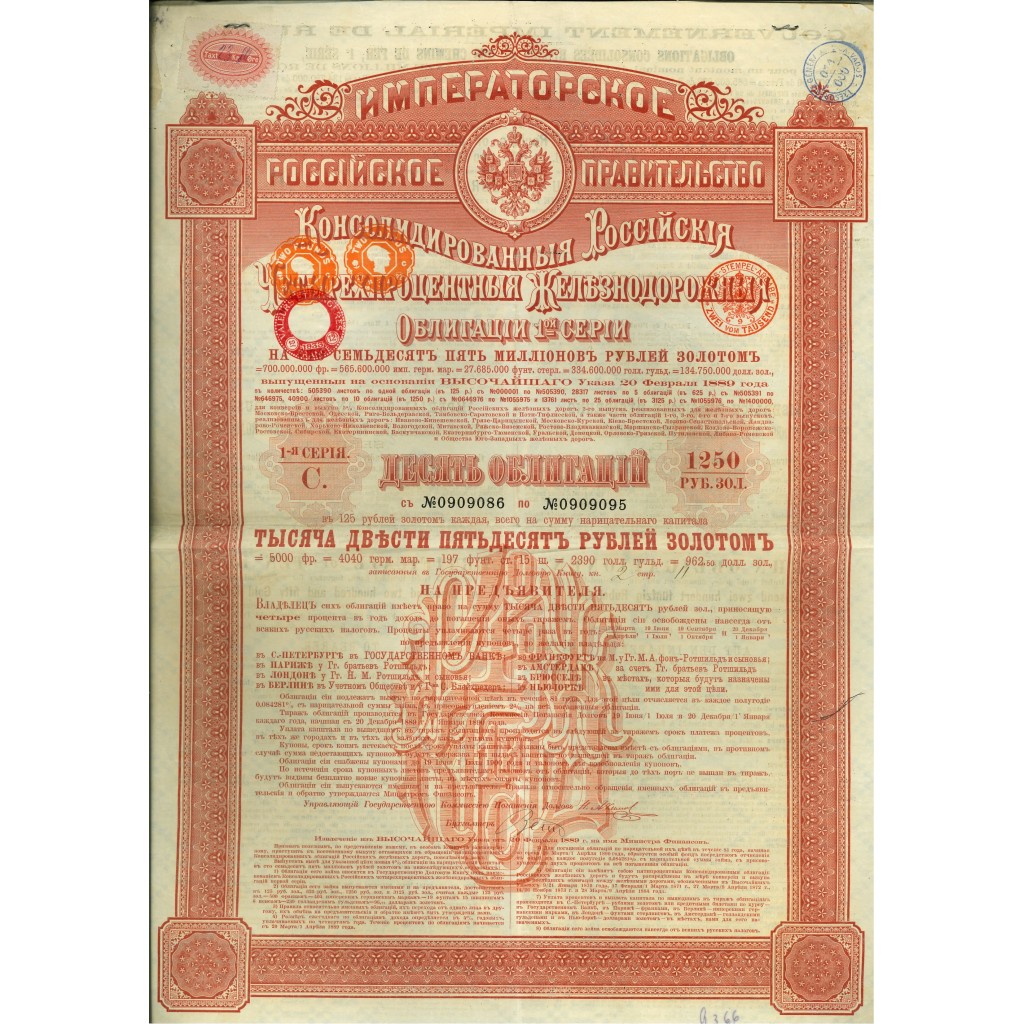
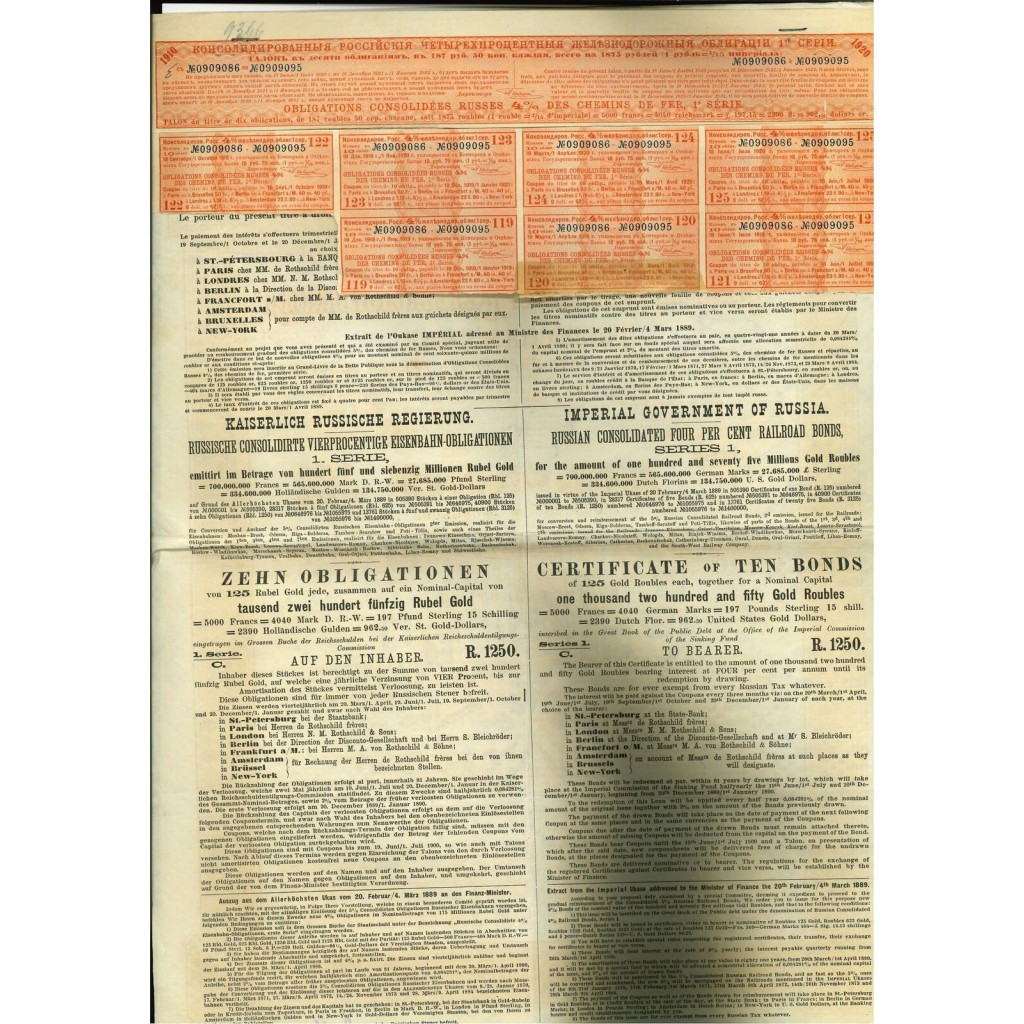
The document in question is a bond issued by the Russian Imperial Government at the end of the 19th century, during a period of significant industrial expansion and infrastructure development, particularly in the railway sector. These bonds represent a substantial part of the financing for the construction of new railway lines, which were essential to support the economic and military growth of the Russian Empire.
Historical Context
At the end of the 19th century, the Russian Empire was engaged in a vast program of modernization and industrialization. This period saw a remarkable development of infrastructure, particularly railways, which were crucial for connecting the vast areas of the empire and facilitating the transportation of resources and goods. The construction of railways required enormous capital, and the imperial government frequently resorted to issuing bonds to finance these projects.
In the international context, the issuance of bonds by the Russian government attracted many foreign investors, particularly in Western Europe, due to the perception of the Russian Empire as a stable and expanding giant. However, these bonds were issued in a context of growing international tension and internal challenges, which would eventually lead to the fall of the Empire and the Russian Revolution of 1917.
Document Features
| Feature | Detail |
|---|---|
| Title | Russian Consolidated Bond 4% |
| Year of Issue | 1889 |
| Initial Capital | 1,241,992,000 gold rubles |
| Capital at Cessation | Not available |
| Nominal Value | 625 gold rubles |
| Coupon Rate | 4% |
| Series | 2nd Series |
| Number of Bonds Issued | 200,000 bonds |
| Maturity | 1950 |
| Coupon Payment Locations | St. Petersburg, Paris, London, Amsterdam, Berlin |
| Currencies Accepted | Rubles, Sterling, Marks, Guilders, Dollars |
| Provenance | Private collection, acquired through specialized auctions |
Artistic and Typographical Details
The bond features an elaborate design, typical of bonds from that era, with intricate decorations that include the Russian Imperial coat of arms. The typography is of high quality, with well-defined characters and a layout that reflects the majesty and power of the Russian Empire. The predominant colors are red and gold, symbolizing the wealth and importance of the document.
Provenance
The bond comes from a private collection and was acquired through a specialized auction. It has been preserved in excellent condition, maintaining its artistic and historical beauty.
Valuation and Rarity
Bonds issued by the Russian Imperial Government at the end of the 19th century are considered highly valuable pieces for collectors, not only for their historical value but also for their artistic beauty. The rarity of these documents increased after the Russian Revolution, as many bonds were destroyed or lost. Recent sales of similar titles show strong interest in the collectibles market, with prices varying significantly depending on the condition of the bond and its provenance.
The Importance of Scripophily Collecting
Collecting historical stocks and bonds, known as scripophily, is a passion that allows one to own a tangible part of the world's economic history. These documents not only represent old investments but tell stories of past eras, empires, and evolving economies. Collecting scripophily means preserving these unique pieces of history, appreciating their art and beauty.
Collectors can display these documents in elegant frames, transforming them into unique decorative pieces with great historical and visual impact. Moreover, these documents can be a distinguished gift, symbolizing a bygone era and an invaluable investment in history.
All historical documents for sale are intended as collectibles. The documents have no economic or financial value (no economic or financial value), the images that are not the historical document are representative of the company's subject matter and the historical period of reference are not provided but can be freely downloaded from the website and printed.