Shopping Cart
There are no more items in your cart

Historical Profile of the Kingdom of Roumania Monopolies Institute
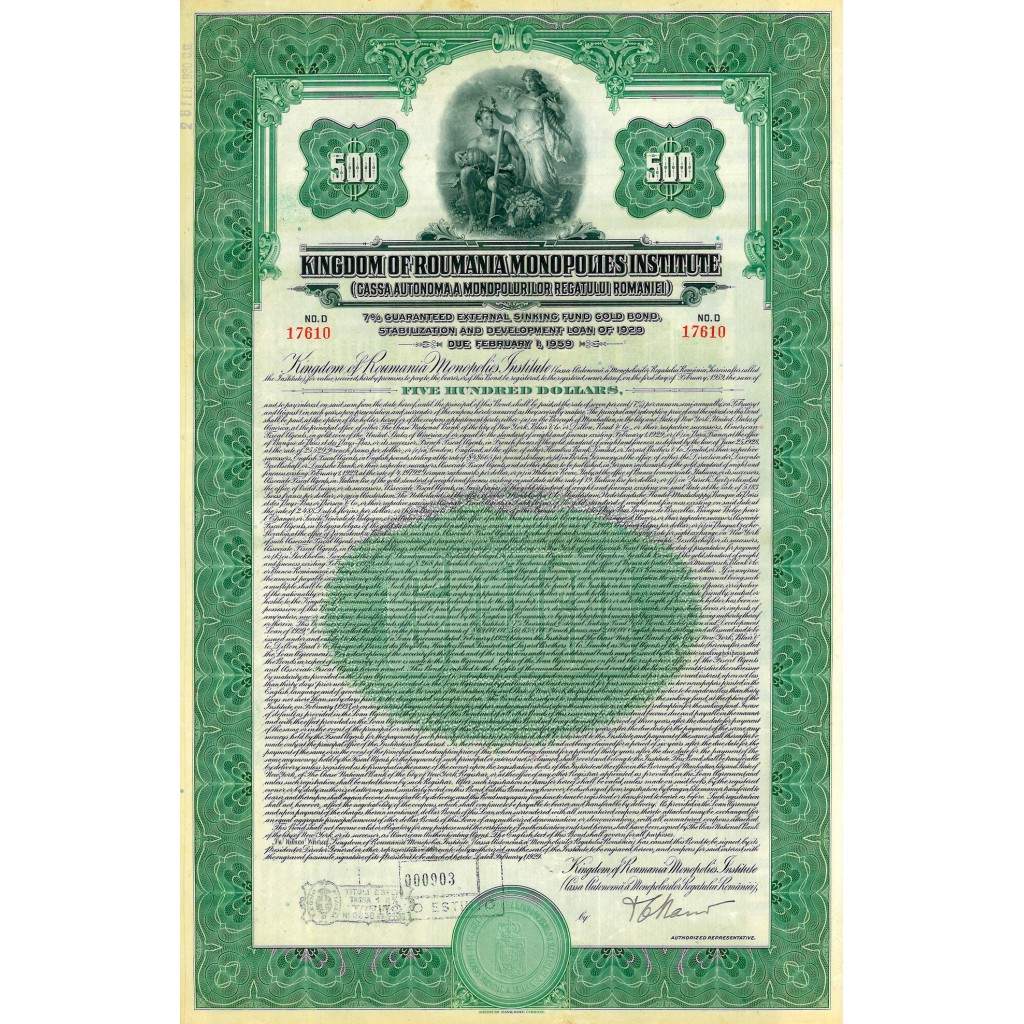
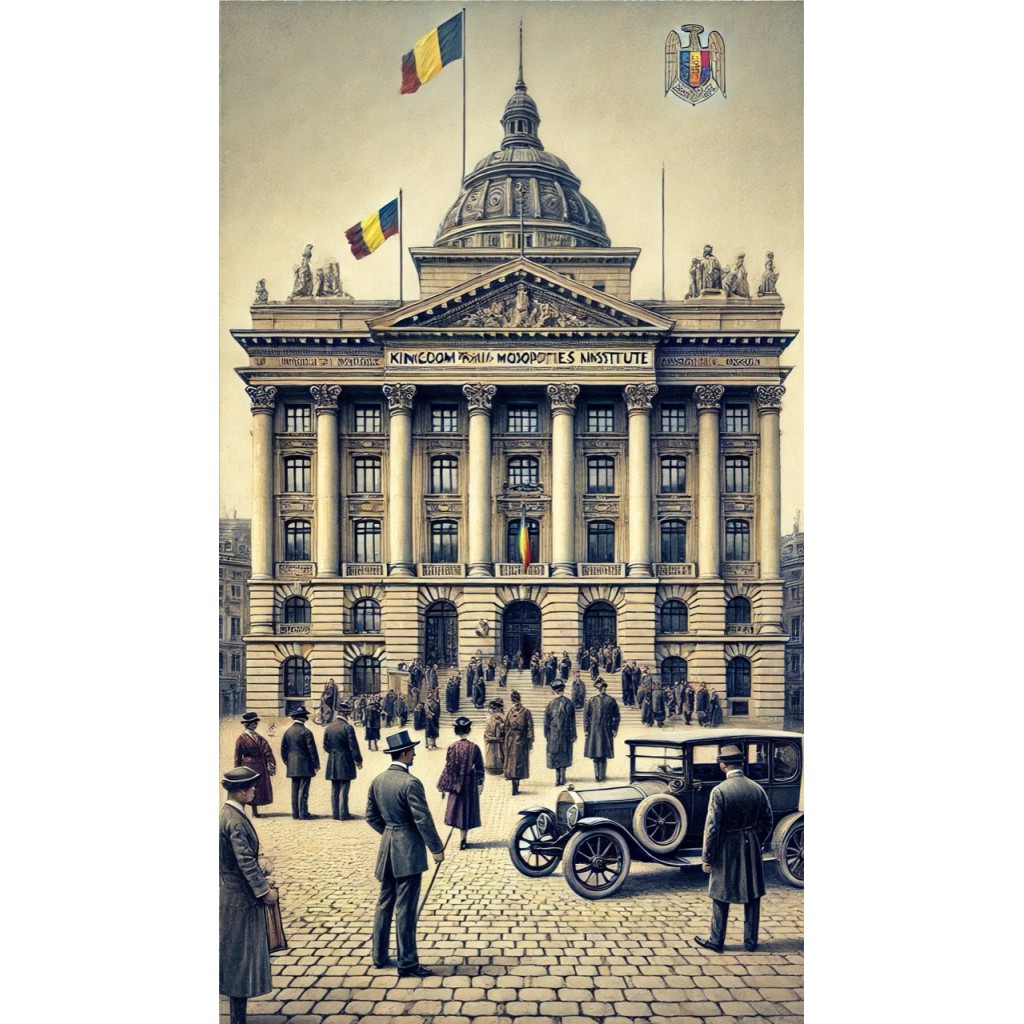
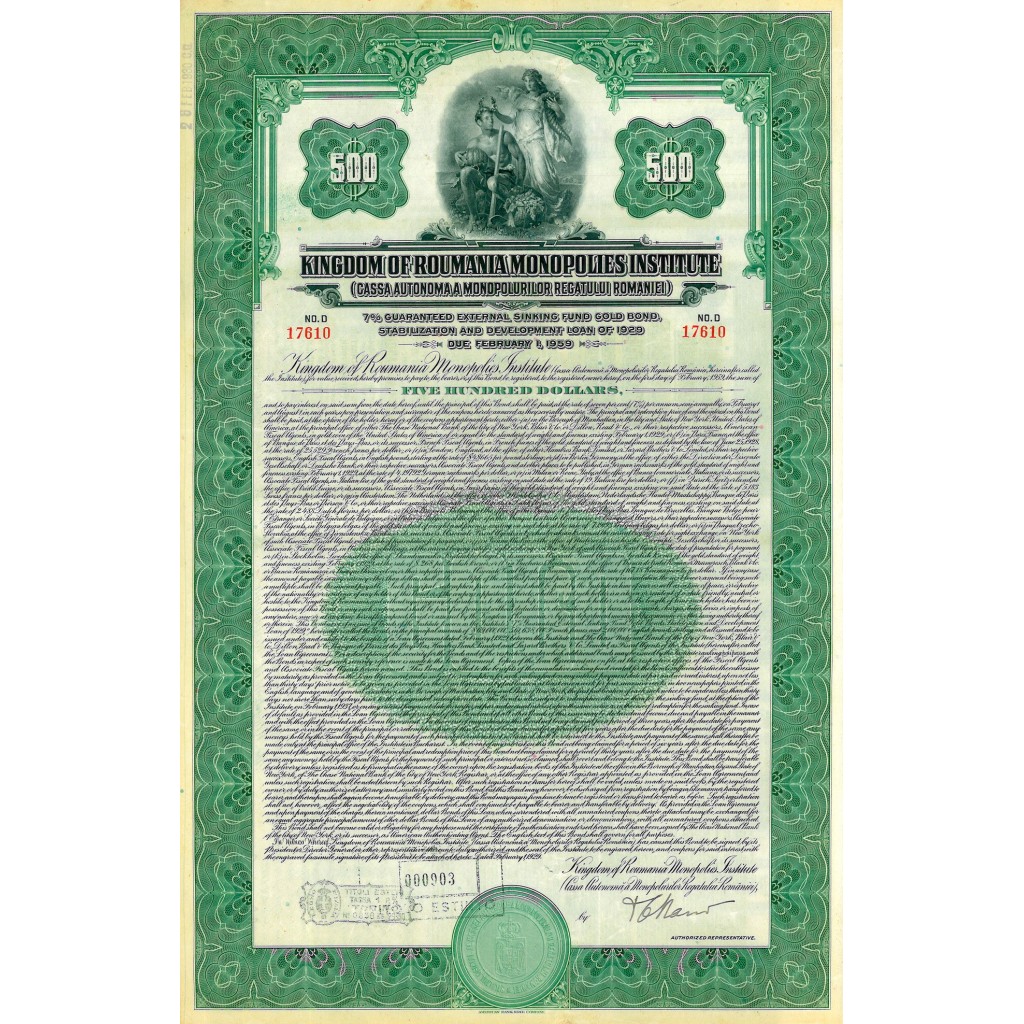
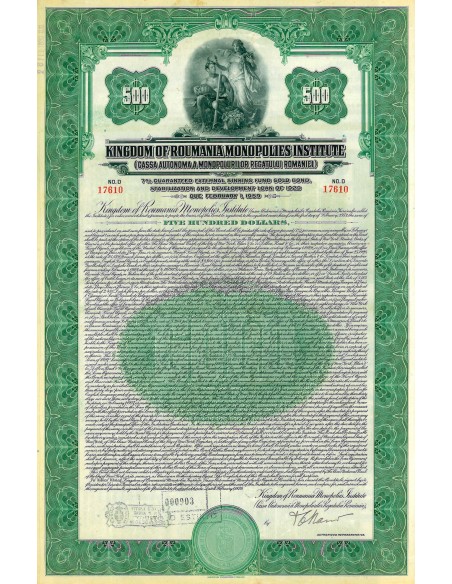
The Kingdom of Roumania Monopolies Institute was responsible for managing state monopolies in Romania, particularly in strategic resources like tobacco, salt, and other key goods. In 1929, the institute issued an international loan backed by gold bonds to fund the stabilization and development of Romania’s economy, hit hard by the global financial crisis. This $500 bond, part of the 7% external loan, aimed to strengthen the country’s public finances and support infrastructure growth.
Historical Data of the Company
| Company Historical Data | Information |
|---|---|
| Year of Establishment | 1925 |
| Headquarters | Bucharest, Kingdom of Romania |
| Year of Stock Exchange Listing | 1929 |
| Year of Delisting from Stock Exchange | 1959 |
| Year of Dissolution | 1959 |
| Share Capital at Establishment | Not available |
| Share Capital at Dissolution | Not available |
| Annual Revenue (1929) | Not available |
Certificate Characteristics
| Characteristic | Description |
|---|---|
| Number of Certificates | N/A |
| Type of Certificate | External Gold Bond |
| Nominal Value | 500 dollars |
| Serial Number | 17610 |
| Interest Rate | 7% |
| Maturity Date | February 1, 1959 |
| Issue Date | 1929 |
| Signed by | Representatives of the Kingdom of Roumania Monopolies Institute (names present but unclear) |
| Condition of Document | Very good preservation |
| Authenticity Status | Authentic |
| Language of Document | English |
| Stamps and Seals | Official stamps from the Romanian Ministry of Finance and the issuing bank |
Historical Context
The loan issued in 1929 represents Romania’s attempt to attract external capital to stabilize its economy during a period of great international instability following the Wall Street crash. The gold-backed bonds, like the one shown here, offered investors the security of returning their capital despite the global financial struggles. During this period, the Romanian government was focused on modernizing the country and strengthening its infrastructure, but financial difficulties persisted, leading to significant political changes in the 1930s and 1940s.
Artistic and Typographical Details
This $500 certificate features an elaborate design, with green decorative patterns framing the central text. In the middle, an allegorical illustration symbolizes the country’s economy and progress. The document is rich in graphic details, with elegant serif fonts used for the main text and official seals confirming its authenticity. The coupon sections (visible on the back) feature portraits of Romanian officials and signatures affirming the bond’s validity.
Evaluation and Rarity
$500 bonds issued by the Kingdom of Roumania Monopolies Institute are relatively rare, especially in excellent condition. The market for these certificates can vary, but one in good condition like this can be valued between 200 and 700 euros. The value is determined by the document’s rarity, historical significance, and preservation condition.
The Importance of Scripophily Collecting
Collecting historical certificates like this provides a unique opportunity to explore the economic and political history of the past. These documents not only represent financial interests but are also works of art, with detailed illustrations and decorative motifs that reflect the importance of public finance in national economies. For scripophily collectors, documents like this are true gems, enriching any collection.
Preserving these bonds is essential: they should be stored in protective frames or special albums to avoid damage from exposure to light or humidity. These documents can also serve as valuable historical decorative pieces in offices or homes, contributing to an elegant and sophisticated environment.
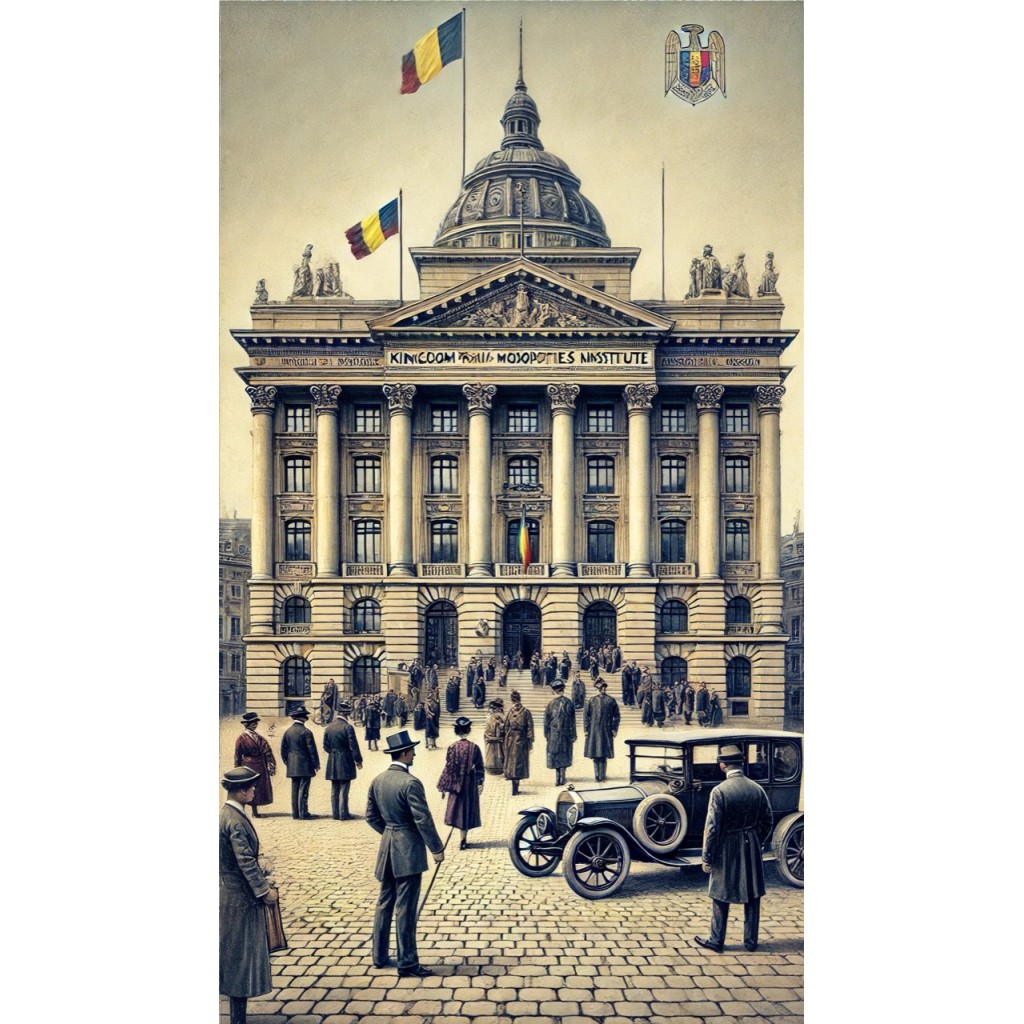
All historical documents for sale are considered collectible. They have no economic or financial value (no economic or financial value), and the images that are not of the historical document are representative of the company's object and the historical period. They are not provided but can be freely downloaded from the website and printed.