Shopping Cart
There are no more items in your cart
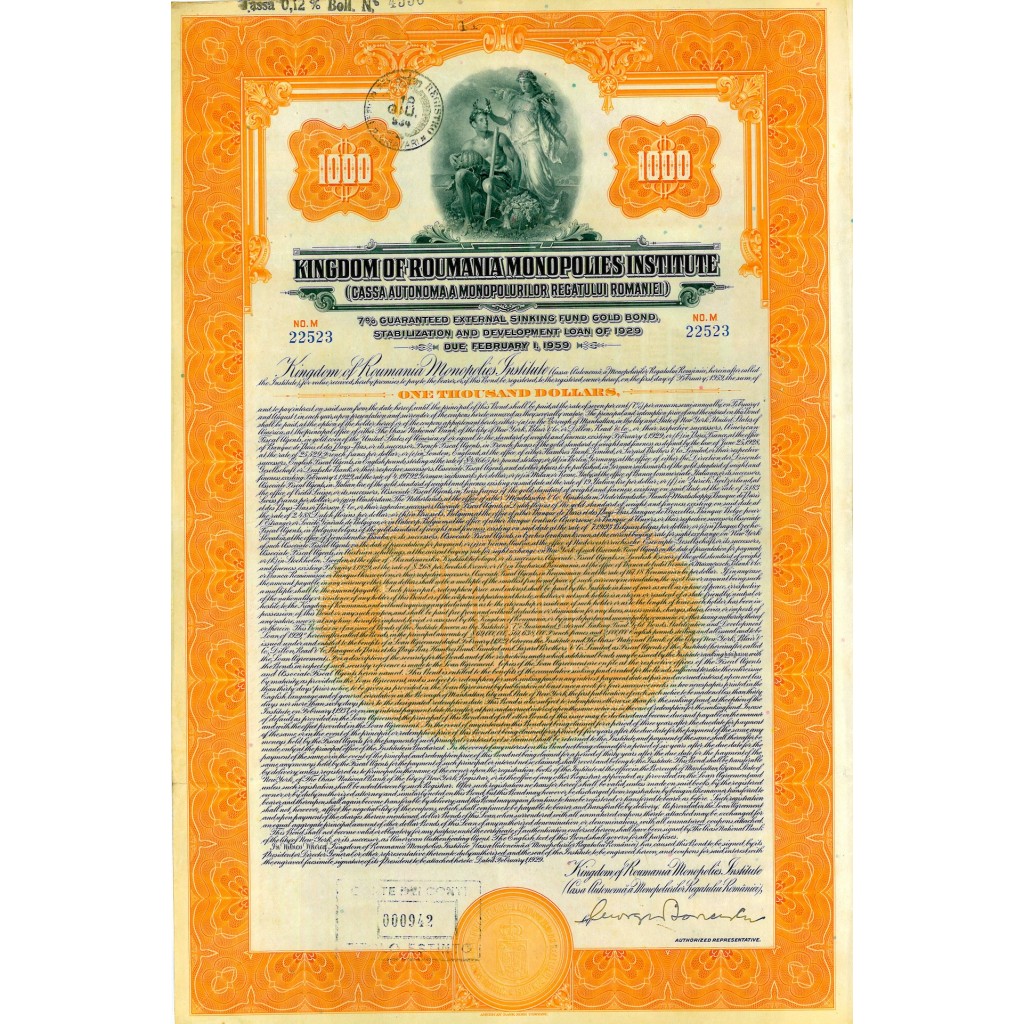
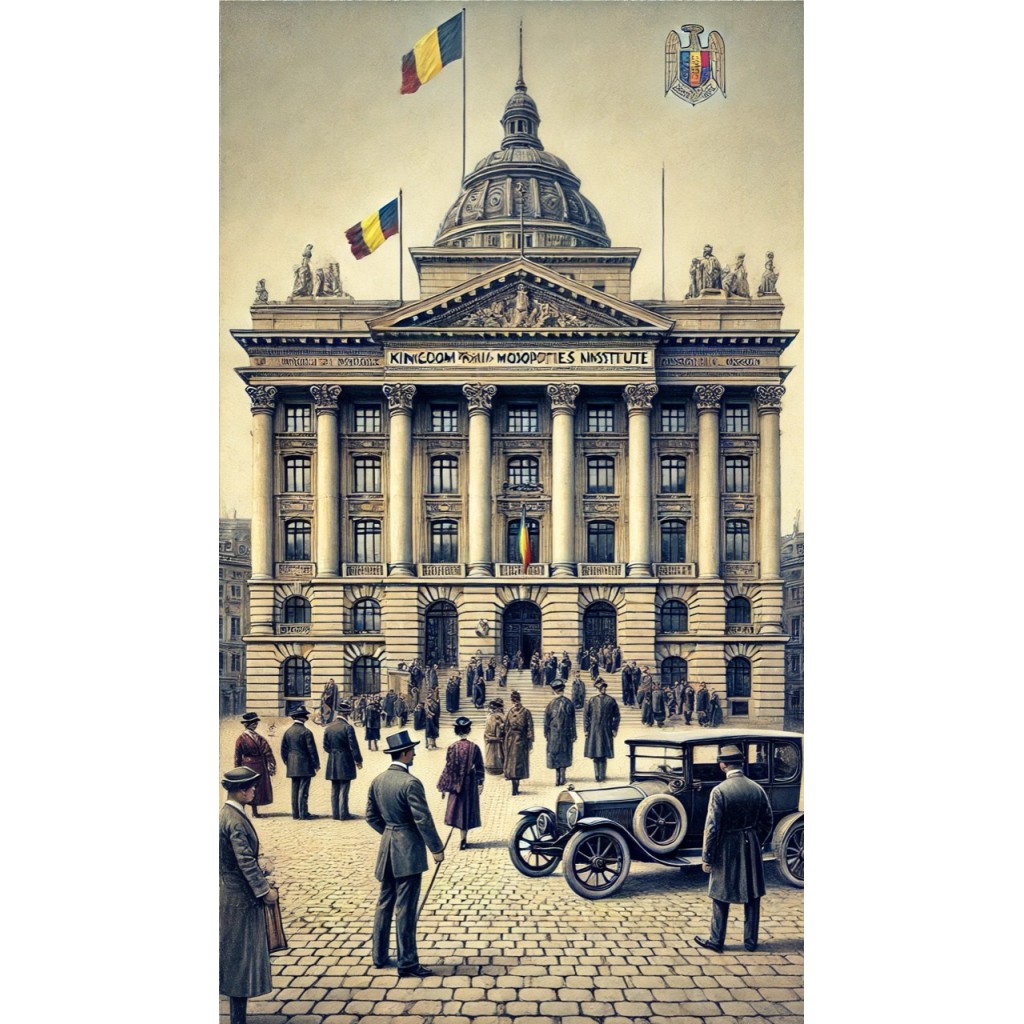
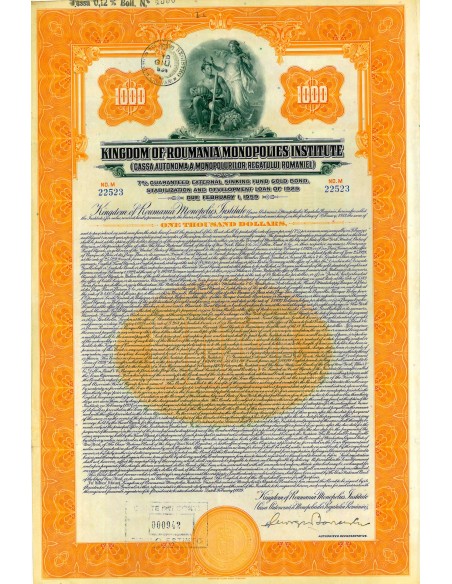
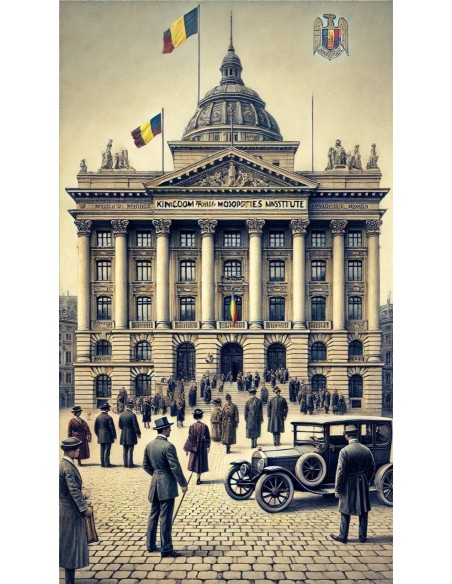
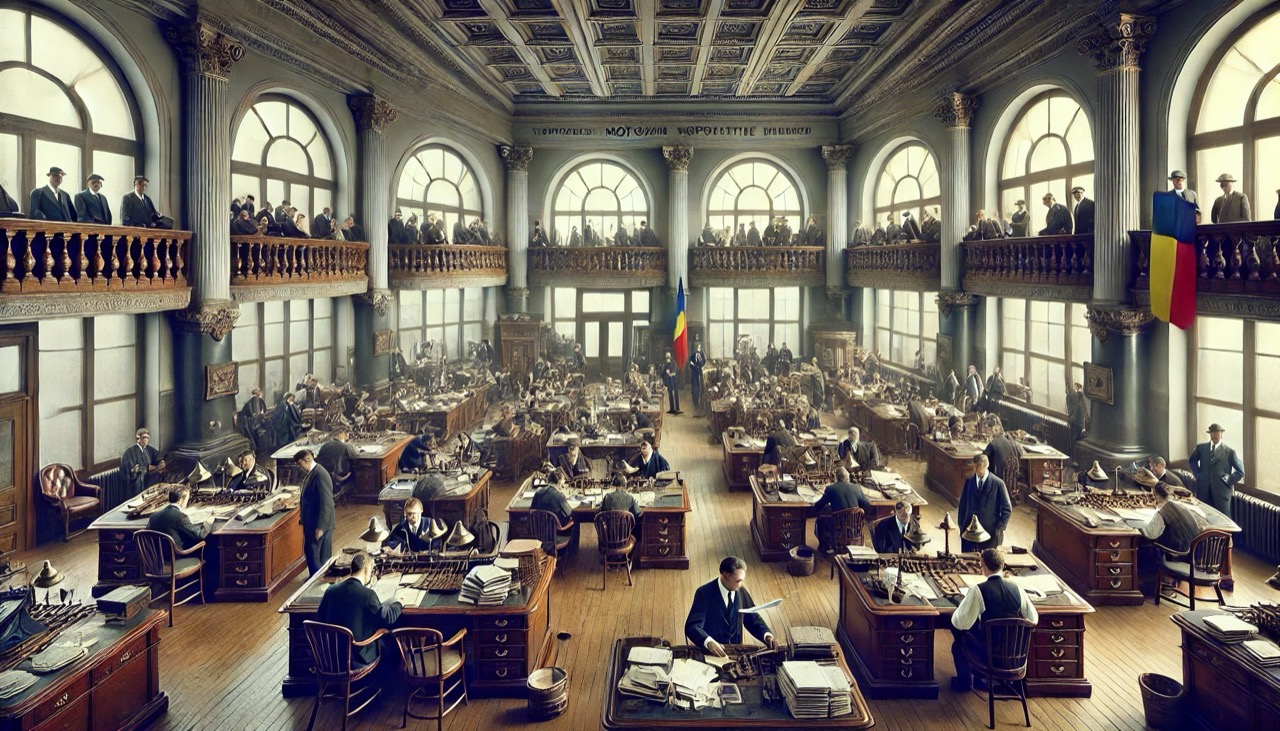
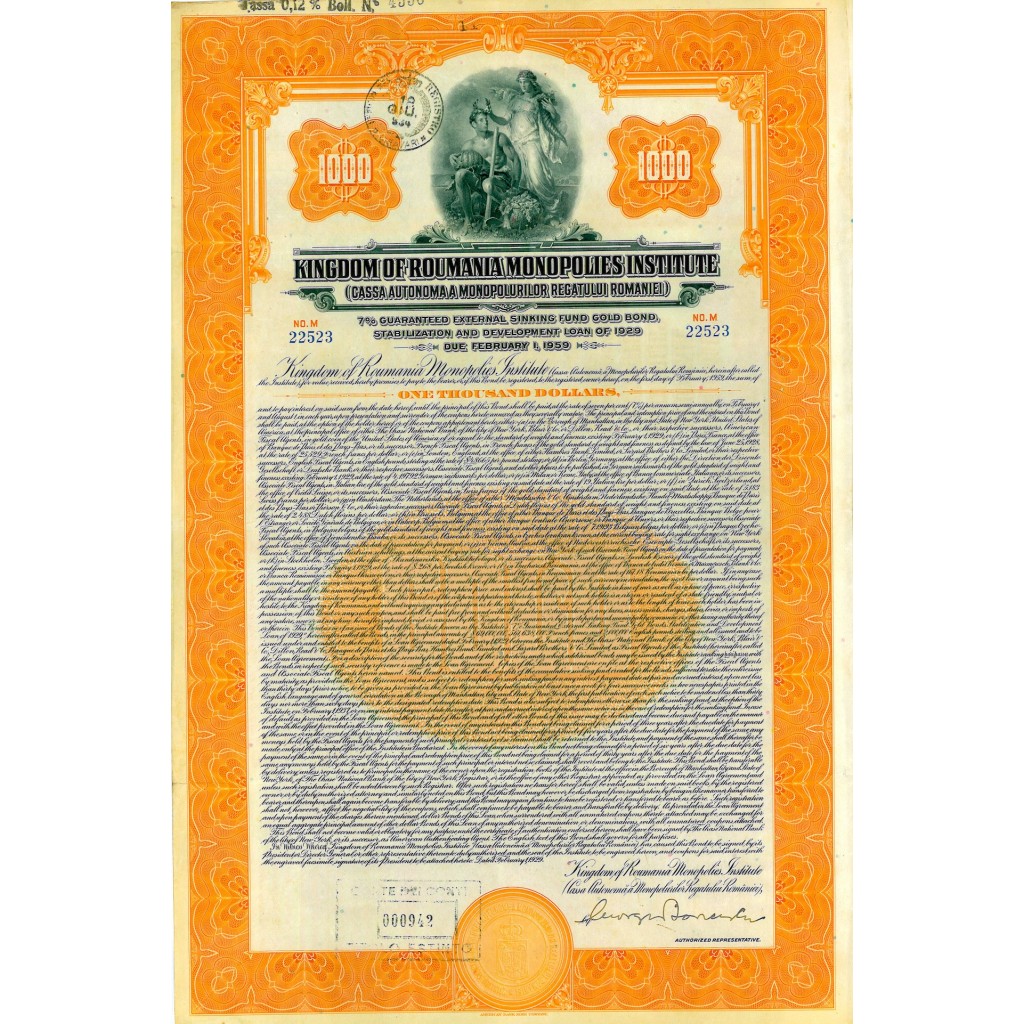
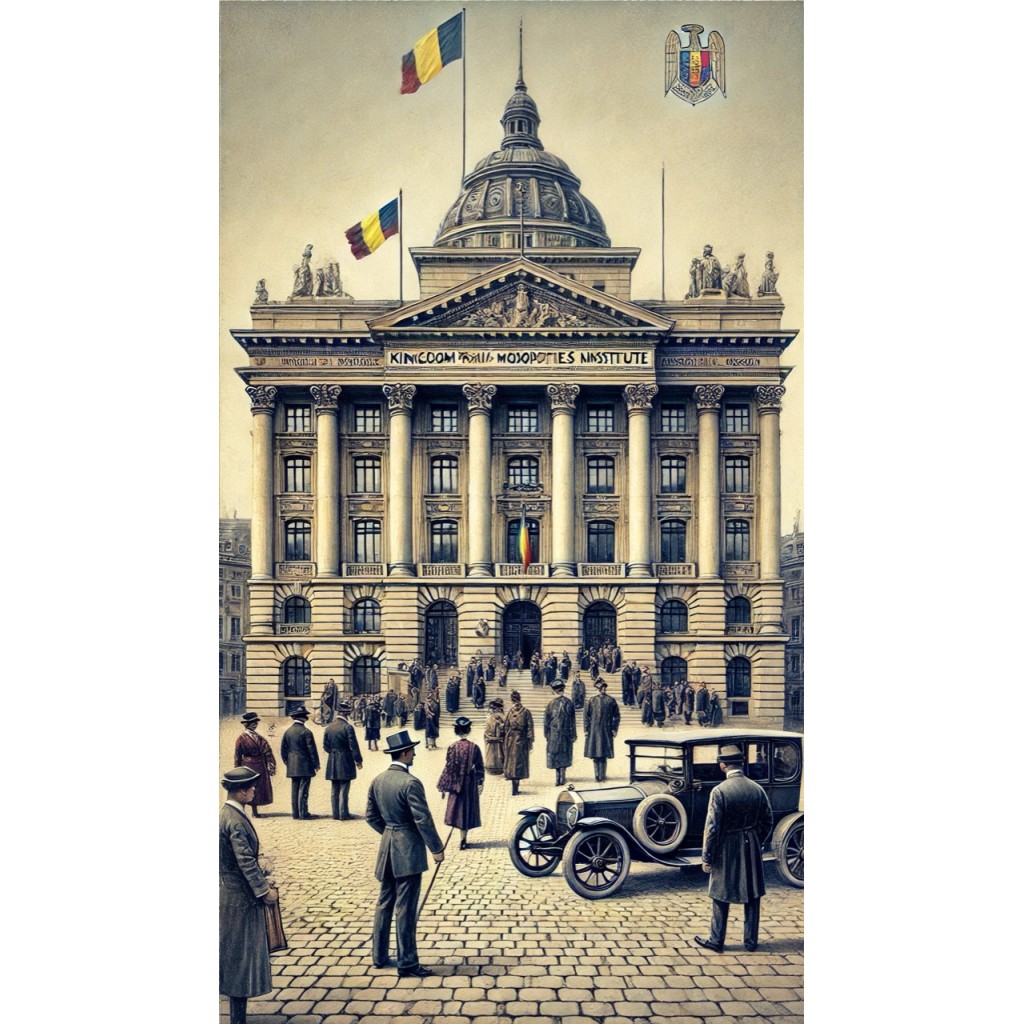
The Kingdom of Roumania Monopolies Institute was one of Romania’s primary financial institutions, responsible for managing state monopolies on key goods such as tobacco and salt. In 1929, in response to the global economic crisis, the institute issued a series of gold-backed bonds to attract foreign investment and support the stabilization of the country’s economy. This $1000 bond was part of that international loan, due to mature in 1959.
The bond was issued to finance economic development and infrastructure in Romania during a time of great economic and political instability. The $1000 bond guaranteed a 7% interest rate and was particularly attractive to international investors due to its gold backing.
Historical Data of the Company
| Company Historical Data | Information |
|---|---|
| Year of Establishment | 1925 |
| Headquarters | Bucharest, Kingdom of Romania |
| Year of Stock Exchange Listing | 1929 |
| Year of Delisting from Stock Exchange | 1959 |
| Year of Dissolution | 1959 |
| Share Capital at Establishment | Not available |
| Share Capital at Dissolution | Not available |
| Annual Revenue (1929) | Not available |
Certificate Characteristics
| Characteristic | Description |
|---|---|
| Number of Certificates | N/A |
| Type of Certificate | External Gold Bond |
| Nominal Value | 1000 dollars |
| Serial Number | 21644 |
| Interest Rate | 7% |
| Maturity Date | February 1, 1959 |
| Issue Date | 1929 |
| Signed by | Representatives of the Kingdom of Roumania Monopolies Institute (names present but unclear) |
| Condition of Document | Very good preservation |
| Authenticity Status | Authentic |
| Language of Document | English |
| Stamps and Seals | Official stamps from the Romanian Ministry of Finance and the issuing bank |
Historical Context
The issuance of bonds by the Kingdom of Roumania Monopolies Institute in 1929 was a strategic effort to stabilize Romania’s economy, which had been severely affected by the Great Depression. The bonds were gold-backed, making them particularly safe and attractive to foreign investors. During this period, Romania was engaged in modernizing its infrastructure and consolidating its foreign debt.
In the years that followed, the country faced significant political crises and the Second World War, which profoundly changed its economic and social structure.
Artistic and Typographical Details
The $1000 bond certificate is a fine example of financial design and typography from the era. The document is framed with an intricate orange design, and in the center is an allegorical illustration symbolizing the country’s economy and progress. The typography is elegant, with serif fonts used for the main text. The graphic elements, such as the official seals and signatures, give the document an air of prestige and authority.
Evaluation and Rarity
The $1000 bonds issued by the Kingdom of Roumania Monopolies Institute are rare, especially in excellent condition like this example. Their value can range between 400 and 1000 euros, depending on the condition, provenance, and collector interest. These certificates are particularly sought after for their connection to Romania’s economic history and their detailed design.
The Importance of Scripophily Collecting
Collecting historical certificates like this one provides a unique opportunity to explore the economic and political history of the past. These documents are not just financial instruments but also works of art, reflecting the importance of public finance in national affairs. For collectors, these bonds offer a unique window into the past, linked to significant historical events.
Preserving these documents is essential: it is recommended to store them in protective frames or albums to avoid damage from light or humidity. In addition to being valuable collector’s items, these certificates can serve as refined decorations in offices or homes, adding a touch of history and sophistication.
All historical documents for sale are considered collectible. They have no economic or financial value (no economic or financial value), and the images that are not of the historical document are representative of the company's object and the historical period. They are not provided but can be freely downloaded from the website and printed.