Shopping Cart
There are no more items in your cart
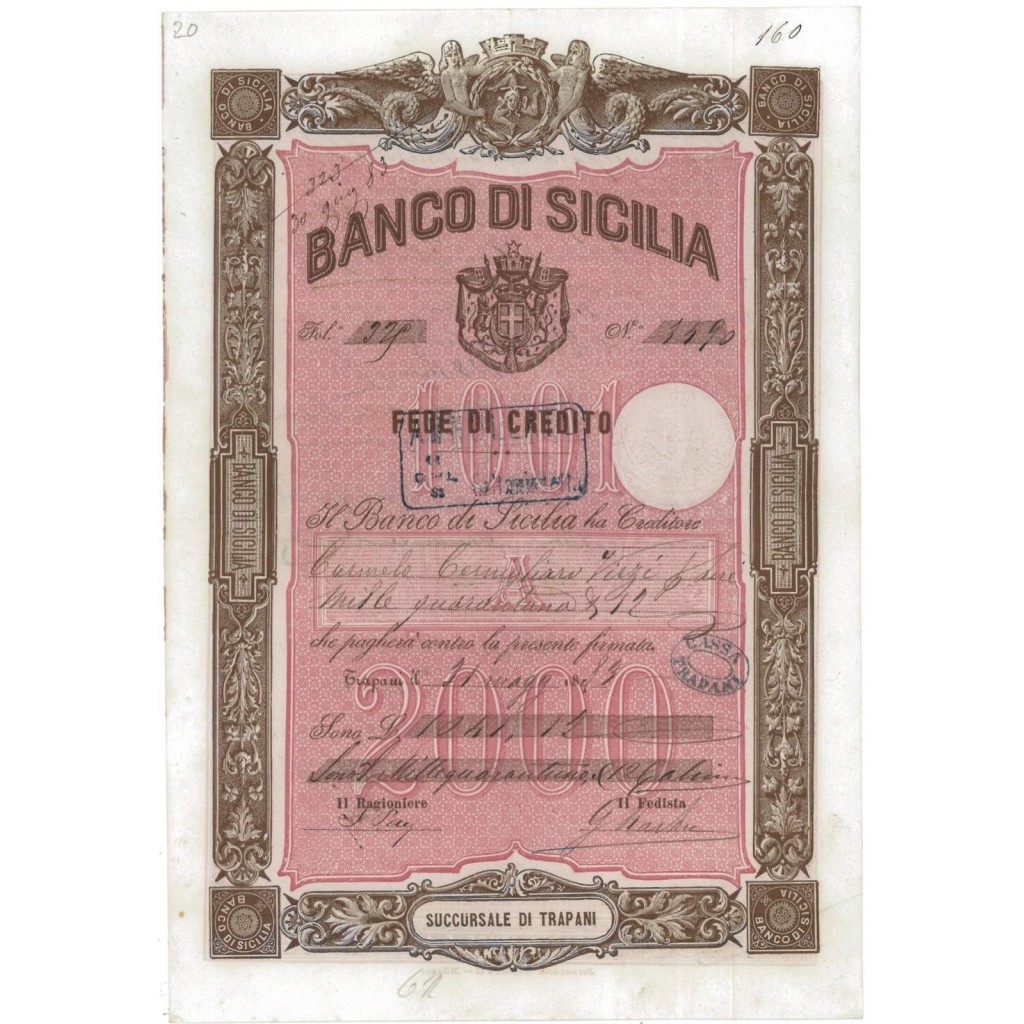
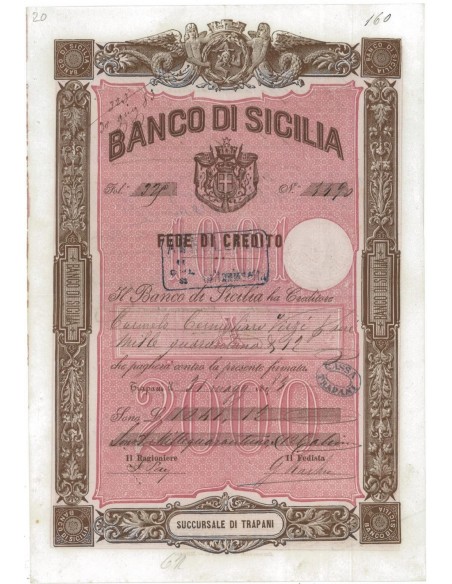

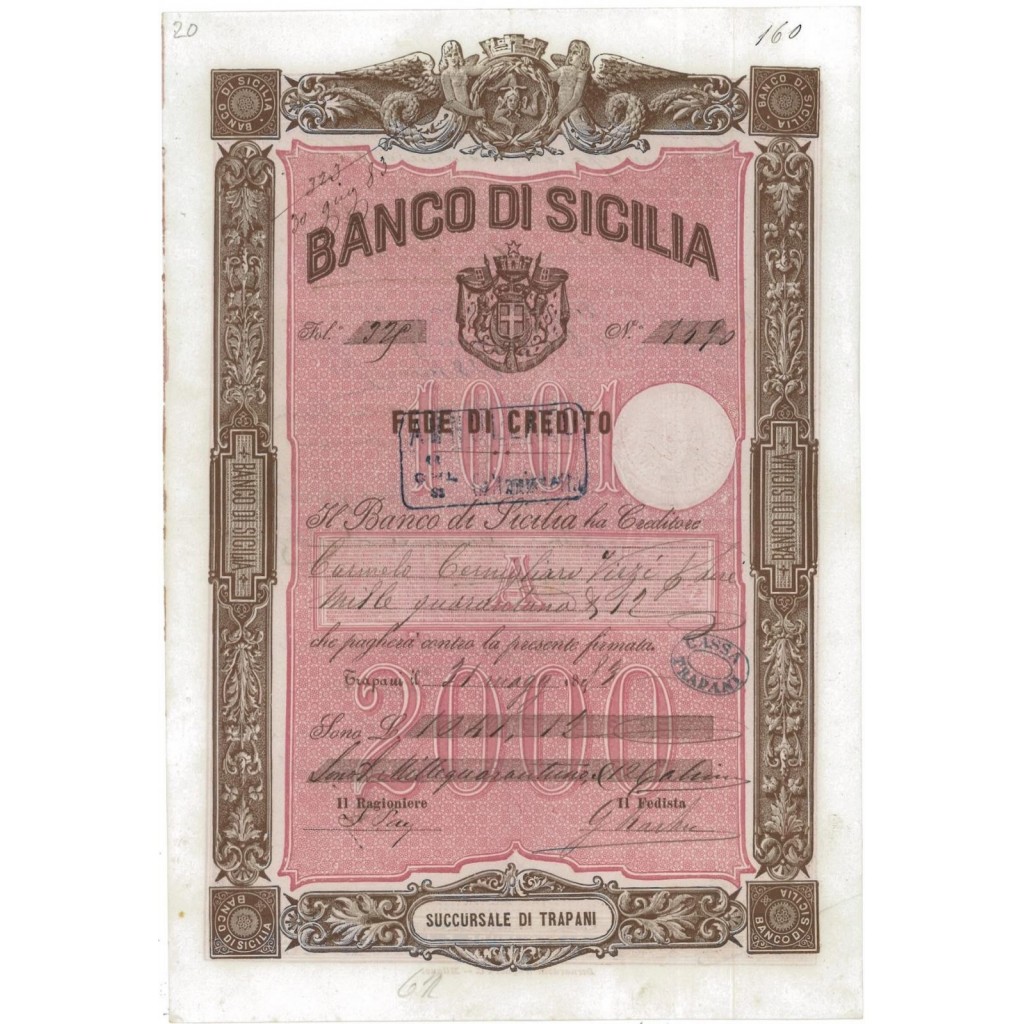
Banco di Sicilia, founded in 1849, played a fundamental role in the economic history of Sicily and Italy. This credit institution supported the economic growth of the region, financing both industry and commerce during a period of great economic and social change. The fede di credito represented in the document under review, issued in 1884 by the Trapani branch, is a significant example of the type of financial instruments used at that time to facilitate commercial transactions.
The fede di credito is a debt security used by Banco di Sicilia to document a loan or an amount owed, with a promise of payment on sight or at a specific date. The document is richly decorated, with artistic elements typical of the period, such as embossed details and decorative engravings that adorn the edges. The heraldic symbol of the Bank, located in the center, represents the authority and stability of the institution.
Historical Context
In 1884, Italy was undergoing a phase of economic and industrial transformation. Banco di Sicilia played a crucial role in this transformation, providing the necessary capital for infrastructure development and supporting emerging industries. Sicily, still largely agricultural, was beginning to see the first signs of industrialization, thanks in part to financial institutions like Banco di Sicilia.
The document was issued at a time when the Kingdom of Italy was engaged in a series of economic and fiscal reforms to consolidate the national unification that had taken place a few decades earlier. The economy was expanding, and the demand for investment capital was high, explaining the importance of banks like Banco di Sicilia.
Historical Data of Banco di Sicilia
| Year of Establishment | Headquarters | Year of Stock Exchange Listing | Year of Delisting | Year of Company Dissolution | Capital at Establishment | Capital at Dissolution |
|---|---|---|---|---|---|---|
| 1849 | Palermo, Sicily | 1865 | 1999 | 2010 | 10 million lire | 1 billion lire |
Document Characteristics
| Date of Issue | Nominal Value | Branch | Decorations | Artist/Typographer | Condition | Dimensions |
|---|---|---|---|---|---|---|
| 1884 | 2000 lire | Trapani | Borders decorated with floral and heraldic motifs | Unknown, likely local typographer | Excellent | 21 x 29.7 cm (about A4) |
Rarity and Valuation
The Banco di Sicilia title from 1884 is considered rare, especially due to its excellent condition and historical context. Compared to other similar titles, this document is particularly sought after by collectors for its historical value and its connection to Italian economic history.
The Importance of Scripophily Collecting
Collecting historical documents such as stocks and bonds is not only a way to own a piece of history but also an opportunity to explore the rich economic and social history of an era. These documents can be displayed as works of art in homes or offices, enriching the environment with a touch of history. Scripophily is a fascinating way to connect with the past while also investing in objects of historical value.
These historical documents are perfect for personal collecting but can also be used as unique and meaningful gifts, decorations, or elements of historical and modern art.
All historical documents for sale are considered collectible items. The documents have no economic or financial value (no economic or financial value), images that are not the historical document are representative of the company's object and the historical period of reference, they are not provided but can be freely downloaded from the website and printed.