Shopping Cart
There are no more items in your cart
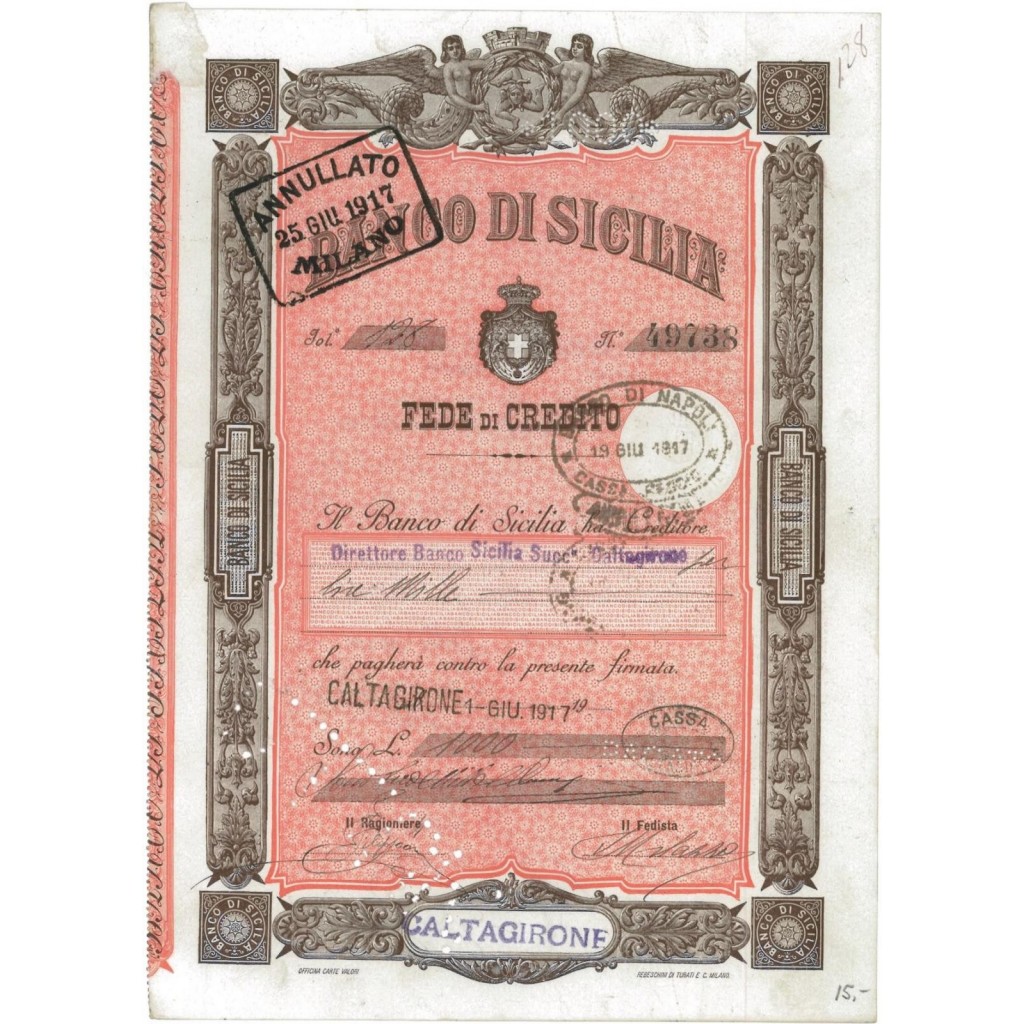
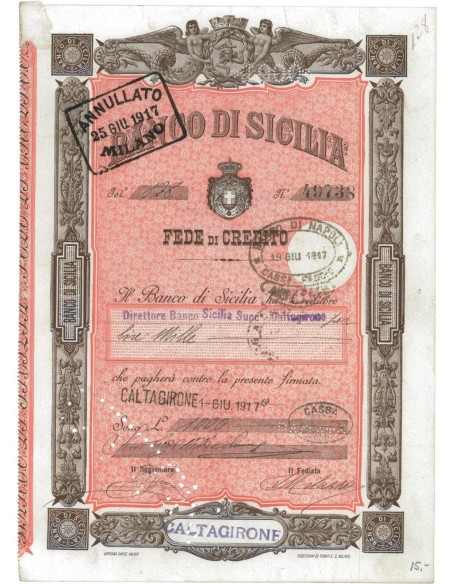

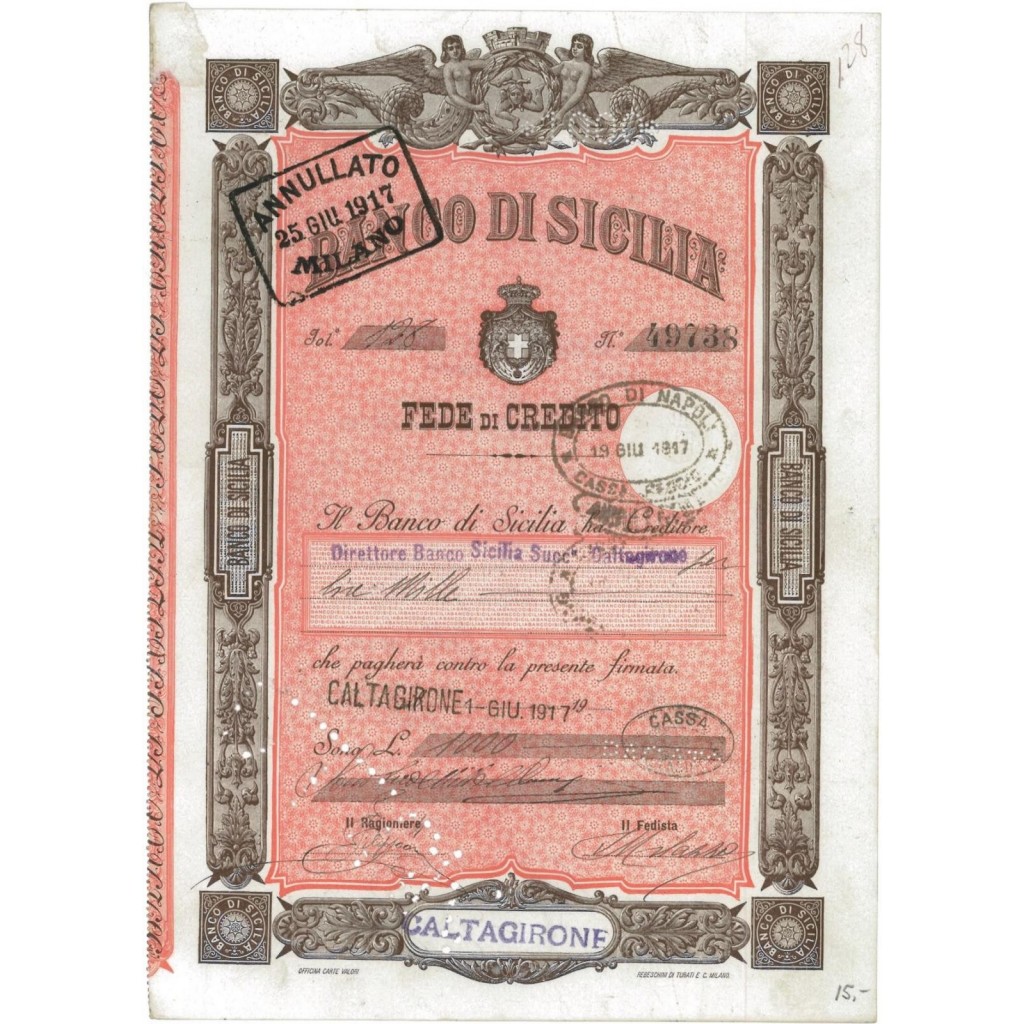
The document in question is a credit certificate issued by "Banco di Sicilia" in 1917. Founded in 1849 in Palermo, Banco di Sicilia was one of the most important banking institutions in the Kingdom of Italy, playing a crucial role in financing and developing the Sicilian and national economy. The bank operated as the primary financial institution for the island of Sicily and had a significant influence on the economy of Southern Italy until its merger with UniCredit in 2010.
Throughout its existence, Banco di Sicilia financed numerous infrastructure, industrial, and commercial projects, supporting economic development during a transformative period for Italy. The credit certificate from 1917 represents a critical moment during World War I, a period when the Italian banking system, including institutions like Banco di Sicilia, played a fundamental role in supporting the war economy.
Historical Data of the Company
| Year of Establishment | 1849 |
|---|---|
| Headquarters | Palermo, Sicily |
| Year of Stock Exchange Admission | 1863 |
| Name at Stock Delisting | Banco di Sicilia |
| Year of Stock Delisting | 2010 |
| Year of Company Dissolution | 2010 (merger with UniCredit) |
| Initial Share Capital | 20,000,000 Sicilian Lire |
| Final Share Capital | 6,000,000,000 Euros (at the time of the merger) |
Document Characteristics
| Issue Date | June 4, 1917 |
|---|---|
| Place of Issue | Caltagirone |
| Serial Number | 49738 |
| Nominal Value | One Thousand Lire |
| Signature of the Accountant | Not identified (handwritten) |
| Stamp | Naples Cashier |
Historical Context
The credit certificate issued in 1917 by Banco di Sicilia dates back to an extremely significant period in Italian and world history: World War I. During this conflict, Italy faced enormous economic challenges, and the role of banks was crucial in supporting the war effort. Banco di Sicilia, with its long history of supporting local businesses and infrastructure, contributed to financing wartime needs by issuing credit certificates like the one represented. These documents were vital tools for raising funds needed to sustain the economy during a period of great financial and political stress.
Artistic and Typographic Details
The certificate features elaborate graphics with a richly detailed typographic design, typical of the era. The central element is the logo of Banco di Sicilia, adorned with classical decorations, with allegorical figures representing prosperity and security. The predominant color scheme in shades of pink and brown adds a touch of elegance, while the ornate border emphasizes the importance and authority of the document. The certificate was printed by "Officina Carte Valori," one of the leading specialized printing houses of the time, known for the quality and security of its productions.
Provenance of the Certificate
This certificate comes from a private collection, where it has been carefully preserved. It has been acquired by collectors over the years, each recognizing the historical and artistic value of the document.
Valuation and Rarity
The Banco di Sicilia credit certificate from 1917 is considered a rare piece, especially due to its historical context during World War I. Documents like this are valued for their ability to evoke a crucial period in Italian history and are sought after by both scripophily collectors and history enthusiasts.
The Importance of Scripophily
Collecting historical documents like this not only allows you to own a piece of history but also offers a unique opportunity to gain a better understanding of the economic and social context of past eras. Certificates like those from Banco di Sicilia can be displayed in elegant frames or preserved in special albums, adding a touch of history to any collection.
These documents are not just personal collection items but can also be used as unique gifts, elegant decorations, or historical art pieces that combine beauty and significance.
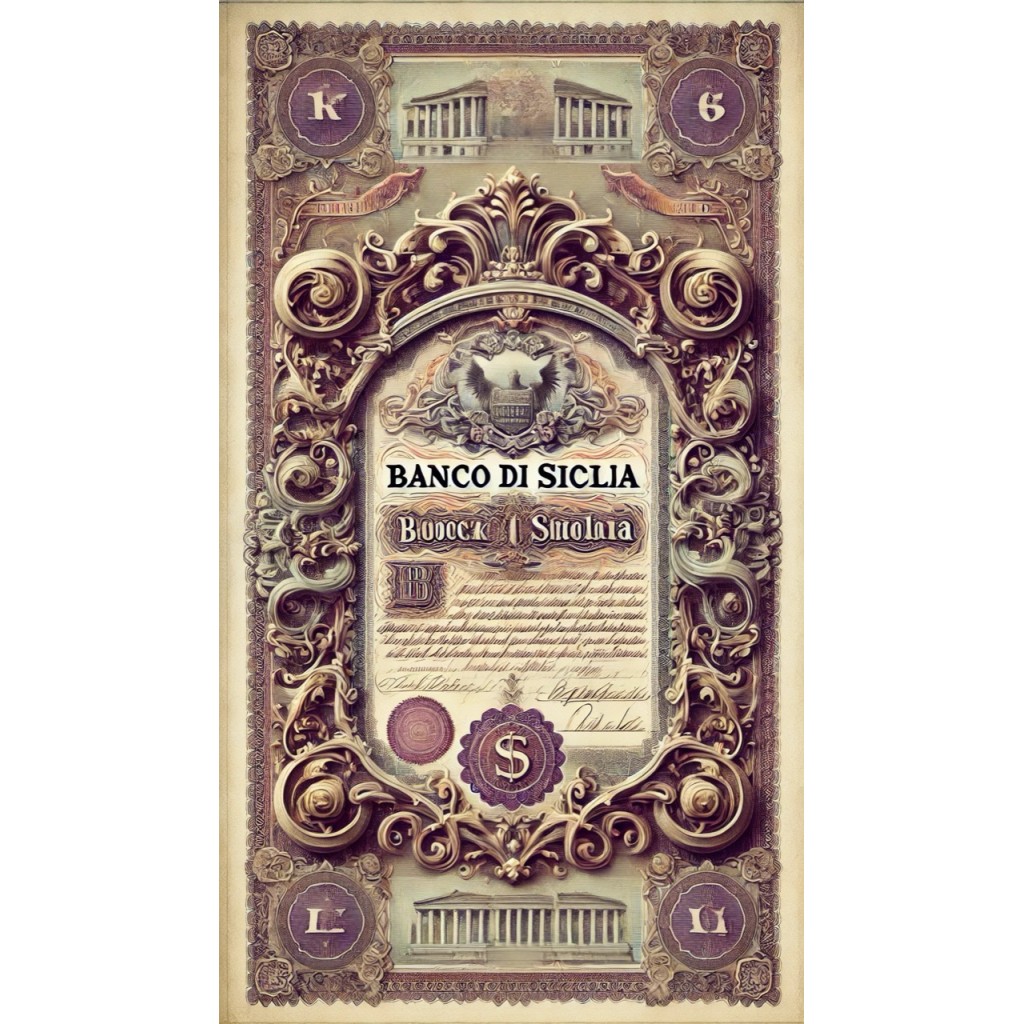
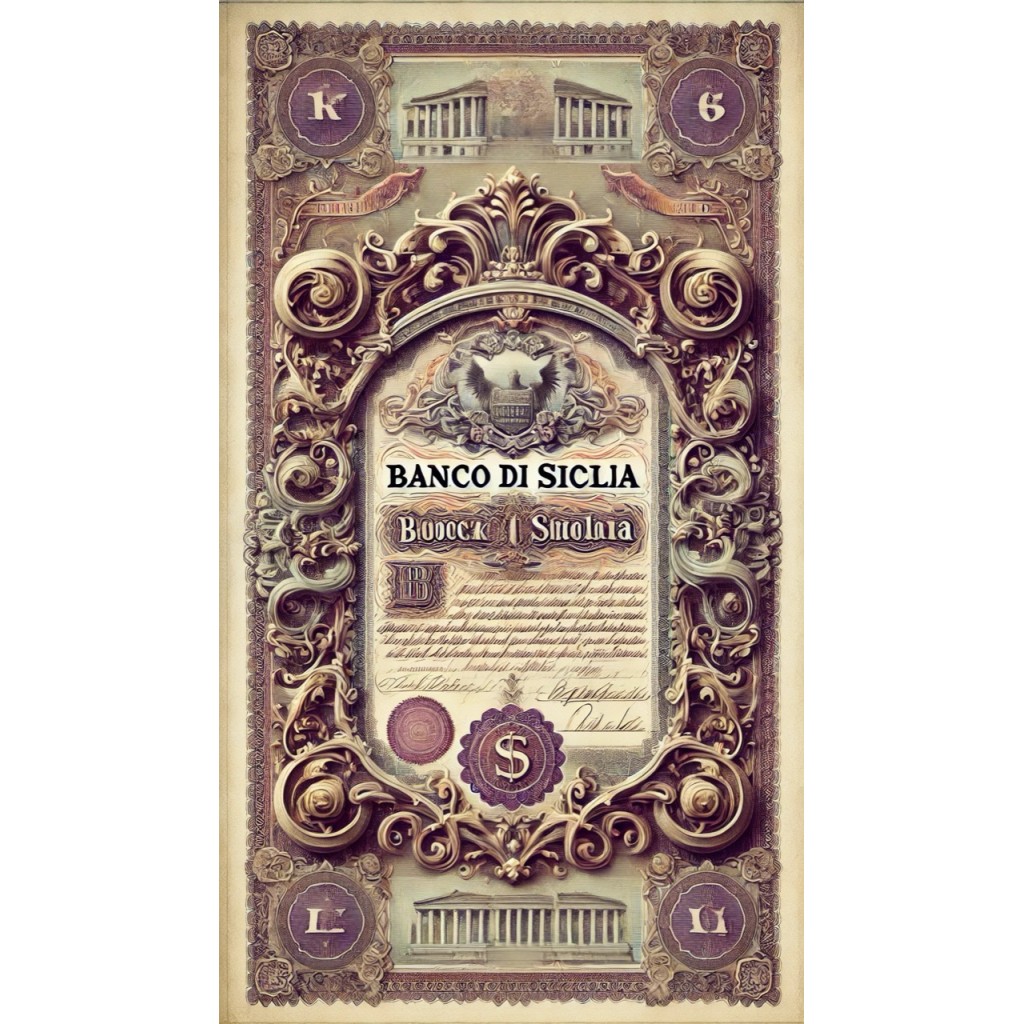
All historical documents for sale are intended for collection purposes only. The documents have no economic or financial value (no economic or financial value), images that are not the historical document are representative of the company's object and the historical period of reference, they are not provided but can be freely downloaded from the website and printed;