Shopping Cart
There are no more items in your cart
Historical Context
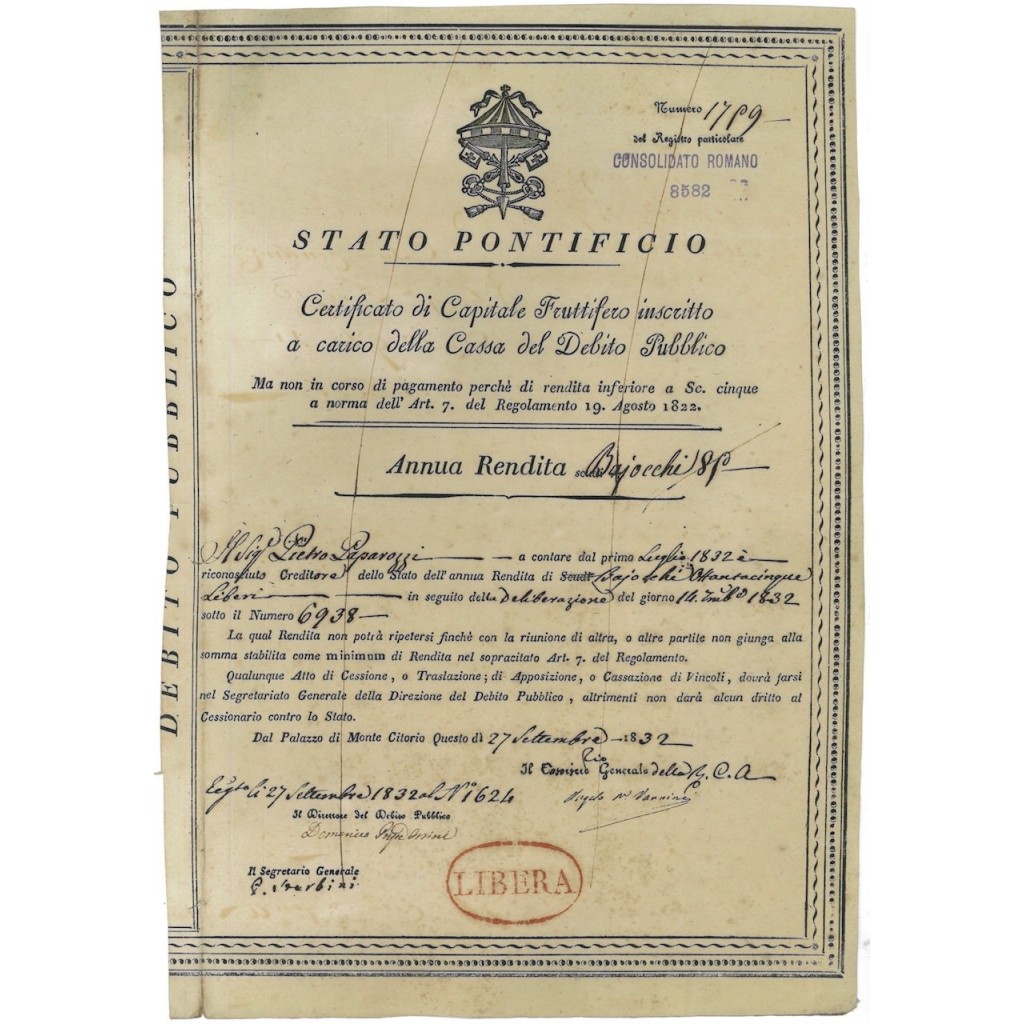
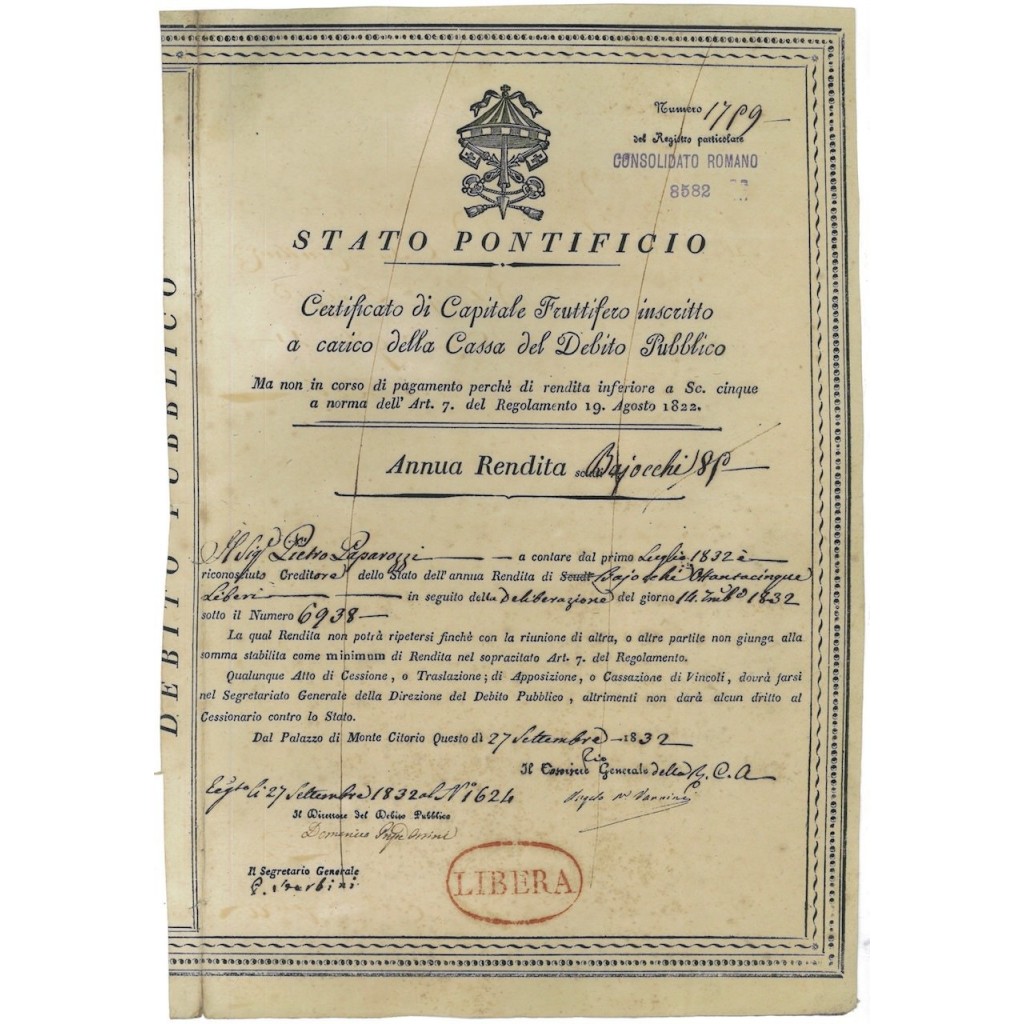
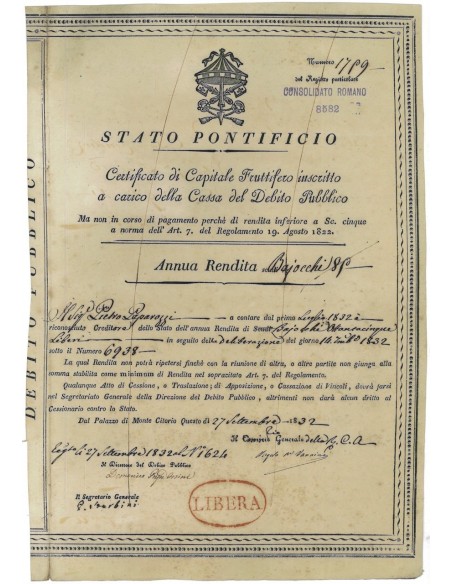
In Italy was still fragmented into several sovereign states, with the Kingdom of Sardinia, the Kingdom of the Two Sicilies, the Grand Duchy of Tuscany, and the Papal States among the main ones. The Congress of Vienna in 1815 had recently redrawn the map of Europe after the Napoleonic Wars, restoring many old dynasties and strengthening the authority of the Catholic Church, especially in the Papal States. In this context, public finance was crucial to the stability of papal power, and the issuance of certificates like this was part of a strategy to consolidate the state's economic resources.
Typographic and Artistic Elements
This certificate is characterized by elegant typography and a design typical of official documents of the time. Although there is no specific information about the artist who might have designed the graphic, the attention to detail and the use of decorative elements typical of the period make it a piece of historical art. The printing was likely done by an official printer of the Papal States, using hand-printing techniques that today add further artistic and historical value to the document.
Valuation and Rarity
This type of title is considered rare, especially in such well-preserved conditions. Compared to other titles issued by the Papal States in the same period, this bound interest-bearing capital certificate is particularly sought after by collectors due to its preservation state, ecclesiastical provenance, and the historical context in which it was issued.
For Scripophilia Collectors
Collecting historical titles, known as scripophilia, is an activity that combines interest in economic history with art and historical documentation. Certificates like this are not only fascinating testimonies of the past but also art objects that can be proudly displayed. For collectors, the importance of preserving these documents is crucial. It is advisable to use high-quality protective frames and store them in temperature-controlled environments to preserve their beauty and value over time.
These documents are not only valuable for personal collections but also represent a unique and meaningful gift, suitable for special occasions such as collections, author's gifts, historical decoration, or modern art.
All historical documents for sale are intended for collection purposes only. The documents have no economic or financial value (no economic or financial value), and images that are not the historical document are representative of the object of the company and the historical period of reference. They are not provided but can be freely downloaded from the website and printed;