Shopping Cart
There are no more items in your cart
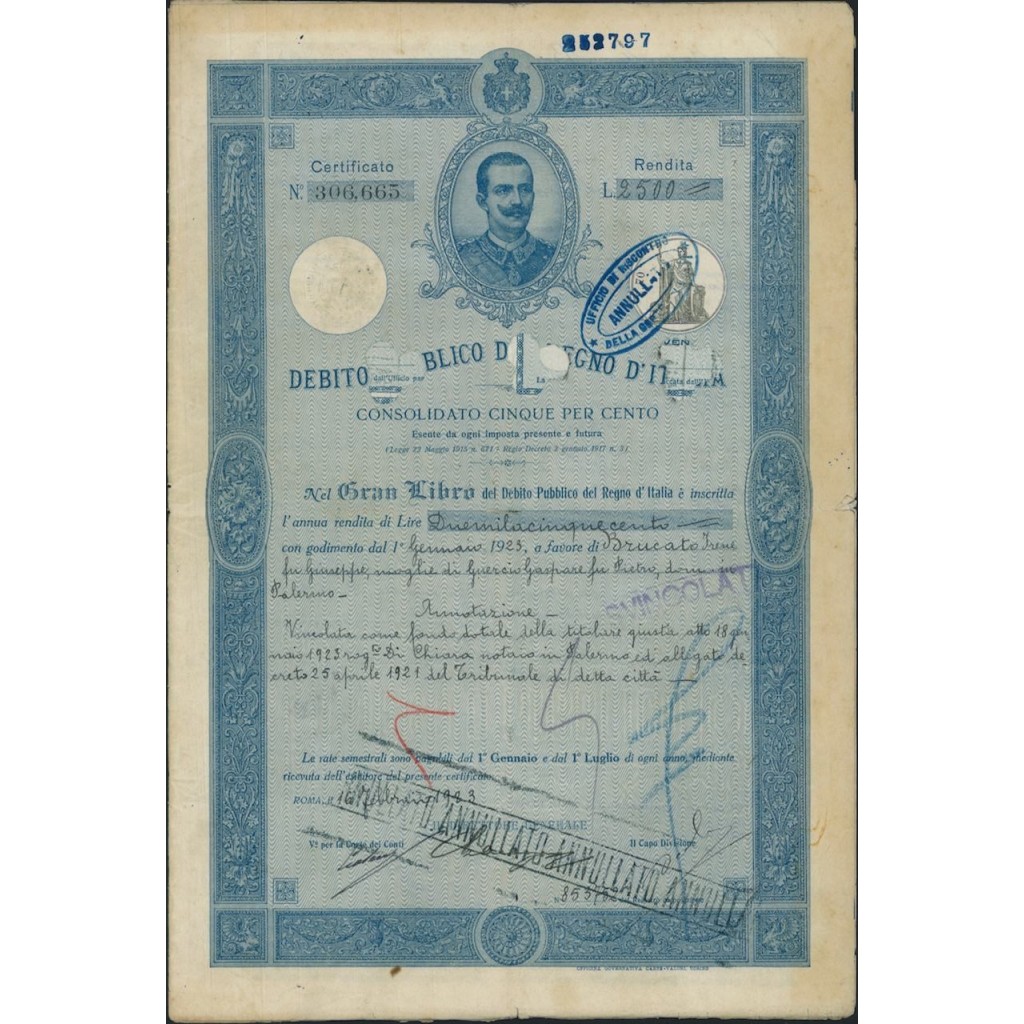
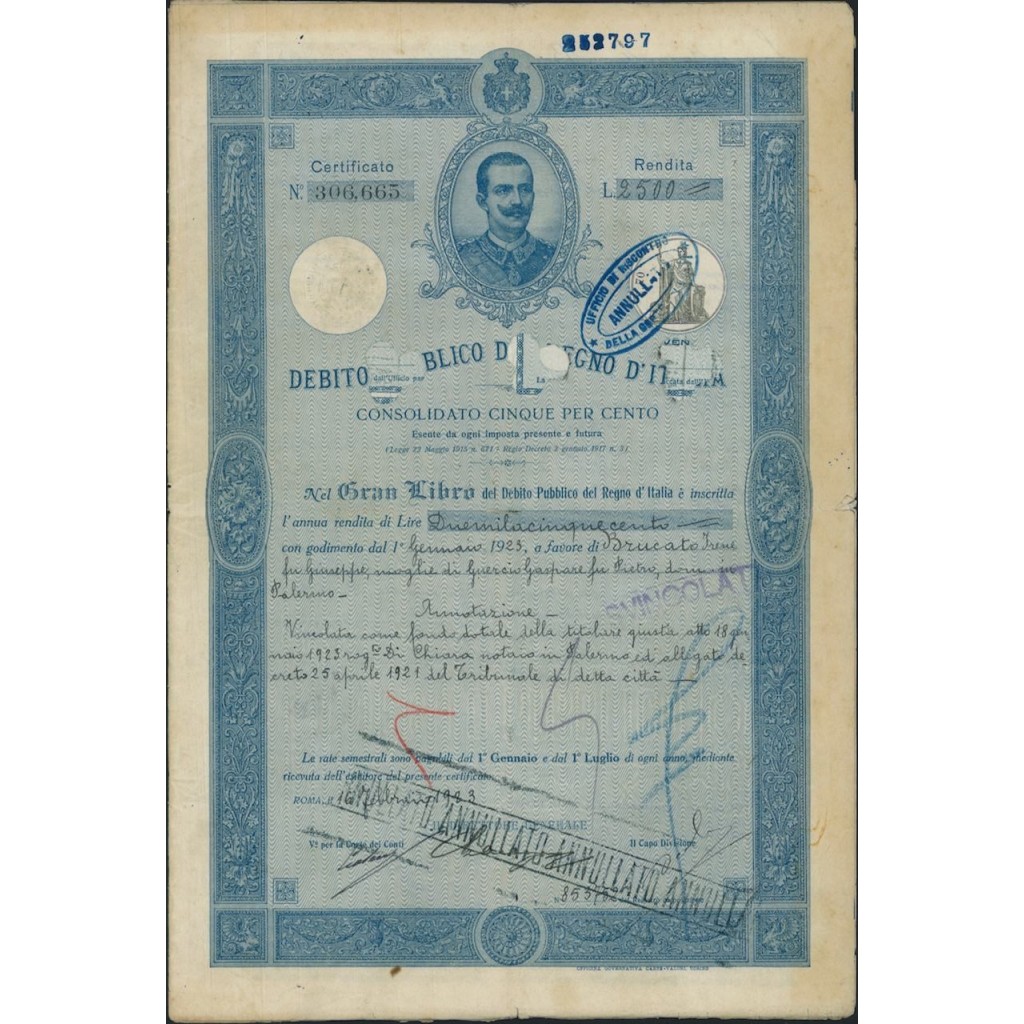
Title: "5% Consolidated Public Debt Certificate of the Kingdom of Italy: A Document from 1927"
Introduction The document we are examining is a 5% Consolidated Public Debt Certificate issued by the Kingdom of Italy on June 21, 1927. This certificate was part of Italy's debt consolidation policies used to finance state needs during the interwar period. During these years, Italy was under the fascist regime led by Benito Mussolini, and the government sought to stabilize the economy and support infrastructural growth by issuing debt securities.
Historical Context The year 1927 was a significant one in Italian history, marked by economic policies aimed at strengthening the lira and stabilizing the national financial system. After World War I and the ensuing economic crisis, the fascist government implemented measures to reduce public debt and encourage domestic investments. The issuance of 5% consolidated debt certificates was part of this strategy.
These bonds represented a safe option for investors, offering a fixed return and tax exemption. Their popularity among Italian savers was encouraged by the regime's propaganda, which presented investing in government bonds as an act of patriotism and confidence in Italy's future.
Document Analysis
The upper part of the certificate features a portrait of King Vittorio Emanuele III, surrounded by neoclassical floral decorations. The blue border and decorative details give the certificate a solemn and official appearance, typical of securities issued during that period. The certificate is signed by the Director General and the Head of Division, with a "CANCELLED" stamp indicating that the bond was subsequently redeemed.
Certificate Features The 5% Consolidated Public Debt guaranteed a fixed interest rate exempt from any present or future taxes, as provided by Law No. 671 of May 22, 1915, and Royal Decree of January 2, 1917. Interest payments were made on January 1 and July 1 of each year, making these bonds a stable option for savers.
Being a nominative certificate, it offered greater security compared to bearer bonds, as it was tied to a specific beneficiary. This made it less susceptible to theft or loss but limited its transferability.
The Role of Debt Consolidation During the 1920s, consolidating public debt was a priority for the fascist government. Issuing long-term bonds with a fixed interest rate was a strategy to reduce short-term debt and stabilize public finances. This type of certificate reflected the government's intention to encourage domestic savings while reducing dependence on foreign capital.
Significance for Collectors Certificates like this are highly valued by scripophily collectors, not only for their historical value but also for their detailed design and authentic signatures. The historical context of 1927, a period of economic stabilization under the fascist regime, adds particular significance for enthusiasts of Italian history.
Conclusion The 5% Consolidated Public Debt Certificate of 1927 is more than just a financial bond; it is a testament to the economic and political context of a crucial era for Italy. Collecting and preserving such documents means safeguarding an important part of Italy's economic history, providing a unique glimpse into the financial strategies adopted during the fascist regime.