Shopping Cart
There are no more items in your cart


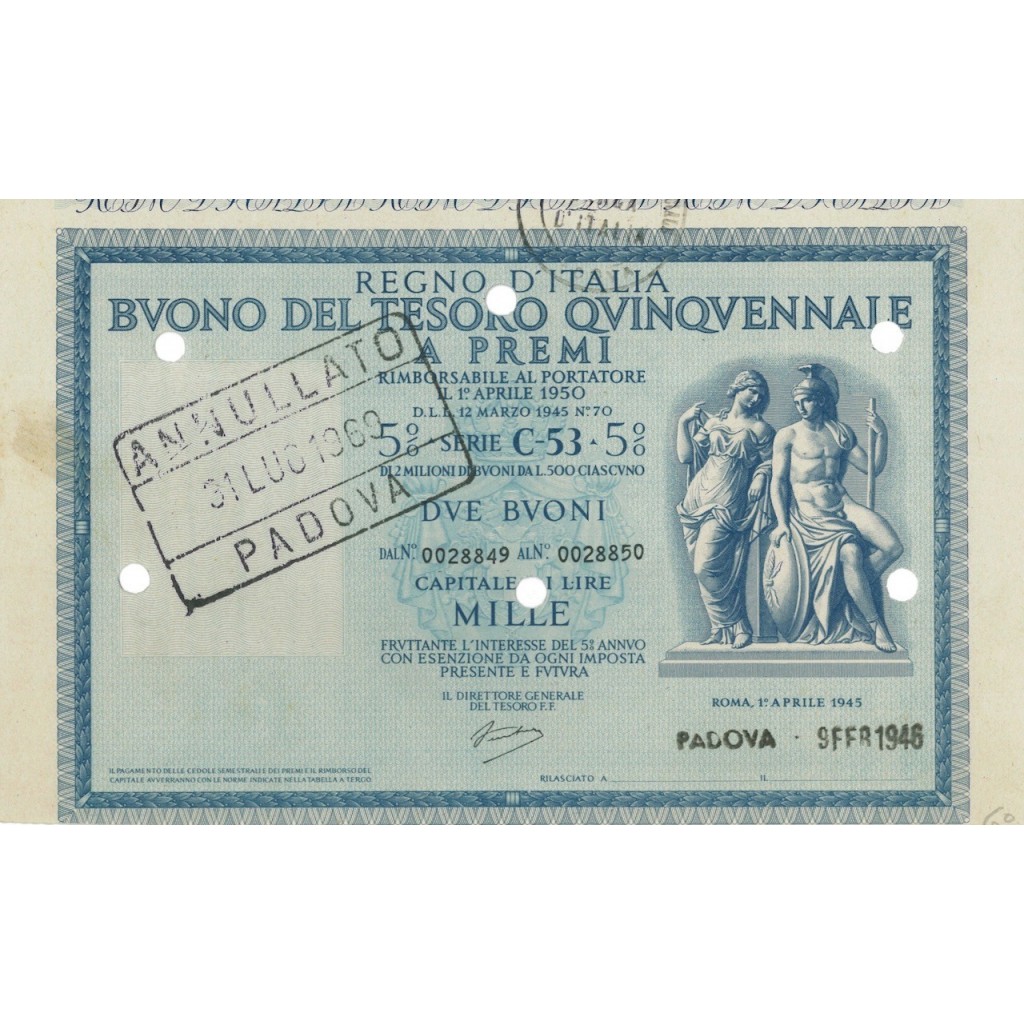
The Five-Year Treasury Bond with Prizes, issued on April 1, 1945 by the Kingdom of Italy, represents one of the last public debt certificates issued by the monarchy before the birth of the Italian Republic. This certificate carried a 5% annual interest, maturing on April 1, 1950. Issued in a series of 2 million bonds worth 1,500 lire each, it was aimed at citizens who wanted to support public finances during a crucial period in the country’s history.
The certificate features elegant graphics, with allegorical images of classical figures symbolizing prosperity and economic security. The use of prizes linked to treasury bonds was an effective method of attracting investors, offering them guaranteed returns along with the chance to win additional sums through a lottery.
Historical Context
The year 1945 marked the end of World War II and the beginning of a period of reconstruction for Italy, which had been devastated by the conflict. The Kingdom of Italy, under the rule of King Vittorio Emanuele III, was trying to maintain economic stability during a crucial political transition that would lead to the establishment of the Italian Republicfollowing the 1946 referendum.
In this context, the Five-Year Treasury Bonds with Prizes were a tool to finance public debt and stimulate economic recovery. Many citizens, eager to contribute to the country’s reconstruction, invested in these bonds, attracted by the opportunity to earn interest and win prizes.
The post-war economic difficulties, along with the rapid political and social changes, made these bonds one of the last testimonies of Italy’s monarchy-led economy. The issuance of these bonds reflected the urgent need to raise funds to rebuild the destroyed infrastructure and restore an economy in crisis.