Shopping Cart
There are no more items in your cart

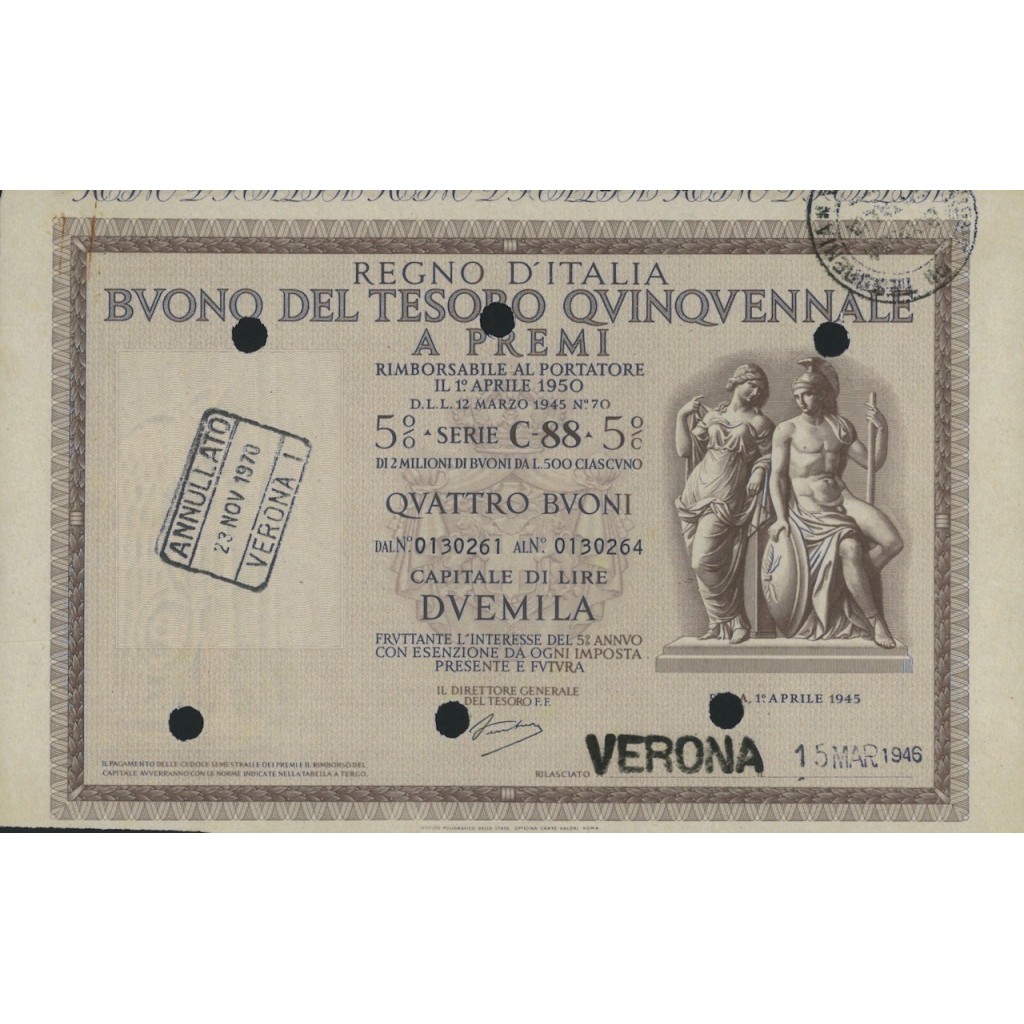
The Five-Year Treasury Bond with Prizes, issued on April 1, 1945 by the Kingdom of Italy, is part of a series of public debt certificates issued to support the country’s finances at the end of World War II. This bond carried an annual interest rate of 5%, with a maturity date set for April 1, 1950, and a capital of two thousand lire. Each series contained two million bonds, each worth 1,500 lire.
The bond was part of the C-27 Series and offered investors the opportunity to win prizes, in addition to the guaranteed return through interest. The aim of these bonds was to attract private capital to support the government during the difficult post-war reconstruction phase. The certificate shows a cancellation stamp, indicating that it was redeemed.
Historical Context
In 1945, Italy was going through a crucial phase in its history. The war had left the country devastated, and the government of the Kingdom of Italy was trying to restore economic and social order. The issuance of treasury bonds like this one was an essential tool for raising funds and financing the country’s recovery.
The Five-Year Treasury Bond with Prizes was a key part of the economic policies of the time, aimed at encouraging the population to invest in public bonds by offering both a financial return through interest and the chance to win prizes. Rebuilding the infrastructure, cities, and industries devastated by the war required vast resources, and these financial instruments played a critical role.