
Shopping Cart
There are no more items in your cart
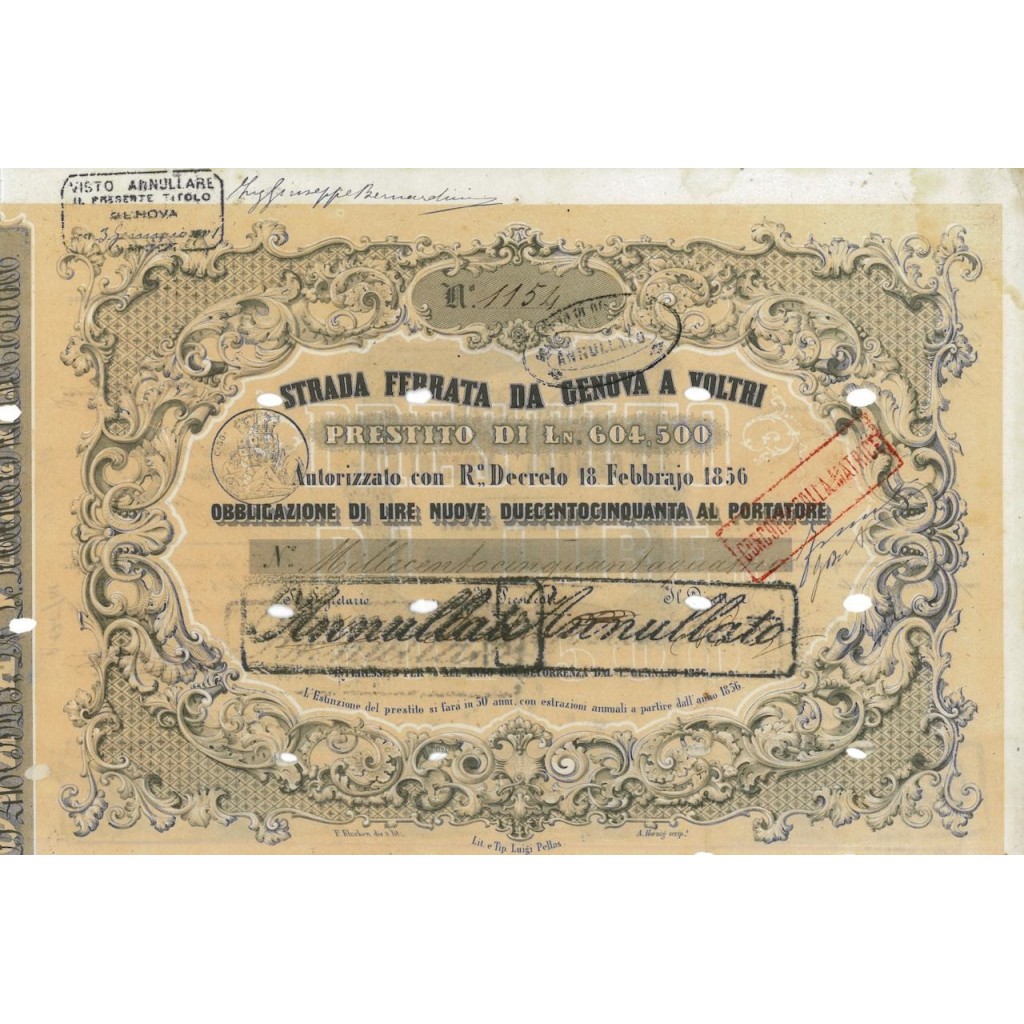

Railway bond certificate issued in 1856 for the Strada Ferrata da Genova a Voltri.
Key Elements of the Document:
-
Issuer:
- The document was issued by the Strada Ferrata da Genova a Voltri, which refers to the railway line between Genoa and Voltri.
-
Authorization:
- The bond was authorized by a Royal Decree dated February 18, 1856.
-
Bond Details:
- This certificate represents an obligation (bond) with a value of 250 Lire nuove (new lire).
- The total loan authorized was 604,500 Lire.
- The bond carries an interest rate of 5% per annum, starting from January 1, 1856.
-
Redemption and Payment:
- The bond was structured to be redeemable over 50 years, with annual drawings to determine which bonds would be paid off early.
- The coupons at the bottom of the document are for semi-annual interest payments, likely due on January 1st and July 1st of each year.
-
Annotations and Stamps:
- The document includes several handwritten annotations and stamps, indicating validation and payment history.
- The word "Annullato" (Cancelled) is stamped multiple times, suggesting that the bond has been redeemed.
- There are stamps related to the Banco di Genova, confirming the processing of payments.
-
Design and Aesthetics:
- The certificate is richly decorated with ornate borders and includes the coat of arms of Genoa.
- The intricate design reflects the importance and prestige of railway bonds during this period, which were critical in funding infrastructure projects.
Historical Context:
This bond is a valuable artifact from the mid-19th century, a period when Italy was undergoing significant infrastructure development. The Genoa-Voltri railway was part of the broader expansion of the railway network in Italy, which played a crucial role in the country's industrialization and unification efforts. Bonds like this one were commonly used to finance these large-scale projects, offering investors a fixed return guaranteed by the state or issuing entity.
