Shopping Cart
There are no more items in your cart
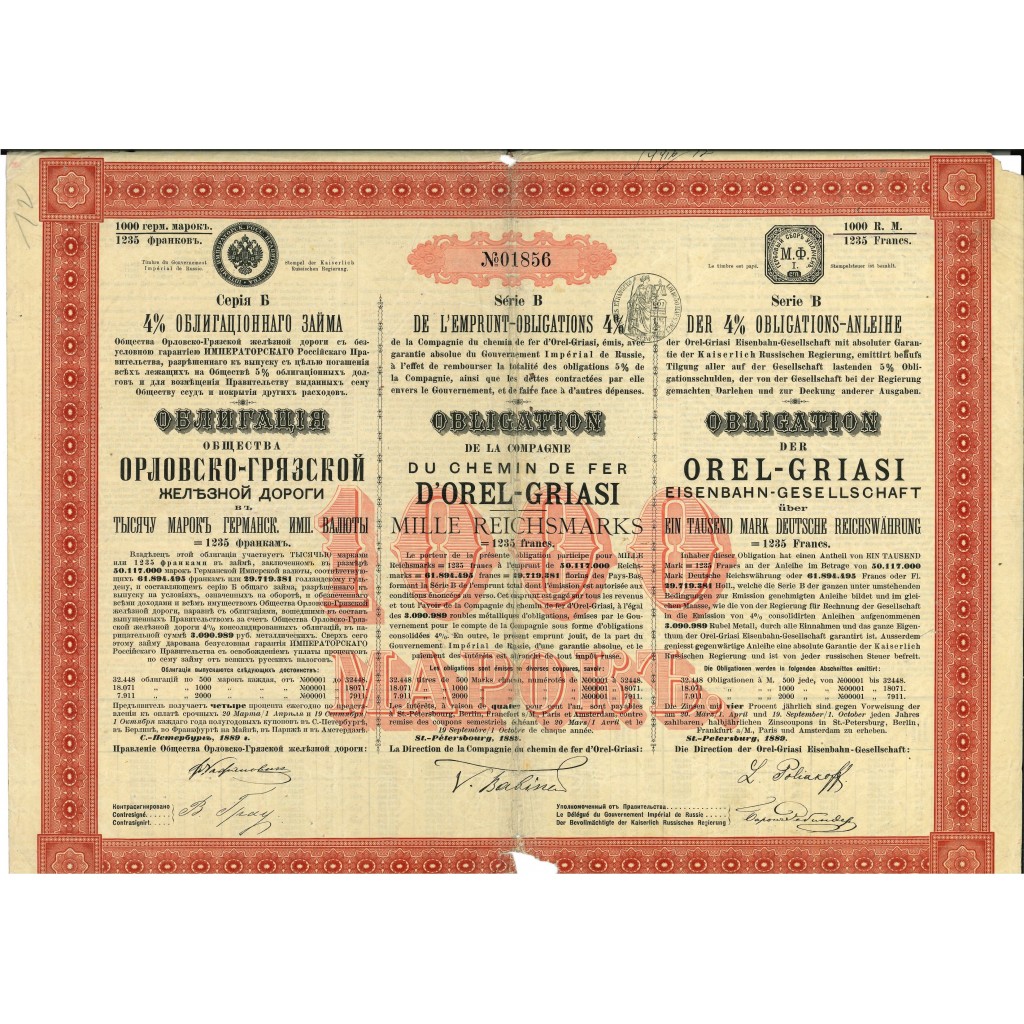
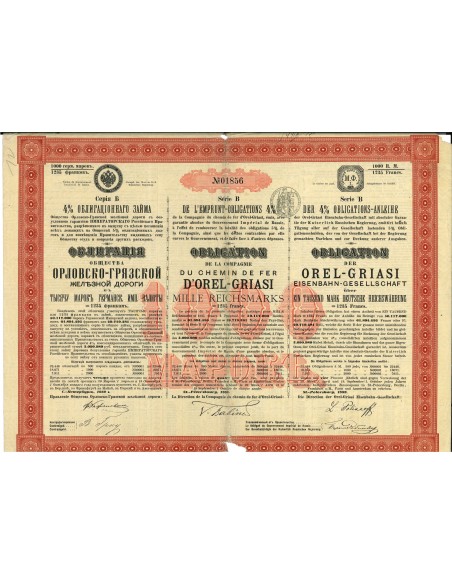
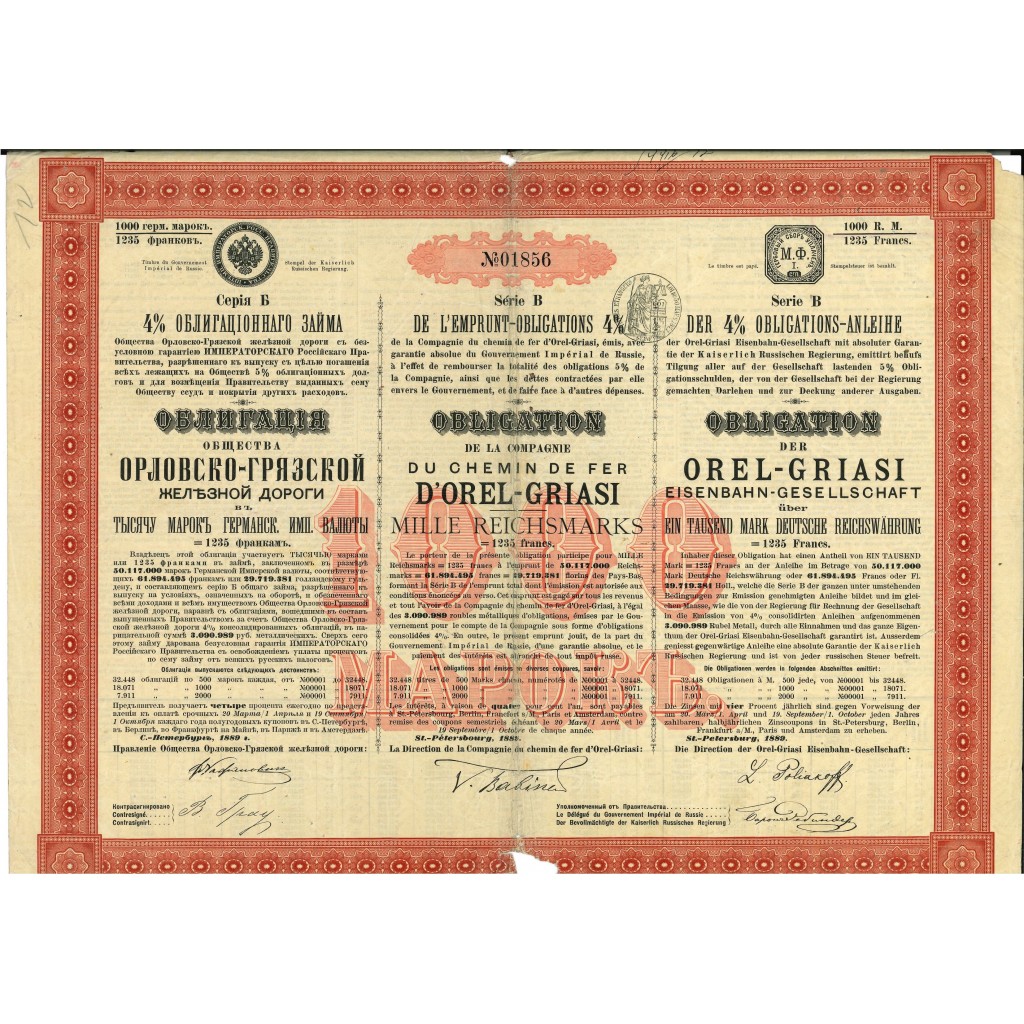
The Orel-Griasi Railway Company was founded in 1889 to facilitate rail transport between the cities of Orel and Griasi in the Russian Empire. This railway line was crucial in connecting major industrial and agricultural centers, significantly contributing to the region's economic development.
In 1889, the company issued bonds guaranteed by the Imperial Russian government, valued at 1,000 German marks or 1,235 francs each. These bonds offered a 4% annual yield, an attractive rate for investors of the time, supported by the security of state guarantees.
Historical Data of the Company
| Historical Data | Details |
|---|---|
| Year of Establishment | 1889 |
| Headquarters | St. Petersburg, Russia |
| Initial Capital | 3,909,980 German marks |
| Number of Bonds Issued | 5,117,000 Reichsmarks |
| Value of Each Bond | 1,000 German marks (1,235 francs) |
| Bond Interest Rate | 4% |
| Bond Issue Date | 1889 |
| Final or Current Capital | Data not available |
| Annual Revenue | Data not available |
| Year of Stock Exchange Admission | Data not available |
| Year of Stock Exchange Delisting | Data not available |
| Year of Company Cessation | Data not available |
Document Characteristics
| Characteristic | Detail |
|---|---|
| Series | B |
| Serial Number | 01856 |
| Currency | 1,000 German marks / 1,235 francs |
| Document Languages | Russian, French, German |
| Document Date | 1889 |
| Issuer | Orel-Griasi Railway Company |
| Guarantee | Imperial Russian Government |
For Scripophilia Collectors
Scripophilia is the collection of old stock and bond certificates. These documents are not just relics of past financial investments but also pieces of economic and industrial history. Each certificate tells a unique story, representing the economic aspirations and achievements of a bygone era.
The certificate from the Orel-Griasi Railway Company is a fascinating example of how railway infrastructure was financed in the 19th century. With its intricate decorations and original signatures, it represents a piece of history to collect and preserve. These documents offer a unique opportunity for collectors to own a tangible fragment of economic and industrial history.
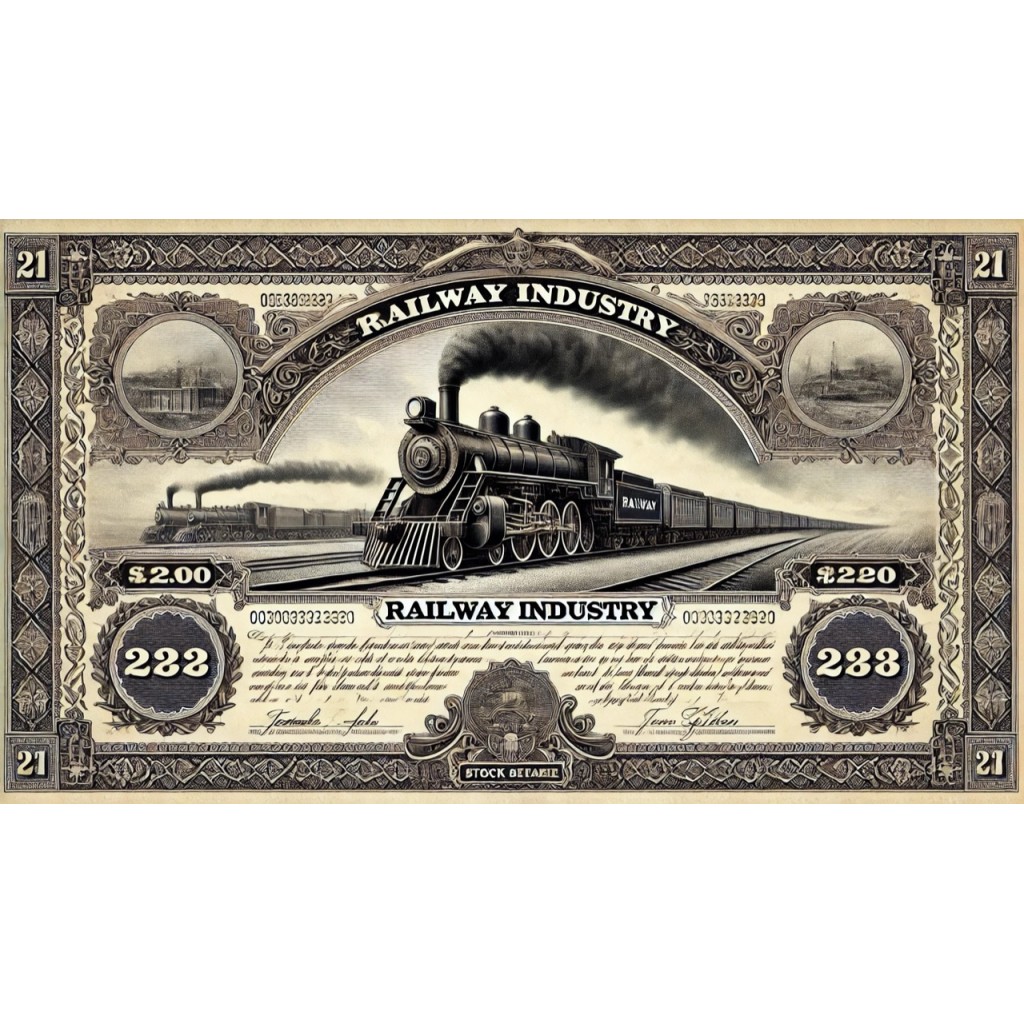
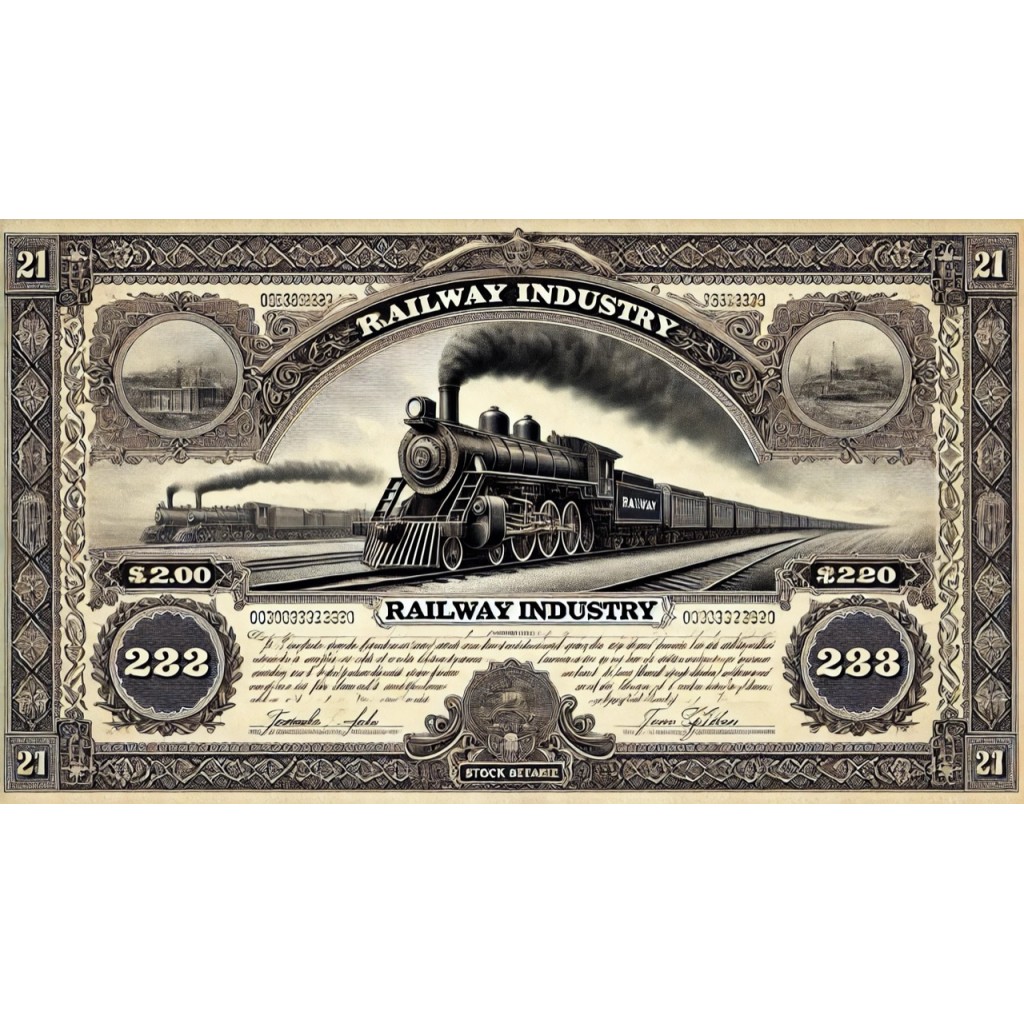
All historical documents for sale are intended for collection purposes only. The documents have no economic or financial value (no economic or financial value), the second image is only representative of the company's object.