
Shopping Cart
There are no more items in your cart
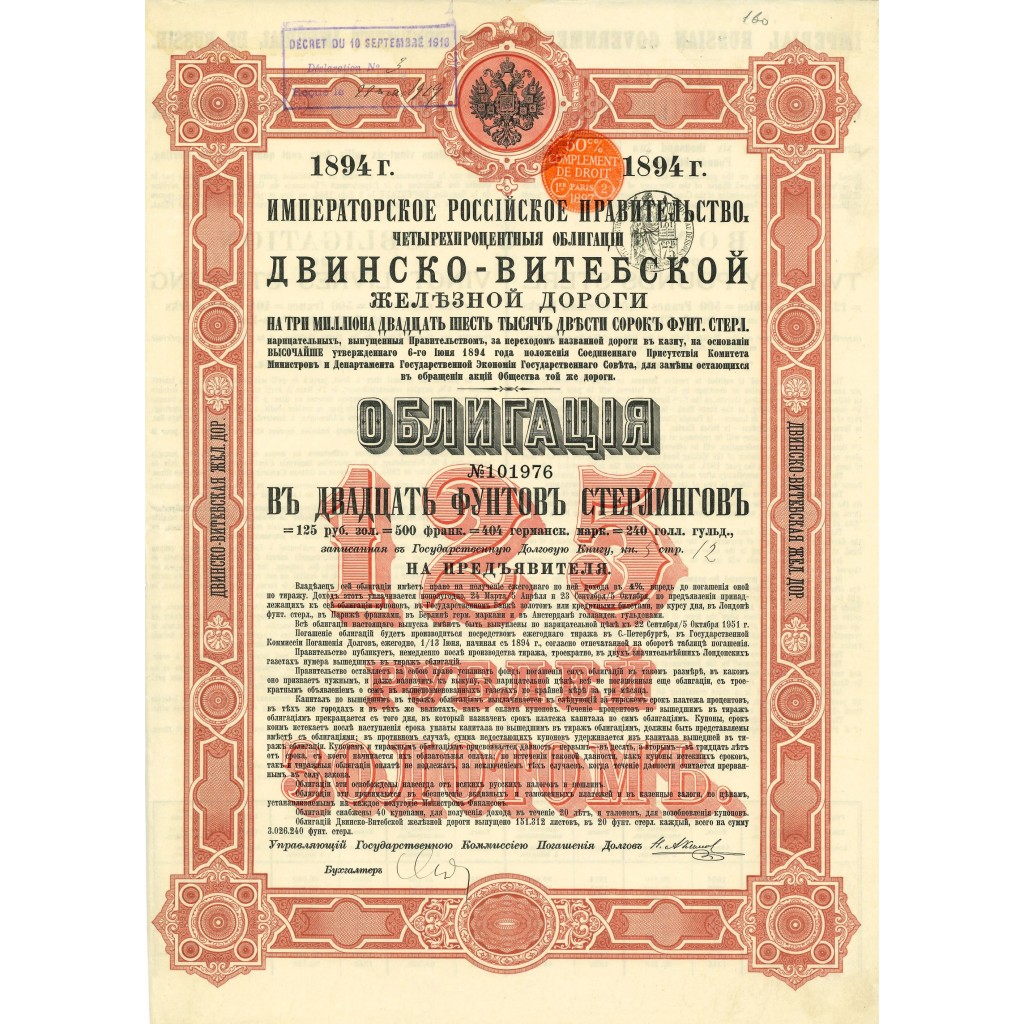
The "Chemin de Fer de Dvinsk-Vitebsk" is one of the most important railway lines of the Russian Empire, built to improve the transport network and connect the cities of Dvinsk (now Daugavpils, Latvia) and Vitebsk (Belarus). This railway line played a crucial role in the economic and industrial development of the region, facilitating the movement of people and goods.
Historical Profile of the Company:
| Year of Establishment | Headquarters | Initial Share Capital | Year of Stock Exchange Listing | Year of Delisting | Year of Dissolution | Share Capital at Dissolution (or last available data) | Annual Revenue (1894) |
|---|---|---|---|---|---|---|---|
| 1894 | St. Petersburg, Russia | Not available | Not available | Not available | Not available | Not available | Not available |
Bond Characteristics:
| Issue Date | Total Issue Amount | Nominal Value of Bond | Serial Number | Language | Annual Yield | Coupon Payment Dates |
|---|---|---|---|---|---|---|
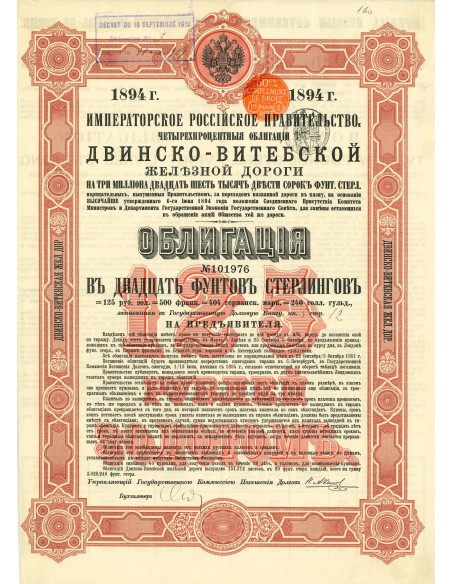
| 1894 | 3,126,240 sterling | 20 sterling | 101976 | Russian | 4% | 1/13 January and 1/13 July |
The presented bond was issued in 1894 for a total amount of 3,126,240 sterling, with a nominal value of 20 sterling. Written in Russian, it reflects the strategic and national importance of the company's operations.
Importance of Scripophily Collecting
Collecting scripophily offers an extraordinary window into the economic and financial past. Each document tells the story of governments and companies that contributed to the economic progress of their time. Collecting historical shares and bonds is not just a hobby, but a way to preserve and appreciate economic and cultural history.
This particular document from the "Chemin de Fer de Dvinsk-Vitebsk" is an excellent example of scripophily. Issued during a crucial period for the development of Russia's railway infrastructure, it represents the importance of imperial railways and economic development strategies of the time. Its detailed craftsmanship and authentic signatures add a touch of authenticity and historical value, making it a desirable piece for any collector.
All historical documents for sale are intended for collection purposes. The documents have no economic or financial value (no economic or financial value), and the second image is only representative of the object of the reference company.

