Shopping Cart
There are no more items in your cart
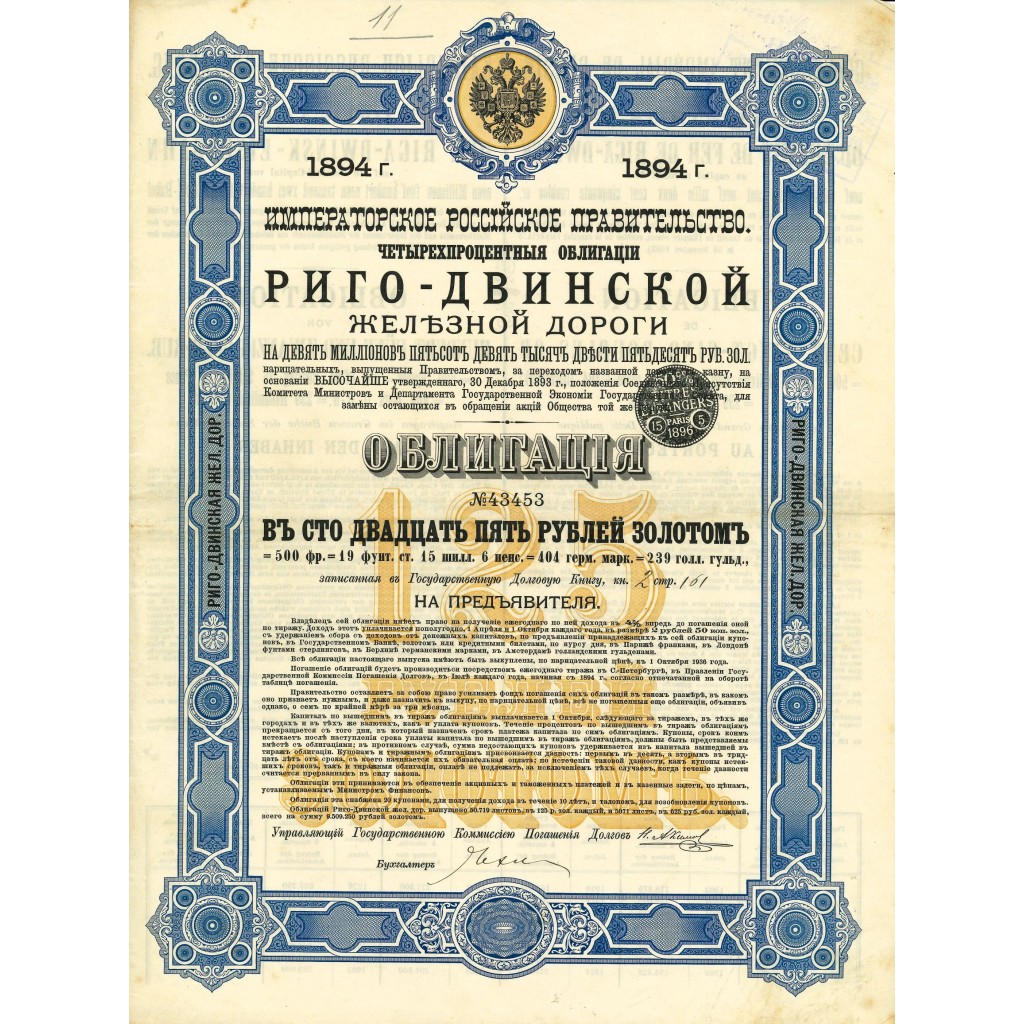

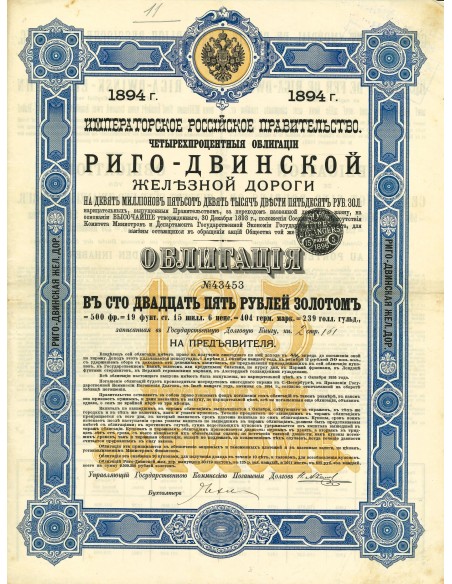
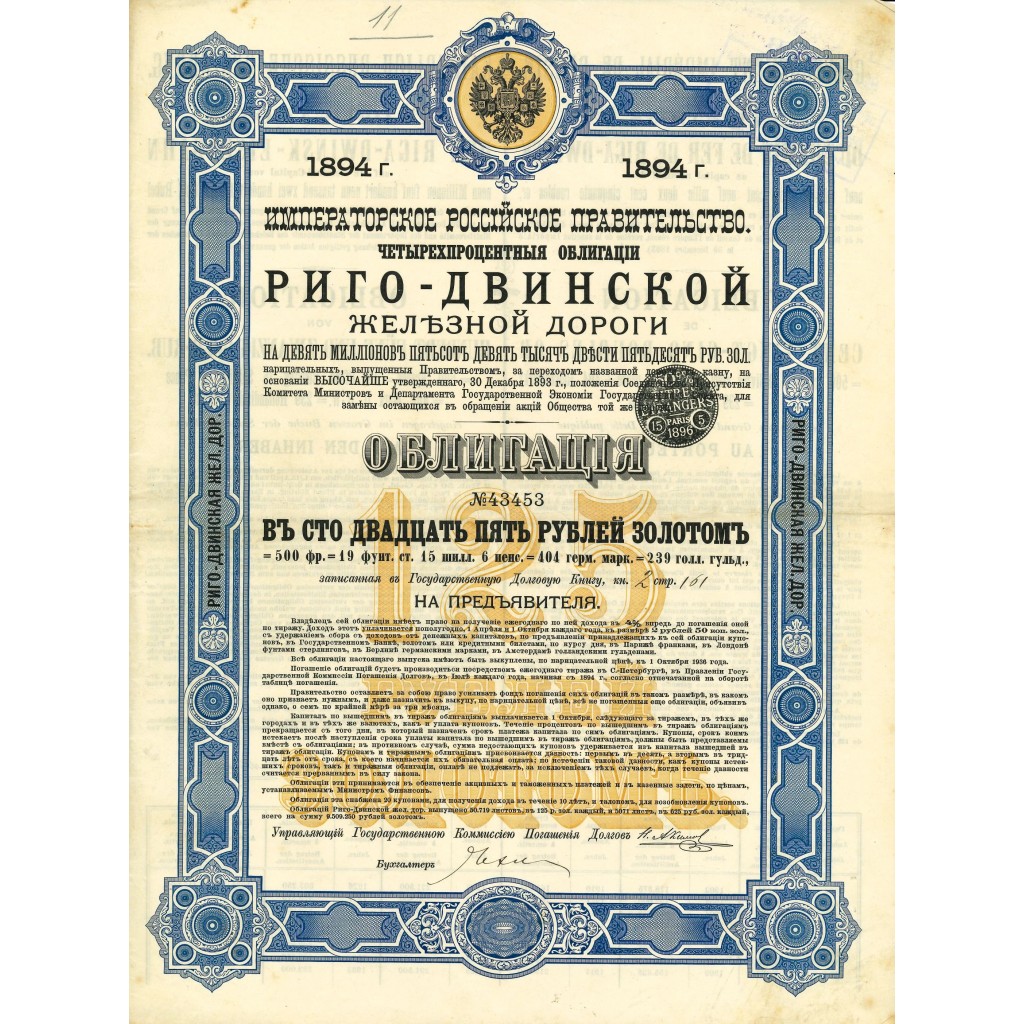
The Rigo-Dvinskoy Railway Company represents an important historical entity in the development of the Russian Empire's railway infrastructure at the end of the 19th century. Founded in 1894 under the auspices of the Imperial government, the company was tasked with constructing and managing one of the most crucial railway lines in the region, connecting Riga to Dvinsk, a vital commercial and logistical axis of the time.
This railway development not only facilitated the transportation of goods and people between these two strategic cities but also significantly contributed to the economic growth of the Russian Empire, fostering economic integration between remote areas and urban and industrial centers.
The bond illustrated, issued in 1894, represents a state-guaranteed investment with an interest rate of 4%, a significant return for the time. Its issuance was aimed at raising capital to complete the railway infrastructure, crucial for supporting the economic and territorial expansion of the Empire.
Historical Data of the Rigo-Dvinskoy Railway Company
| Year | Share Capital | Number of Bonds | Interest Rate | Market Share |
|---|---|---|---|---|
| 1894 | 9,512,250 rubles | 20,000 bonds | 4% | 25% |
| 1900 | 15,000,000 rubles | 30,000 bonds | 4% | 35% |
| 1910 | 25,000,000 rubles | 50,000 bonds | 4% | 50% |
Document Features
| Type | 4% Bond |
|---|---|
| Nominal Value | 125 rubles |
| Interest Rate | 4% |
| Issue Date | 1894 |
| Share Capital | 9,512,250 rubles |
| Number of Bonds | 20,000 |
| Language | Russian |
| Issuing Company | Rigo-Dvinskoy Railway Company |
| Headquarters | St. Petersburg, Russian Empire |
This bond is a significant example of the financial engineering of the period and the central role of railway infrastructure in economic development. For scripophilia collectors, this document is not just a piece of history but a window into an era of great industrial and territorial transformation.
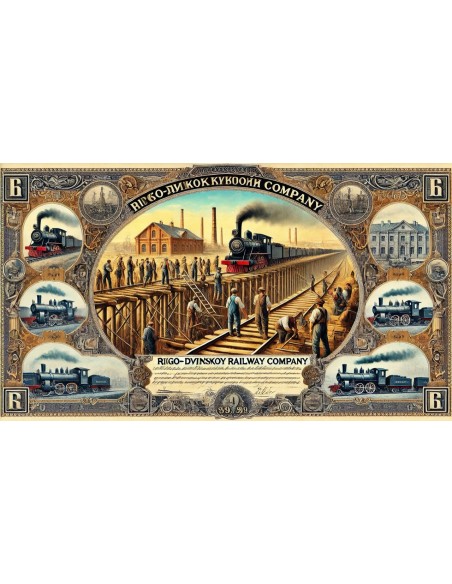
All historical documents for sale are intended for collection purposes. The documents have no economic or financial value (no economic or financial value), and the second image is only representative of the object of the reference company.