Shopping Cart
There are no more items in your cart
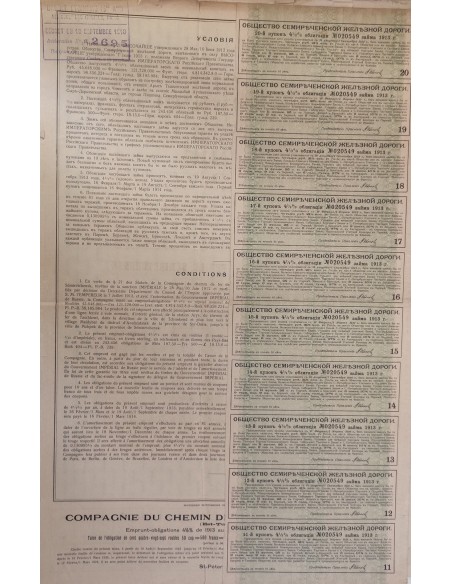

Article on the Semiretchensk Railway Company
History of the Semiretchensk Railway Company
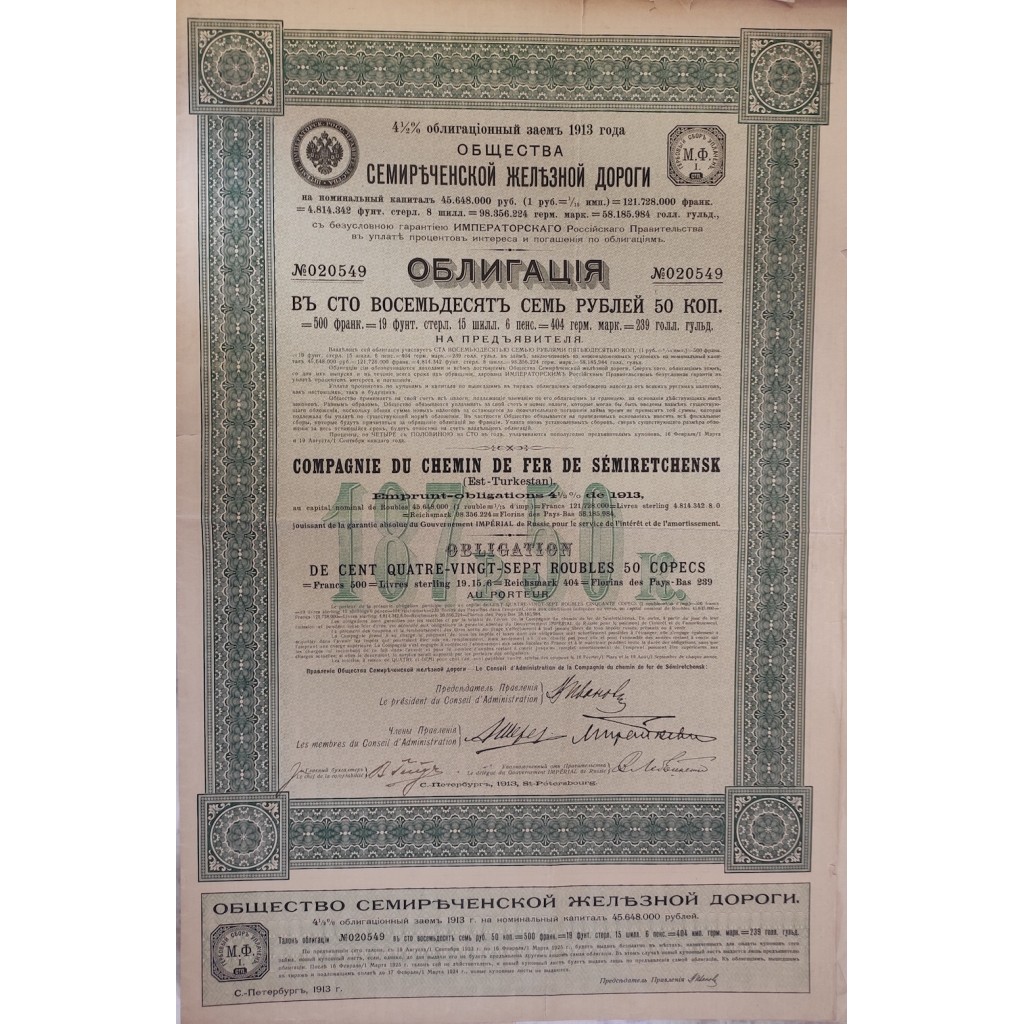
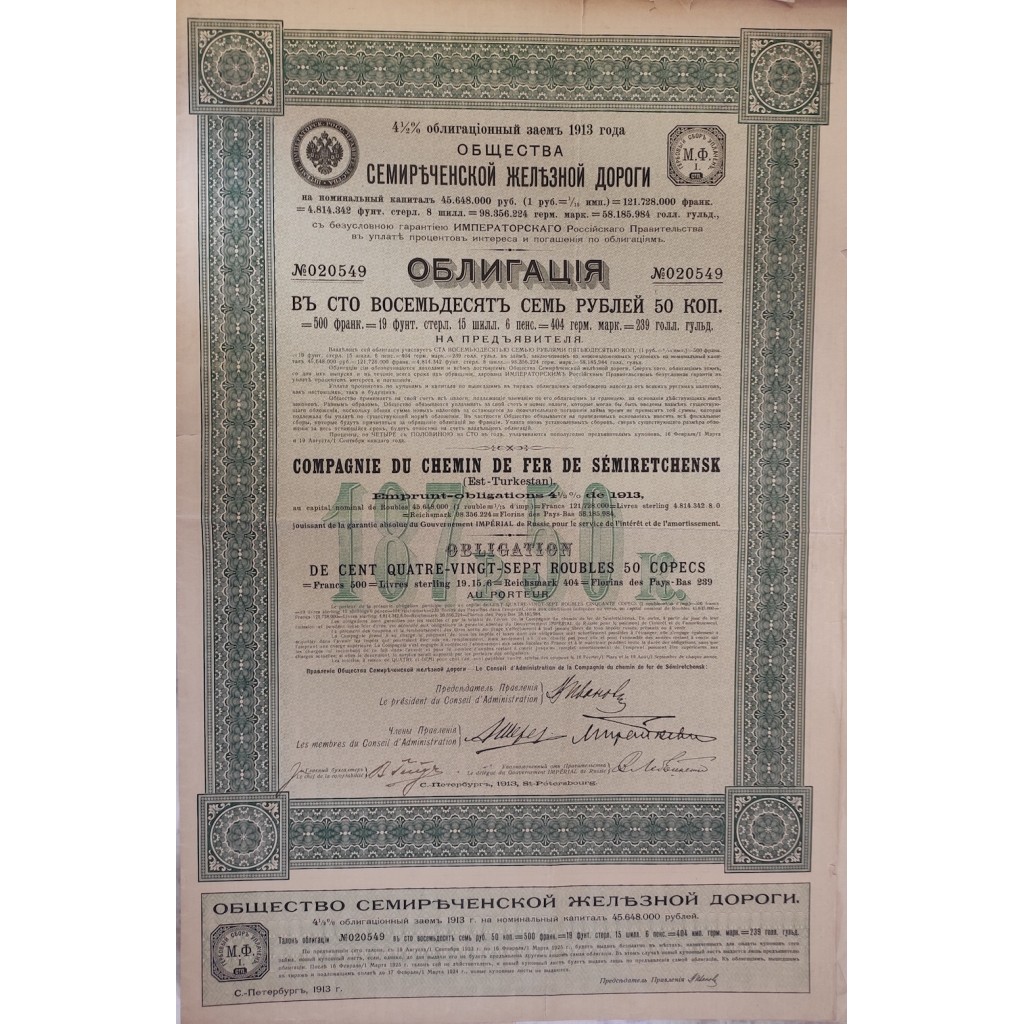
The Semiretchensk Railway Company was founded in 1913, during one of the most complex and turbulent periods in the history of the Russian Empire. The railway was intended to connect the Semiretchensk region, located in Eastern Turkestan, with other important areas of the Empire. This region was rich in natural resources, and the construction of a railway represented a significant economic opportunity to facilitate the transport of goods, minerals, and other vital resources.
The issuance of bonds by the company in 1913 is an example of how the imperial government sought to attract private investment to finance its ambitious infrastructure initiatives. The company secured the support of the imperial government, which guaranteed the payment of interest and the return of capital, making these bonds particularly attractive to investors of the time.
However, the outbreak of World War I and the subsequent revolutions of 1917 dramatically altered the political and economic situation in Russia. Many companies, including the Semiretchensk Railway Company, were profoundly affected by the events and failed to complete their projects, with many bonds losing value or being annulled.
Historical Context of 1913
The year 1913 marked the zenith of the Russian Empire before the catastrophe of World War I and the revolutions. Russia was experiencing a period of economic growth, albeit accompanied by social and political tensions. The construction of infrastructure such as railways was a priority for the Tsarist government, which saw them as a means of consolidating control over the vast and remote regions of the empire and stimulating economic development. Eastern Turkestan, in particular, represented a strategic area both economically and geopolitically.
Historical Data of the Company
| Company Data | Value |
|---|---|
| Year of Establishment | 1913 |
| Headquarters | St. Petersburg, Russian Empire |
| Share Capital at Establishment | 45,648,000 Rubles |
| Year of Stock Exchange Admission | 1913 |
| Year of Stock Exchange Delisting | Not Available |
| Share Capital at Dissolution | Not Available |
| Year of Company Dissolution | After 1917 (Russian Revolution) |
Document Characteristics
| Document Characteristics | Description |
|---|---|
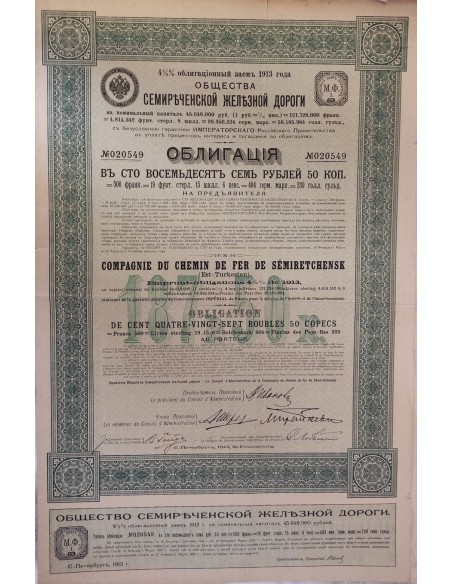
| Title Type | Bond |
| Issuance | 4½% Loan 1913 |
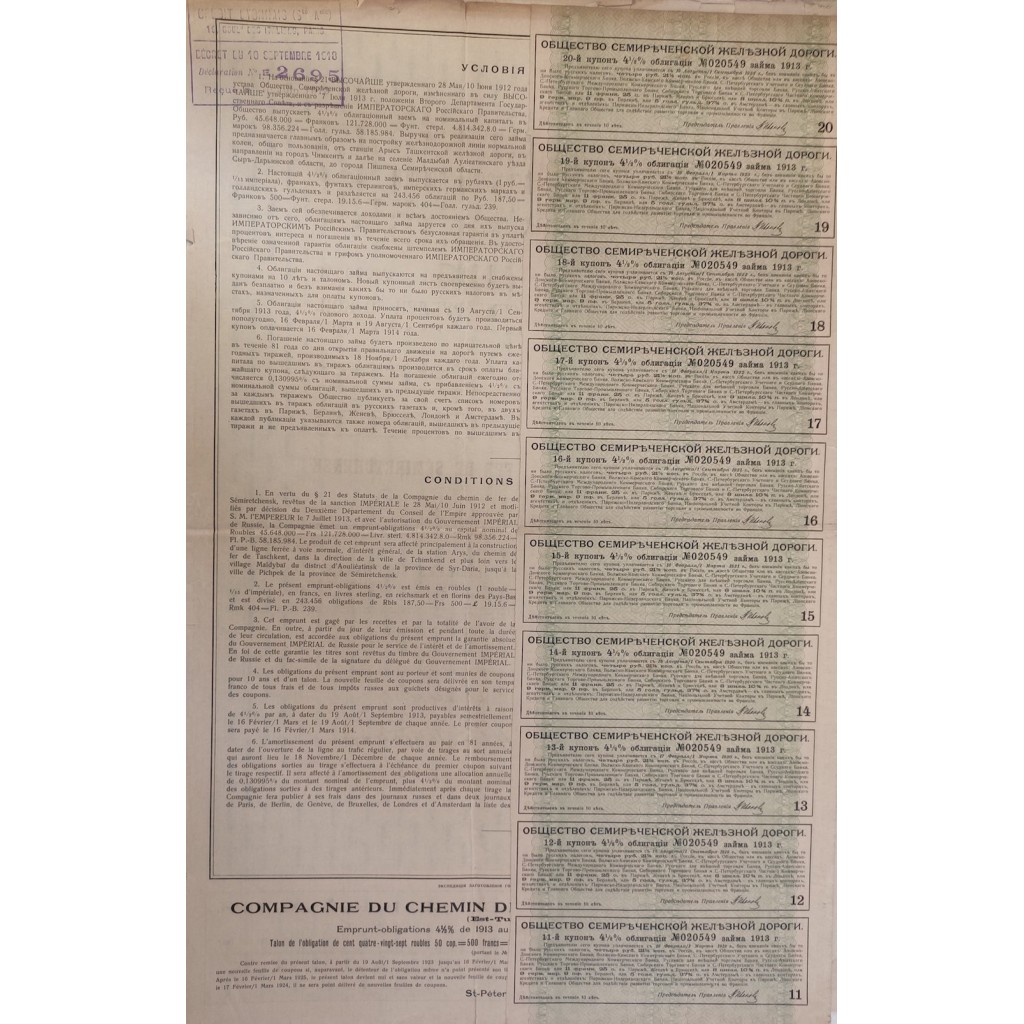
| Currency | 187.50 Rubles - 500 Francs |
| Serial Number | 020549 |
| Date of Issue | 1913 |
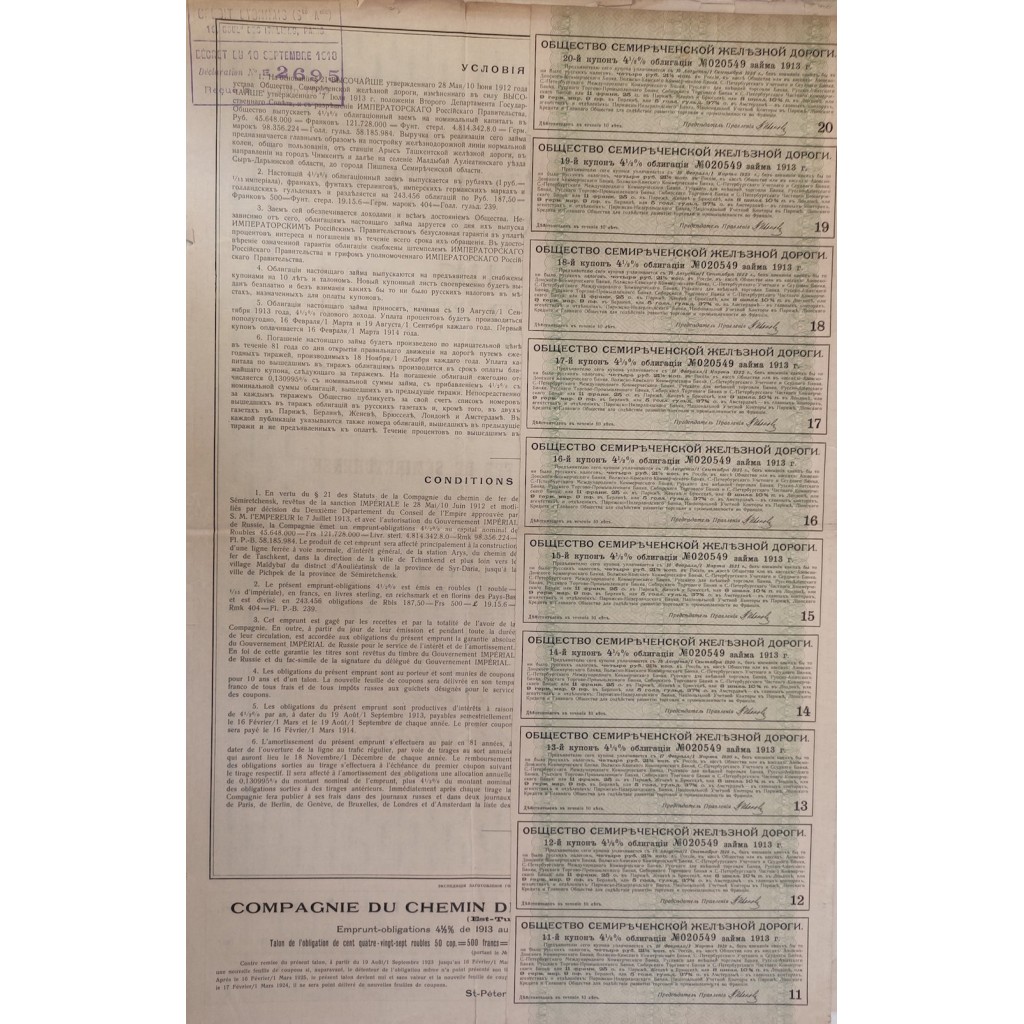
| Languages | Russian, French, German |
| Nominal Value | 500 Francs |
| Guarantee | Imperial Russian Guarantee |
| Maturity | Not specified |
Artistic and Typographic Details
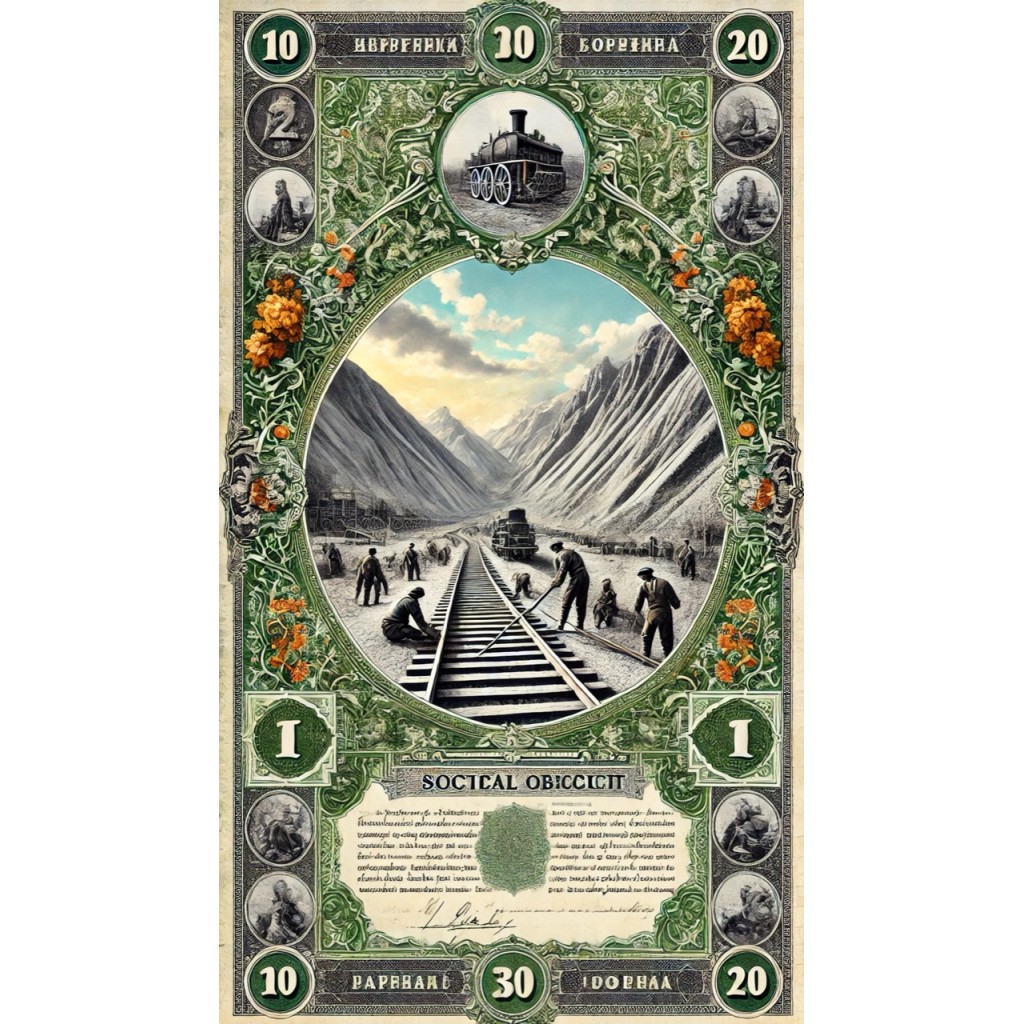
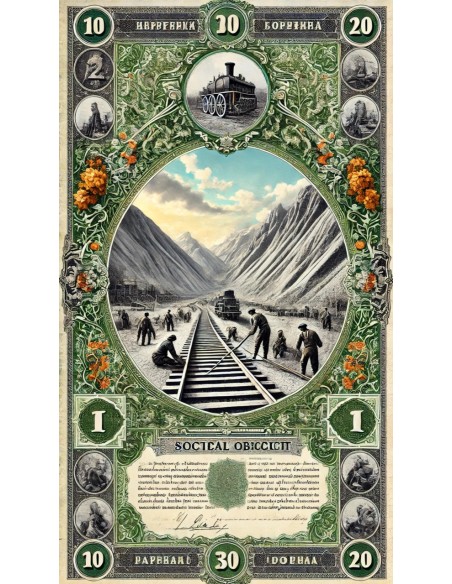
The document features a refined decorative green border with floral motifs typical of the Art Nouveau style, which was very popular at the time. The combination of three languages (Russian, French, and German) indicates the desire to attract investors from various European countries. The quality of the paper is notable, befitting a bond guaranteed by the Russian Empire. The typography, detailed and precise, reflects the importance and seriousness of the project that the company represented.
Provenance of the Title
This certificate was originally issued in St. Petersburg and likely purchased by a European investor, given the presence of different currencies and languages. The title has been preserved in excellent condition and was recently acquired by a collector specializing in pre-revolutionary Russian documents.
Valuation and Rarity
This bond is considered quite rare, especially in good preservation condition. The market value for similar documents has increased in recent years due to growing interest in Russian scripophily. Currently, the estimated value for a bond like this ranges between 400 and 900 euros, depending on the specific condition and rarity of the title.
The Importance of Scripophily
Collecting historical documents such as stocks and bonds represents not only an economic investment but also an opportunity to own a fragment of history. Scripophily offers a tangible connection to the past, allowing collectors to explore the economic and social events that have shaped the modern world. This document, with its rich history and artistic design, is not only a work of art but also a testament to an era of radical changes.
For those wishing to preserve this certificate, it is advisable to frame it with UV-protective glass to prevent deterioration and preserve the artistic details. These documents, in addition to being valuable for collectors, can be used as prestigious gifts, decorative pieces, or works of historical art.
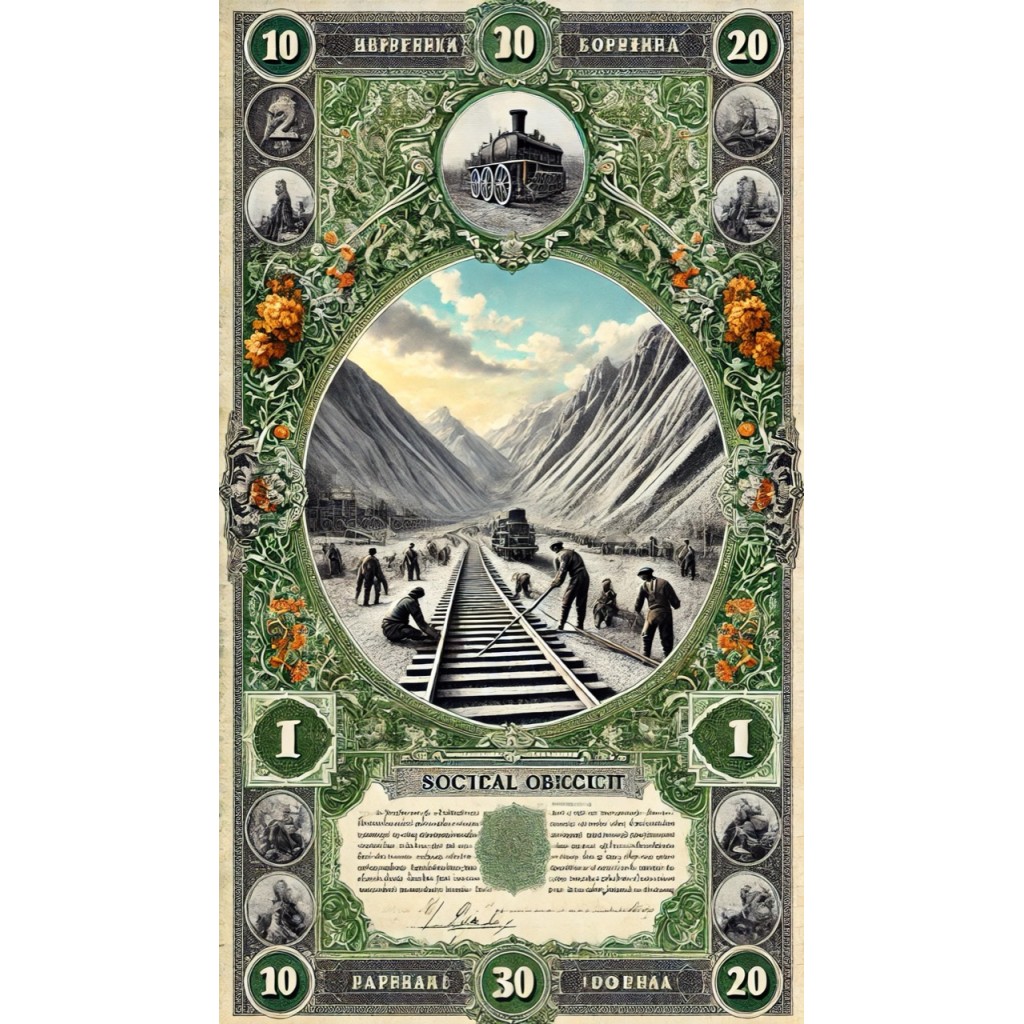
All historical documents for sale are considered collectibles. The documents have no economic or financial value (no economic or financial value), images that are not the historical document are representative of the company's object and the historical period of reference, they are not provided but can be freely downloaded from the website and printed.