Shopping Cart
There are no more items in your cart
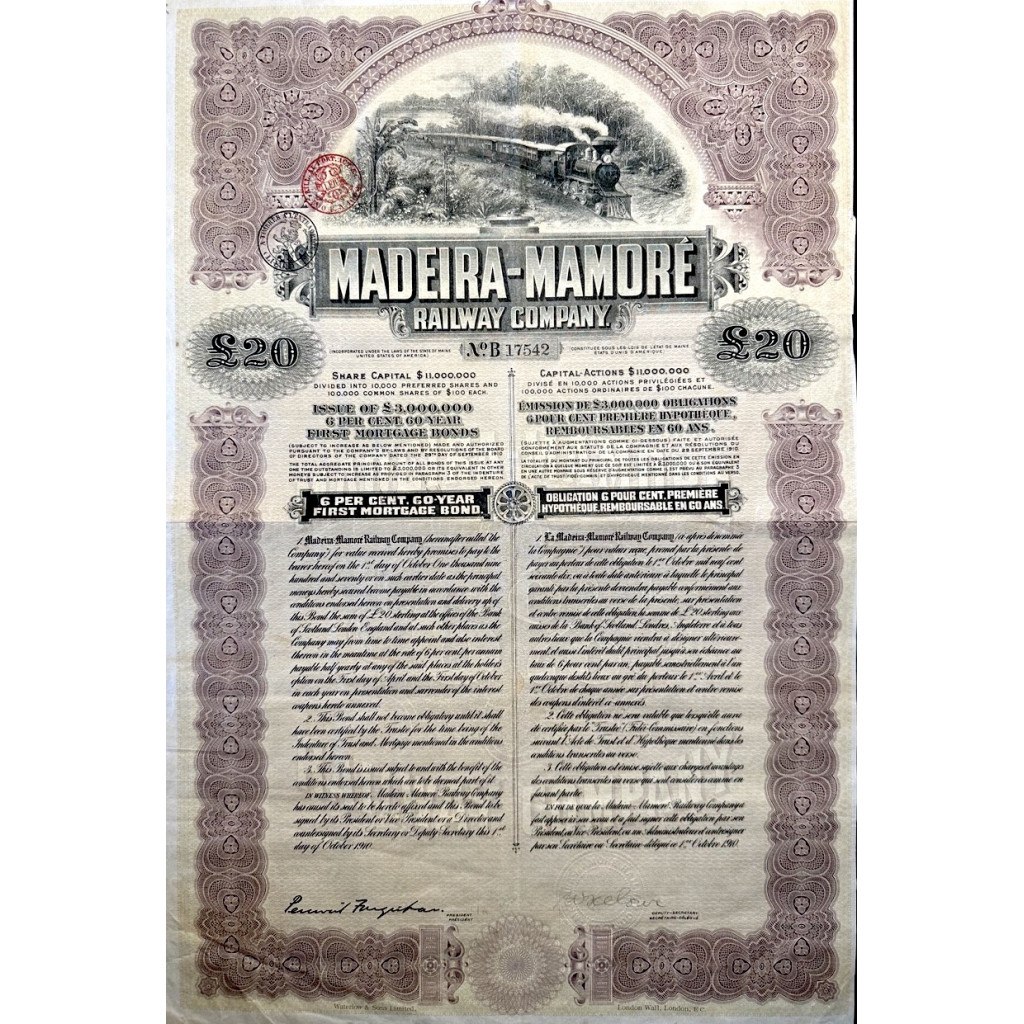
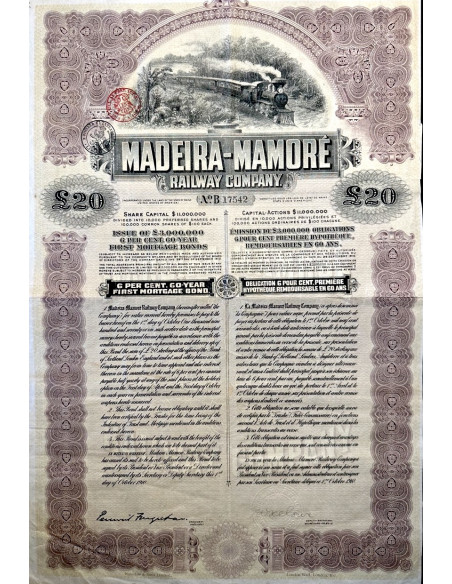
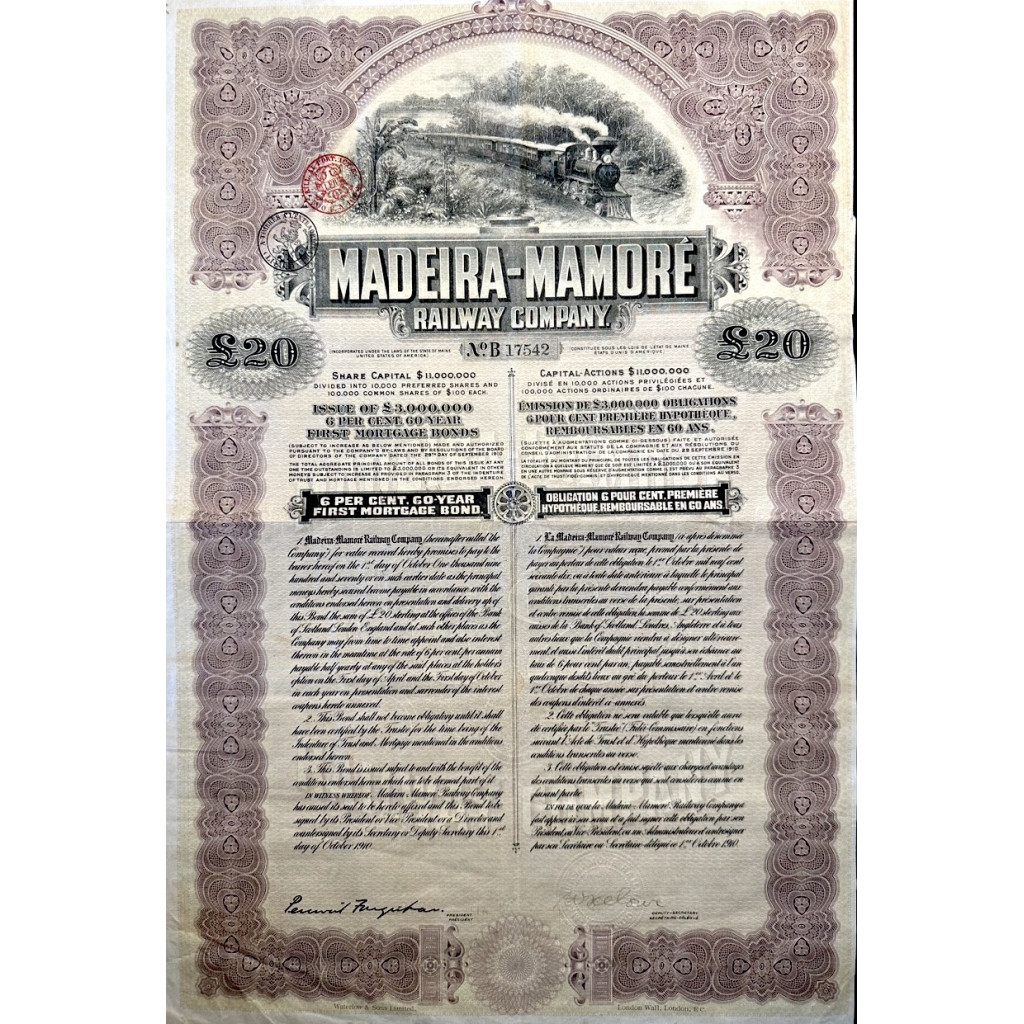
Descrizione Generale: Il documento è un'obbligazione emessa dalla Madeira-Mamoré Railway Company. Questa obbligazione ha un valore nominale di £20.
Dettagli Specifici:
- Emittente: Madeira-Mamoré Railway Company
- Valore Nominale: £20
- Capitale Sociale: $1.000.000 diviso in 10.000 azioni privilegiate e 100.000 azioni ordinarie da $10 ciascuna
- Emissione: $3.000.000 in obbligazioni ipotecarie al 6% rimborsabili in 60 anni
- Lingua del Documento: Inglese e Francese
- Firma del Presidente: Leonard Yerkes
- Firma del Segretario: [Firma]
- Data di Emissione: 1 ottobre 1910
Articolo Storico
La Visione e il Progetto
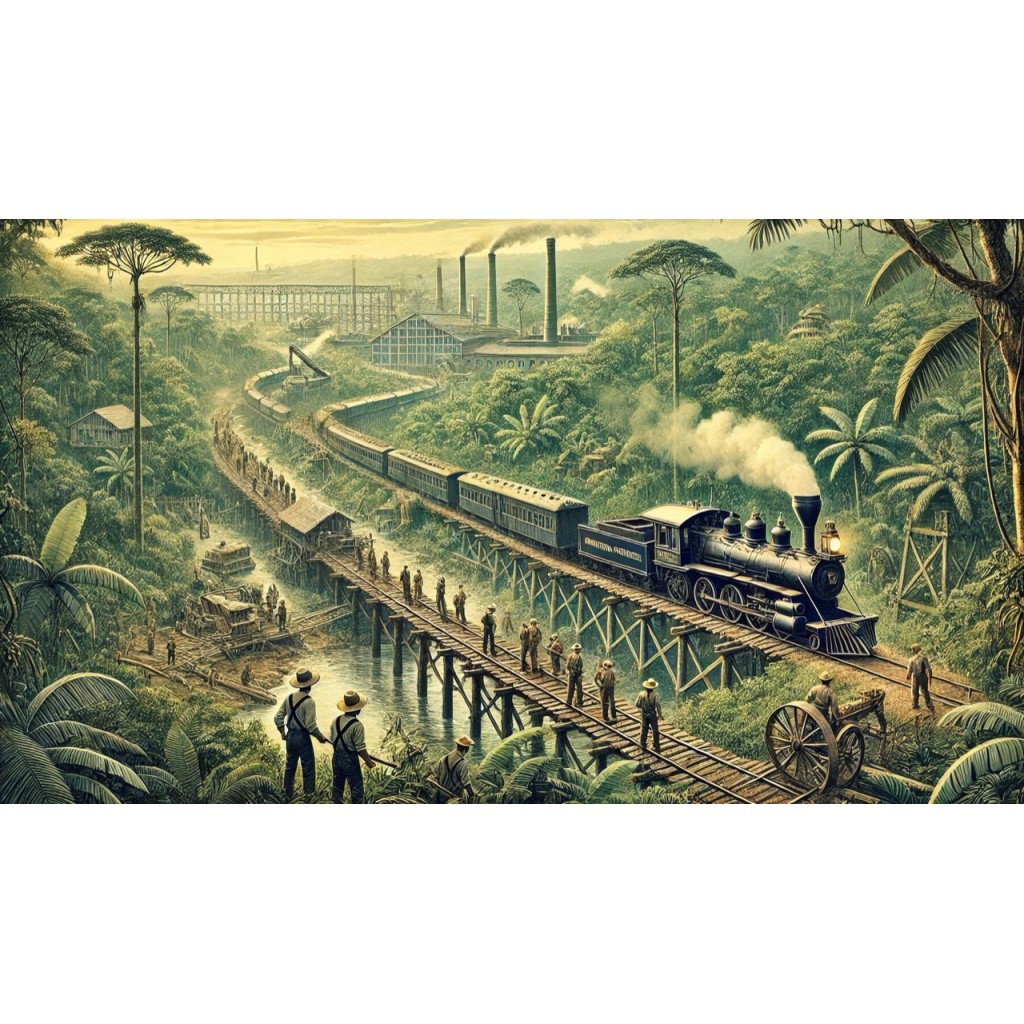
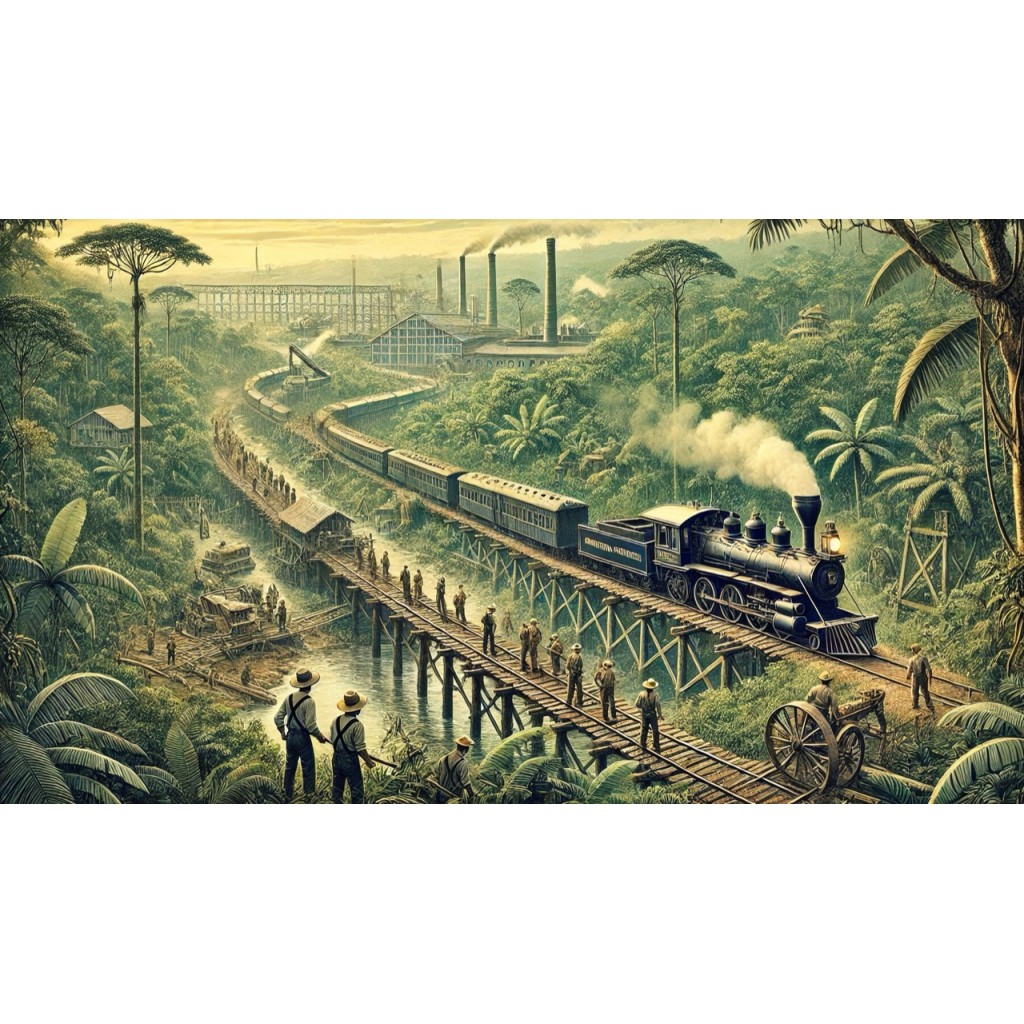
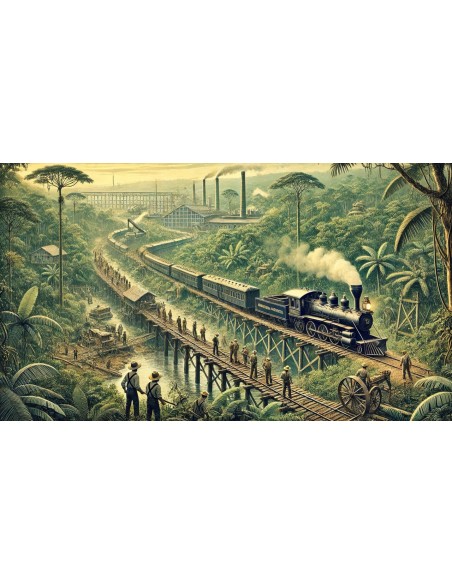
Il progetto della ferrovia Madeira-Mamoré nasceva dall'esigenza di superare le pericolose rapide del fiume Madeira, che impedivano il trasporto efficiente della gomma estratta nelle regioni interne del Brasile. Con una lunghezza prevista di circa 360 chilometri, la ferrovia avrebbe collegato Porto Velho a Guajará-Mirim, facilitando l'esportazione della gomma verso il mercato internazionale.
Sfide e Sacrifici
La costruzione della ferrovia fu un'impresa titanica, segnata da enormi difficoltà tecniche, condizioni climatiche estreme e malattie tropicali. Migliaia di lavoratori provenienti da tutto il mondo persero la vita a causa della malaria, febbre gialla e altre malattie. Nonostante le avversità, la ferrovia fu completata nel 1912, ma il costo umano e finanziario fu immenso.
Un Documento di Valore Storico
L'obbligazione emessa dalla Madeira-Mamoré Railway Company nel 1910 rappresenta non solo un pezzo di storia finanziaria, ma anche un simbolo dell'ingegno e della determinazione umana. Il documento, riccamente decorato e redatto in due lingue, è una testimonianza tangibile delle speranze e degli sforzi dell'epoca.
La Ferrovia Oggi
Oggi, la ferrovia Madeira-Mamoré è in gran parte abbandonata, ma rimane un monumento alla resilienza e all'ambizione. La sua storia è ricordata come una delle grandi epopee dell'ingegneria ferroviaria e come un esempio delle sfide della colonizzazione industriale.
The Madeira-Mamoré railway is an abandoned railway built in the Brazilian state of Rondônia between 1907 and 1912. The railway connects the cities of Porto Velho and Guajará-Mirim. It became known as the 'Devil's Railway' because thousands of construction workers died from tropical diseases and violence.
In 1846, José Augustin Palácios and Rudolf Oscar Kesselring convinced the Bolivian authorities that the best way to secure access to the Atlantic Ocean was through the Amazon. Bolivia had access to the Pacific Ocean, later lost to Chile in the Pacific War of 1884, but the lucrative trade routes to the United States and Europe lay in the Atlantic. In 1851, the US government became interested in access to Bolivian products (particularly rubber) and commissioned Lieutenant Lardner Gibbon to study the feasibility of a rail link between the navigable Amazon and Bolivian production centres. Gibbon's study concluded that a railway along the rapids of the Madeira River would allow efficient transport of goods from the Bolivian capital of La Paz to US markets.
In the 1870s, American George Earl Church made two attempts to cross the rapids of the Madeira River to access Bolivian rubber markets. Both attempts were thwarted by difficult terrain and appalling loss of life due to malaria, accidents and violence. The successful construction of the railway began with the Treaty of Petrópolis (1903), by which Bolivia ceded to Brazil the territory of Acre (191,000 km²), in exchange for Brazilian territory, a cash payment and the promise that Brazil would build a railway link to bypass the rapids of the Madeira River. Construction began in 1907 and the last section of the Madeira-Mamoré railway was inaugurated on 30 April 1912. The chief accountant from October 1911 to September 1913 was Mark E. Smith.
There are no precise figures on the number of lives lost during the construction of the railway. In his book Brazil, the novelist Errol Lincoln Uys estimates the number at between 7,000 and 10,000. The Brazilian government estimates that 6,000 workers lost their lives. Fiorelo Picoli, in his book 'O Capital e a Devastação da Amazônica', estimates a figure of more than 30,000. The loss of life may seem low compared to other complex construction projects in difficult terrain. By way of comparison, the construction of the Panama Canal claimed 30,609 lives (5609 workers died during the 10 years of US management, the rest died under French jurisdiction) due to yellow fever. However, much of the legend of the 'devil's railway' is based on George Church's much deadlier failed attempts and the Brazilian rubber boom itself, which cost tens of thousands of lives.
The South American rubber boom ended due to competition from Asian producers and synthetic rubber, and the railway became redundant. Initially, the Brazilian government was forced to maintain the superfluous facilities due to its obligations under the Treaty of Petrópolis. However, in 1972 Brazil completed the trans-Amazonian highway linking Bolivia to the navigable regions of the Amazon and the railway was abandoned. The South American Integration Project (IIRSA) envisages a series of hydroelectric dams that will transform the rapids of the Madeira River into navigable lakes, finally realising Gibbon's vision of fast and efficient access to Bolivian markets (two of the four dams already exist, the Santo Antônio Dam and the Jirau Dam). If the project is completed, 'more than 4,000 km of waterways upstream of the dams in Brazil, Bolivia and Peru will become navigable'.
Tutti i documenti storici in vendita si intendono da collezione. I documenti non hanno nessun valore economico o finanziario (no economic or financial value).