Shopping Cart
There are no more items in your cart
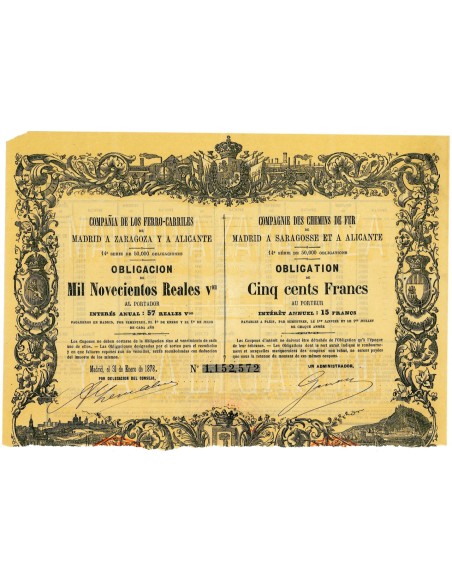

Historical Profile of the Compañía de los Ferro-Carriles de Madrid a Zaragoza y a Alicante
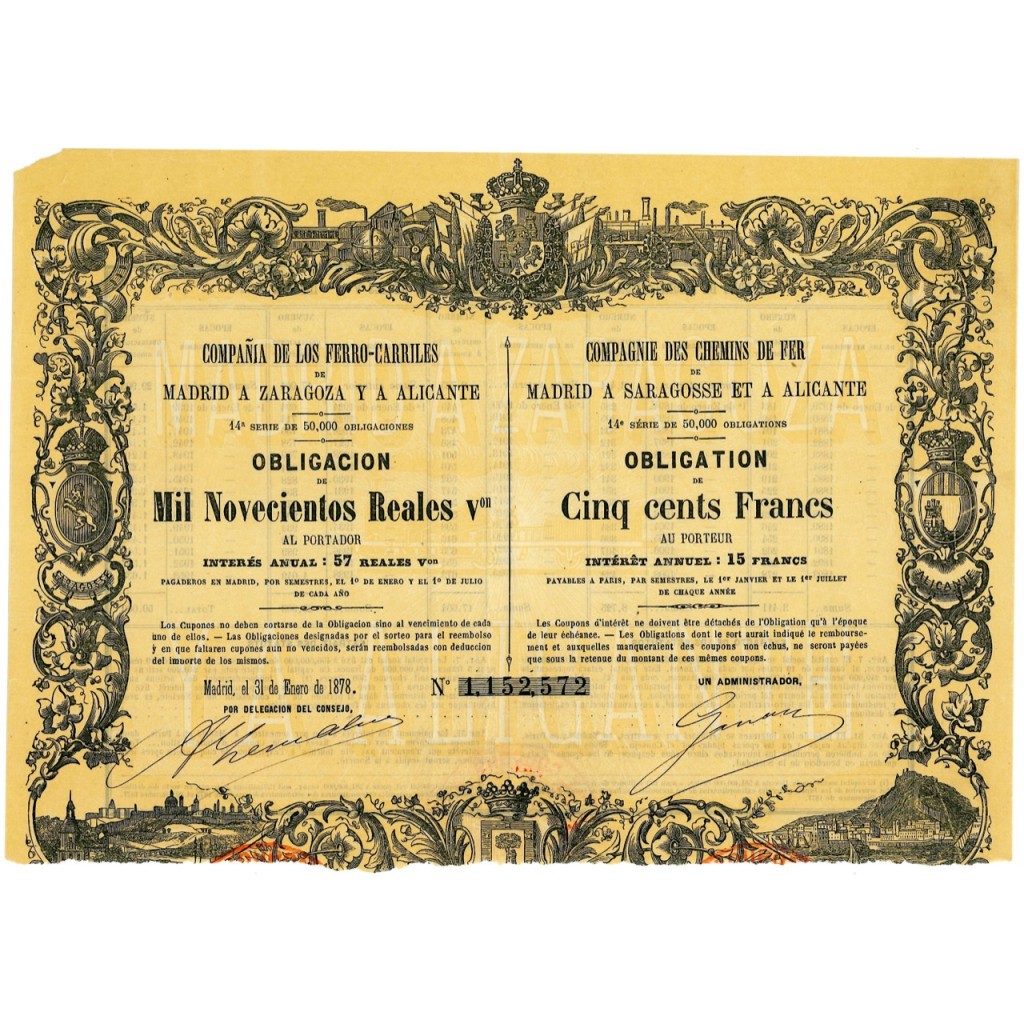
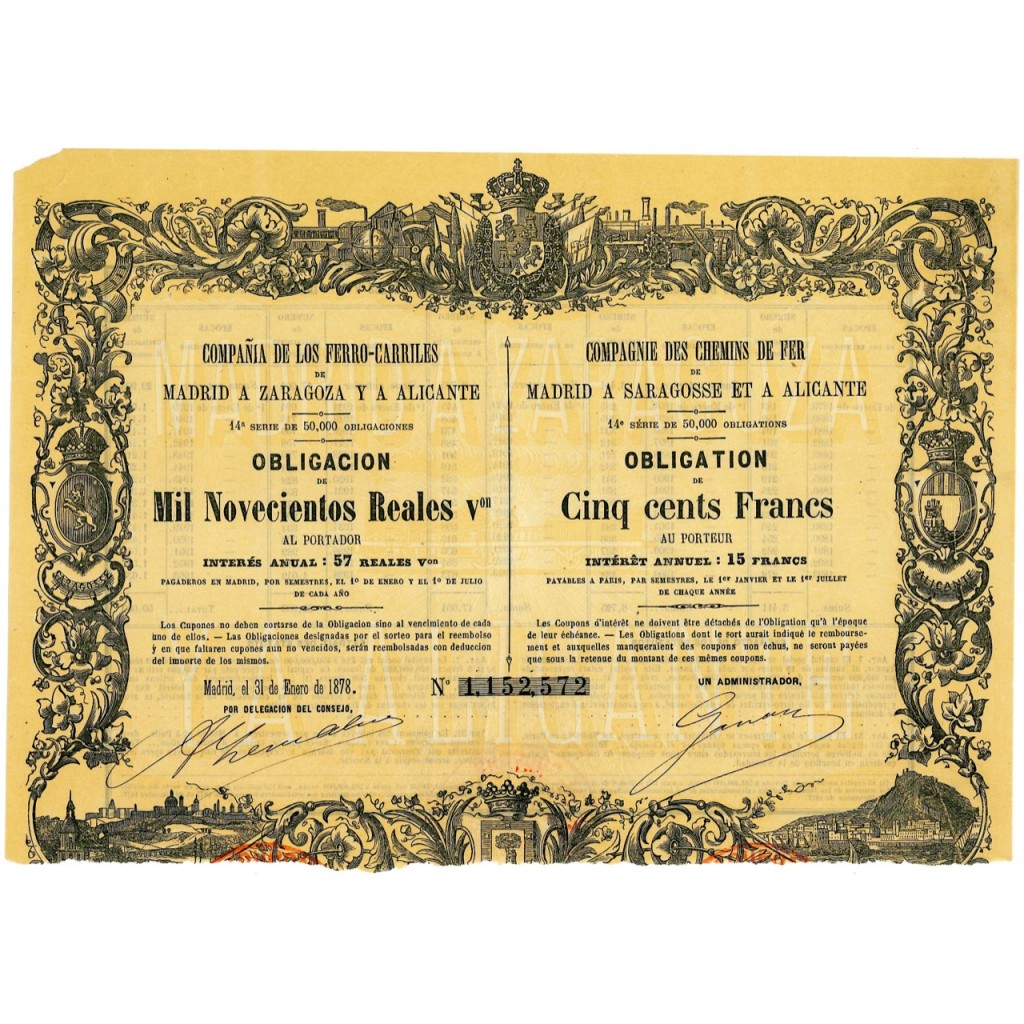
The Compañía de los Ferro-Carriles de Madrid a Zaragoza y a Alicante was one of the key Spanish railway companies of the 19th century. Founded with the goal of connecting Madrid, the Spanish capital, with the strategic cities of Zaragoza and Alicante, the company significantly contributed to the country's railway infrastructure development. Railways were essential for trade and goods transportation, especially in a Spain that was striving to modernize its economy. The issuance of bonds, like this one from 1878, was one of the main means of raising the funds necessary for the construction and maintenance of railway lines.
The railway link between Madrid, Zaragoza, and Alicante was crucial for connecting central regions with the Mediterranean coast, facilitating maritime trade and the development of inland regions. The growth of railway transport was a key element of Spain's economic modernization in the 19th century, making the railway industry one of the country's most important.
Historical Data of the Company
| Company Historical Data | Information |
|---|---|
| Year of Establishment | 1856 |
| Headquarters | Madrid, Spain |
| Year of Stock Exchange Listing | Not available |
| Year of Delisting from Stock Exchange | Not available |
| Year of Dissolution | Not available |
| Share Capital at Establishment | Not available |
| Share Capital at Dissolution | Not available |
| Annual Revenue (1878) | Not available |
Certificate Characteristics
| Characteristic | Description |
|---|---|
| Number of Certificates | 152,572 |
| Type of Certificate | Bond |
| Nominal Value | 1,900 reales or 500 francs |
| Date of Issuance | January 31, 1878 |
| Signed by | Executives of the railway company |
| Condition of Document | Excellent preservation |
| Authenticity Status | Authentic |
| Language of Document | Spanish and French |
| Stamps and Seals | Not present |
Historical Context
In 1878, Spain was in the process of modernizing its infrastructure, and railways were a key innovation for trade and industrial development. The railway link between Madrid, Zaragoza, and Alicante significantly improved the transport time for goods between the capital and the Mediterranean coast. At a time when railways were beginning to transform the European economy, the Compañía de los Ferro-Carriles de Madrid a Zaragoza y a Alicante played a crucial role in positioning Spain within the modern economic context.
The bonds issued by the company were a form of long-term financing to support the construction and maintenance of railway lines, allowing the company to access capital from both Spanish and foreign investors. The bonds, payable in reales or francs, indicate the international scope of the offer and the attempt to attract investments from French investors.
Artistic and Typographical Details
The 1878 bond certificate features a rich and detailed design, with a golden frame elegantly surrounding the text. The illustration at the top depicts the Spanish royal coat of arms, flanked by symbols representing the railway industry and economic progress. At the bottom, there is a panoramic view of the city of Madrid, with a train crossing an industrial landscape.
The text of the certificate is written in both Spanish and French, reflecting the international nature of the bond. The typography is formal and elegant, with well-defined serif fonts that give the document an official and prestigious appearance.
Provenance of the Certificate
This certificate was part of one of the series of bonds issued by the Compañía de los Ferro-Carriles de Madrid a Zaragoza y a Alicante in 1878. It was acquired from a private collection and has been preserved in excellent condition. Its authenticity is guaranteed by experts in the scripophily field.
Evaluation and Rarity
Bonds issued by the Compañía de los Ferro-Carriles de Madrid a Zaragoza y a Alicante are relatively rare, especially in such well-preserved conditions. The market value for scripophily collectors can range between 40 and 60 euros, depending on the provenance and condition of the certificate. The rarity of the document, combined with its historical importance and artistic design, makes it a highly sought-after piece among collectors.
The Importance of Scripophily Collecting
Collecting historical certificates like this allows collectors to explore key moments in Spain's economic and industrial history. Railway bond certificates are particularly fascinating, as they tell the story of the development of transportation infrastructure that transformed the Spanish economy in the 19th century. Additionally, these documents are not only historical testimonies but also examples of high-quality artistic and typographical design.
To preserve these certificates, it is advisable to keep them in protective frames or specialized albums. In addition to their collectible value, railway bond certificates can be used as decorative items that add a touch of history and elegance to any environment.
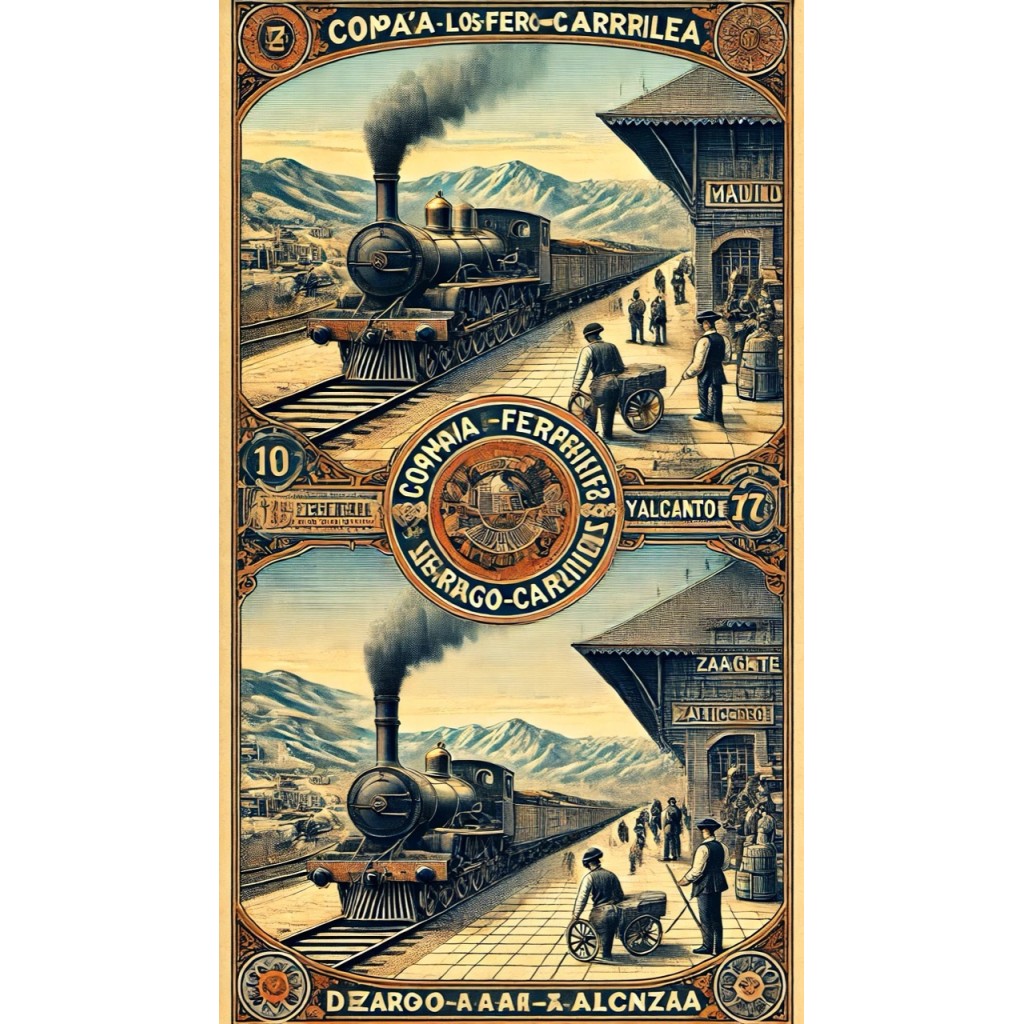
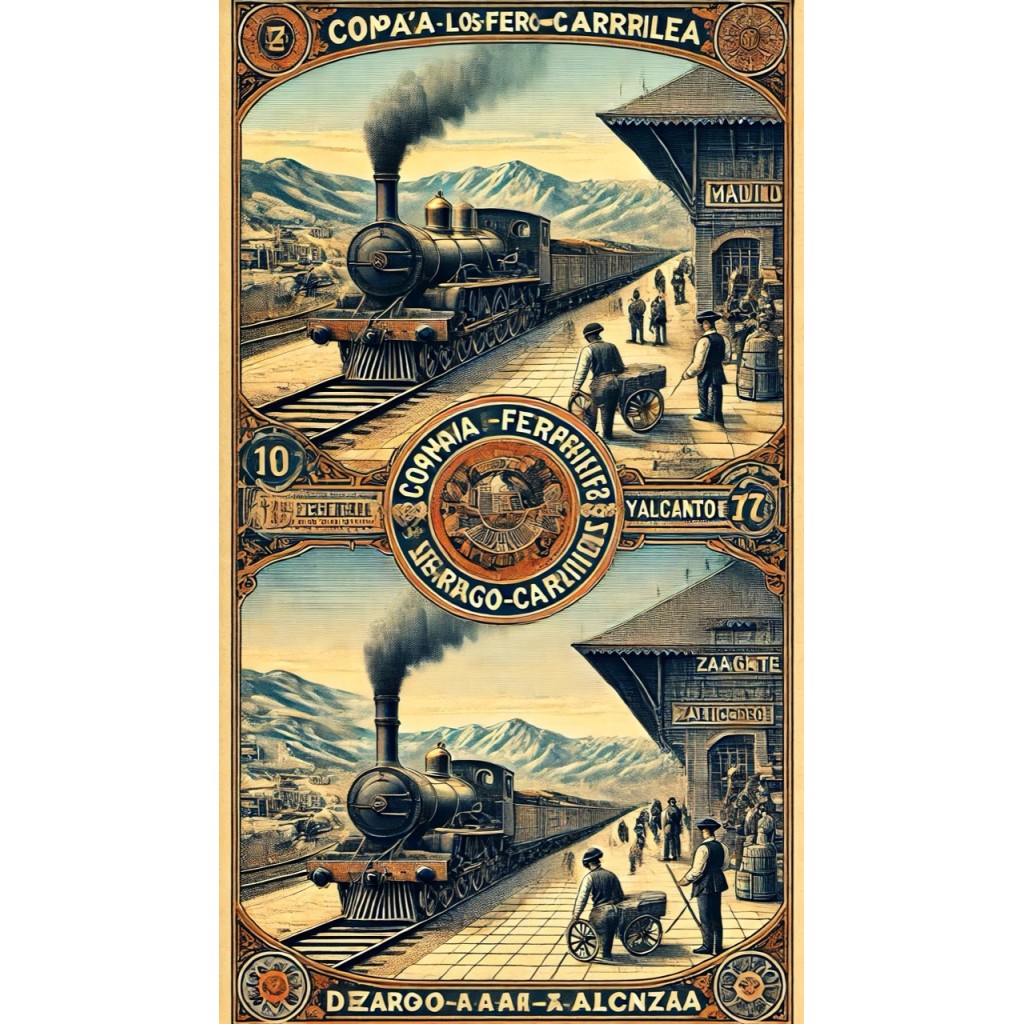
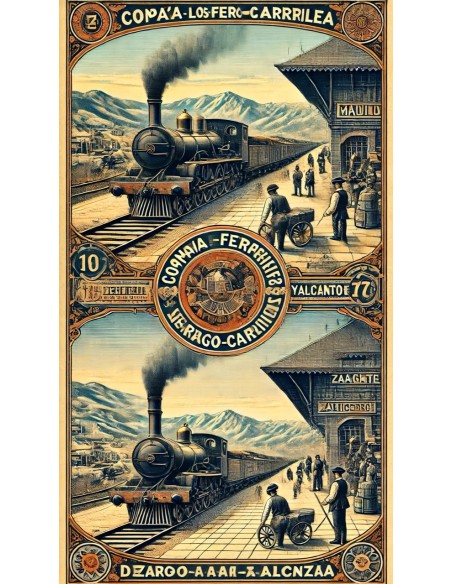
All historical documents for sale are considered collectible. They have no economic or financial value (no economic or financial value), and the images that are not of the historical document are representative of the company's object and the historical period. They are not provided but can be freely downloaded from the website and printed.