Shopping Cart
There are no more items in your cart
The History of the Strada Ferrata da Torino a Novara per Vercelli: A Symbol of 19th Century Industrial Evolution
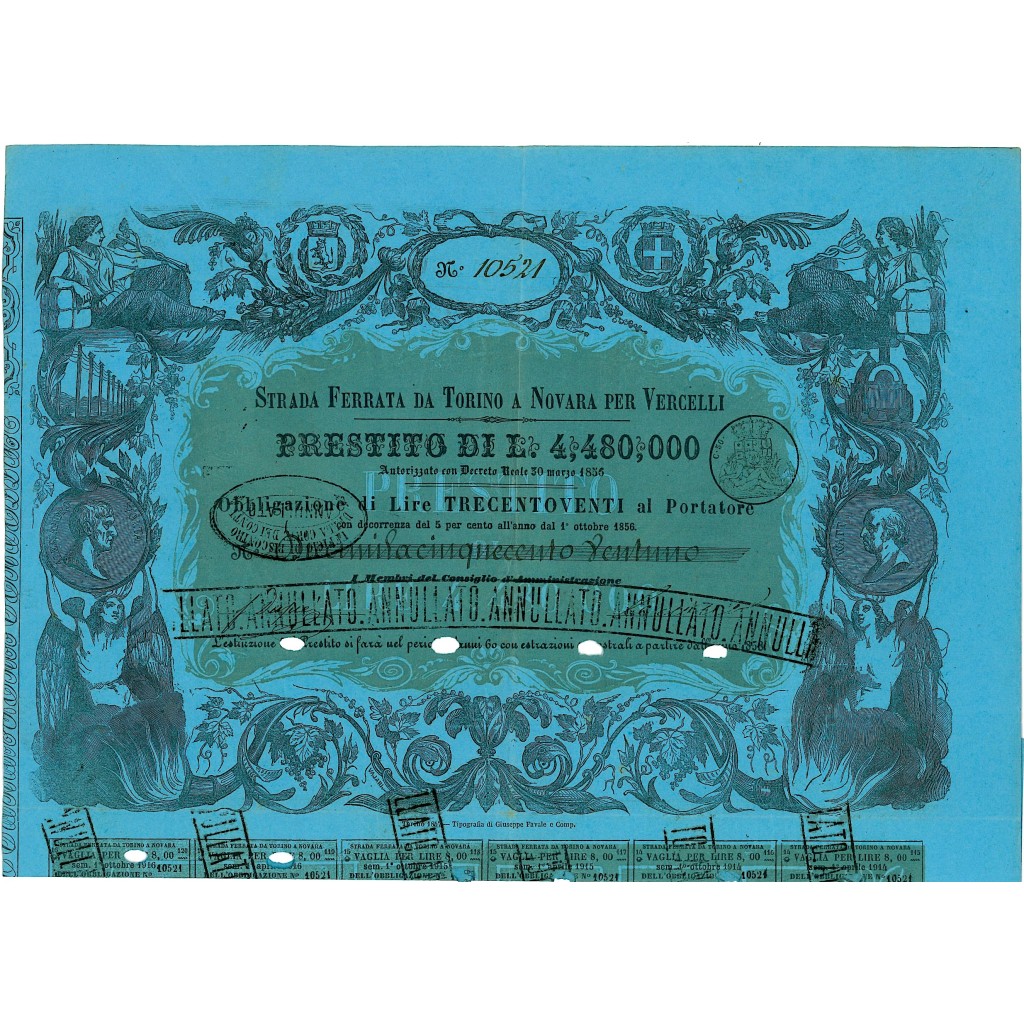
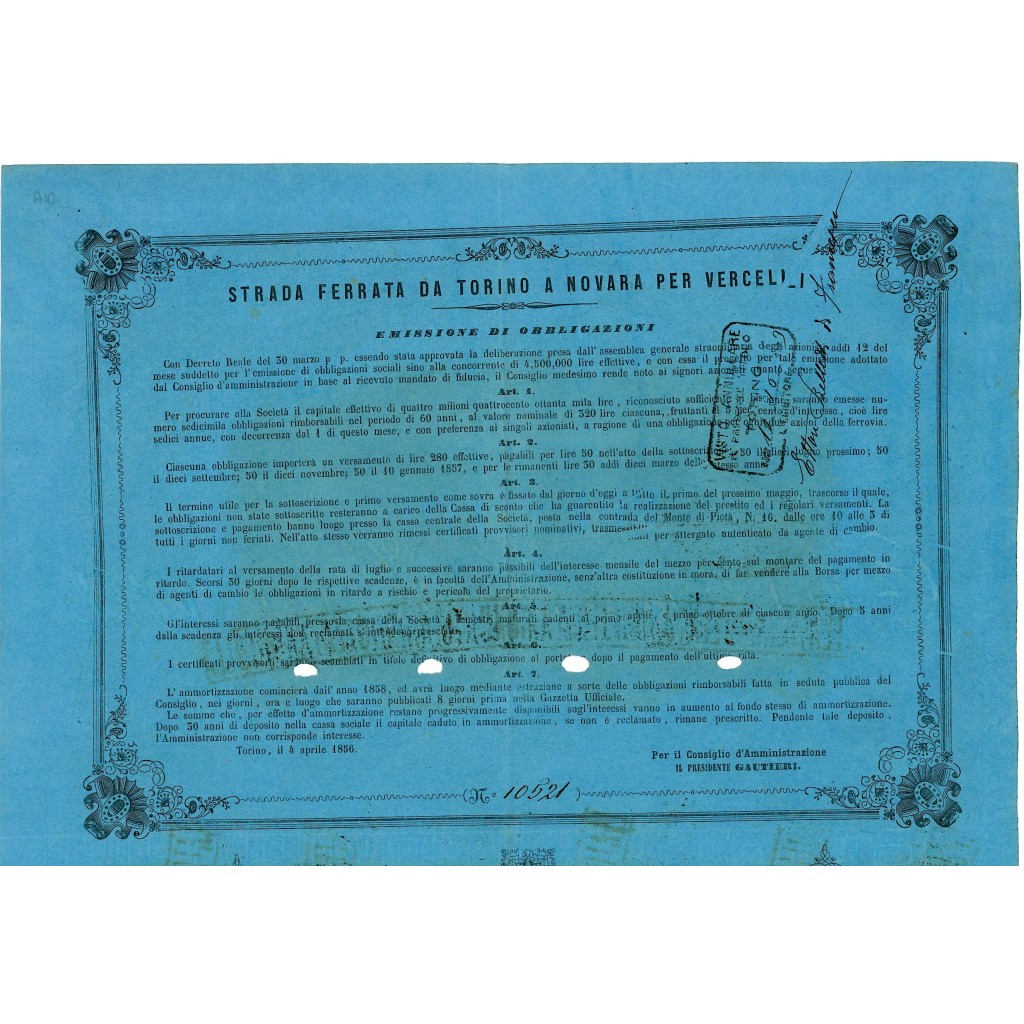
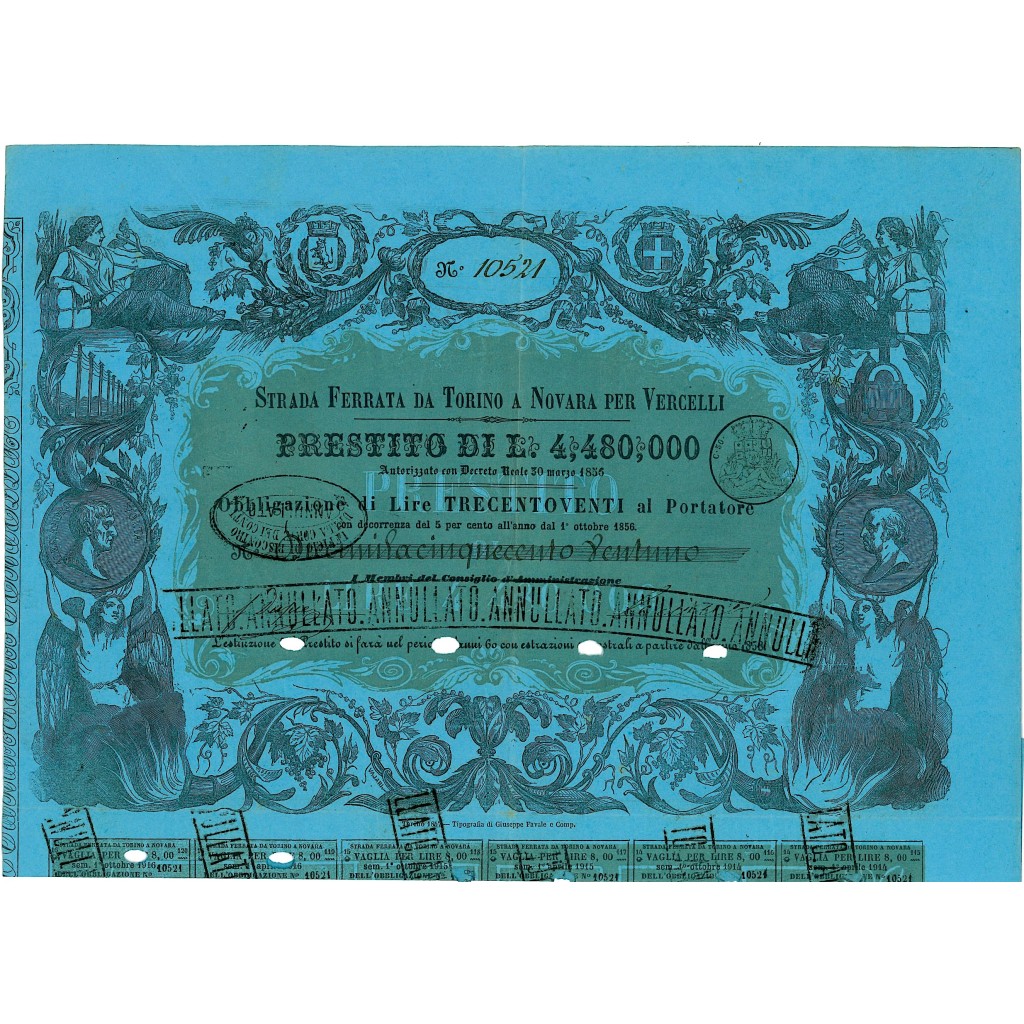
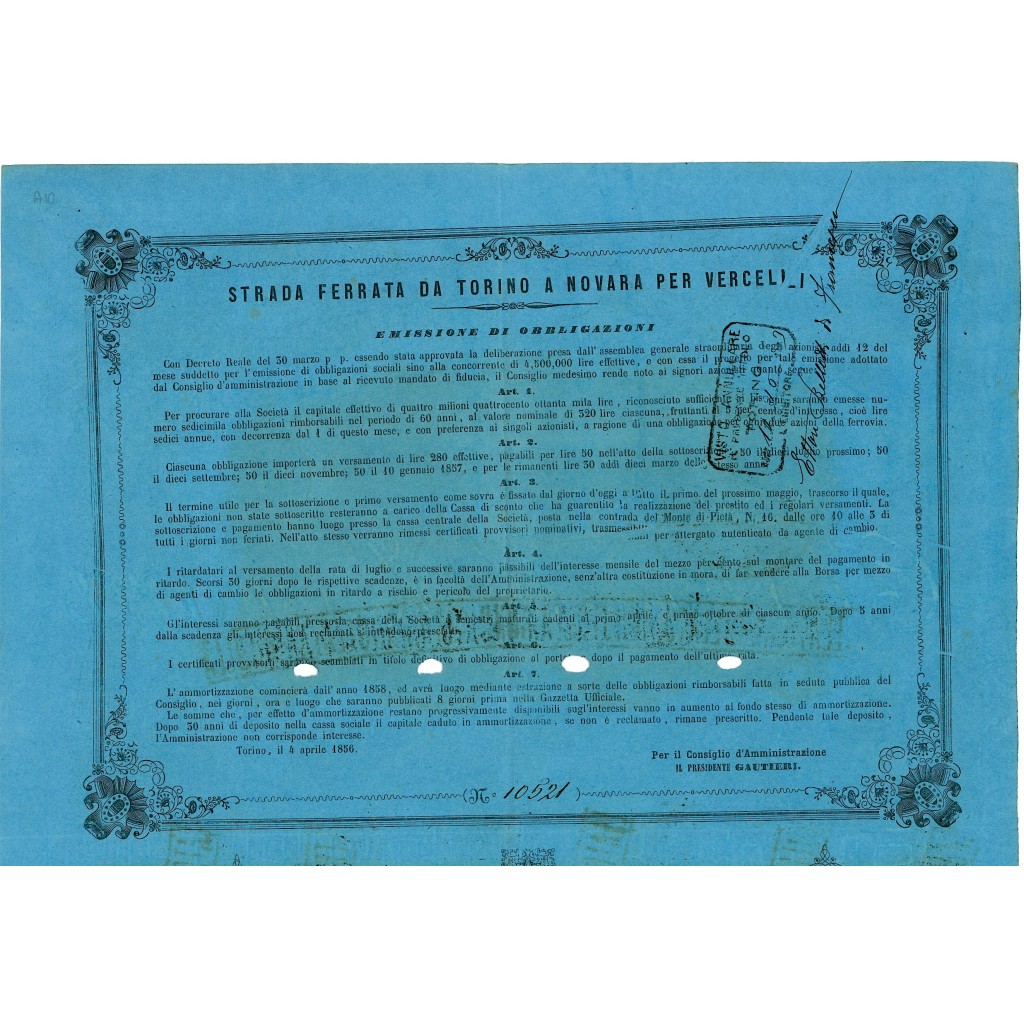
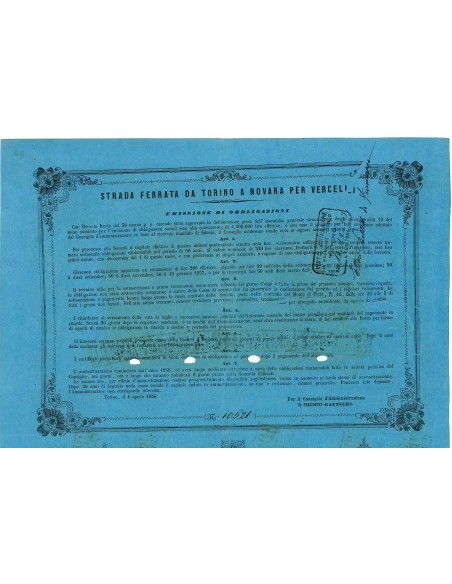
The Strada Ferrata da Torino a Novara per Vercelli represents one of the emblems of infrastructural and industrial evolution in 19th-century Italy. Founded in 1853, this railway company was one of the pioneering projects in the development of Italian railway networks during a period when the Kingdom of Sardinia was seeking to strengthen its internal connections and facilitate trade between regions. The issuance of bonds, like the one presented here, testifies to the strategic and economic importance of this infrastructure.
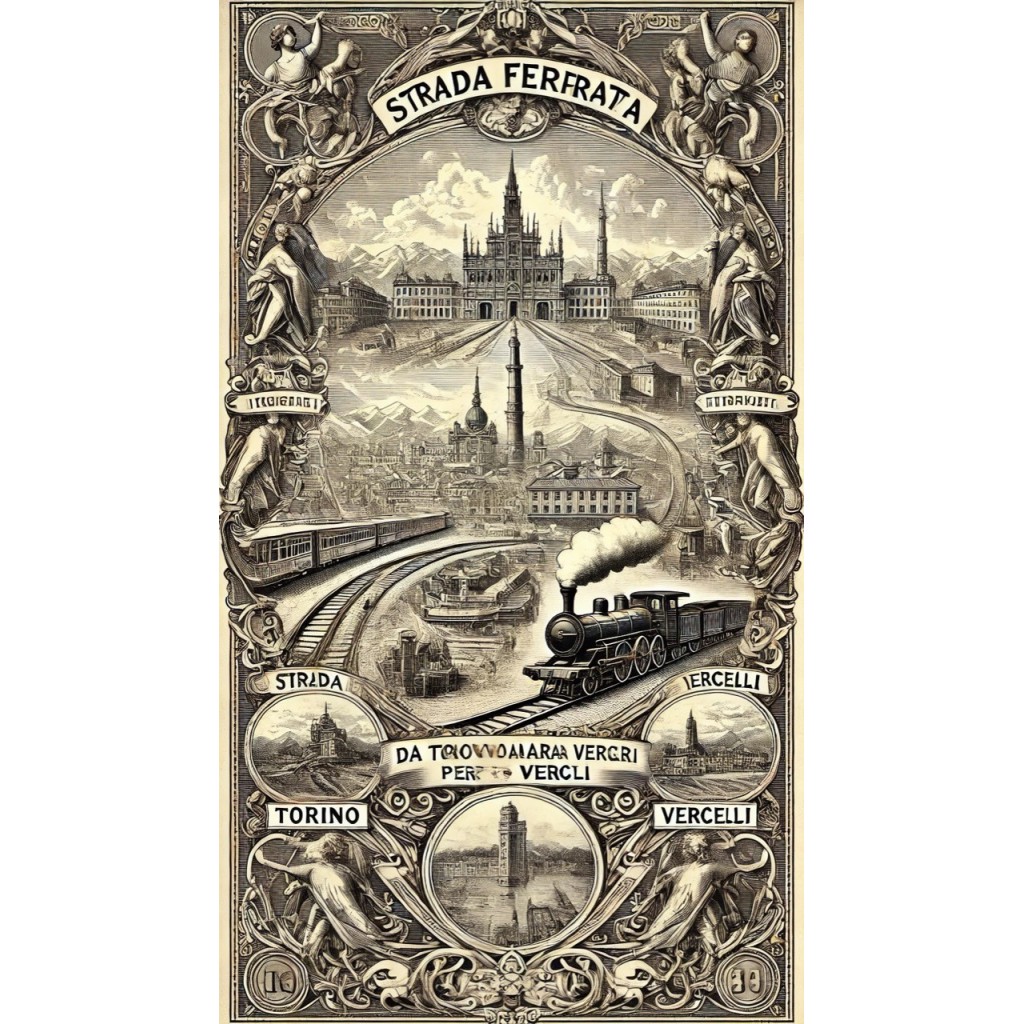
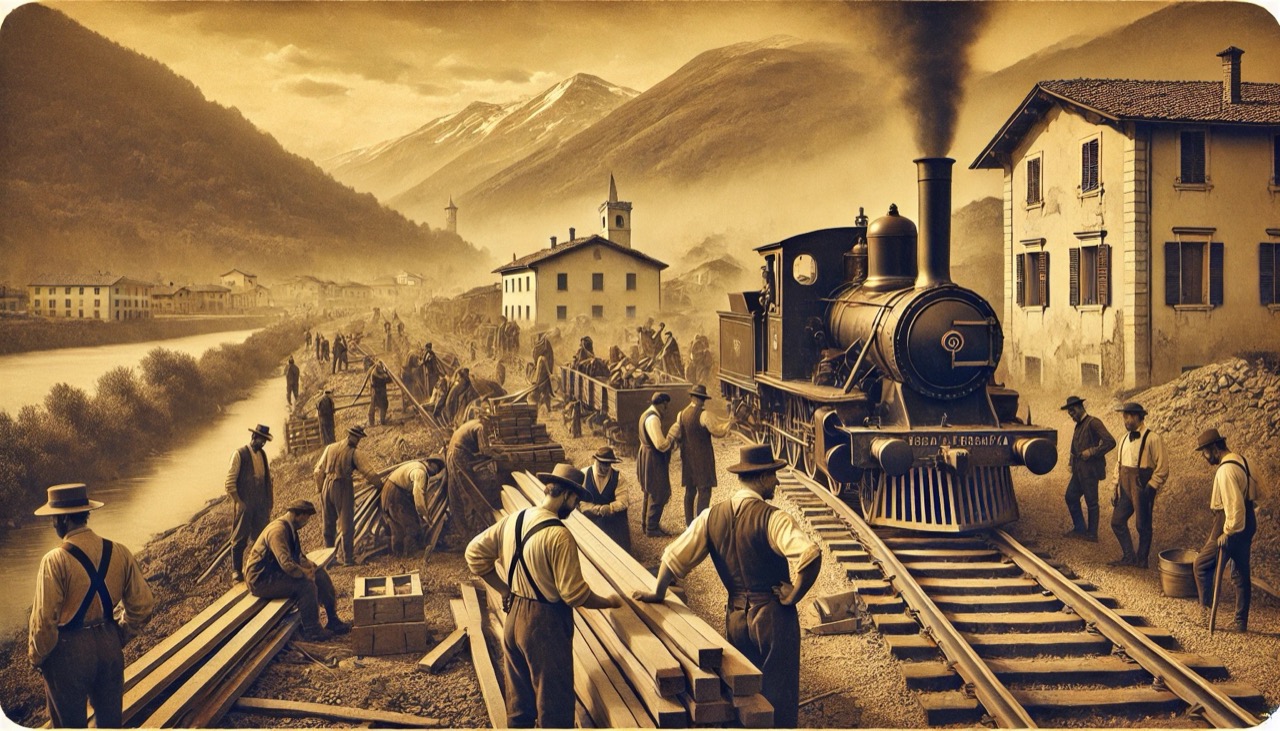
The construction of the railway, which connected Turin to Novara via Vercelli, was part of a broader modernization plan for transportation, aimed at better linking northern Italy with the rest of the country, fostering economic and political integration of the peninsula. This project saw the involvement of prominent engineers and architects of the time and was financially supported by a consortium of banks and investors, both national and international.
Historical Data of the Company
| Entry | Detail |
|---|---|
| Year of Establishment | 1853 |
| Registered Office | Turin, Italy |
| Year of Stock Exchange Listing | 1856 |
| Year of Delisting from Stock Exchange | 1905 |
| Year of Company Dissolution | 1906 |
| Initial Share Capital | 12,000,000 Lire |
| Final Share Capital | 15,000,000 Lire |
| Revenue (last available) | 2,500,000 Lire |
| Name at Delisting | Strada Ferrata da Torino a Novara per Vercelli |
Document Features
| Feature | Detail |
|---|---|
| Date of Issue | 1856 |
| Face Value | 320 Lire |
| Interest Rate | 5% |
| Loan Duration | 30 years |
| Format | Paper certificate |
| Dimensions | Approximately 35x25 cm |
| Color | Blue |
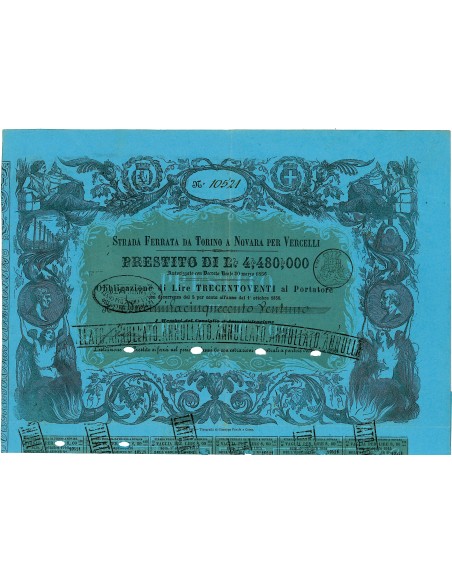
| Artistic Elements | Engravings with allegorical representations |
| Typography | Gothic style print |
| Provenance | Private collection, acquired through auction in 2022 |
Historical Context
The bond was issued during a crucial period in Italian history. In 1856, Italy was still divided into various independent states, and the Kingdom of Sardinia, under the leadership of Cavour, was planning the future unification of the country. The construction of modern infrastructures like the Turin to Novara railway was essential to promote economic development, facilitate troop movements, and strengthen the political influence of the Kingdom of Sardinia in the unification process.
Artistic and Typographic Details
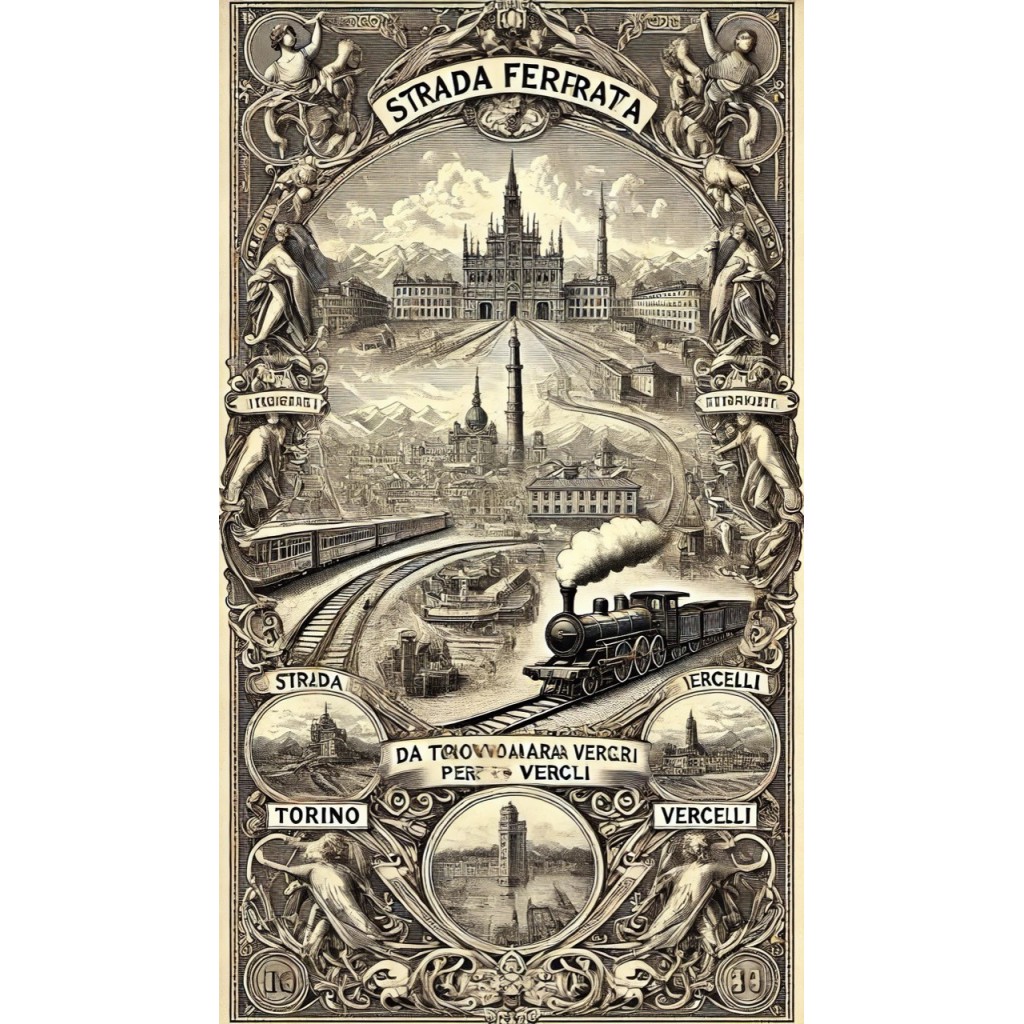
The certificate features refined decoration with allegorical and symbolic motifs representing industry, progress, and the connection between cities. The print is characterized by elegant Gothic typography, typical of official documents of the time. Although the artist is not specified, the style resembles the works of renowned engravers of the period, such as Luigi Calamatta. The certificate was printed by a Turin-based printing house specializing in financial documents.
Provenance
This certificate comes from a private collection and was acquired through a specialized auction in 2022. The provenance is well-documented, ensuring the authenticity of the piece. An official certificate of authenticity with a historical registry can be requested for an additional fee.
Evaluation and Rarity
The bond issued by the Strada Ferrata da Torino a Novara per Vercelli is considered rare, especially in good condition like the one presented. Compared to other Italian railway bonds of the time, this certificate is particularly sought after for its historical and artistic value. Its rarity, combined with the rich history it represents, makes it a piece of great interest to scripophily collectors.
The Importance of Scripophily
Scripophily is not just a way to collect pieces of history, but also an opportunity to better understand the economic and social evolution of an era. Documents like this not only represent financial investments of the past but also tell stories of innovation, progress, and transformation. Collecting certificates like this is a way to preserve and celebrate our cultural heritage.
Advice for Collectors
Collectors should consider displaying these certificates in protective frames with UV glass to preserve the paper and colors. Additionally, it is advisable to store documents in environments with controlled temperature and humidity to prevent damage over time. This certificate, in addition to being a valuable collector's item, can be a unique gift or a decorative element that adds a touch of history and culture to any environment.
All historical documents for sale are intended for collection purposes. The documents have no economic or financial value (no economic or financial value), the images that are not the historical document are representative of the company's object and the historical period of reference, they are not provided but can be freely downloaded from the website and printed;