Shopping Cart
There are no more items in your cart

Société Anonyme des Chemins de Fer de la Basse-Égypte
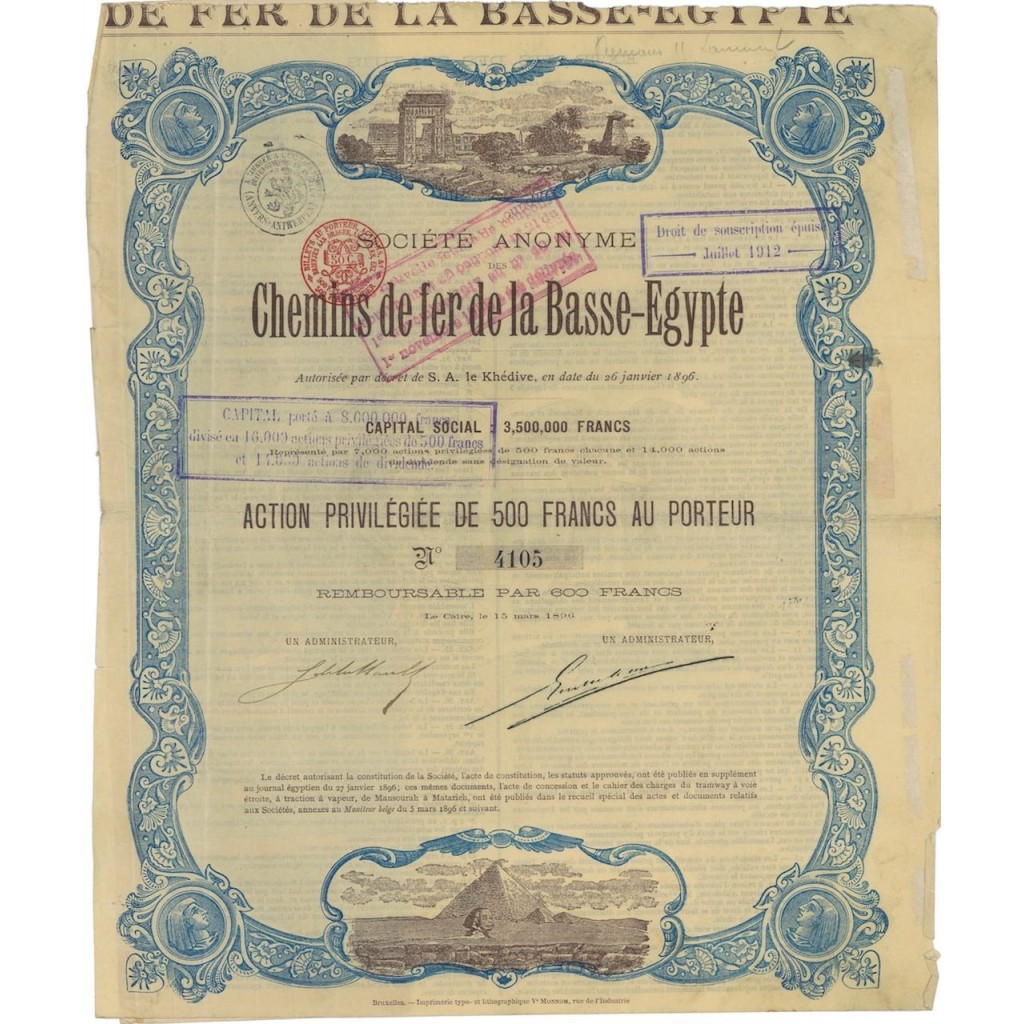
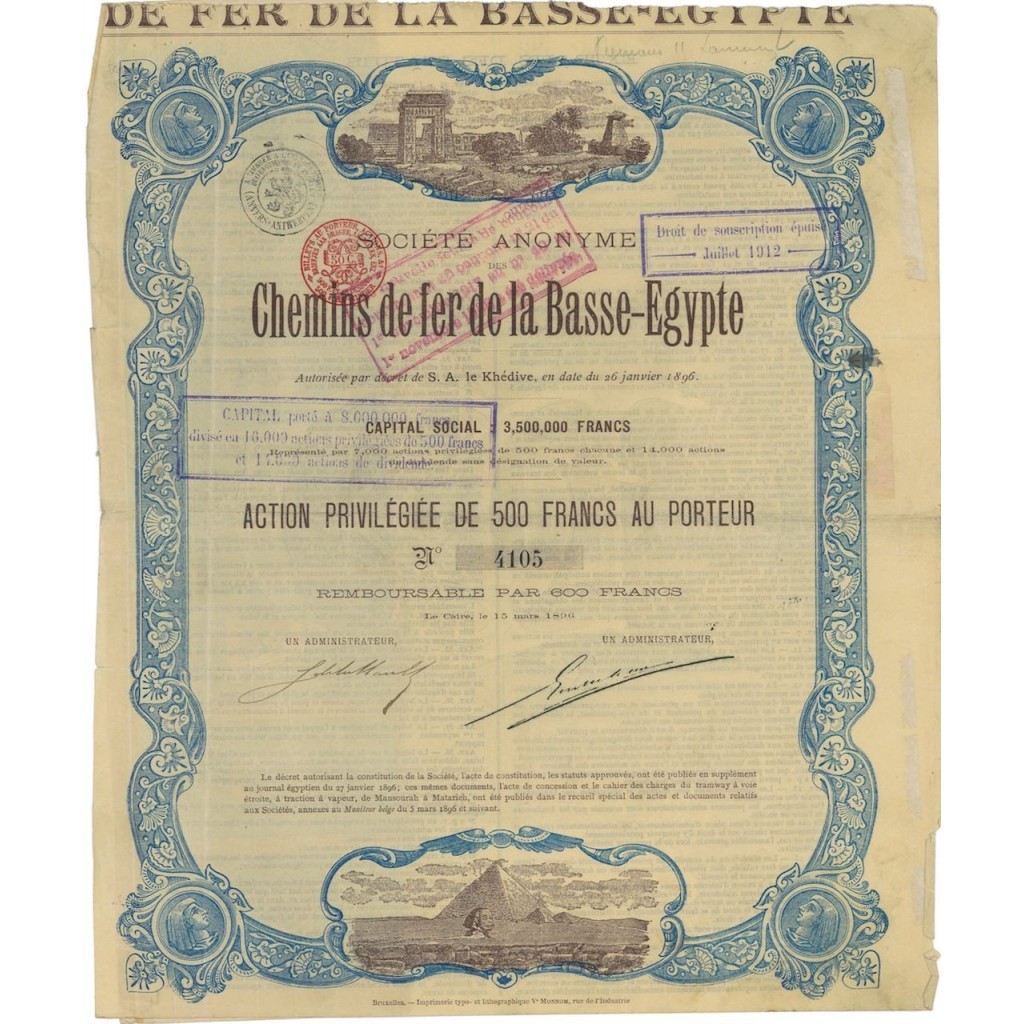
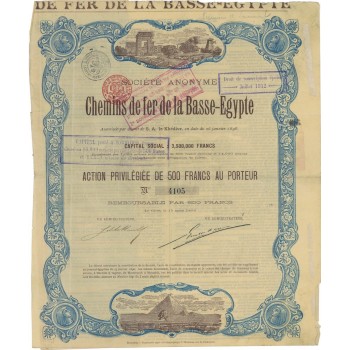
The Société Anonyme des Chemins de Fer de la Basse-Égypte was established in the late 19th century with the aim of developing a railway network in the Lower Egypt region. The company, founded under the authorization of the Khedive of Egypt in 1896, aimed to facilitate transportation between various agricultural and urban areas, thereby improving the efficiency and economic integration of the region. The railway line was intended to connect strategic areas, supporting trade and economic development in the country.
Historical Context
At the end of the 19th century, Egypt was undergoing a period of modernization and infrastructural development under British rule. The Khedive, the local ruler who governed Egypt under the Ottoman Empire's aegis, promoted numerous initiatives to modernize the country, including the construction of railways. Railways were seen as a key tool for connecting the vast expanses of the country and facilitating the transport of goods, particularly cotton, which was Egypt's main export.
The Société Anonyme des Chemins de Fer de la Basse-Égypte was founded in this context to take advantage of the opportunities offered by a growing market and the need for transportation infrastructure. The company's capital was divided into shares, such as the one presented in this document, with a nominal value of 500 francs. The shares were negotiable and were purchased by both local and international investors, attracted by the profit prospects linked to the expansion of Egypt's railway network.
Artistic and Typographic Details
The certificate is a remarkable example of late 19th-century typographic and graphic art. The decorative frame is richly adorned with floral motifs and symbols representing Egyptian culture, such as the depiction of an ancient temple and pyramids at the top of the certificate. The document is printed in an elegant blue color on high-quality paper, with the main text standing out in the center, highlighting the share value and essential information about the company. The original seals and signatures add an additional layer of authenticity and historical value to the certificate.
Historical Company Data Table
| Field | Details |
|---|---|
| Year of Foundation | 1896 |
| Headquarters | Cairo, Egypt |
| Initial Capital | 3,500,000 Francs |
| Year of Stock Listing | Not available |
| Year of Delisting | Not available |
| Year of Company Dissolution | Not available |
| Nominal Value of the Share | 500 Francs |
| Languages Used | French |
| Type of Title | Preferred Share |
| Serial Number | Not specified |
Provenance and Authenticity
This certificate, issued in 1896, is representative of the financial and infrastructural activities of the time in Egypt. Being issued in an international context, it is likely that it changed hands among several investors. Upon request, a certificate of authenticity can be obtained, certifying the history and provenance of the document, thereby increasing its perceived value.
Evaluation and Rarity
Shares of the Société Anonyme des Chemins de Fer de la Basse-Égypte are considered rare in the scripophily market, especially in good condition like the one presented. Demand for these certificates is growing, as they represent a unique combination of colonial history, infrastructural development, and typographic art. Market prices vary depending on the condition of the certificate and current demand, but in general, such titles are considered a good investment for collectors.
Importance of Scripophily Collecting
Collecting historical securities like this represents a unique opportunity to connect with the economic and social history of past eras. These documents not only represent an investment for the collector but are also works of art that can enhance the decor of a home or office. Additionally, scripophily is a hobby that offers the chance to deepen knowledge of history and economics, making each piece a window into a past world.
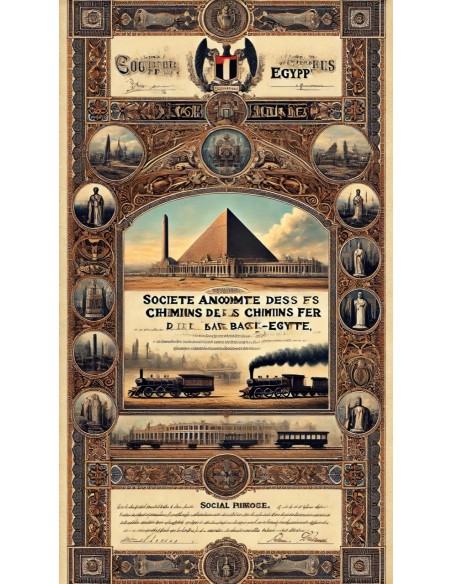
All historical documents for sale are considered collectibles. The documents have no economic or financial value (no economic or financial value), the images that are not the historical document are representative of the company's object and the historical period of reference, they are not provided but can be freely downloaded from the website and printed.