Shopping Cart
There are no more items in your cart
Historical Profile of the Company
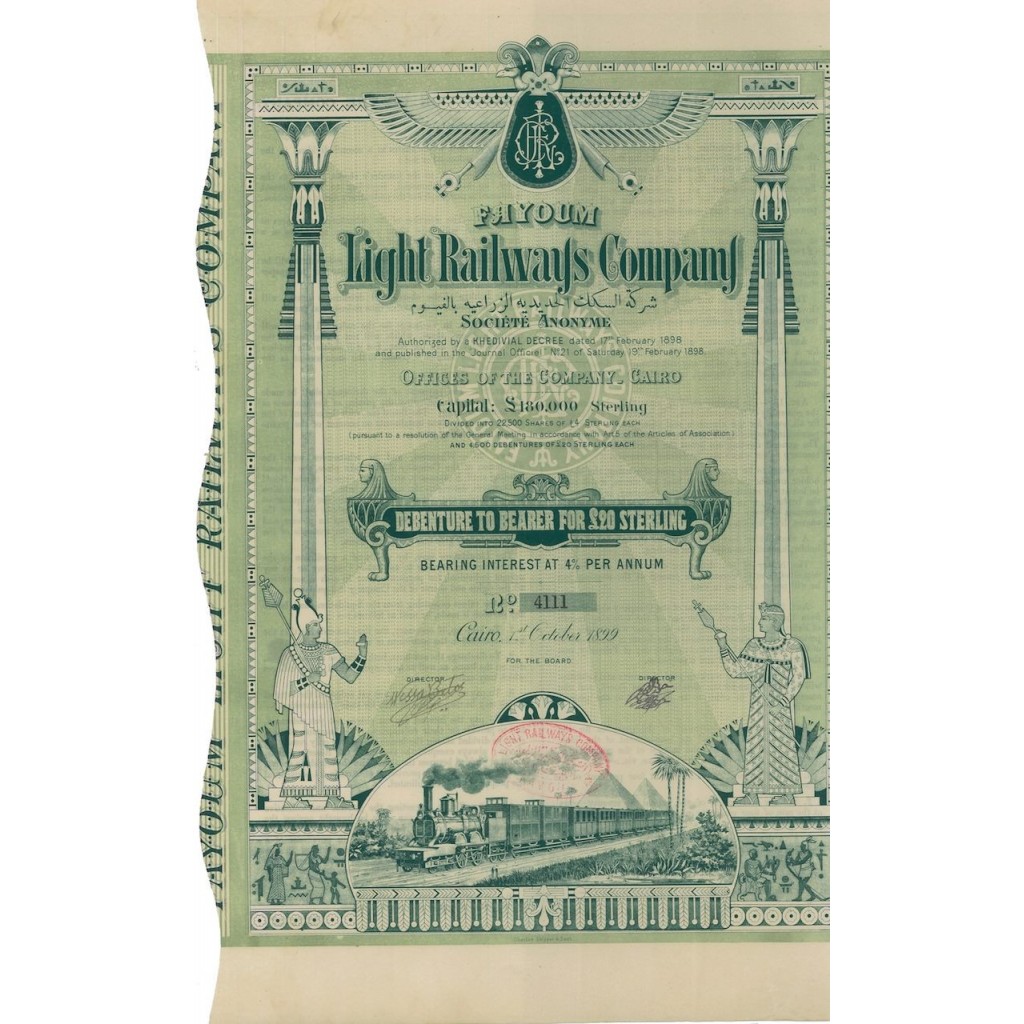
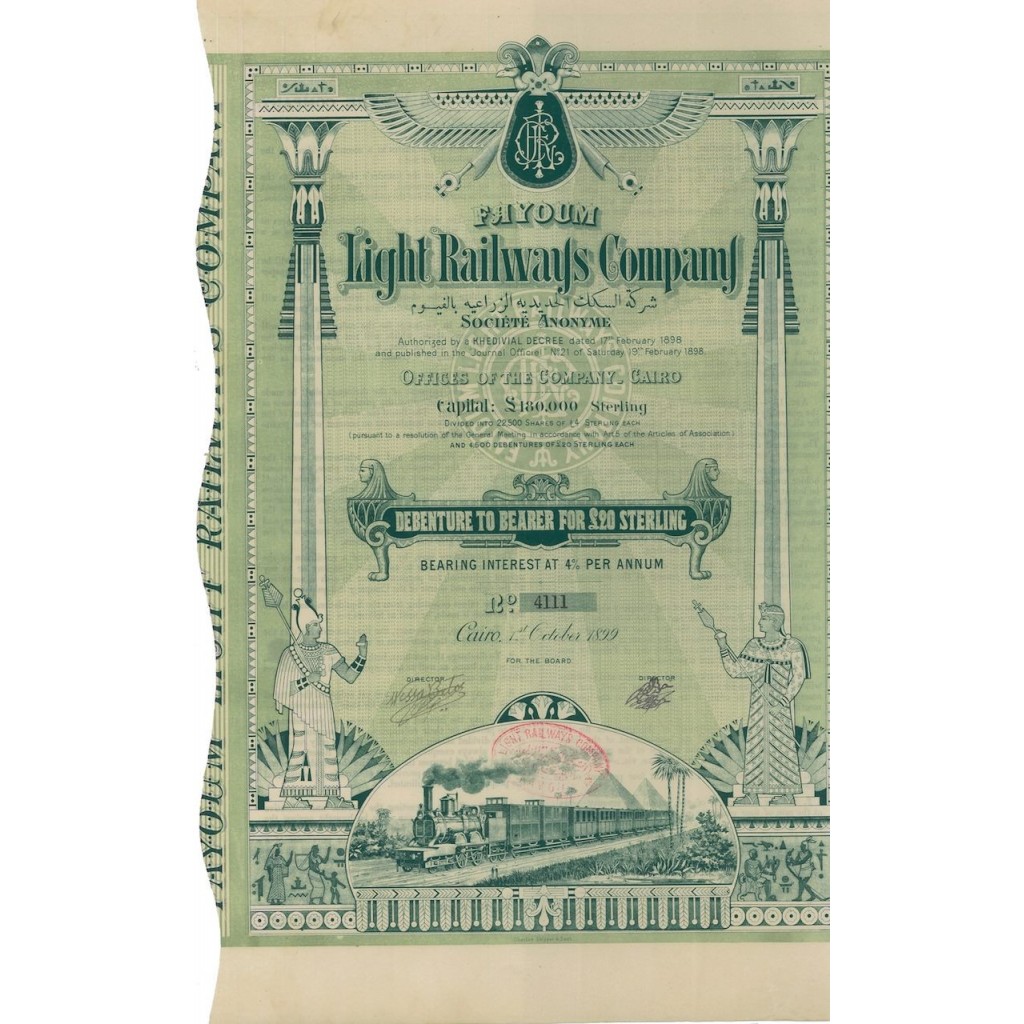
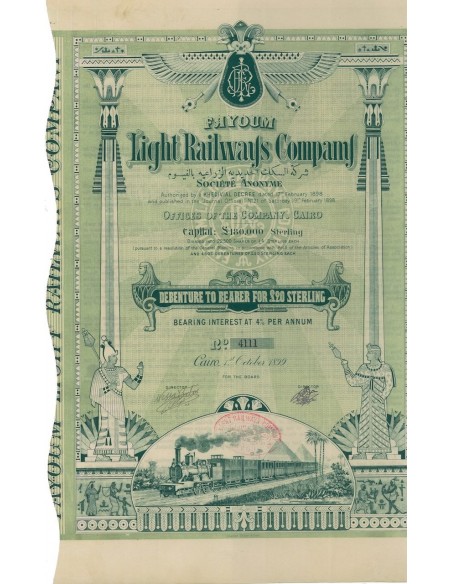
The Fayoum Light Railways Company was founded on February 17, 1898, by Khedivial decree, during a period of great expansion and development of railway infrastructure in Egypt. The company, based in Cairo, was established with the objective of developing and managing light railway lines in the Fayoum region, a strategically important agricultural area for the production of cotton and other crops.
With an initial capital of 180,000 pounds, divided into 22,500 shares of 8 pounds each and 6,500 debentures of 20 pounds each, the company was able to raise significant funds to finance the construction of the railway lines. The issuance of the debentures, like the one shown in the document presented, offered an annual interest rate of 4%, a competitive rate for the time.
The company operated during a period of economic and political transition for Egypt, which, although still formally under the sovereignty of the Ottoman Empire, was effectively under British control. Railways were a crucial tool for controlling the territory and economic development, connecting agricultural areas with urban markets and ports for export.
Historical Data of the Company
| Year | Description | Value |
|---|---|---|
| 1898 | Year of incorporation | February 17, 1898 |
| 1898 | Registered office | Cairo, Egypt |
| 1899 | Year of debenture issuance | October 1, 1899 |
| 1899 | Initial share capital | 180,000 pounds |
| - | Share capital at dissolution | Data not available |
| - | Revenue per year | Data not available |
| - | Year of stock exchange listing | Data not available |
| - | Year of delisting from stock exchange | Data not available |
| - | Year of company dissolution | Data not available |
Document Features
| Feature | Description |
|---|---|
| Document type | Bearer debenture |
| Nominal value | 20 pounds |
| Interest rate | 4% per annum |
| Serial number | 4111 |
| Issue date | October 1, 1899 |
| Place of issuance | Cairo |
| Decorations | Egyptian figures, pharaonic symbols, locomotive |
| Printer | Bradbury, Wilkinson & Co. |
Historical Context
The issuance of this debenture took place during a period when Egypt was a British protectorate, with significant foreign investments in infrastructure. Agriculture, particularly cotton production, was at the heart of Egypt's economy, and light railways such as those of the Fayoum Light Railways Company were crucial for transporting goods and people. The introduction of these railway lines significantly contributed to the economic development of the Fayoum region.
Artistic and Typographic Details
The debenture features elegant graphics inspired by Egyptian iconography, with figures of pharaohs and ancient symbols. The typography used is rich in ornaments and details, reflecting the artistic taste of the period. The printer, Bradbury, Wilkinson & Co., was known for producing high-quality financial documents.
Provenance
This title has a fascinating history that may include various owners over the decades. The provenance of a certificate can add value to the title, especially if it was owned by historical figures or was part of an important collection.
Valuation and Rarity
Debentures issued by the Fayoum Light Railways Company are considered rare, especially in good condition. The rarity and condition of the document can significantly affect its collectible value. Compared to other similar titles of the period, this debenture represents a piece of railway and colonial history.
Importance of Scripophily Collecting
Scripophily, or the collecting of historical financial certificates, offers not only aesthetic value but also historical significance, providing a glimpse into a country's economic and political past. Collecting titles like this debenture from the Fayoum Light Railways Company means owning a piece of history, a document that represented an investment and contributed to the development of crucial infrastructure.
For collectors, displaying a historical title in an elegant frame or preserving it in a specialized album can enhance its appeal and preserve its quality. Additionally, these documents are ideal not only for personal collection but also as unique gifts, historical decorations, or works of art that combine history and beauty.
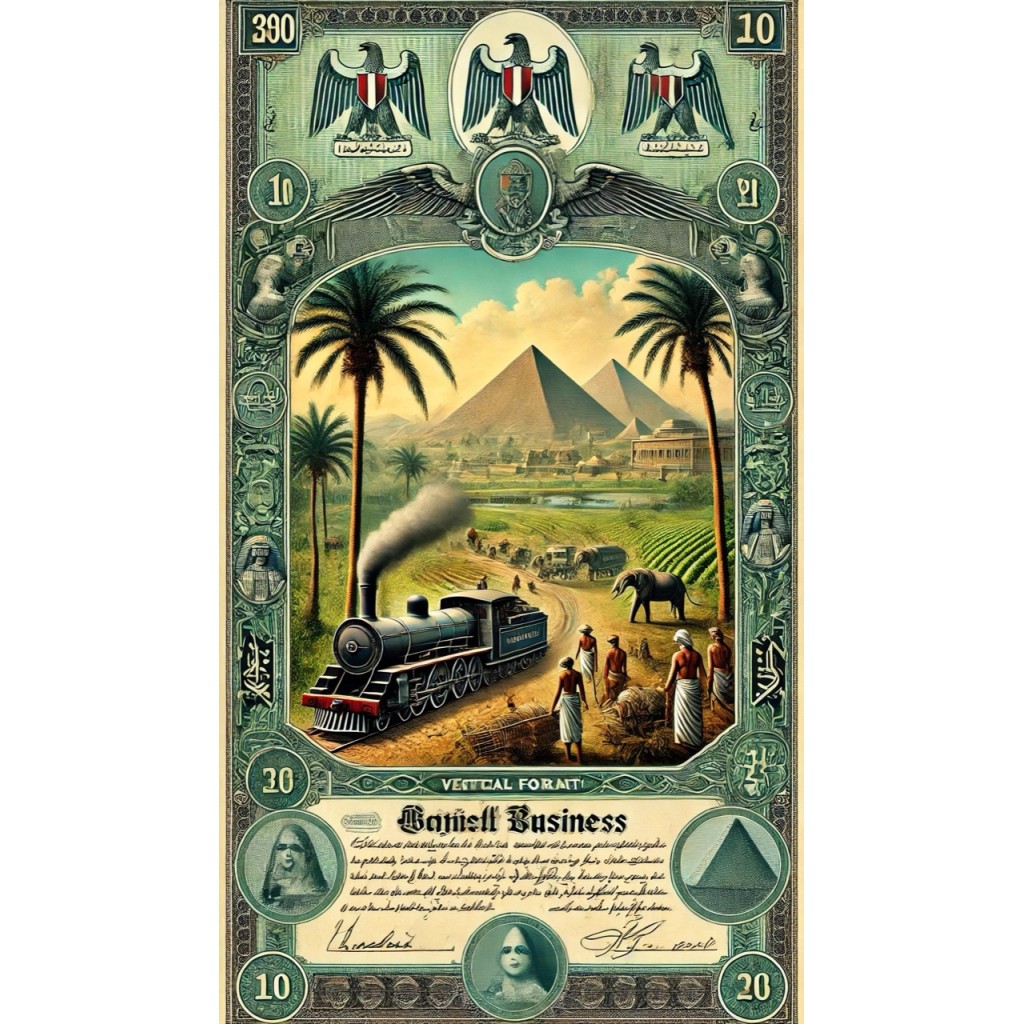
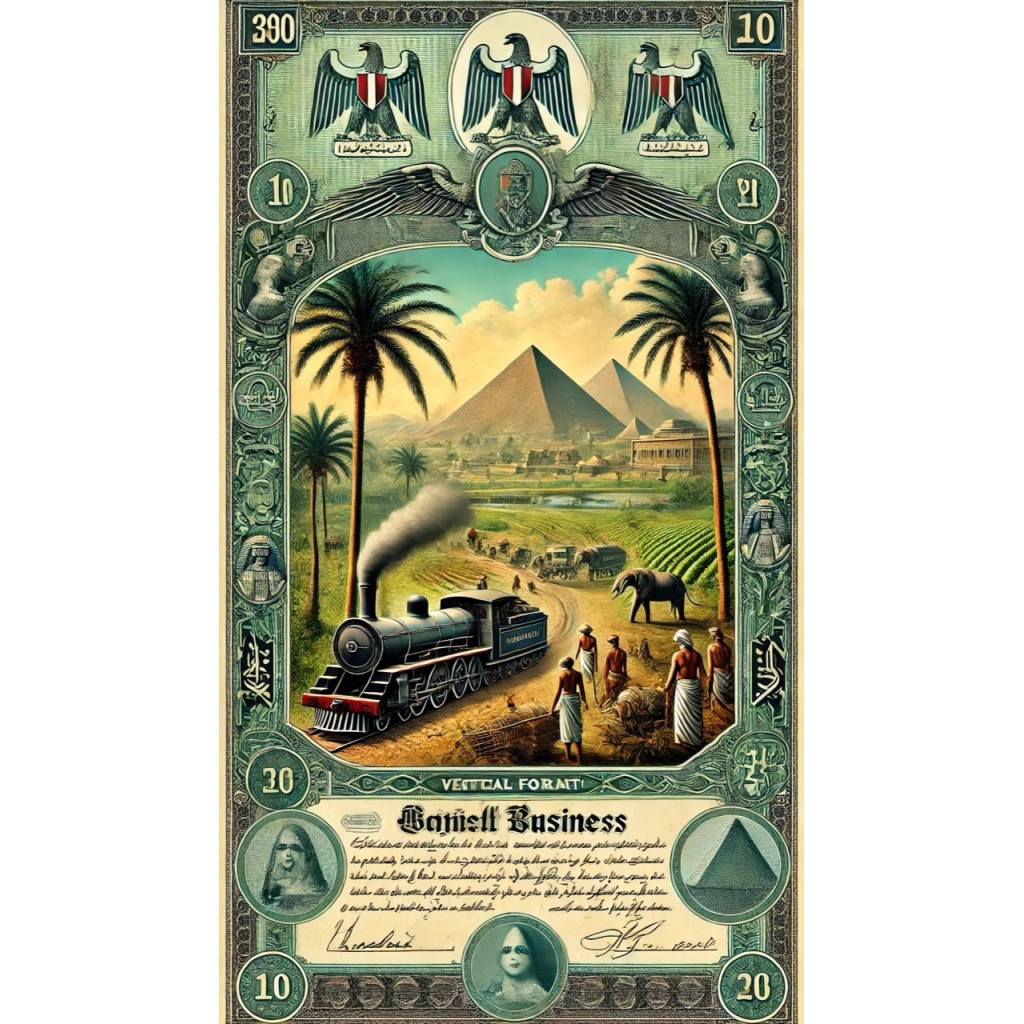
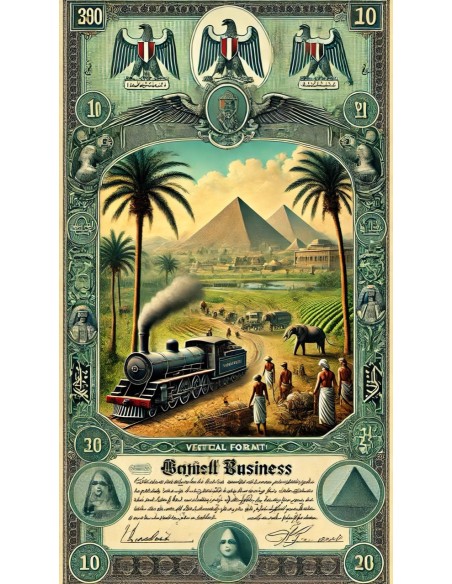
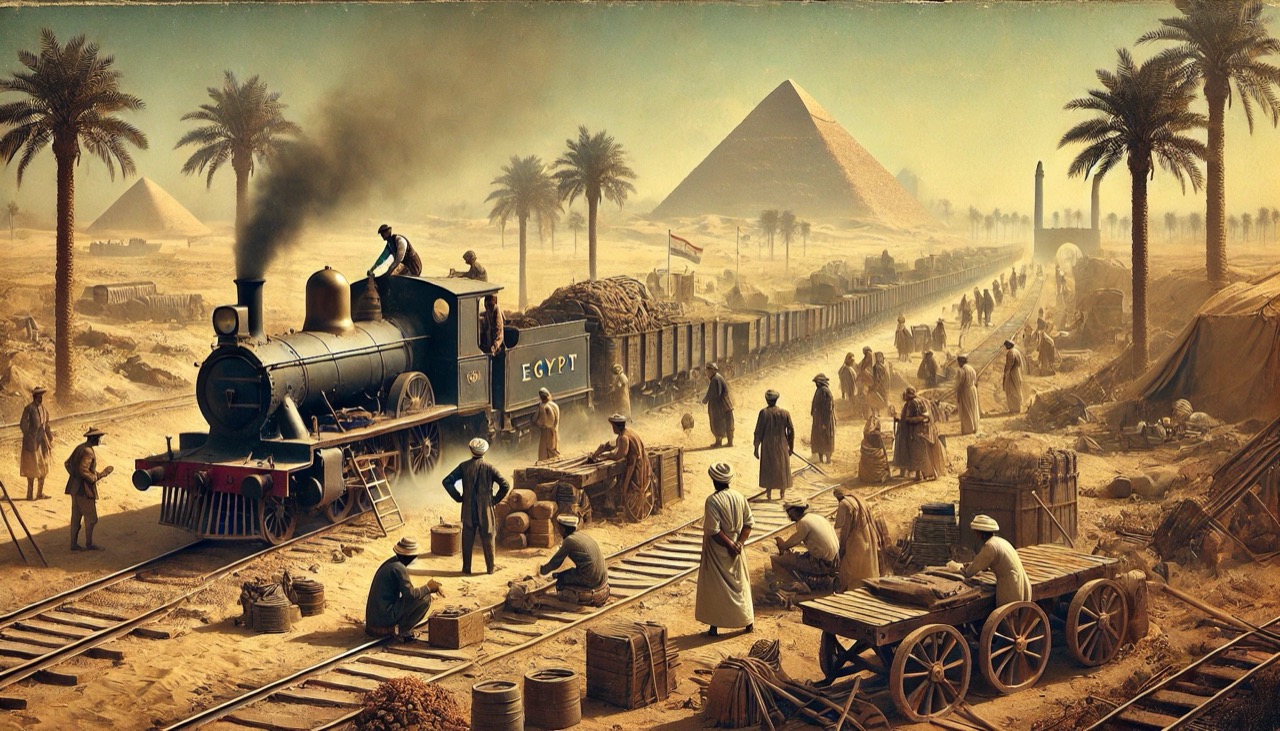
All historical documents for sale are intended for collection. The documents have no economic or financial value (no economic or financial value), and images that are not the historical document are representative of the company's object and the historical period referenced. These can be freely downloaded from the website and printed.