Shopping Cart
There are no more items in your cart
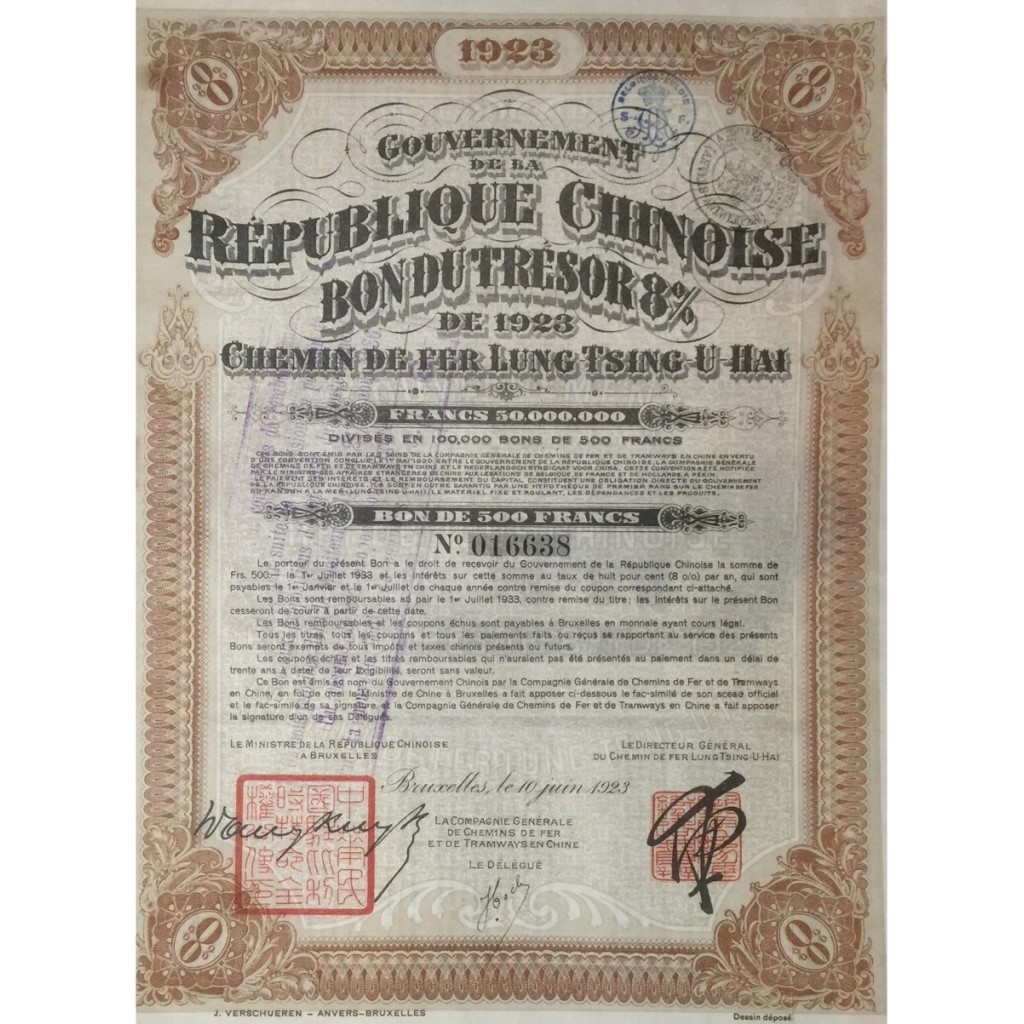
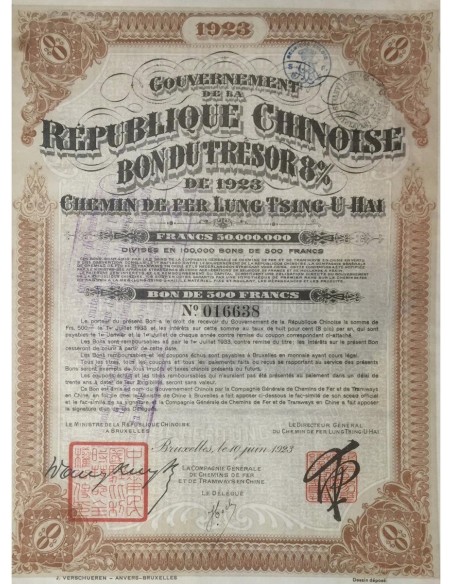
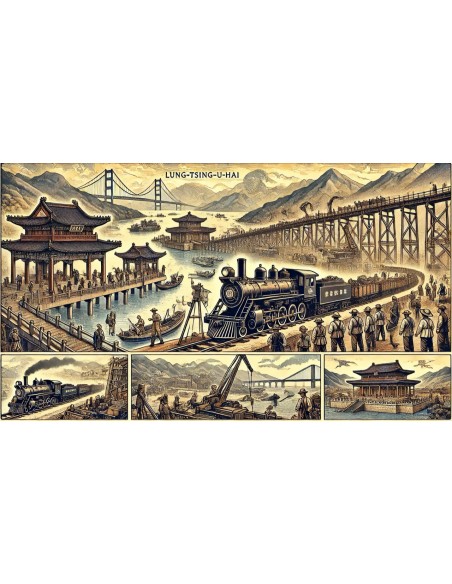
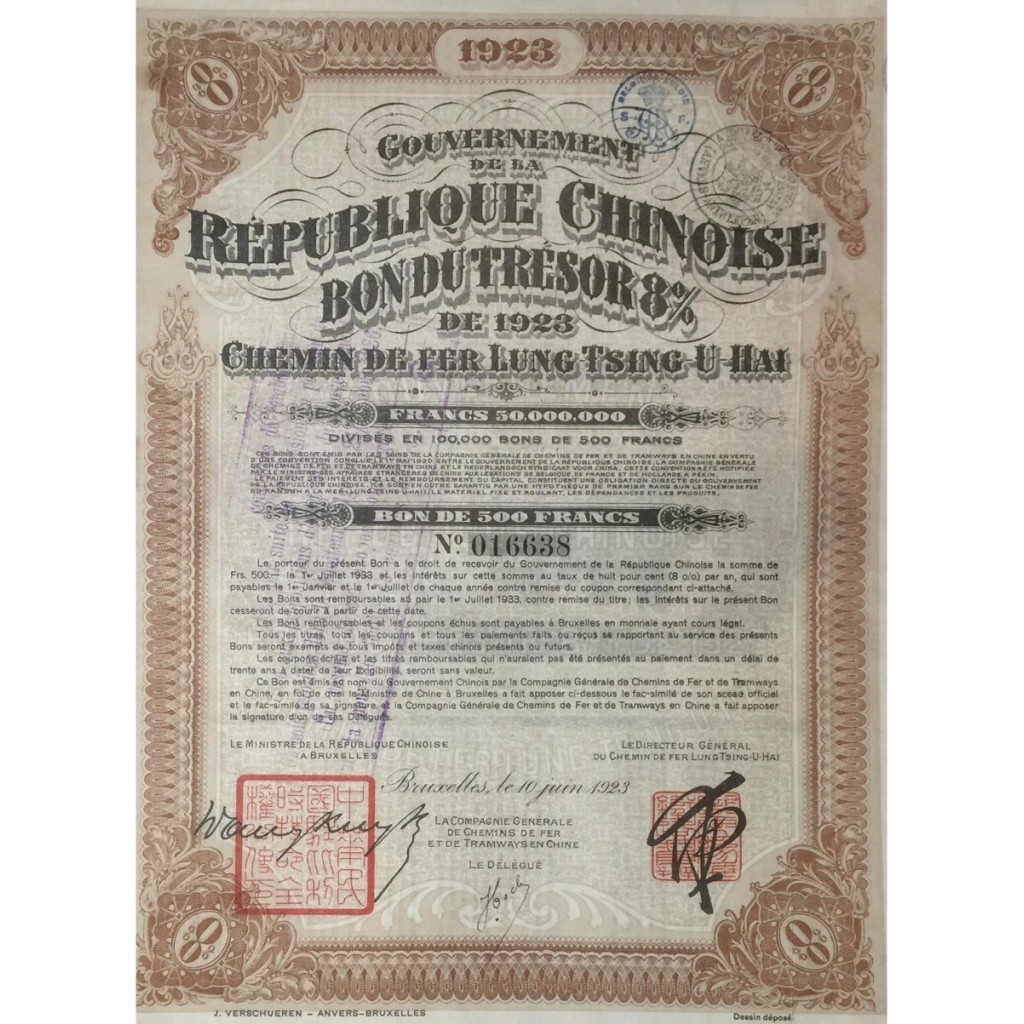
The document is a bond issued by the Government of the Chinese Republic in 1923 for the Lung-Tsing-U-Hai Railway project. This bond has a nominal value of 500 francs.
Specific Details:
- Issuer: Gouvernement de la République Chinoise
- Year of Issue: 1923
- Nominal Value: 500 francs
- Interest Rate: 8% per annum
- Purpose: Financing the construction of the Lung-Tsing-U-Hai Railway
- Total Capital Issued: 50,000,000 francs, divided into 100,000 bonds of 500 francs each
- Signatories: Minister of the Chinese Republic in Brussels and the General Director of the Lung-Tsing-U-Hai Railway
- Seals: Various seals, including red stamps and a signature
- Date of Issue: Brussels, June 10, 1923
Historical Article
A Vision of Modernization
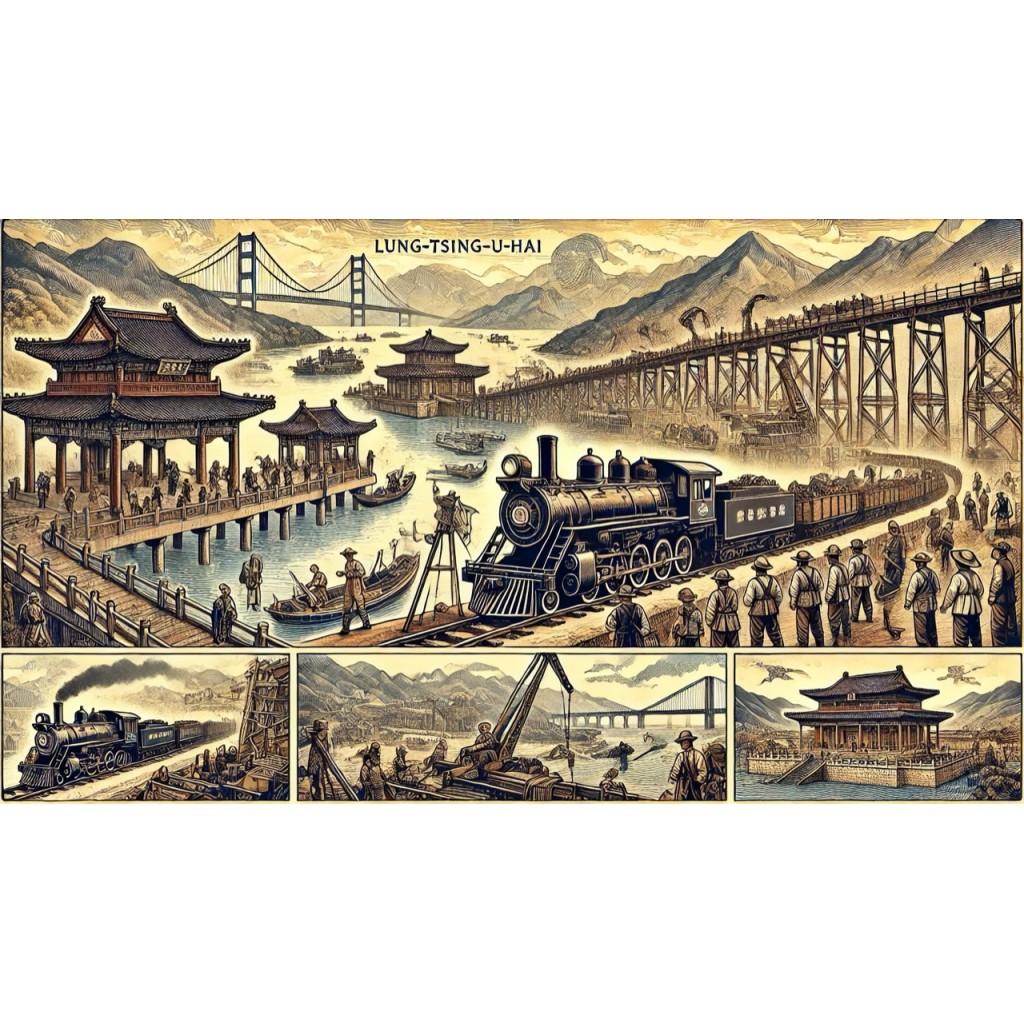
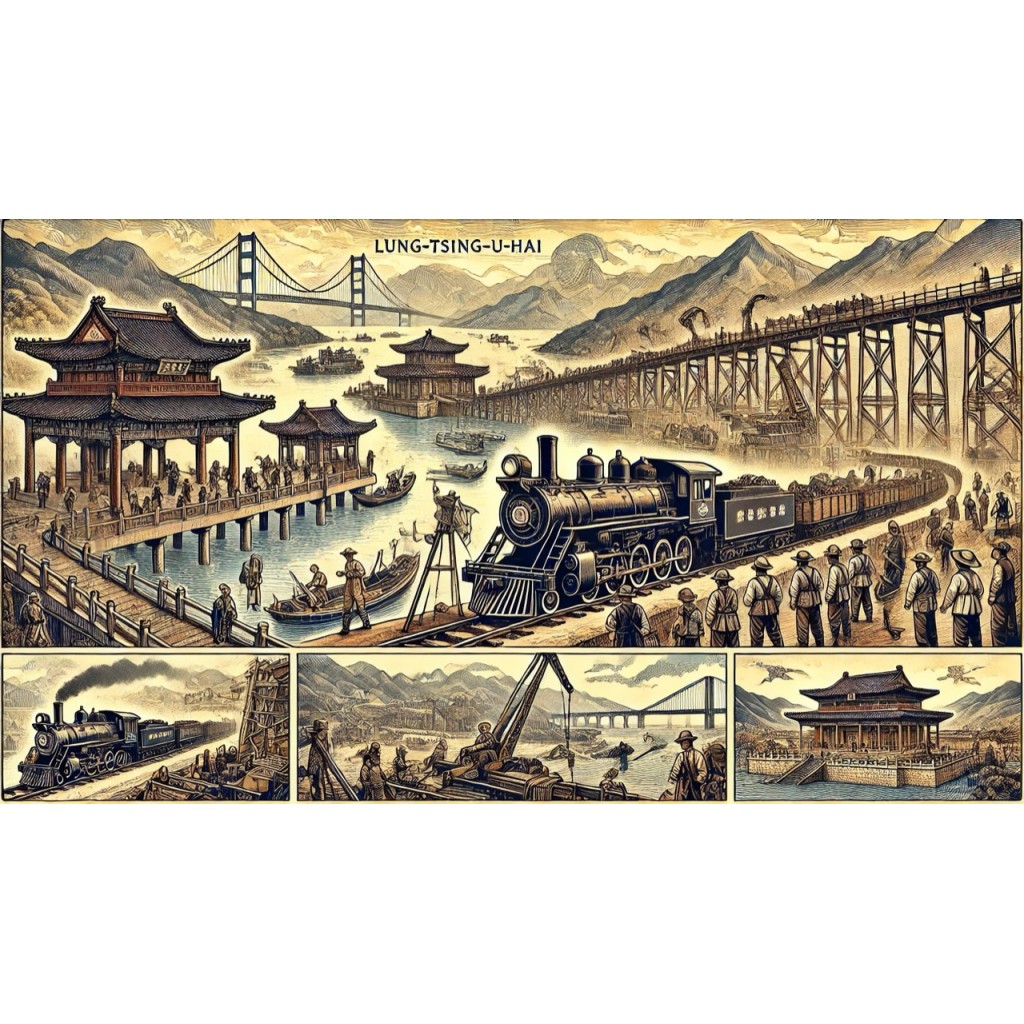
The Lung-Tsing-U-Hai Railway was designed to connect the cities of Tianjin, Shandong, Anhui, and Jiangsu, facilitating the transport of goods and people across some of China’s most populous and economically significant regions. With an annual interest rate of 8%, these bonds attracted both domestic and international investors, providing the necessary funds to advance the project.
Challenges and Progress
The railway project faced several challenges. Technical difficulties, climatic conditions, and the unstable political situation of the time posed significant obstacles. However, the government’s determination and the financial support from subscribers allowed the project to proceed, contributing significantly to China’s economic development.
A Document of Historical Value
Today, the bonds issued for the Lung-Tsing-U-Hai project are considered valuable collectibles for history enthusiasts. The document, richly decorated and detailed, offers a fascinating glimpse into China’s financial and infrastructural past. With text in French and numerous official seals, it represents a combination of art and economic history.
The Legacy of the Railway
Although many of the original infrastructures have since been modernized or replaced, the Lung-Tsing-U-Hai Railway project left a lasting legacy. The railway lines constructed with the proceeds from these bonds helped shape China’s modern transport system, demonstrating the importance of strategic investments in infrastructural progress.
The Lung-Tsing-U-Hai Railway Loan of 1920 was created by virtue of an agreement dated the 1st May 1920 between the Government of the Chinese Republic, the Compagnie Generale de Chemins de Fer et de Tramways en Chine and the Netherlands Syndicate for China. The agreement was notified by the Ministry of Foreign Affairs to the Belgian, French and Dutch Legations in Peking.
1923 - capital amounts BF50,000,000 (Belgian).
The participating financial institutions were the Compagnie Generale Chemins de Fer et de Tramways en Chine on behalf of the Netherlands Syndicate for China and the Nederlandsche Maatschappij
It is interesting to note that Wilhelm Kuhlmann recorded each of the above bond issues as five separate loans. However, a study of the actual bonds shows that all of the above bonds and capital sums were floated pursuant to the same loan agreement dated 1st May 1920 and were all for the same purposes. Bearer bonds were issued as shown on the table above with different designs to denote Belgian or Dutch bonds.
The purpose of the loan was for the completion of the western section of the Lung-Tsing-U-Hai Railway from Kwanyingtang to the Yellow River and also the eastern section from Hsuchow to the sea; for the development and construction of a harbour in close proximity to Haichow and for meeting the financial commitments to service previous loans issued in 1913 for the Lung-Tsing-U-Hai Railway.
The loan was secured by a first charge on the Lung-Tsing-U-Hai Railway. Coupons were payable on 1st January and 1st July each year. The loan went into default in 1925, but further to an agreement made in August 1936, the loan was reactivated. The terms of the loan were altered and were re-negotiated. The new terms published in the Moniteur Belge on 24th and 25th August 1936 and in
Tutti i documenti storici in vendita si intendono da collezione. I documenti non hanno nessun valore economico o finanziario (no economic or financial value).