Shopping Cart
There are no more items in your cart
The first trams in Buenos Aires began operating in 1863 in what quickly became a vast network of tramways with the city being known as the "City of Trams" for having the highest tramway-to-population ratio in the world.[1][2][3] In the 1920s, Buenos Aires had 875 km (544 mi) of tramways and 99 tram lines using 3000 carriages running throughout the city.[2][3] By 1963, the vast majority of the network began to be dismantled, though some minor tram services continue in the city today.
History
Horse-drawn and steam-powered trams
The first horse-drawn trams began circulating the city in 1863 as a feeder service to the railways, taking passengers from Plaza de Mayo to the Retiro Terminal,[4] where it connected to the Buenos Aires Northern Railway. A second similar horse-drawn feeder service was established between Monserrat and the Constitución railway terminal in 1866 to service the Buenos Aires Great Southern Railway.[2]
The first urban tramways were inaugurated in 1870 by Argentine pioneer Federico Lacroze and his brother Julio.[5] These two lines were the Lacroze brothers' Central Tramway (Tramway Central) and the Méndez brothers' Tramway 11 de Septiembre, which both ran parallel from Plaza de Mayo westwards to Plaza Miserere, currently the home of Once de Septiembre railway station.[6] The tramways were first met with scepticism from the public, however by 1880 numerous other tram operators began to appear - such as the Anglo-Argentine Tramways Company - and the city would eventually emerge as having the largest tramway-to-population ratio in the world, gaining a global reputation for many decades as the "City of Trams".[1][2] During this period, up until electrification, there was also an abundance of steam-powered trams which also gradually replaced the horse-drawn ones.[7]
Electrification of the network
In 1880 Fyodor Pirotsky created the first electric tram in Saint Petersberg[8] and Argentina opened its first electric tram in 1892 in the city of La Plata, south of Buenos Aires.[6] Buenos Aires would not receive its first electric trams until 1897 when the North American engineer Charles Bright and the Argentine engineer Juan Mallol opened their "Buenos Ayres Electric Tramway" and "Tramways La Capital" lines in the city.[9] These vehicles operated at 30kph, which was considered to be extremely fast for the time and led a journalist writing about an initial voyage to refer to the electric tram as "a furious vehicle that eats up the ground with its frightening speed".[10] By 1914, the last of the horse-drawn trams were retired and the - now much larger - network was completely electrified.[9]
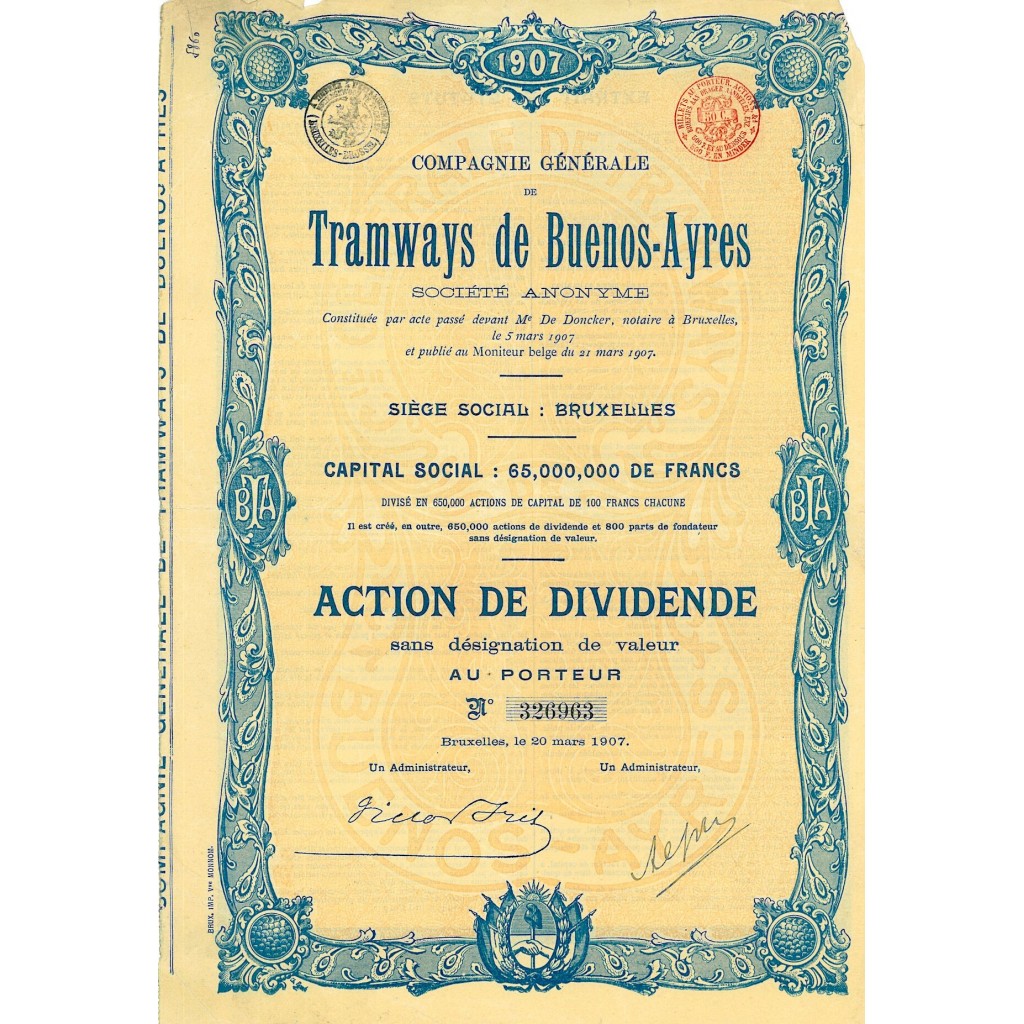
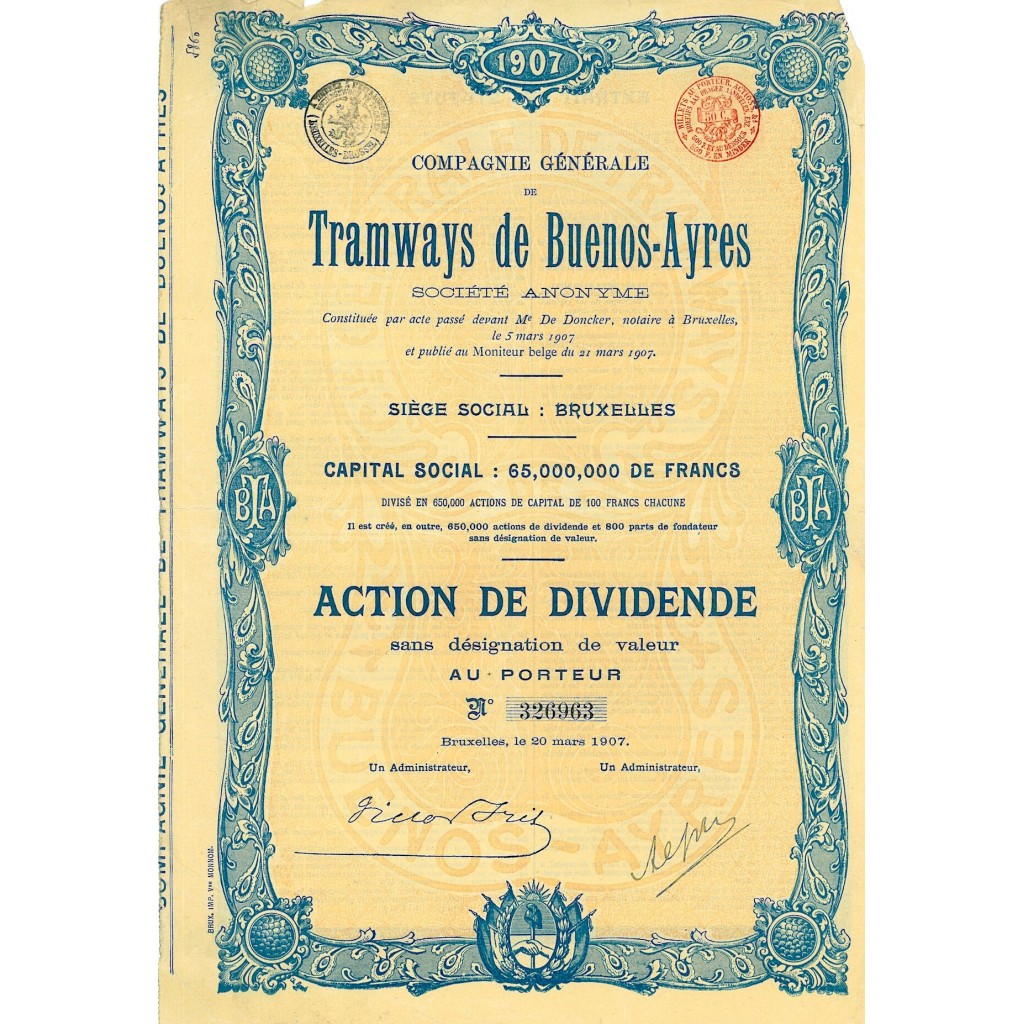
The Belgian Compagnie Générale de Tramways de Buenos-Ayres took over the Anglo-Argentine Tramways Company in 1908 and standardised much of the network, though many Argentine companies such as the Lacroze Companyremained.[6] In the early 1900s the network expanded rapidly as a result of electrification and by the mid-1920s the system has reached its maximum extension of 875 km with 3,000 vehicles carrying 650 million passengers a year on 99 lines serviced by 12,000 employees.[6] At the same time, some of the tramways began moving underground when the Anglo-Argentine Tramways Company opened the Buenos Aires Underground's Line A in 1913, becoming the first underground rail in Latin America, the southern hemisphere and the Spanish speaking world.