Shopping Cart
There are no more items in your cart
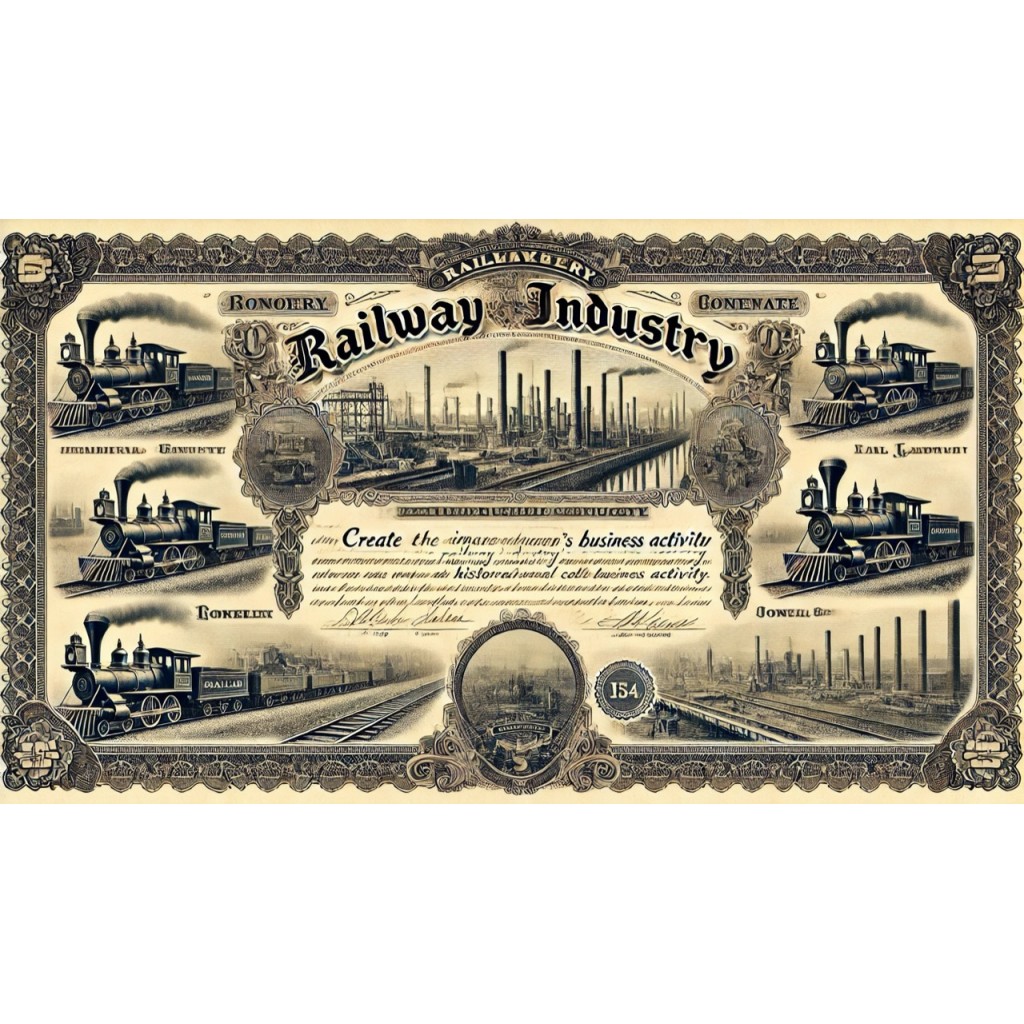
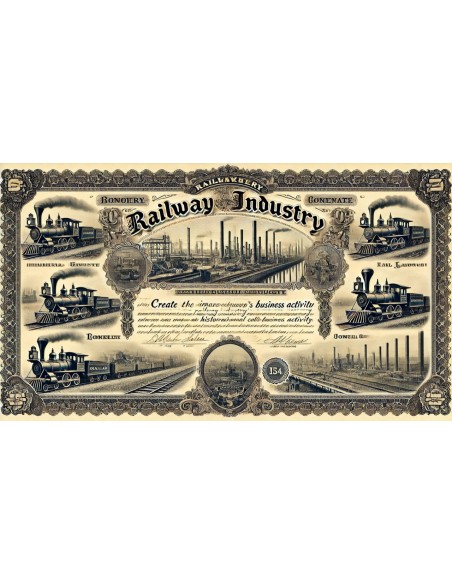
The Imperial Russian Government issued several series of consolidated railway bonds in the late 19th century to finance the expansion and improvement of Russia's railway network. These bonds represent a significant piece of the financial and industrial history of the Russian Empire, reflecting the government's ambition to modernize the country's infrastructure and support economic growth.
The bond presented, issued in 1889, is part of the first series of 4% railway bonds. With a nominal value of 125 gold rubles, these bonds offered a guaranteed 4% yield, making them a safe and attractive investment for investors of the time. The elaborate artwork of the certificate, with artistic details and the Russian imperial emblem, underscores the importance and official nature of the document.
Historical Data of the Imperial Russian Government
| Year | Revenue (in Rubles) | Share Capital | Headquarters | Stock Market Admission | Delisting from Stock Market | Year of Cessation |
|---|---|---|---|---|---|---|
| 1889 | Not available | Not available | St. Petersburg | Not available | Not available | 1917 |
Document Characteristics
| Issue Date | Serial Number | Nominal Value | Interest Rate | Artwork | Signature |
|---|---|---|---|---|---|
| 1889 | N/A | 125 Gold Rubles | 4% | Artistic details | Not identified |
Scripophily Collecting
Scripophily collecting is a fascinating activity that allows enthusiasts to explore and preserve financial and industrial history through authentic documents. Each share or bond certificate tells a story of economic development, innovation, and social change. The railway bonds of the Imperial Russian Government not only represent important historical investments but are also works of art that reflect the aesthetics and culture of the era in which they were issued.
Owning a historical document like this 1889 bond means preserving a piece of the industrial and cultural history of the Russian Empire. The detailed artwork and imperial emblem add aesthetic value in addition to historical significance, making these certificates objects of great interest to collectors.
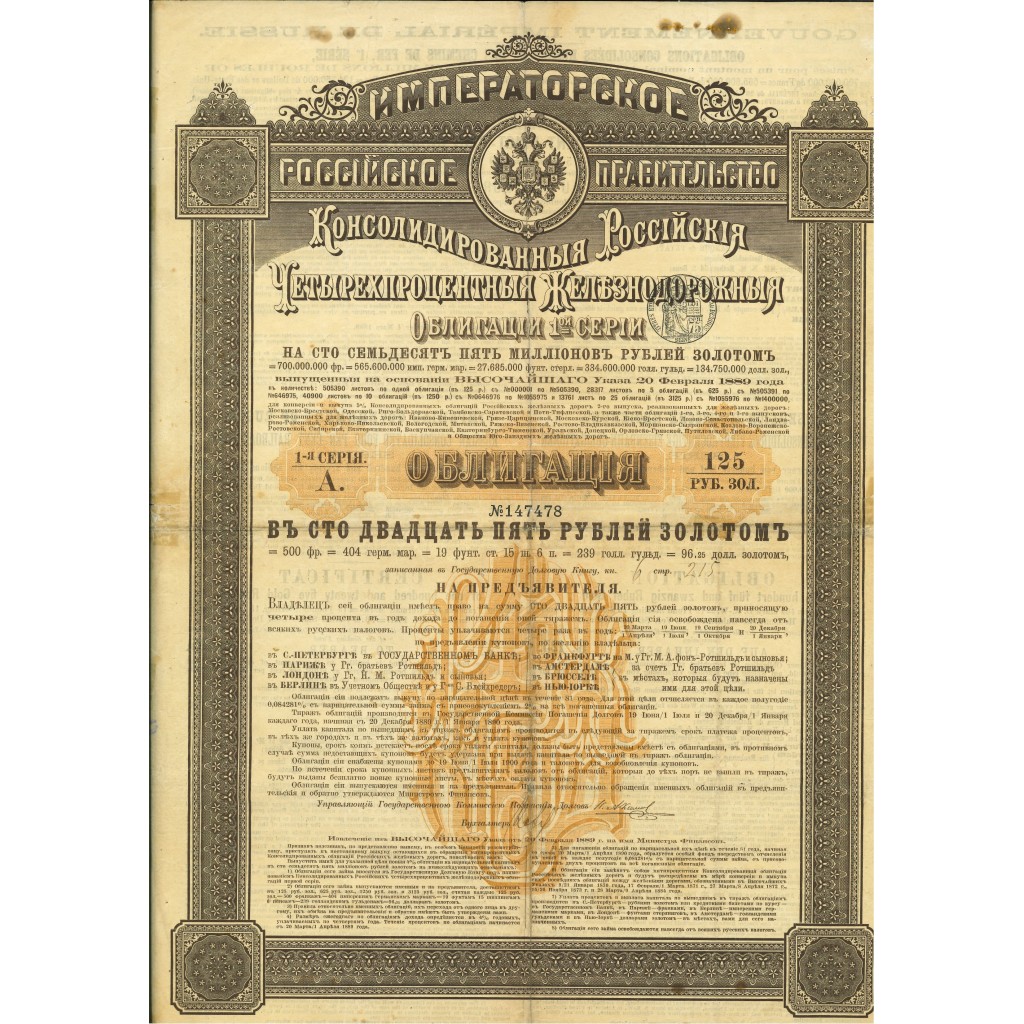
All historical documents for sale are considered collectible. The documents have no economic or financial value, and the second image is only representative of the object of the reference company.